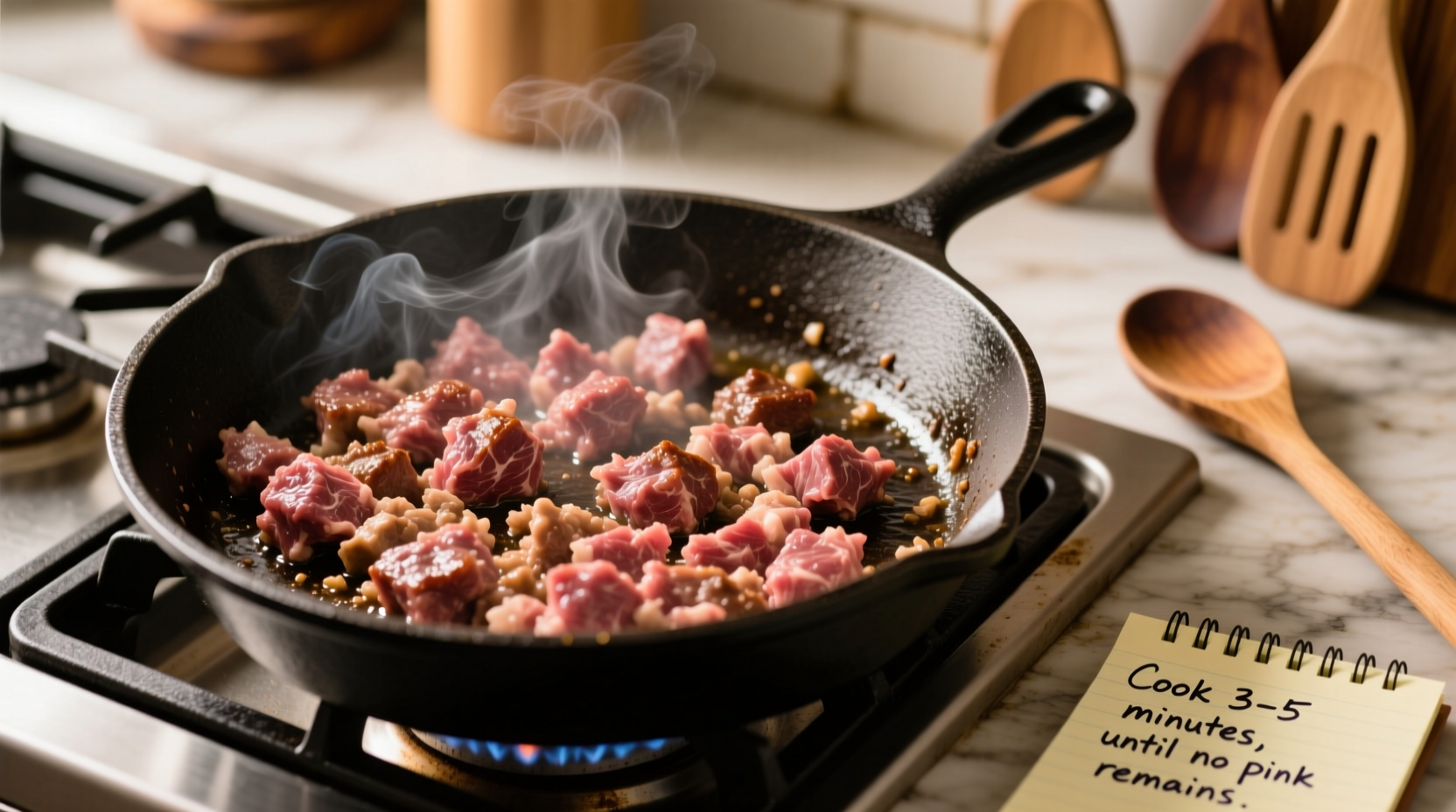
Ground Beef Cooked Temperature Standards and Practices
Ground beef must be cooked to an internal temperature of 160°F (71.1°C), as verified by a digital food thermometer, because the grinding process distributes surface bacteria throughout the entire mixture. Unlike whole cuts of meat wher...
Ground beef must be cooked to an internal temperature of 160°F (71.1°C), as verified by a digital food thermometer, because the grinding process distributes surface bacteria throughout the entire mixture. Unlike whole cuts of meat where pathogens remain on the exterior, ground meat requires uniform heat penetration to eliminate harmful microorganisms effectively.
Contents
Understanding the Safety Imperative of Ground Beef
The fundamental difference between whole-muscle cuts of meat and ground beef dictates completely different cooking standards. When a steak or a roast is contaminated with foodborne pathogens—such as Escherichia coli (E. coli), Salmonella, or Staphylococcus aureus—these bacteria reside almost exclusively on the outer surface of the meat. Searing a steak exposes those outer surfaces to high heat, instantly destroying the bacteria even if the center remains rare and red.
Ground beef undergoes a mechanical mincing process that fundamentally alters this structural safety profile. During grinding, any bacteria present on the exterior meat cuts, equipment, or handling surfaces are thoroughly mixed throughout the entire batch. Consequently, a pathogen like Shiga toxin-producing E. coli can be deposited deep in the center of a hamburger patty or meatloaf. If that interior does not reach a temperature capable of destroying these microorganisms, they survive the cooking process and pose a severe risk of foodborne illness.
Public health organizations, including the United States Department of Agriculture (USDA) Food Safety and Inspection Service and the Centers for Disease Control and Prevention (CDC), uniformly mandate that ground meats must reach a minimum internal temperature of 160°F (71.1°C). Understanding this microbiological reality prevents the dangerous assumption that ground beef can be safely consumed undercooked based on the visual appearance of the interior.
Regulatory Standards and Official Temperature Guidelines
Official food safety regulations draw a sharp line between whole cuts and ground products. According to the USDA and the Food and Drug Administration (FDA) Food Code, regulatory standards require specific thermal endpoints for various categories of animal proteins.
| Product Category | Minimum Internal Temperature | Verification Method |
|---|---|---|
| Whole Muscle Beef, Pork, Lamb | 145°F (62.8°C) with a 3-minute rest | Insert into the thickest part |
| Ground Beef, Pork, Lamb, Veal | 160°F (71.1°C) with no rest required | Insert into the thickest part |
| Poultry (Whole, Pieces, Ground) | 165°F (73.9°C) with no rest required | Insert into the thickest part |
While whole beef cuts can be safely consumed at lower temperatures once their surfaces are pasteurized by heat, ground beef lacks this protective barrier. Furthermore, while the USDA recommends 160°F for home cooking, commercial food service establishments operating under the FDA Food Code must adhere to strict cooking requirements that often mandate holding times or higher initial temperatures depending on the thickness of the patty and the equipment used.
It is also important to note that temperature alone is a function of time. High heat destroys bacteria rapidly, but pasteurization can theoretically occur at lower temperatures if held for a sustained duration. However, because home kitchens cannot reliably measure or maintain precise decimal-degree holding times, regulatory bodies establish 160°F as an instantaneous kill-step threshold that guarantees safety upon reaching that precise peak.
Accurate Measurement Practices Using Food Thermometers
Relying on sensory cues—such as color, texture, or juices running clear—is scientifically proven to be an unreliable method for determining food safety. Meat can turn brown prematurely due to the Maillard reaction, fat content, or pH levels before reaching the necessary thermal death point for pathogens. Conversely, some cooked ground beef can remain pink even after exceeding 160°F due to chemical reactions involving hemoglobin and myoglobin.
To ensure safety, cooks must utilize a reliable digital instant-read food thermometer. Proper measurement technique requires specific steps:
- Calibration: Periodically test the thermometer in ice water (which should read 32°F or 0°C) and boiling water (212°F or 100°C) to ensure accuracy.
- Insertion Point: Insert the probe into the thickest part of the meat patty, loaf, or casserole, avoiding gristle, bone, or the cooking pan itself.
- Burger Thickness: For thin hamburger patties, inserting the probe vertically from the top may miss the center; instead, insert the thermometer stem into the side of the patty horizontally to the exact midpoint.
- Read Time: Wait for the digital readout to stabilize completely—typically between 3 to 10 seconds depending on the sensor technology.
Clean the thermometer probe thoroughly with hot, soapy water between checks to prevent cross-contamination, especially if testing meat at various stages of the cooking process.
Safe Handling, Preparation, and Storage Practices
Temperature standards at the stove or grill are only one component of a comprehensive food safety strategy. Pathogens can multiply rapidly in the "Danger Zone"—temperatures between 40°F (4.4°C) and 140°F (60°C)—making proper storage and thawing vital prerequisites for safe preparation.
When purchasing ground beef, select it near the end of your shopping trip and place it in a separate plastic bag to prevent juices from leaking onto other groceries. Refrigerate ground beef immediately at 40°F (4.4°C) or lower, and use or freeze it within one to two days of purchase. If freezing, wrap original packaging in heavy-duty aluminum foil or plastic freezer wrap to prevent freezer burn and moisture loss.
Thawing ground beef must be executed safely using one of three approved methods:
- Refrigeration: The safest method, allowing the meat to thaw slowly over 24 hours while remaining below the Danger Zone.
- Cold Water: Submerge the sealed package in cold tap water, changing the water every 30 minutes to ensure it continues thawing safely. Cook immediately after thawing.
- Microwave: Use the defrost setting and cook the meat immediately afterward, as parts of the meat may begin to warm and cook during the process.
Never leave ground beef on a kitchen counter at room temperature to thaw, as the outer layers will warm into the Danger Zone and foster rapid bacterial proliferation long before the interior thaws.
Common Mistakes and Troubleshooting in Ground Beef Preparation
Even experienced cooks occasionally fall victim to common pitfalls that compromise the safety or quality of ground beef dishes. Recognizing these errors helps maintain rigorous culinary standards.
One frequent mistake is cross-contamination in the kitchen workspace. Using the same cutting board, plate, or spatula for raw ground beef and subsequently for cooked patties transfers surviving pathogens directly to the finished meal. Always use dedicated utensils and sanitized surfaces for raw meat preparation.
Another common error involves overcrowding the cooking pan or grill. Overcrowding lowers the cooking surface temperature, steaming the meat rather than searing it, and making it difficult to measure internal temperatures accurately across multiple unevenly cooked patties.
If a digital thermometer indicates that ground beef has not reached 160°F, continue the cooking process until the target is met. If the exterior is browning too quickly while the interior remains under-temperature, lower the heat source or transfer the meat to a lower-temperature oven to allow heat to penetrate the center without burning the outside.
Frequently Asked Questions
Can ground beef be eaten medium-rare if it is freshly ground from a trusted butcher?
No. Even if ground fresh on-site from prime cuts of whole muscle, the grinding process mixes surface bacteria throughout the entire volume of the meat. Without industrial pasteurization treatments, fresh-ground beef must reach 160°F to eliminate internalized pathogens safely.
Why does some ground beef stay pink even after reaching 160°F?
Color is not an indicator of doneness. Chemical reactions involving myoglobin, carbon monoxide, or oven gases can cause meat proteins to retain a pink hue even when internal temperatures have safely exceeded the pathogen destruction threshold. Always rely on a calibrated food thermometer rather than visual inspection.
How do I check the temperature of a thin hamburger patty?
Inserting a thermometer probe vertically from the top of a thin patty often pushes the probe straight through to the hot pan, giving a false reading. Instead, insert the thermometer stem horizontally through the side of the patty until the tip rests precisely in the geometric center.
What should I do if my digital food thermometer breaks while cooking?
If you do not have a backup thermometer, you must continue cooking the ground beef until you are entirely certain through extended cooking time that the center has lost all pink color, juices run completely clear, and the texture is firm throughout. However, obtaining a replacement thermometer is strongly advised, as visual inspection remains scientifically unreliable.
How long can cooked ground beef safely sit at room temperature?
Cooked ground beef should never sit at room temperature for more than two hours (or one hour if ambient temperatures exceed 90°F / 32°C). Promptly refrigerate leftovers in shallow containers at 40°F (4.4°C) or lower, and consume them within three to four days.
Conclusion and Next Action
Mastering ground beef cooked temperature standards and practices protects against foodborne illness through precise thermal verification. Always utilize a calibrated digital food thermometer to confirm that every batch reaches the non-negotiable internal standard of 160°F (71.1°C). For your next meal preparation, inspect your kitchen thermometer's battery and accuracy before cooking, and adopt disciplined handling habits from storage to the plate.
Image Gallery