Honda Pilot TrailSport vs. Touring: Which 2026 Model Fits Your Lifestyle?
Choosing between the 2026 Honda Pilot TrailSport and the Touring trim requires balancing the need for rugged off-road capability against the desire for premium family comfort. The TrailSport is engineered with a lifted suspension and s...
Choosing between the 2026 Honda Pilot TrailSport and the Touring trim requires balancing the need for rugged off-road capability against the desire for premium family comfort. The TrailSport is engineered with a lifted suspension and steel skid plates for adventure, while the Touring offers a quieter cabin, a high-end Bose audio system, and more flexible seating configurations for daily commuting and long-distance travel.
Contents
The Honda Pilot has solidified its position in 2026 as one of the most versatile three-row SUVs on the market. Now several years into its fourth generation, the Pilot provides a refined platform that serves two distinct types of drivers through its specialized trims. While both vehicles share the same robust 3.5-liter V6 engine and advanced all-wheel-drive architecture, their executions cater to divergent priorities.
Engineering for Different Terrains
The most significant differences between the TrailSport and the Touring lie beneath the chassis. Honda has tuned these two trims to handle specific environments, affecting everything from ground clearance to ride quality on the highway.
The TrailSport’s Off-Road Architecture
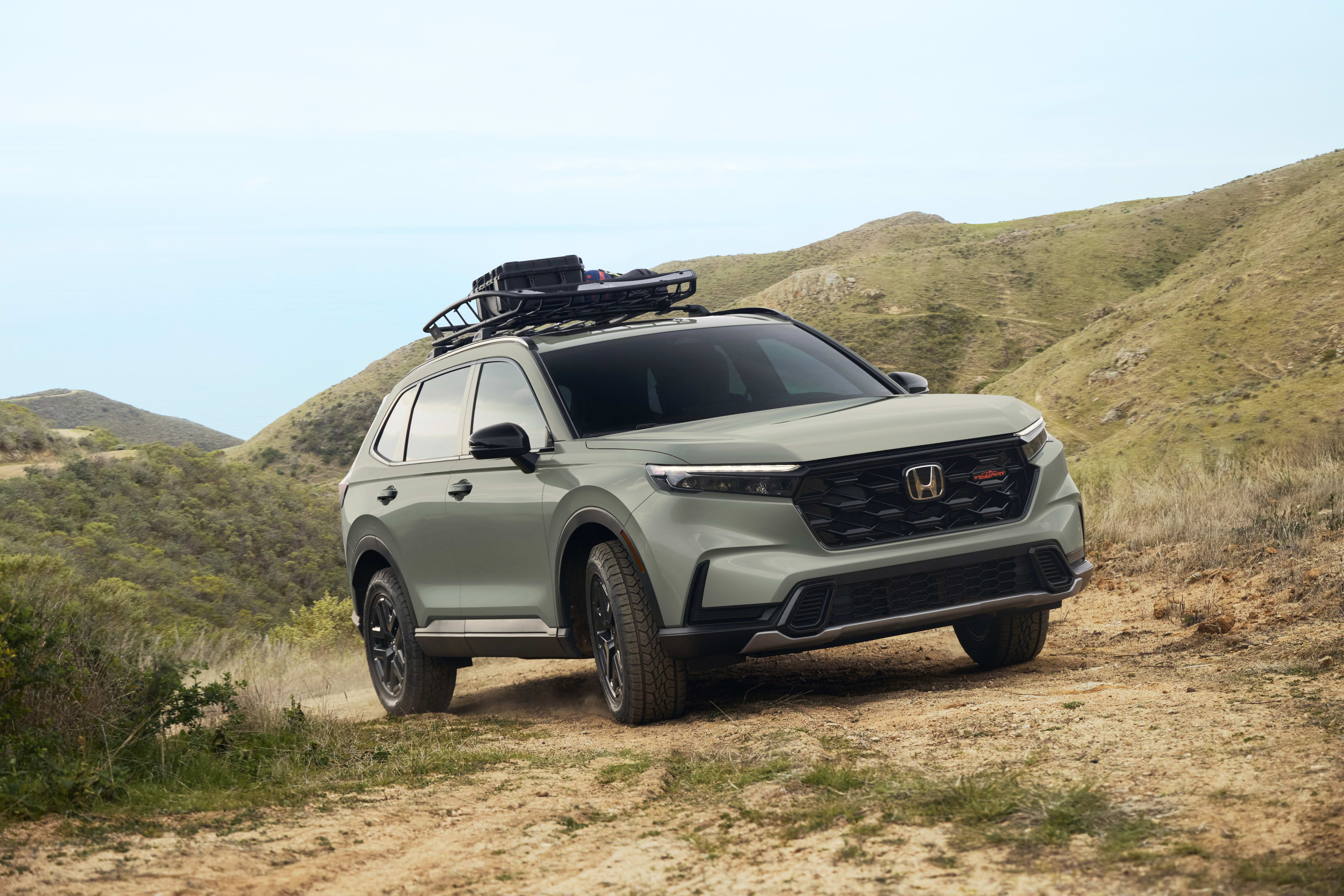
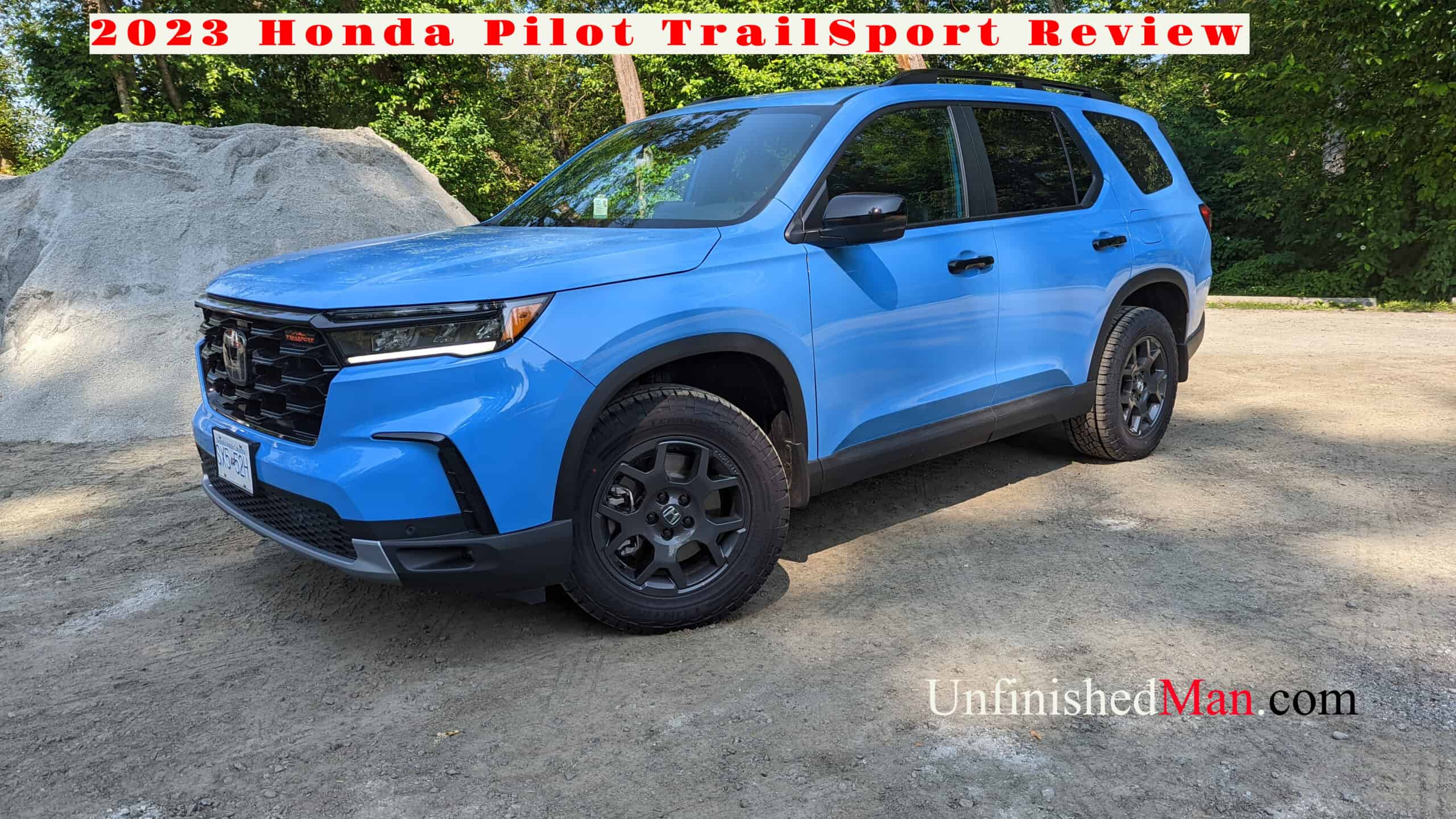
The TrailSport is not merely an appearance package; it is a mechanical upgrade designed for moderate to difficult trails. In 2026, the TrailSport continues to feature a specialized off-road tuned suspension that provides a 1-inch factory lift. This increase in height improves the approach, breakover, and departure angles, allowing the vehicle to clear obstacles that would scrape the undercarriage of a standard SUV.
Crucially, the TrailSport is equipped with high-strength steel skid plates. These plates protect the engine’s oil pan, the transmission, and the fuel tank. Honda engineers designed these plates to support the entire weight of the vehicle if it were to high-center on a rock. Furthermore, the TrailSport utilizes 18-inch wheels wrapped in Continental TerrainContact A/T tires. These all-terrain tires feature a deeper tread pattern and tougher sidewalls, providing necessary grip on loose dirt, gravel, and mud, though they do generate slightly more road noise than the Touring’s highway tires.
The Touring’s On-Road Refinement
In contrast, the 2026 Honda Pilot Touring is optimized for the pavement. It swaps the rugged 18-inch wheels for 20-inch alloy wheels with a machined face. While these larger wheels provide a more "executive" look and sharper steering response on asphalt, they have a thinner sidewall, which makes them less suitable for rocky terrain.
To enhance the family travel experience, the Touring trim includes acoustic laminated glass on the windshield and front side windows. This significantly reduces wind and tire noise at highway speeds. For families who prioritize a serene cabin environment for sleeping children or clear conversations, the Touring’s focus on NVH (Noise, Vibration, and Harshness) reduction makes it the superior choice for interstate travel.
Interior Versatility and Seating Configurations
The internal layout is often the deciding factor for families, as the seating capacity and flexibility differ between these two trims.
Seating Capacity: 7 vs. 8 Passengers
The 2026 TrailSport is exclusively available in a 7-passenger configuration. It features second-row captain’s chairs, which provide easier access to the third row but limit the total number of occupants. This layout is often preferred by families with two children who want to keep them separated or those who frequently need to move between the rows without folding seats.
The Touring trim offers more flexibility with an 8-passenger capacity. However, its standout feature is the hidden versatility of the second row. The Touring includes a removable middle seat in the second row. When not in use, this middle seat can be stowed in a dedicated compartment under the rear cargo floor. This allows owners to switch between an 8-passenger bench and a 7-passenger captain’s chair layout within minutes, a feature not found on the TrailSport.
Materials and Aesthetics
Inside the TrailSport, the focus is on durability and "rugged" aesthetics. You will find synthetic leather (StarTex or similar) upholstery with high-contrast orange stitching and the TrailSport logo embroidered into the headrests. The floor is protected by heavy-duty all-season rubber mats, designed to be hosed off after a weekend in the woods.
The Touring interior leans toward a premium feel. It utilizes genuine leather-trimmed seating surfaces and offers more traditional color palettes. The cabin feels more "open" thanks to the standard panoramic moonroof—a feature that is also present on the TrailSport but feels more aligned with the Touring’s luxury-adjacent positioning.
Technology and Audio Systems
While both trims are well-equipped with the latest Honda Sensing safety suite, the Touring trim pulls ahead in the realm of entertainment and convenience technology.
Premium Audio and Navigation
The 2026 Pilot Touring comes standard with a 12-speaker Bose Premium Sound System, including a subwoofer. This system uses Centerpoint surround-sound technology to provide an immersive experience that the TrailSport’s standard 9-speaker system cannot match. If you are an audiophile or spend hours a day in your vehicle, the Bose system is a notable upgrade.
Additionally, the Touring trim includes a multi-zone audio system and Wi-Fi hotspot capability, which are essential for keeping passengers entertained on long journeys. Both trims feature a 9-inch color touchscreen with wireless Apple CarPlay and Android Auto compatibility, ensuring that your navigation and media are always integrated.
TrailWatch Camera System
One technology feature unique to the TrailSport (and the higher Elite trim) is the TrailWatch Camera System. This system uses four exterior cameras to provide a clear view of the ground directly surrounding the vehicle. It automatically activates when the vehicle is in "Trail" mode and traveling under 15 mph. This is invaluable when navigating narrow paths or avoiding sharp rocks that are hidden from the driver’s line of sight over the hood.
Performance and Towing Capabilities
Both the TrailSport and the Touring are powered by the 24-valve, DOHC 3.5-liter V6 engine, producing 285 horsepower and 262 lb-ft of torque. This engine is mated to a 10-speed automatic transmission that has been praised for its smooth shifts and logic-based gear selection.
i-VTM4 All-Wheel Drive
Both models come standard with Honda’s i-VTM4 (Intelligent Variable Torque Management) all-wheel-drive system. This is a "true" torque-vectoring system that can send up to 70% of the engine's torque to the rear axle and 100% of that torque to either the left or right rear wheel.
However, the TrailSport features a unique Trail Mode calibration. In this mode, the system can manage traction even if one or two wheels are completely off the ground—a common occurrence during technical off-roading. The Touring’s AWD system is tuned for rain, snow, and sand, focusing on stability and efficiency rather than extreme articulation recovery.
Towing Capacity
Both vehicles offer a maximum towing capacity of 5,000 pounds when properly equipped. This is sufficient for towing a small boat, a pair of jet skis, or a modest camper. It is worth noting that the TrailSport comes with a standard trailer hitch, whereas it may be an add-on accessory for the Touring depending on regional dealership packaging.
Technical Specifications Comparison
| Feature | 2026 Honda Pilot TrailSport | 2026 Honda Pilot Touring |
|---|---|---|
| Seating Capacity | 7 Passengers | 7 or 8 Passengers (Removable Seat) |
| Ground Clearance | 8.3 Inches | 7.3 Inches |
| Wheels | 18-inch Shark Gray Alloy | 20-inch Machined-Face Alloy |
| Tires | Continental TerrainContact A/T | All-Season Highway Tires |
| Audio System | 9-Speaker Standard | 12-Speaker Bose Premium |
| Skid Plates | Steel (Engine, Trans, Fuel) | None |
| Drivetrain | i-VTM4 AWD (Trail Tuned) | i-VTM4 AWD |
| Suspension | Off-Road Tuned (Lifted) | Standard Independent |
| MSRP (Estimated) | $49,500 - $51,000 | $50,500 - $52,500 |
Cost of Ownership and Fuel Economy
In the 2026 market, the Touring trim typically carries a slightly higher MSRP than the TrailSport, though the difference is often less than $2,000. However, the TrailSport has a slightly higher cost of operation over time due to its aerodynamics and tires.
The TrailSport’s lifted profile and all-terrain tires result in a minor fuel economy penalty. Owners can expect approximately 18 mpg city and 23 mpg highway. The Touring, with its more aerodynamic wheels and lower rolling-resistance tires, typically achieves 19 mpg city and 25 mpg highway. While the difference seems small, it can add up over 100,000 miles of ownership.
Insurance rates are generally comparable between the two, though some providers may view the TrailSport as a higher risk if it is frequently used for off-roading. Conversely, the Touring’s higher initial value and more expensive 20-inch wheels can lead to slightly higher premiums in some jurisdictions.
Frequently Asked Questions
Is the TrailSport too loud for highway driving?
While the all-terrain tires on the TrailSport do produce more "hum" than the highway tires on the Touring, Honda has added significant sound deadening to the 2026 model. It is louder than the Touring, which features acoustic glass, but it remains much quieter than traditional body-on-frame off-roaders like the Jeep Wrangler or Toyota 4Runner.
Can I add the TrailSport's skid plates to a Touring model?
Technically, the mounting points are similar, but it is not a direct "bolt-on" for most users. The TrailSport has a specific suspension geometry and bumper design that accommodates the skid plates. Retrofitting them to a Touring model would be expensive and would not provide the increased ground clearance that makes the plates truly useful.
Does the Touring model have a spare tire?
Yes, both models include a spare tire. However, the TrailSport is equipped with a full-size spare tire mounted under the vehicle. This is critical for off-roading, as a temporary "donut" spare cannot handle the rigors of a trail. The Touring typically comes with a temporary compact spare to save weight and improve fuel economy.
Which model is better for snow?
Both are excellent in the snow thanks to the i-VTM4 AWD system and "Snow Mode." However, the TrailSport has a slight advantage in deep, unplowed snow due to its extra inch of ground clearance and the biting edges of its all-terrain tires. For icy highway conditions, the Touring is equally capable.
Is the panoramic sunroof standard on both?
Yes, in the 2026 model year, the panoramic sunroof is standard on both the TrailSport and Touring trims, providing an airy feel to both the front and rear of the cabin.
Choosing the Right Path
The decision between the 2026 Honda Pilot TrailSport and the Touring depends entirely on where you plan to spend your time.
Choose the TrailSport if:
- You frequently visit national parks, campsites, or trailheads that require traversing unpaved or rocky roads.
- You prefer the "rugged" aesthetic and want the peace of mind provided by steel skid plates and a full-size spare.
- You only need seating for seven and prefer the easy access of second-row captain’s chairs.
Choose the Touring if:
- Your driving is primarily on paved roads, highways, and suburban streets.
- You want the quietest possible cabin and the best available audio system for your family.
- You need the flexibility of 8-passenger seating or the ability to remove and store the middle seat for different occasions.
- You prioritize fuel efficiency and a more polished, executive appearance.
Both vehicles represent the pinnacle of Honda's engineering for the mid-size SUV segment, ensuring that regardless of your choice, you are receiving a vehicle with top-tier safety ratings and proven reliability.
Image Gallery