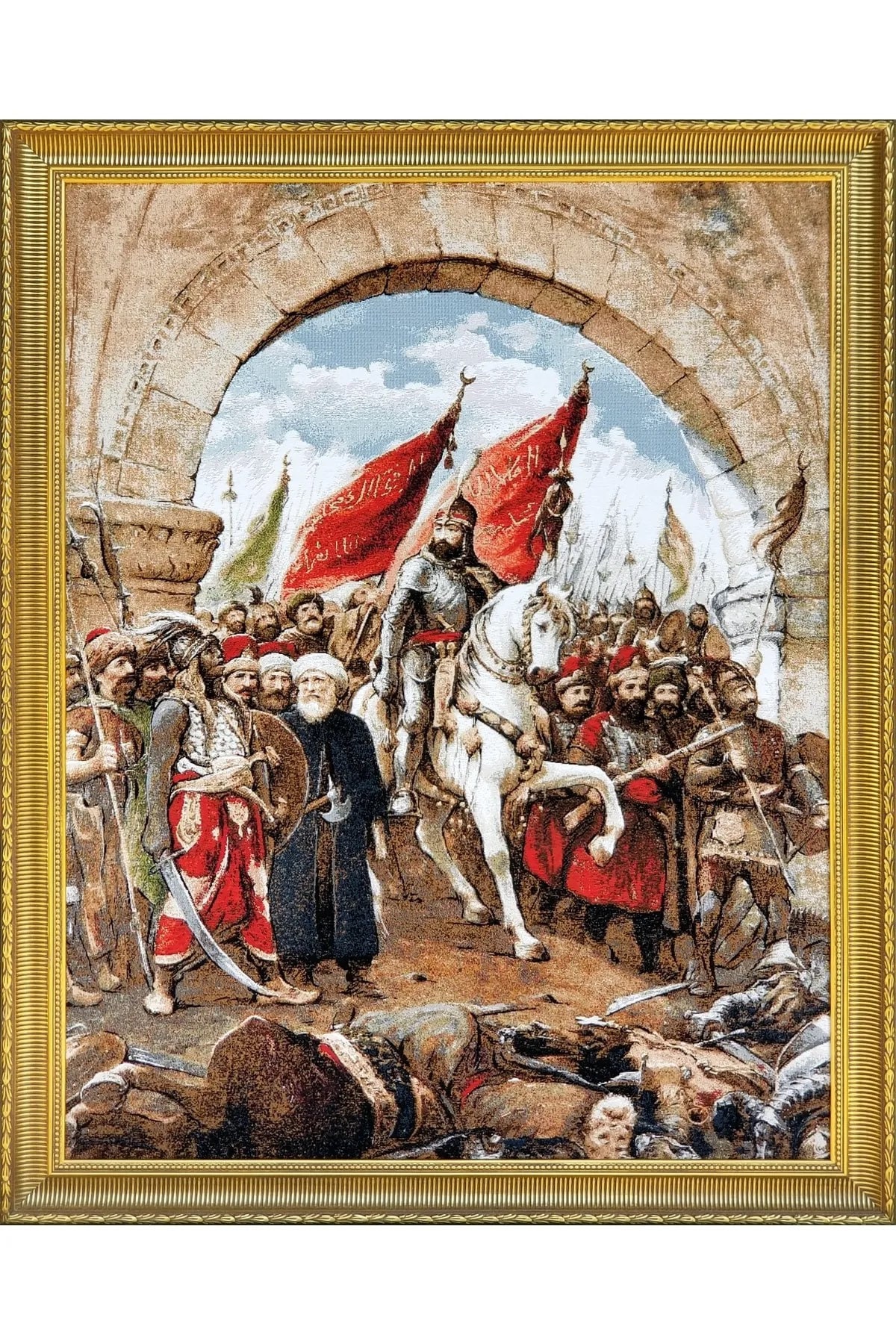
The Conqueror of Constantinople: Sultan Mehmed II and the Fall of Byzantium
The conqueror of Constantinople was Sultan Mehmed II, often referred to as Mehmed the Conqueror (Fatih Sultan Mehmed). On May 29, 1453, he successfully led the Ottoman Empire in capturing the Byzantine capital after a grueling 53-day s...
The conqueror of Constantinople was Sultan Mehmed II, often referred to as Mehmed the Conqueror (Fatih Sultan Mehmed). On May 29, 1453, he successfully led the Ottoman Empire in capturing the Byzantine capital after a grueling 53-day siege, an event that marked the end of the Byzantine Empire and the final collapse of the Roman imperial legacy.
Contents
The Rise of Sultan Mehmed II
Mehmed II ascended to the Ottoman throne for the second time in 1451 at the age of 19. His early reign was marked by skepticism from his viziers and European neighbors, who perceived the young ruler as inexperienced. However, Mehmed’s primary ambition was the conquest of Constantinople, a city that had eluded Ottoman rulers for decades. He was a highly educated leader, fluent in several languages, and deeply interested in both military engineering and classical history, which drove his strategic determination to claim the "Queen of Cities."
By 1453, the Byzantine Empire had been reduced to the city of Constantinople and a few scattered territories. Despite its diminished state, the city’s location and its legendary Theodosian Walls made it an formidable defensive position that had successfully repelled sieges for over a millennium.
Strategic Planning and Military Innovations
Mehmed II’s victory was not merely a result of overwhelming numbers but of meticulous logistical and technological preparation. He understood that to take Constantinople, he would need to neutralize the sea-based reinforcements and penetrate or circumvent the city’s immense land walls.
Engineering the Siege
To overcome the limitations of traditional siege warfare, Mehmed commissioned the services of Orban, a Hungarian engineer, to construct massive bombards—cannons of unprecedented size. These weapons, known as the "Basilica" or Great Bombard, were capable of firing 1,200-pound granite balls. While slow to reload, their psychological and physical impact on the ancient stone walls of the city was transformative for the era.
Naval Maneuvers
The Byzantine defense relied heavily on the Golden Horn, a protected harbor shielded by a massive iron chain stretched across its mouth, preventing Ottoman ships from entering. Recognizing that he could not break the chain, Mehmed orchestrated a daring engineering feat: he ordered his fleet to be hauled overland on greased wooden logs across the hill of Galata. By bypassing the chain and launching his ships directly into the Golden Horn, he forced the Byzantine defenders to spread their limited manpower along a much larger portion of the city walls.
The Final Siege: April to May 1453
The siege formally began in early April 1453. The Ottoman forces numbered approximately 80,000 to 100,000, while the defenders under Emperor Constantine XI Palaiologos numbered only about 7,000 to 8,000, including foreign volunteers like the Genoese commander Giovanni Giustiniani.
The campaign was characterized by:
- Constant Bombardment: Ottoman cannons kept the defenders under constant pressure, forcing them to perform repairs to the walls under the cover of night.
- The Mining War: Ottoman sappers attempted to tunnel under the walls to collapse them, but were frequently countered by Byzantine engineers using primitive detection methods and counter-tunnels.
- The Final Assault: On the morning of May 29, 1453, Mehmed launched a full-scale assault. After several waves of infantry were repelled, the Janissaries—the elite shock troops of the Sultan—managed to find an unlocked gate (the Kerkoporta) or breach a section of the wall where the defense had faltered, allowing them to flood into the city.
The Impact of the Conquest
The fall of Constantinople was a pivotal turning point in world history. It signaled the definitive end of the Middle Ages and the transition into the Early Modern period.
Geopolitical Consequences
- Imperial Consolidation: The capture of the city allowed the Ottoman Empire to consolidate its control over the Anatolian and Balkan territories, effectively bridging the divide between its European and Asian domains.
- Trade Route Disruption: With the Ottoman Empire now controlling the gateway between the Black Sea and the Mediterranean, the traditional land routes for trade between Europe and the East were restricted, compelling European powers to seek new maritime routes, which arguably accelerated the Age of Discovery.
- Intellectual Migration: The flight of Greek scholars to Italy, carrying with them ancient manuscripts and knowledge of Greek literature and philosophy, acted as a significant catalyst for the Renaissance in Europe.
Historical Comparison of Siege Tactics
The following table outlines the key tactical differences that allowed the Ottoman forces to succeed where previous sieges had failed.
| Tactical Element | Pre-1453 Standard | Mehmed II’s Innovation |
|---|---|---|
| Artillery | Small trebuchets and light cannons | Heavy gunpowder bombards (Orban’s design) |
| Naval Access | Blocked by harbor chains | Overland transport of fleet (Galata Hill) |
| Command Structure | Decentralized leadership | Centralized control under Sultan's authority |
| Supply Chain | Seasonal and fragile | Integrated logistics with permanent camps |
Frequently Asked Questions
Who was the last Byzantine Emperor? The last Byzantine Emperor was Constantine XI Palaiologos. He died defending his city during the final Ottoman assault on May 29, 1453. His body was never definitively identified, which led to various legends regarding his fate.
Why was Constantinople so difficult to conquer? Constantinople was protected by the Theodosian Walls, a triple-layered system of fortifications that had been modified over centuries. The sea walls also protected the city from naval attacks, and the strategically placed chain across the Golden Horn made the harbor nearly impossible for hostile fleets to penetrate.
How did Mehmed II change the city after the conquest? Mehmed II declared Constantinople the new capital of the Ottoman Empire, renaming it "Istanbul" in common parlance. He transformed the Hagia Sophia from a cathedral into a mosque and encouraged the repopulation of the city by inviting various ethnic and religious communities to live there, establishing the millet system.
Did the fall of Constantinople cause the Renaissance? While it was not the sole cause, the influx of Byzantine scholars into Italy following the fall of the city significantly bolstered the study of Greek classics, which provided essential intellectual scaffolding for the development of Humanism during the Italian Renaissance.
What happened to the defenders of the city? Following the custom of the time, the city was subject to looting for a brief period before Mehmed restored order. The surviving nobility and soldiers were largely executed or enslaved, though many of the civilian population were granted protection under the new Ottoman administration.
Recommendation for Further Study
To better understand the logistical complexity of the 1453 siege, one should consult the accounts of contemporaries such as Niccolò Barbaro, a Venetian physician who kept a diary throughout the siege. His detailed observations provide a firsthand perspective on the effectiveness of Ottoman artillery and the psychological atmosphere within the city walls. Understanding the shift from medieval stone fortifications to modern gunpowder warfare remains the most effective way to grasp why Mehmed II’s conquest was so decisive and historically irreversible.
Image Gallery