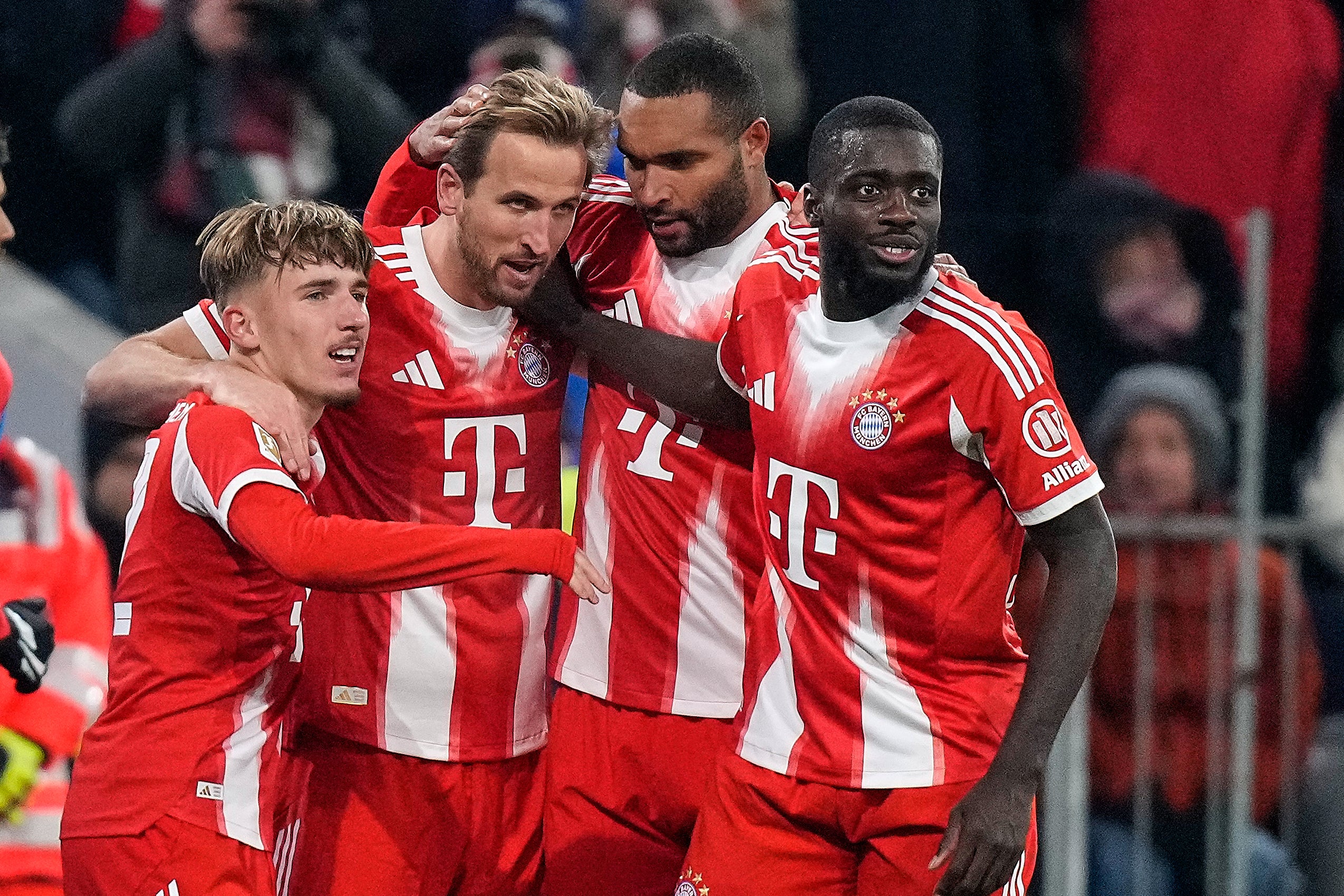
Why the Ronaldo Bayern Munich Rumor Should Remain a Footnote
The transfer rumor linking Cristiano Ronaldo to Bayern Munich during the summer of 2022 was a product of media speculation and agent outreach rather than serious negotiations. Bayern Munich's board explicitly rejected the transaction d...
The transfer rumor linking Cristiano Ronaldo to Bayern Munich during the summer of 2022 was a product of media speculation and agent outreach rather than serious negotiations. Bayern Munich's board explicitly rejected the transaction due to strict wage caps, tactical incompatibility with high-pressing tactics, and a squad planning model focused on long-term sustainability.
Contents
| The Ronaldo-Bayern Speculation at a Glance | Details |
|---|---|
| Agent Outreach & Market Context | Offered by Jorge Mendes during summer 2022 |
| Public Board Response | Publicly rejected by Oliver Kahn & Board |
| Financial Barrier | Demands far exceeded Bayern's wage structure |
| Tactical Mismatch | Off-ball profile conflicted with pressing |
| Subsequent Outcome | Ronaldo -> Al-Nassr | Bayern -> Harry Kane |
Contextualizing the 2022 Transfer Window Speculation
During the summer 2022 transfer window, elite European football experienced a major narrative cycle when Cristiano Ronaldo sought an exit from Manchester United. Following United’s fifth-place Premier League finish in the 2021–22 season, which excluded the club from the 2022–23 UEFA Champions League, Ronaldo’s representative, Jorge Mendes, explored opportunities with top-tier clubs across Europe.
Among the clubs frequently linked to Ronaldo in global headlines was FC Bayern Munich. The timing of the rumor coincided with Robert Lewandowski’s high-profile departure from Bayern to FC Barcelona, creating a apparent vacancy at the center-forward position for the Bavarian giants. Media outlets quickly amplified reports suggesting that Ronaldo could step into the Bayern front line to maintain the club's Champions League ambitions.
However, despite intense media coverage and online speculation, a transfer never materialized or progressed into formal negotiations. Understanding why this rumor should remain a minor footnote in transfer history requires examining the operational, financial, and tactical realities of Bayern Munich.
Financial Governance: Bayern’s Strict Wage Structure vs. Mega-Contracts
Bayern Munich operates under a financially conservative business model that sets it apart from many of Europe’s elite clubs. Unlike state-backed institutions or clubs reliant on private equity, Bayern relies on self-generated revenue, maintaining a strictly monitored wage framework designed to preserve economic stability and dressing room harmony.
When Ronaldo sought a move in 2022, his salary at Manchester United was reported to be over £500,000 per week, translating to a gross annual cost exceeding €30 million. Integrating a contract of that magnitude into Bayern's pay scale presented severe financial risks:
- Wage Ceiling Disruption: Bayern’s highest earners—such as Manuel Neuer, Thomas Müller, and Joshua Kimmich—operated within an established top-tier wage bracket. Granting a contract significantly above this baseline to an incoming 37-year-old would have jeopardized future contract renewal negotiations across the roster.
- Commercial vs. Operational ROI: While Ronaldo’s signing would have generated immediate commercial returns in shirt sales and international sponsorship interest, Bayern’s executive board historically prioritizes sporting longevity over short-term marketing surges.
- Budgeting Realities: Committing massive capital to an aging forward would have restricted Bayern's ability to fund crucial contract extensions and target younger primary transfers in subsequent transfer windows.
Estimated Annual Wage Demands vs. Club Wage Ceilings (2022)
- Ronaldo's Contract Expectations: ~€30M+ Net/Gross Equiv.
- Bayern Munich Top Wage Ceiling: ~€20M Gross Max
- Secondary Squad Wage Tier: ~€10M-€15M Gross
Tactical Incompatibility in Julian Nagelsmann’s System
Beyond financial considerations, the proposed transfer presented clear tactical friction with Bayern Munich’s playing style under then-head coach Julian Nagelsmann.
In 2022, Nagelsmann’s tactical setup depended on aggressive off-ball pressing, rapid counter-pressing (Gegenpressing), and continuous positional rotation among the forward line. This approach required every attacking player to contribute significantly to defensive transitions and high-intensity running.
Typical Nagelsmann Pressing System vs. Late-Career Ronaldo Profile (Structural Incompatibility)
- High-Intensity Gegenpressing:
- High sprint volume per 90
- Defensive transition duty
- Fluid positional rotation
- Specialized Box Finisher:
- Selective pressing exertion
- Positional conservation
- Target man focal point
By 2022, Ronaldo had evolved into a specialized penalty-box finisher. While his positioning, aerial ability, and finishing remained elite, his physical profile naturally limited his off-ball defensive output and distance covered per match:
- Pressing Metrics: Statistical data from Ronaldo’s 2021–22 Premier League campaign highlighted a low number of defensive pressures per 90 minutes compared to elite European forwards.
- Systemic Balance: Integrating a striker who conserves energy for attacking transitions would have required Nagelsmann to alter Bayern's defensive structure, forcing surrounding midfielders and wingers to cover additional defensive distance.
- Positional Flexibility: Nagelsmann preferred fluid attackers capable of interchanging between wide and central areas. Ronaldo’s optimal role had become firmly anchored as a traditional central target man.
Public Executive Responses: The "Mia San Mia" Philosophy
Unlike many transfer sagas where club leadership remains silent, Bayern Munich’s executive board took the unusual step of repeatedly and publicly dismissing the Ronaldo links. This transparent communication underscored how fundamentally the proposition conflicted with the club’s sporting identity.
Oliver Kahn, serving as Bayern Munich’s Chief Executive Officer at the time, explicitly clarified the club's stance in an interview with German publication Kicker in July 2022:
"As much as I appreciate Cristiano Ronaldo as one of the greatest, a transfer would not fit into our philosophy."
Sporting Director Hasan Salihamidžić similarly confirmed on multiple occasions through broadcasters Sky Germany and Sport1 that while Mendes had inquired about Bayern's interest, the club's leadership unanimously decided against pursuing negotiations.
These official statements demonstrated that the refusal was not a matter of financial haggling, but a fundamental decision based on squad architecture and the club’s established ethos (Mia san mia).
Comparative Matrix: Rumor vs. Bayern Operational Principles
The following table contrasts the parameters of the proposed Ronaldo transfer with Bayern Munich’s established operational principles during the 2022 period:
| Parameter | Proposed Ronaldo Scenario | Bayern Munich Operational Standard |
|---|---|---|
| Player Age | 37 years old (Summer 2022) | Primary recruitment focus: 20–28 years old |
| Contract Structure | High fixed wage expectation | Performance-incentivized tiered structure |
| Tactical Role | Fixed central striker / Box finisher | Flexible, high-intensity pressing attacker |
| Resale / Future Value | Zero financial return potential | High resale potential or long-term core foundation |
| Squad Hierarchy Fit | Global superstar demanding guaranteed starts | Team-first dynamic with rotational depth |
| Executive Approval | Initiated by external agent pitch | Unanimous internal sporting board consensus |
| Subsequent Club Move | Al-Nassr FC (January 2023) | Sadio Mané (2022), Harry Kane (2023) |
Strategic Alternatives: How Bayern Solved the Striker Position
Analyzing Bayern's actual transfer moves following Lewandowski's departure shows why the Ronaldo rumor was never a strategic priority. Rather than committing huge resources to a short-term superstar, Bayern pursued alternative squad-building avenues:
Bayern Striker Strategy (2022-2023)
- Summer 2022: Signed Sadio Mané & Mathys Tel (Dynamic pressing & youth investment)
- Summer 2023: Signed Harry Kane (Prime elite striker profile)
In the summer of 2022, Bayern acquired Sadio Mané from Liverpool to add versatile pressing power across the front line, while also securing young prospect Mathys Tel from Rennes for long-term development. When the club ultimately decided to spend a record transfer fee on a marquee central striker in the summer of 2023, they targeted Harry Kane.
Kane fit Bayern's needs in several key ways: at 30 years old, he was entering his prime years, offered deep playmaking vision alongside elite goalscoring metrics, and integrated smoothly into the club's tactical structure and wage framework.
Why Media Cycles Perpetuate Non-Starter Transfer Stories
The persistence of the Ronaldo-to-Bayern story highlights common dynamics in modern sports journalism:
- Agent Leverage: Player representatives frequently drop top-tier club names to domestic and international press to generate market urgency and maintain leverage in negotiations with other prospective buyers.
- Content Volume Demands: Digital sports media outlets rely on high-volume search traffic during transfer windows. Pairing two globally recognized brands—Cristiano Ronaldo and Bayern Munich—guarantees click-through rates regardless of structural validity.
- The "Vacancy Fallacy": Media coverage often relies on simple positional logic: Bayern lost a star striker (Lewandowski), and a star striker (Ronaldo) wanted to move. This framing ignores complex underlying factors like wage ceilings, pressing metrics, and squad harmony.
Frequently Asked Questions
Did Bayern Munich ever submit a formal offer for Cristiano Ronaldo?
No, Bayern Munich never submitted a formal bid. While representative Jorge Mendes reached out to gauge interest, Bayern’s sporting board unanimously declined to initiate contract negotiations or transfer talks with Manchester United.
Why did Oliver Kahn publicly address the Ronaldo transfer speculation?
To shut down persistent media speculation and maintain focus on internal squad planning. By issuing clear statements to outlets like Kicker, Kahn protected the club's wage negotiations and prevented speculation from distracting the squad.
How did Ronaldo's wage demands conflict with Bayern's pay structure?
Ronaldo’s earnings far exceeded Bayern’s top salary tier. Granting a contract of that size to a short-term signing would have disrupted Bayern's wage ceiling and created friction during contract renewals for core players.
Was tactical fit a major reason for Bayern rejecting the move?
Yes, tactical style was a key factor. Julian Nagelsmann’s system relied on aggressive Gegenpressing and high physical output from attackers. Ronaldo's late-career evolution into a specialized box finisher conflicted with those off-ball demands.
Where did Ronaldo move after leaving Manchester United?
Ronaldo joined Saudi Pro League club Al-Nassr in January 2023. This move followed the mutual termination of his Manchester United contract in November 2022, ending his pursuit of a transfer to European Champions League sides.
Practical Takeaway for Football Analysis
When assessing transfer rumors involving top-tier European clubs, fans and analysts should look beyond superficial positional logic and brand notoriety. Evaluating a prospective transfer through three core criteria provides a clear picture of its feasibility:
- Financial Alignment: Does the contract expectation fit within the purchasing club's established wage structure without creating squad friction?
- Tactical Synergy: Does the player's off-ball work rate and positional flexibility match the manager's tactical system?
- Long-Term Strategy: Does the acquisition support the club's multi-year roster planning, or is it merely a high-cost, short-term measure?
Evaluating the 2022 speculation against these benchmarks clearly shows why the Ronaldo-to-Bayern story was never a near-miss deal, but rather a persistent transfer window footnote.
Image Gallery