Azerbaijan Olympic Participation History: Evolution, Medals, and Key Milestones
Azerbaijan's Olympic participation history spans over seven decades, progressing from Soviet-era involvement (1952–1988) and the post-Soviet Unified Team (1992) to competing as a sovereign nation since 1996. Renowned for elite achievem...
Azerbaijan's Olympic participation history spans over seven decades, progressing from Soviet-era involvement (1952–1988) and the post-Soviet Unified Team (1992) to competing as a sovereign nation since 1996. Renowned for elite achievements in combat sports like wrestling, judo, boxing, and taekwondo, Azerbaijan has earned 56 Summer Olympic medals in its independent history.
Contents
Pre-Independence Foundations: The Soviet Era and the 1992 Unified Team
Before competing under its own flag, Azerbaijan made significant contributions to the Olympic movement through the Soviet Union national team. From the 1952 Helsinki Games through the 1988 Seoul Games, Azerbaijani athletes represented the USSR, winning medals across disciplines ranging from combat sports to volleyball and fencing.
The Soviet Era (1952–1988)
The first athlete from Azerbaijan to earn an Olympic medal was freestyle wrestler Rashid Mammadbeyov, who captured a silver medal in the bantamweight division at the 1952 Helsinki Olympics. Over the following decades, several Azerbaijani athletes achieved international renown within the Soviet delegation:
- Inna Ryskal: One of the most decorated volleyball players in Olympic history, earning four consecutive medals (silver in 1964 and 1972; gold in 1968 and 1976).
- Viktor Modzolevsky: Fencer who secured a silver medal in 1968 and bronze in 1972 in team épée.
- Igor Ponomaryov: Key midfielder for the Soviet football team that captured the gold medal at the 1988 Seoul Olympics.
During this era, athletic infrastructure in Baku and surrounding regions developed under centralized Soviet sports programs. Local training centers specialized in martial arts, weightlifting, and target shooting, building a technical foundation that benefited the nation after independence.
The 1992 Transition and the Unified Team
Following the dissolution of the Soviet Union in late 1991, post-Soviet republics competed together as the Unified Team (often designated under the country code EUN) at the 1992 Winter Games in Albertville and the 1992 Summer Games in Barcelona.
At the Barcelona Games, Baku-born judoka Nazim Huseynov made history in the extra-lightweight (-60 kg) division. Competing under the Olympic flag on behalf of the Unified Team, Huseynov won the gold medal, becoming the first athlete from independent Azerbaijan to stand atop an Olympic podium.
- Soviet Era (1952–1988)
- Representing USSR
- Unified Team (Barcelona 1992)
- Nazim Huseynov Gold
- Independent Debut (Atlanta 1996)
- First Independent Medal
Sovereign Debut and Strategic Growth (1996–2008)
The National Olympic Committee of the Republic of Azerbaijan (NOC) was established in 1992 and officially recognized by the International Olympic Committee in 1993. The nation's strategic focus on sports infrastructure expanded significantly following the election of Ilham Aliyev as NOC President in 1997.
Atlanta 1996: The Independent Debut
Azerbaijan made its independent Olympic debut at the 1996 Summer Olympics in Atlanta, sending a delegation of 23 athletes to compete across 9 sports.
The delegation secured its first official Olympic medal as a sovereign nation when freestyle wrestler Namig Abdullayev took silver in the men's 52 kg division. Azerbaijan finished 61st in the overall medal table, establishing combat sports as its core competitive area.
Atlanta 1996 Delegation Breakdown
| Sport | Athletes |
|---|---|
| Wrestling (Freestyle) | 8 |
| Judo | 2 |
| Boxing | 2 |
| Athletics | 4 |
| Swimming | 2 |
| Shooting / Other | 5 |
Sydney 2000: Historic Gold Medals
At the 2000 Sydney Games, Azerbaijan expanded its delegation to 31 athletes and claimed its first Olympic gold medals as an independent nation:
- Namig Abdullayev: Improved upon his 1996 silver by winning gold in the men's freestyle wrestling 54 kg division.
- Zemfira Meftahatdinova: Captured gold in women's skeet shooting, setting an Olympic record in the process.
With an additional bronze medal won by boxer Vugar Alakbarov in the middleweight category, Azerbaijan finished 34th in the overall medal standings.
Athens 2004 and Beijing 2008
- Athens 2004: Azerbaijan earned 5 medals (1 gold, 4 bronze). Farid Mansurov secured gold in Greco-Roman wrestling (66 kg), while Zemfira Meftahatdinova added a bronze in skeet shooting. Boxers Fuad Aslanov and Aghasi Mammadov, along with freestyle wrestler Irini Merleni, earned bronze medals.
- Beijing 2008: The nation secured 6 medals (1 gold, 1 silver, 4 bronze). Lightweight judoka Elnur Mammadli (-73 kg) achieved one of the most dominant victories in Olympic judo history, defeating all five opponents by ippon, including a 13-second victory in the final match.
Peak Medal Volume and Modern Campaigns (2012–2024)
Between 2012 and 2024, Azerbaijan expanded its training programs, naturalized selective international talent in target sports, and systematically invested in high-performance sport science.
London 2012: Wrestling Dominance
Azerbaijan sent 53 athletes to the 2012 London Olympics, securing 9 medals (2 gold, 2 silver, 5 bronze). Dual gold medals came from freestyle wrestling:
- Toghrul Asgarov won gold in the men's 60 kg division at age 19.
- Sharif Sharifov claimed gold in the men's 84 kg division.
Wrestling accounted for 6 of the 9 total medals earned in London, cementing the nation's reputation as a global wrestling powerhouse.
Rio 2016: Highest Total Medal Count
The 2016 Summer Olympics in Rio de Janeiro marked Azerbaijan's highest overall podium tally. With 56 athletes competing, Azerbaijan captured 18 medals (1 gold, 7 silver, 10 bronze), ranking 15th globally in overall medal count and among the highest in medals per capita.
- Radik Isayev won Azerbaijan's first Olympic gold medal in Taekwondo (+80 kg).
- Wrestling delivered 9 medals (3 silver, 6 bronze).
- Azerbaijani athletes also reached the podium in canoeing, judo, boxing, and women's gymnastics.
Rio 2016 Medal Composition (Total: 18)
| Sport | Medals |
|---|---|
| Wrestling | 9 |
| Judo | 2 |
| Boxing | 2 |
| Taekwondo | 3 |
| Canoeing (Sprint) | 2 |
Tokyo 2020: Consistent Podium Presence
At the Tokyo 2020 Games (held in 2021 due to global delays), Azerbaijan competed with 44 athletes. Although the delegation did not secure a gold medal, it earned 7 medals (3 silver, 4 bronze):
- Karate: Rafael Aghayev (Silver, Kumite 75 kg) and Iryna Zaretska (Silver, Kumite +61 kg).
- Wrestling: Haji Aliyev (Silver, Freestyle 65 kg), Maria Stadnik (Bronze, Freestyle 50 kg), and Rafig Huseynov (Bronze, Greco-Roman 77 kg).
- Judo & Boxing: Bronze medals claimed by Iryna Kindzerska (Judo +78 kg) and Loren Alfonso (Boxing 81 kg).
Paris 2024: The Judo Renaissance
The 2024 Paris Olympics marked a major resurgence in gold medal achievements, led by an exceptional performance from the national judo team. Azerbaijan won 7 medals (2 gold, 2 silver, 3 bronze):
- Hidayat Heydarov: Won gold in judo (-73 kg), completing a rare sweep of European, World, and Olympic titles in the same calendar year.
- Zelym Kotsoiev: Captured gold in judo (-100 kg), establishing Azerbaijan as a dominant force in weight-class judo.
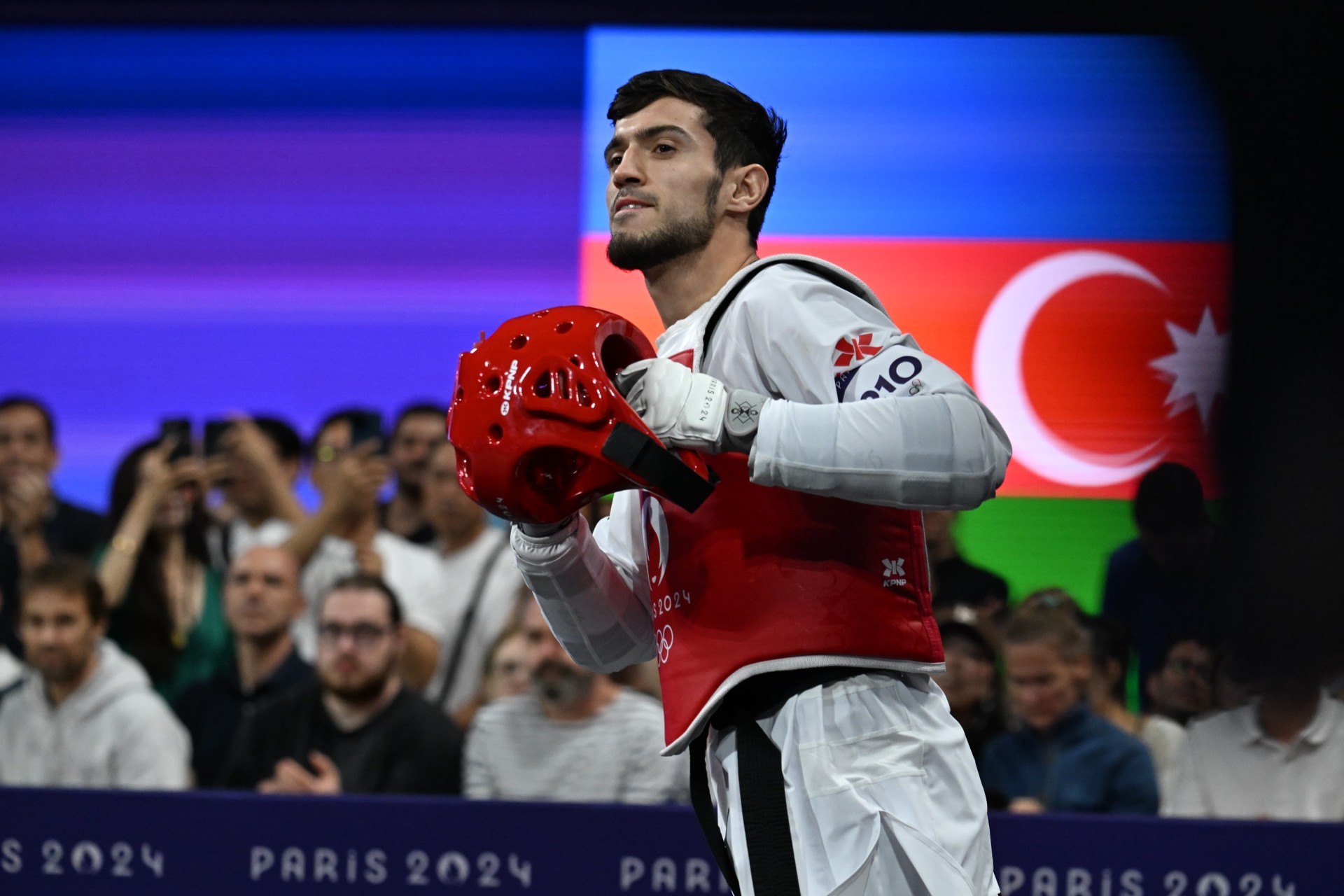
- Silvers: Gashim Magomedov (Taekwondo -58 kg) and Loren Alfonso (Boxing 92 kg).
- Bronzes: Hasrat Jafarov (Greco-Roman Wrestling 67 kg), Giorgi Meshvildishvili (Freestyle Wrestling 125 kg), and Magomedkhan Magomedov (Freestyle Wrestling 97 kg).
Azerbaijan at the Winter Olympic Games
While Azerbaijan has achieved extensive success at the Summer Games, its participation in the Winter Olympic Games reflects a smaller operational footprint due to geographic and climatic factors.
- Winter Games Debut (Nagano 1998)
- 4-Athlete Alpine/Skating Team
- Continuous Entry (2002–2022)
- Small Delegation Strategy
- Target Disciplines
- Alpine Skiing & Figure Skating
Azerbaijan made its Winter Olympics debut at the 1998 Nagano Games in Japan, sending four athletes to compete in alpine skiing and figure skating. The nation has participated in every Winter Games since:
- Salt Lake City 2002: 4 competitors in figure skating and alpine skiing.
- Turin 2006: 2 competitors in figure skating.
- Vancouver 2010: 2 competitors in alpine skiing.
- Sochi 2014: 4 competitors in alpine skiing and figure skating.
- PyeongChang 2018: 1 competitor in alpine skiing (Patrick Brachner).
- Beijing 2022: 2 competitors in figure skating (Ekaterina Ryabova and Vladimir Litvintsev).
Azerbaijan has not yet won a medal at the Winter Olympic Games. State winter sports initiatives focus primarily on developing facilities at winter resorts like Shahdag and Tufandag to expand grassroots participation.
Core Disciplines Driving Olympic Success
Azerbaijan's 56 independent Summer Olympic medals are concentrated primarily within combat sports. National combat sports federations receive substantial institutional backing, elite international coaching support, and access to modern training complexes built across the country.
Distribution of Independent Olympic Medals by Sport (1996–2024)
| Sport | Gold | Silver | Bronze | Total |
|---|---|---|---|---|
| Wrestling | 4 | 8 | 16 | 28 |
| Judo | 3 | 2 | 2 | 7 |
| Shooting | 1 | 0 | 2 | 3 |
| Taekwondo | 1 | 1 | 2 | 4 |
| Boxing | 0 | 2 | 8 | 10 |
| Karate | 0 | 2 | 0 | 2 |
| Canoeing | 0 | 1 | 1 | 2 |
Key Factors Behind Combat Sport Dominance
- Cultural Tradition: Wrestling (Gulesh) has deep historical roots in Azerbaijani culture, creating a broad grassroots talent pipeline.
- Centralized Infrastructure: Regional Olympic Sports Complexes across Azerbaijan provide high-performance training hubs outside the capital city of Baku.
- Coaching & International Exchange: The hiring of top-tier international trainers alongside domestic coaches has elevated technical execution in judo, taekwondo, and boxing.
Statistical Overview of Summer Olympic Participation
The following table summarizes Azerbaijan's complete participation and medal performance at the Summer Olympic Games from its independent debut in 1996 through 2024:
| Olympic Games | Flag Bearer | Competitors | Gold | Silver | Bronze | Total Medals | Rank |
|---|---|---|---|---|---|---|---|
| Atlanta 1996 | Nazim Huseynov | 23 | 0 | 1 | 0 | 1 | 61 |
| Sydney 2000 | Namig Abdullayev | 31 | 2 | 0 | 1 | 3 | 34 |
| Athens 2004 | Nizami Pashayev | 36 | 1 | 0 | 4 | 5 | 50 |
| Beijing 2008 | Farid Mansurov | 44 | 1 | 1 | 4 | 6 | 39 |
| London 2012 | Elnur Mammadli | 53 | 2 | 2 | 5 | 9 | 30 |
| Rio 2016 | Teymur Mammadov | 56 | 1 | 7 | 10 | 18 | 39 |
| Tokyo 2020 | Farida Abiyeva / Rustam Orujov | 44 | 0 | 3 | 4 | 7 | 67 |
| Paris 2024 | Gultaj Mammadaliyeva / Mahammad Abdullayev | 48 | 2 | 2 | 3 | 7 | 30 |
| Total | — | — | 9 | 16 | 31 | 56 | — |
Strategic Takeaways and Future Outlook
Azerbaijan's Olympic trajectory reflects a highly specialized sporting framework. By concentrating resources on combat sports—most notably freestyle wrestling, Greco-Roman wrestling, and judo—the nation consistently outperforms many larger countries on the Olympic stage.
Heading toward upcoming Olympic cycles, including the 2026 Winter Games in Milano-Cortina and the 2028 Summer Games in Los Angeles, the National Olympic Committee of Azerbaijan continues to pursue a two-pronged strategy:
- Sustaining Combat Sports Elite Status: Maintaining high-performance pipelines in judo, wrestling, and boxing.
- Diversifying Podium Contenders: Expanding financial and technical support to gymnastics, shooting, rowing, and fencing to broaden medal opportunities.
Frequently Asked Questions
When did Azerbaijan first participate in the Olympic Games as an independent nation?
Azerbaijan made its independent Olympic debut at the 1996 Summer Olympics in Atlanta, United States. Prior to 1996, Azerbaijani athletes competed as part of the Soviet Union (1952–1988) and the Unified Team (1992).
Who was independent Azerbaijan's first Olympic gold medalist?
Shooter Zemfira Meftahatdinova won Azerbaijan's first Olympic gold medal as an independent nation on September 21, 2000, in the women's skeet event at the Sydney Games. Freestyle wrestler Namig Abdullayev won his gold medal shortly after at the same Games on October 1, 2000.
Which sport has won the most Olympic medals for Azerbaijan?
Wrestling is Azerbaijan's most successful Olympic sport. Between 1996 and 2024, Azerbaijani wrestlers earned 28 of the country's 56 total Summer Olympic medals, including 4 gold, 8 silver, and 16 bronze medals across freestyle and Greco-Roman disciplines.
Has Azerbaijan won any medals at the Winter Olympic Games?
No, Azerbaijan has not won an Olympic medal at the Winter Games. The country has participated in every Winter Olympics since its winter debut at Nagano 1998, primarily fielding athletes in figure skating and alpine skiing.
How many total Olympic medals has Azerbaijan won?
As of 2026, Azerbaijan has won a total of 56 Olympic medals (9 gold, 16 silver, and 31 bronze), all achieved at the Summer Olympic Games between 1996 and 2024.
Image Gallery