Understanding What Season Ecuador Is In Right Now: Weather, Microclimates, and Regional Variations
Ecuador does not experience the traditional four-season calendar of spring, summer, autumn, and winter. Instead, because the country sits directly on the equator, its weather is defined by the alternation of wet and dry periods, heavil...
Ecuador does not experience the traditional four-season calendar of spring, summer, autumn, and winter. Instead, because the country sits directly on the equator, its weather is defined by the alternation of wet and dry periods, heavily modified by altitude and Pacific Ocean currents.
Contents
The Myth of the Four Seasons in Equatorial Latitudes
When travelers and researchers ask what season Ecuador is in right now, they often search for a straightforward meteorological equivalent to North American or European seasons. However, equatorial geography dismantles conventional seasonal models. Day length remains almost entirely constant throughout the entire year, with roughly twelve hours of daylight and twelve hours of darkness daily. Sunrise and sunset happen consistently around 6:00 AM and 6:00 PM local time.
Instead of thermal winter and summer governed by axial tilt toward or away from the sun, Ecuador’s climate is driven by atmospheric circulation patterns, the Intertropical Convergence Zone (ITCZ), and cold and warm oceanic currents. The Humboldt Current flows north from Antarctica along the coast of South America, bringing cooler, drier air during certain months, while the El Niño-Southern Oscillation (ENSO) periodically disrupts these norms with heavy rainfall and elevated sea surface temperatures.
Consequently, local populations do not talk about winter and summer. They divide the year into invierno (winter, which locally means the rainy season) and verano (summer, meaning the dry season), regardless of the actual calendar months. Understanding this local nomenclature prevents severe travel and logistical miscalculations.
Regional Climate Zones: Why Ecuador Has Many Weather Realities Simultaneously
Ecuador is roughly the size of the United Kingdom or the US state of Nevada, yet it packs an extraordinary diversity of landscapes into its borders. Within a single day, a traveler can drive from the freezing, glaciated peaks of the Andes down into the humid Amazon rainforest, or across to the arid coastal lowlands. This topography creates distinct regional climatic zones that operate on entirely different seasonal schedules.
| Region | Primary "Dry" Season | Primary "Wet" Season |
|---|---|---|
| Costa (Coast) | June to December | January to May |
| Sierra (Andes) | June to September | October to May |
| Oriente (Amazon) | December to February | March to August |
| Galápagos | June to December | January to May |
The Coast (La Costa)
The coastal strip stretching from Esmeraldas down to Machala experiences a tropical climate governed heavily by the ocean. The coastal rainy season—locally called invierno—runs from January through May. During these months, afternoon tropical downpours are common, humidity spikes, and temperatures remain consistently high.
Conversely, the coastal dry season spans from June to December. During this period, skies are often overcast with a persistent marine layer known locally as garúa. While rainfall is minimal, direct sunshine can be scarce along the immediate shoreline, though interior lowlands see clearer skies.
The Andes Highlands (La Sierra)
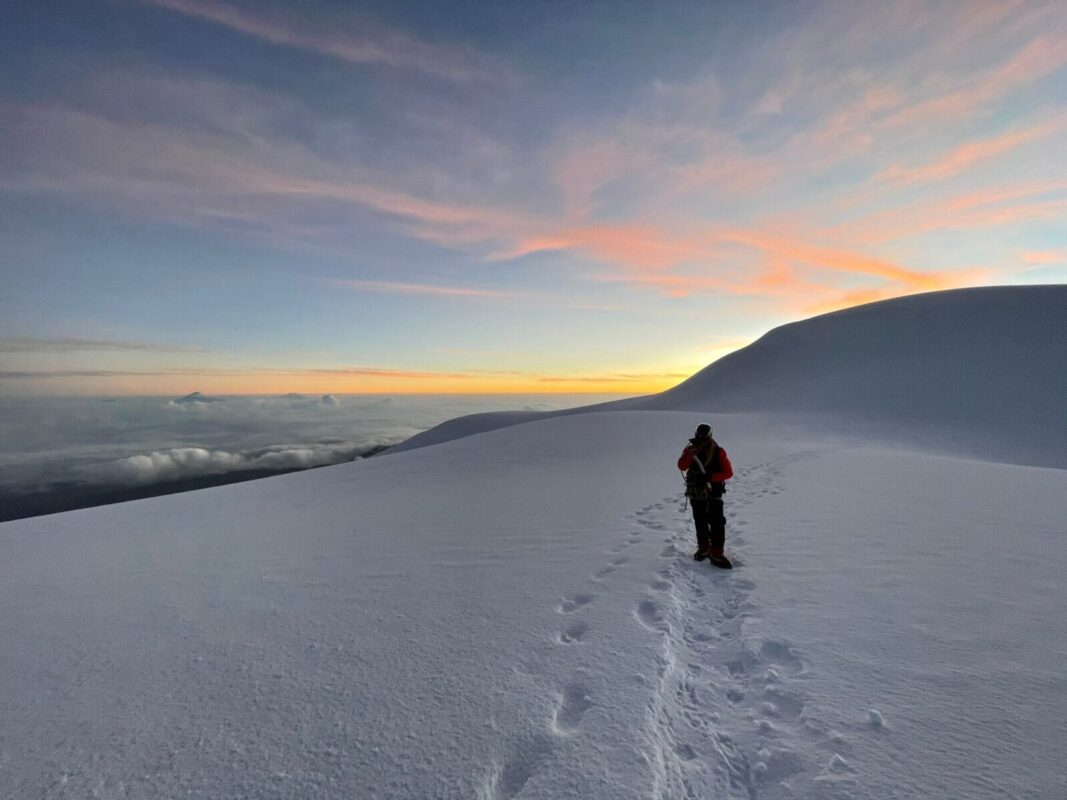
High-altitude cities like Quito, Cuenca, and Baños lie nestled in the inter-Andean valleys. In the mountains, weather patterns change dramatically by the hour rather than the month, earning Quito its moniker as the "Land of Eternal Spring."
The Andean dry season generally runs from June through September (often featuring a brief dry spell in July known as the veranillo de San Juan). During these months, travelers encounter crisp mornings, intense UV radiation at high elevations, and clear views of volcanic peaks. The wet season spans from October to May, characterized by sunny mornings followed by heavy, localized afternoon thunderstorms.
The Amazon Rainforest (El Oriente)
Ecuador’s eastern jungle region does not have a true dry season in the traditional sense, as precipitation falls year-round. However, distinct hydrological cycles exist. The relatively drier period occurs between December and February, when river levels drop slightly and hiking trails are somewhat more navigable. The heaviest rainfall typically arrives between March and August, causing rivers to swell and transforming parts of the forest floor into flooded ecosystems.
The Galápagos Islands
Located roughly 1,000 kilometers off the mainland coast, the Galápagos archipelago has two primary seasons dictated by ocean currents:
- Warm and Wet Season (January to May): Water temperatures peak, underwater visibility is exceptional for snorkeling with warm-water marine life, and skies see brief, heavy tropical showers followed by intense sunshine.
- Cool and Dry Season (June to December): The Humboldt Current brings cooler waters rich in nutrients. Air temperatures drop slightly, skies are often overcast, and seas can be choppy, but this period triggers massive seabird nesting and marine mammal activity.
Determining the Current Month’s Climatic Status
Because the current timeframe is 2026, looking at general monthly patterns helps establish what travelers and researchers can expect at any given point in the calendar year. Weather is inherently variable, but historical climatology provides reliable baselines for each quarter.
First Quarter (January to March)
During the early months of the year, the coastal lowlands and the Galápagos Islands are in the middle of their warm, rainy season. Afternoon rainstorms are frequent, but lush green landscapes dominate. In the Andean highlands, this period represents the height of the wet season, meaning daily rain gear is essential for visitors exploring historic colonial centers or trekking mountain trails.
Second Quarter (April to June)
April marks the tail end of the rainy season in the Andes and along the coast. By May and June, the transition into the dry season (verano) begins across the Sierra. Skies clear up significantly by June, and winds pick up in the highlands. On the coast, June marks the onset of the garúa season, bringing cooler, overcast days.
Third Quarter (July to September)
This window represents the true dry season across the Andean highlands and the coastal strip. July and August are peak months for mountain climbing, hiking the Quilotoa Loop, and exploring open-air markets. Clear mornings offer dramatic mountain vistas, though nighttime temperatures in high-altitude cities drop significantly.
Fourth Quarter (October to December)
October brings the return of transitional rains to the Andes, ending the dry months. November and December see variable weather patterns with increasing precipitation in the mountains, while the Amazon experiences the beginning of its drier window toward December. Coastal areas begin to see warmer air and ocean temperatures as the year closes out.
Practical Guidance for Travelers and Planners
Navigating Ecuador’s microclimates requires abandoning the expectation of a single national weather report. Packing strategies must account for altitude and geography rather than a generic seasonal checklist.
- Layering is Mandatory in the Andes: Regardless of whether it is the dry or wet season, high-altitude cities experience rapid temperature drops as soon as the sun sets. Thermal layers, fleece jackets, and windproof outer shells are essential year-round.
- Sun Protection is Crucial: Because Ecuador sits on the equator, the sun's rays strike the earth at a more direct angle. At high altitudes in the Sierra, UV radiation is extreme. Sunscreen with high SPF, polarized sunglasses, and wide-brimmed hats are required even on cloudy days.
- Flexible Itineraries: In the highlands and the Amazon, afternoon downpours are a standard part of daily life during the wet months. Outdoor activities should be scheduled for the morning hours when clear skies are most prevalent.
Frequently Asked Questions
Does Ecuador have winter and summer?
Ecuador does not have winter and summer in the astronomical sense. Instead, locals refer to the rainy season as invierno (winter) and the dry season as verano (summer). These seasons do not align with northern or southern hemisphere calendar norms and vary drastically depending on whether you are in the Andes, on the coast, or in the Amazon.
When is the best time of year to visit Ecuador?
The best time to visit depends entirely on the region you plan to explore. For the Andean highlands, June through September offers the driest and clearest weather. For the Galápagos Islands, January to May brings warm waters and sunny skies, while June to December offers cooler waters rich in marine life and active seabird populations.
Why is Quito called the "Land of Eternal Spring"?
Quito sits at an altitude of 2,850 meters (9,350 feet) near the equator, which keeps its daytime temperatures remarkably consistent throughout the entire year. Highs consistently hover around 20°C to 22°C (68°F to 72°F) every month, with nighttime lows dropping to around 10°C (50°F), preventing extreme seasonal temperature swings.
How does the equator affect Ecuador's weather?
Being on the equator means Ecuador receives approximately 12 hours of direct sunlight every day of the year, with virtually no seasonal variation in day length. Climate is driven primarily by altitude, wind patterns, and Pacific Ocean currents rather than the tilt of the Earth toward or away from the sun.
Do I need different clothes for different regions in Ecuador?
Yes. Packing for Ecuador requires preparing for multiple climates simultaneously. You will need lightweight tropical clothing for the coast and the Amazon, heavy fleece jackets and rain shells for the high Andes, and windbreakers if visiting coastal areas or the Galápagos during the cooler dry months.
Image Gallery