How to Convert Pacific Daylight Time to Central Time
Converting Pacific Daylight Time (PDT) to Central Time (CT) requires adding two hours to your local Pacific time. Because the Central time zone sits two hours ahead of the Pacific time zone, a meeting scheduled for 10:00 AM PDT transla...
Converting Pacific Daylight Time (PDT) to Central Time (CT) requires adding two hours to your local Pacific time. Because the Central time zone sits two hours ahead of the Pacific time zone, a meeting scheduled for 10:00 AM PDT translates directly to 12:00 PM CDT, making time conversion straightforward once you account for the offset.
Contents
Managing schedules across multiple geographical zones is a daily necessity for remote teams, logistics coordinators, financial markets participants, and travelers. When the United States and Canada observe daylight saving time, the Pacific zone operates on Pacific Daylight Time (UTC-7), while the Central zone operates on Central Daylight Time (UTC-5). Understanding the mechanical relationship between these two zones eliminates missed appointments, prevents scheduling errors, and ensures seamless coordination across long-distance communications.
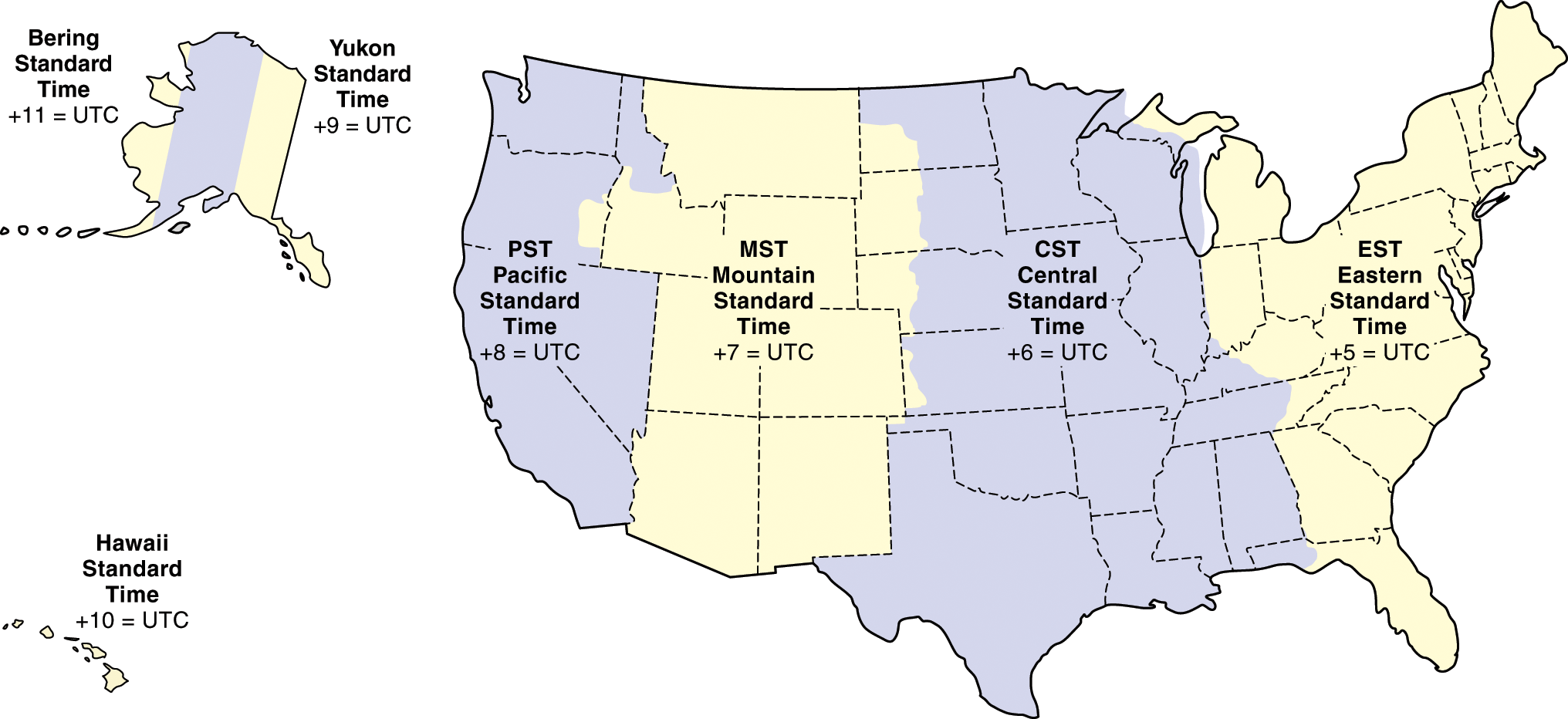
Understanding North American Time Zones
The North American time zone system partitions the continent into distinct vertical slices, each synchronized to Coordinated Universal Time (UTC). To convert times accurately, you must understand how these zones relate to one another and recognize the exact geographical boundaries and offsets that govern them.
The Pacific Time Zone (PT) covers the western coast of North America, including states like California, Washington, Oregon, and parts of Nevada and Idaho, alongside the province of British Columbia in Canada. During the warmer months, this region observes Pacific Daylight Time, shifting the baseline offset from UTC-8 to UTC-7.
Conversely, the Central Time Zone (CT) sits two hours ahead of the Pacific zone. It spans a vast central corridor of North America, encompassing major commercial hubs like Chicago, Dallas, Houston, Minneapolis, St. Louis, and New Orleans, as well as provinces like Manitoba and parts of Ontario in Canada. During daylight saving months, the Central zone operates on Central Daylight Time, shifting its baseline from UTC-6 to UTC-5. Because both zones observe daylight saving time concurrently under current U.S. federal law, the two-hour difference remains constant throughout the entire daylight saving period.
The Mathematical Conversion Formula
The conversion formula between Pacific Daylight Time and Central Time is fixed and relies entirely on a positive two-hour addition. Because the Earth rotates from west to east, locations situated further east experience sunrise, noon, and sunset earlier than locations to the west. Consequently, time increases as you move from west to east across the North American continent.
To convert a time from PDT to CT, take your starting hour in PDT and add two hours. If the calculation crosses the 12:00 threshold, you must also flip the meridian indicator from AM to PM, or vice versa.
| Pacific Daylight Time (PDT) | Central Daylight Time (CDT) | Mathematical Rule |
|---|---|---|
| 12:00 AM (Midnight) | 2:00 AM | Add 2 hours |
| 6:00 AM | 8:00 AM | Add 2 hours |
| 9:00 AM | 11:00 AM | Add 2 hours |
| 11:00 AM | 1:00 PM | Add 2 hours, flip AM to PM |
| 1:00 PM | 3:00 PM | Add 2 hours |
| 5:00 PM | 7:00 PM | Add 2 hours |
| 10:00 PM | 12:00 AM (Midnight) | Add 2 hours, advance calendar day |
When performing conversions that land near midnight, pay close attention to the calendar date. Adding two hours to 11:00 PM PDT on a Tuesday yields 1:00 AM CDT on a Wednesday. Failing to account for this date shift is one of the most common errors in cross-country scheduling.
Handling the 12-Hour and 24-Hour Clock Formats
Scheduling applications, transportation manifests, and military communications often rely on the 24-hour clock (commonly known as military time) to eliminate ambiguity between morning and evening hours. Converting PDT to CT using the 24-hour format follows the same fundamental rule of adding two hours, but the math changes slightly when crossing the midnight boundary.
Under the 24-hour system, hours run from 00:00 (midnight) to 23:11 PM. If you are converting 14:00 PDT (which is 2:00 PM), you simply add 200 hours to reach 16:00 CDT.
When your addition equals or exceeds 2400 hours, you must subtract 24 hours to reset the clock to the new day. For example, converting 23:00 PDT requires adding two hours, resulting in 25:00. Because a day only contains 24 hours, you subtract 24, leaving you with 01:00 CDT on the following calendar day. Mastering this minor adjustment prevents critical errors in aviation, freight shipping, and international project management.
Practical Steps for Cross-Zone Scheduling
Scheduling a meeting, webinar, or flight across the Pacific and Central zones requires a systematic approach to verify times before sending calendar invitations. Follow these steps to ensure absolute accuracy:
- Identify the Source Time: Confirm whether the stated time is explicitly in Pacific Daylight Time (PDT) or if the participants are assuming local time based on their physical location.
- Apply the Offset: Add exactly two hours to the Pacific time to determine the corresponding Central Time.
- Check the Date Boundary: Determine if adding those two hours pushes the time past midnight (12:00 AM). If it does, advance the meeting date by one calendar day.
- Account for Seasonal Transitions: Verify that both locations are actively observing daylight saving time. If your event falls outside the daylight saving period (typically from early November to mid-March), the zones shift to Pacific Standard Time (PST) and Central Standard Time (CST), though the two-hour mathematical offset remains identical.
- Use Integrated Tools: Set up digital calendar platforms, such as Google Calendar or Microsoft Outlook, to display multiple time zones side-by-side to automate future calculations.
Frequently Asked Questions
What is the exact time difference between PDT and CDT?
The time difference between Pacific Daylight Time and Central Daylight Time is always exactly two hours. Central Time is always two hours ahead of Pacific Time. If it is 1:00 PM PDT in Los Angeles, it is 3:00 PM CDT in Chicago.
Does the two-hour difference change during standard time?
No, the two-hour difference remains constant year-round in North America. When daylight saving time ends in the autumn, both zones transition simultaneously to Pacific Standard Time (PST) and Central Standard Time (CST), preserving the exact two-hour gap.
How do I convert 3:30 PM PDT to Central Time?
To convert 3:30 PM PDT, add two hours to the time. Three hours plus two hours equals 5:00 PM, keeping the minutes unchanged. Therefore, 3:30 PM PDT is 5:30 PM CDT.
What happens to the date when converting late-night Pacific times?
If you add two hours to a Pacific time that occurs at or after 10:00 PM, the resulting Central time will cross midnight into the next calendar day. For instance, 11:30 PM PDT on a Friday becomes 1:30 AM CDT on a Saturday.
Are there parts of the Pacific or Central zones that do not observe daylight saving time?
Yes. For example, the state of Arizona (except for the Navajo Nation) and the province of Saskatchewan do not observe daylight saving time. If you are scheduling with participants in these regions, you must verify their local time offsets manually, as their relationship to UTC shifts by one hour twice a year relative to zones that observe daylight saving changes.
Conclusion and Next Actions
Accurately converting Pacific Daylight Time to Central Time is a simple matter of adding two hours while remaining vigilant about calendar dates and seasonal transitions. To eliminate manual arithmetic in your daily workflow, configure your primary digital calendar to display dual time zones, or bookmark a reliable, time-zone-aware scheduling tool. Always confirm the exact date and time zone designations with your cross-country counterparts before finalizing critical deadlines or travel itineraries.
Image Gallery