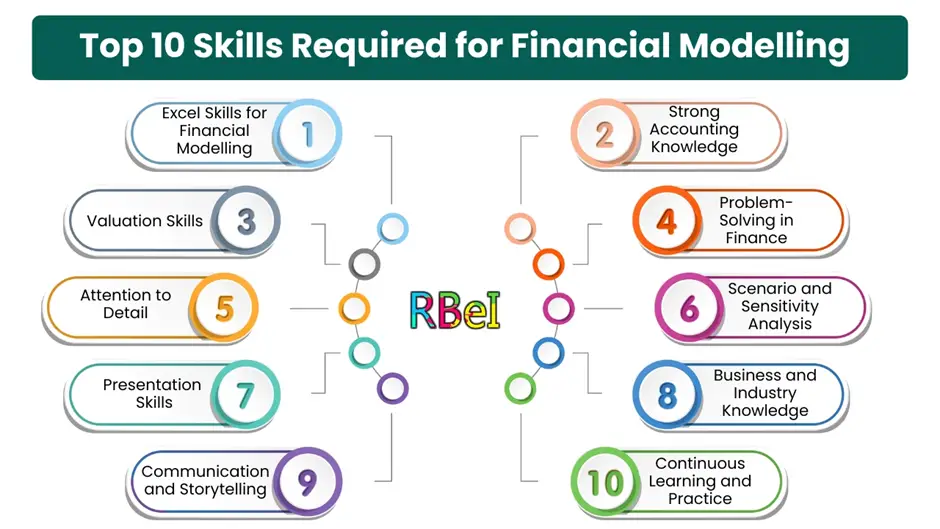
Core Skills Required for a Finance Analyst in 2026
To succeed as a finance analyst in 2026, you must master a dual-threat competency model: advanced technical proficiency in data science and financial modeling, alongside high-level soft skills like strategic storytelling and critical t...
To succeed as a finance analyst in 2026, you must master a dual-threat competency model: advanced technical proficiency in data science and financial modeling, alongside high-level soft skills like strategic storytelling and critical thinking. Mastery of tools like SQL, Python, and AI-driven forecasting has transitioned from "optional" to "essential" in the modern corporate landscape.
Contents
Financial analysts serve as the primary navigators for corporate decision-making. Whether working in investment banking, corporate FP&A (Financial Planning and Analysis), or private equity, their role involves interpreting historical data to predict future performance. As we operate in 2026, the volume of data available has increased exponentially, requiring analysts to be more than just "number crunchers"—they must be data architects who can translate complex datasets into actionable business strategies.
Technical Skills and Financial Proficiency
The bedrock of any finance analyst's career remains their technical capability. However, the definition of "technical" has expanded significantly over the last few years.
Advanced Financial Modeling
Financial modeling is the process of creating a summary of a company's expenses and earnings in the form of a spreadsheet. In 2026, a proficient analyst must go beyond simple three-statement models. You are expected to build dynamic models for Discounted Cash Flow (DCF) analysis, Leveraged Buyout (LBO) scenarios, and Mergers and Acquisitions (M&A).
The "How" behind this skill involves deep knowledge of how the Income Statement, Balance Sheet, and Cash Flow Statement interact. For instance, an analyst must understand how a change in depreciation expense flows through the income statement, impacts taxes, and is ultimately added back in the cash flow from operations while adjusting the book value of assets on the balance sheet. Accuracy in these linkages is what separates a junior clerk from a senior analyst.
Data Management and SQL
The era of receiving clean, small datasets in an email is over. Modern finance analysts frequently interact with massive data warehouses. SQL (Structured Query Language) is now a mandatory skill for extracting the specific data needed for analysis. Instead of waiting for the IT department to run a report, an analyst must be able to write queries to pull transactional data, filter it by region or product line, and join tables to find correlations between marketing spend and revenue growth.
Programming for Finance (Python and R)
While Excel remains a staple, Python has become the industry standard for automating repetitive tasks and performing complex statistical analysis. Analysts use Python libraries like Pandas for data manipulation and Scikit-learn for basic predictive modeling. In 2026, the ability to automate the monthly "actuals vs. budget" report using a Python script can save dozens of hours, allowing the analyst to focus on the "why" rather than the "how."
Foundational Knowledge of Accounting and Finance
Technical tools are useless if the user does not understand the underlying principles of finance and accounting.
Mastery of GAAP and IFRS
An analyst must be fluent in Generally Accepted Accounting Principles (GAAP) or International Financial Reporting Standards (IFRS), depending on their jurisdiction. Understanding revenue recognition rules, lease accounting (IFRS 16/ASC 842), and the treatment of intangible assets is critical. Without this foundation, an analyst might misinterpret a company’s healthy-looking cash flow as profitability when it might actually be driven by aggressive accounts payable management or the sale of long-term assets.
Capital Budgeting and Valuation
Understanding the time value of money is the most important conceptual skill in finance. An analyst must be able to calculate Net Present Value (NPV), Internal Rate of Return (IRR), and Weighted Average Cost of Capital (WACC). These metrics are the yardsticks used to decide whether a company should invest in a new factory, acquire a competitor, or buy back its own shares.
Soft Skills: The "Human" Element of Finance
As AI handles more of the raw data processing in 2026, the value of a finance analyst has shifted toward interpretation and communication.
Strategic Communication and Storytelling
Data is a means to an end. The ultimate goal of a finance analyst is to persuade stakeholders—be it the CFO, a board of directors, or a portfolio manager. This requires data storytelling. It is not enough to present a chart showing a 5% dip in margins; the analyst must explain that the dip was caused by supply chain disruptions in Southeast Asia and propose three quantified solutions to mitigate the risk in the next quarter.
Critical Thinking and Skepticism
A high-performing analyst maintains a level of "professional skepticism." When a department head submits a budget with a 20% projected growth rate, the analyst must look at historical trends, market saturation, and macroeconomic indicators to determine if that growth is realistic. This involves "triangulating" data from multiple sources to find the truth behind the numbers.
Industry-Specific Skill Requirements
The specific skills required can vary depending on the niche within finance. The following table compares the skill emphasis across different career paths in 2026.
| Skill / Domain | Corporate FP&A | Investment Banking | Asset Management |
|---|---|---|---|
| Primary Tool | Excel, Adaptive Insights | Excel, PowerPoint | Bloomberg Terminal, Python |
| Core Analysis | Variance Analysis, Budgeting | M&A Modeling, Pitchbooks | Equity Research, Risk Metrics |
| Data Source | Internal ERP (SAP/Oracle) | Public Filings, Capital IQ | Market Feeds, Alternative Data |
| Stakeholders | Internal Department Heads | External Clients (CEOs) | Portfolio Managers |
| Key Metric | Operating Margin, Burn Rate | Enterprise Value, EBITDA | Alpha, Sharpe Ratio, Beta |
Educational Background and Professional Certifications
While a bachelor’s degree in finance, economics, or accounting is the entry-level requirement, 2026's competitive market often demands more.
- Chartered Financial Analyst (CFA): Still the "gold standard" for investment management and equity research. It demonstrates a deep mastery of ethics, portfolio management, and advanced investment analysis.
- Certified Public Accountant (CPA): Essential for those leaning toward the accounting side of analysis or working in highly regulated industries.
- Financial Planning & Analysis (FPAC): This certification has gained significant traction for corporate analysts, focusing specifically on the budgeting and forecasting cycle.
- Data Science Certifications: Credentials from platforms like Coursera (via IBM or Google) or specialized "FinTech" bootcamps are now highly valued to prove Python and SQL proficiency.
The Role of AI and Automation in 2026
In 2026, finance analysts no longer spend their days manually entering data into cells. Generative AI and Machine Learning (ML) models are used to perform initial "sanity checks" on data and to generate draft commentary for financial reports.
An analyst's skill set must now include AI Prompt Engineering and Model Validation. You must know how to interact with AI tools to query financial documents (like 10-Ks) and how to verify that the AI hasn't produced a "hallucination" regarding a specific financial figure. Understanding the limitations of algorithmic forecasting—such as its inability to predict "Black Swan" geopolitical events—is a critical part of modern financial oversight.
Frequently Asked Questions
Do I need to be a math genius to be a finance analyst?
No, you do not need to be a "math genius" in the sense of solving complex calculus or theoretical physics. However, you must have a strong command of algebra and statistics. Most financial math involves understanding relationships between variables (e.g., how interest rates affect bond prices) and being able to spot numerical patterns. Precision and logic are more important than high-level theoretical mathematics.
Can I become a finance analyst if my degree is in a non-finance field?
Yes, it is possible, but it requires proactive skill-building. Many successful analysts come from engineering, mathematics, or even liberal arts backgrounds. If you have a non-finance degree, you should focus on obtaining a relevant certification (like the CFA Level 1) and demonstrating technical proficiency in Excel and SQL through a portfolio of projects.
Is Excel still relevant in 2026 with the rise of AI?
Absolutely. Excel remains the "lingua franca" of the business world. While Python and AI are used for heavy lifting and automation, Excel is where the final review and "what-if" scenarios usually happen. It is highly collaborative and provides a visual transparency that code-based tools sometimes lack. A finance analyst without expert-level Excel skills will struggle to integrate with existing corporate workflows.
What is the most important soft skill for a junior analyst?
Attention to detail is arguably the most critical soft skill for someone starting their career. In finance, a single misplaced decimal point or a broken link in a spreadsheet can lead to a multi-million dollar error. Building a reputation for "bulletproof" work in your first two years is the fastest way to gain the trust of senior leadership.
How has the role changed compared to five years ago?
The role has moved from descriptive (what happened?) to prescriptive (what should we do?). Five years ago, analysts spent 80% of their time collecting and cleaning data. In 2026, thanks to better integration tools and AI, analysts spend 80% of their time on interpretation, strategy, and advising the business on risk and opportunity.
Practical Recommendation for Aspiring Analysts
If you are looking to enter or advance in this field in 2026, your immediate next step should be to bridge the gap between traditional finance and data science. Begin by mastering Power Query within Excel to handle data transformation, then progress to learning basic SQL for data extraction. Once comfortable with the data flow, enroll in a Python for Finance course to learn how to automate your workflows. Combining these modern technical skills with a traditional certification like the CFA or FPAC will make you an indispensable asset in any financial organization.
Image Gallery