Understanding the DB Internet for IoT: Architecture, Protocols, and Implementation
The database internet for the Internet of Things (IoT) refers to the specialized data storage, synchronization, and cloud networking architectures designed to manage, query, and process the massive influx of telemetry and event streams...
The database internet for the Internet of Things (IoT) refers to the specialized data storage, synchronization, and cloud networking architectures designed to manage, query, and process the massive influx of telemetry and event streams generated by connected devices.
Contents
Introduction to the Database Internet for IoT
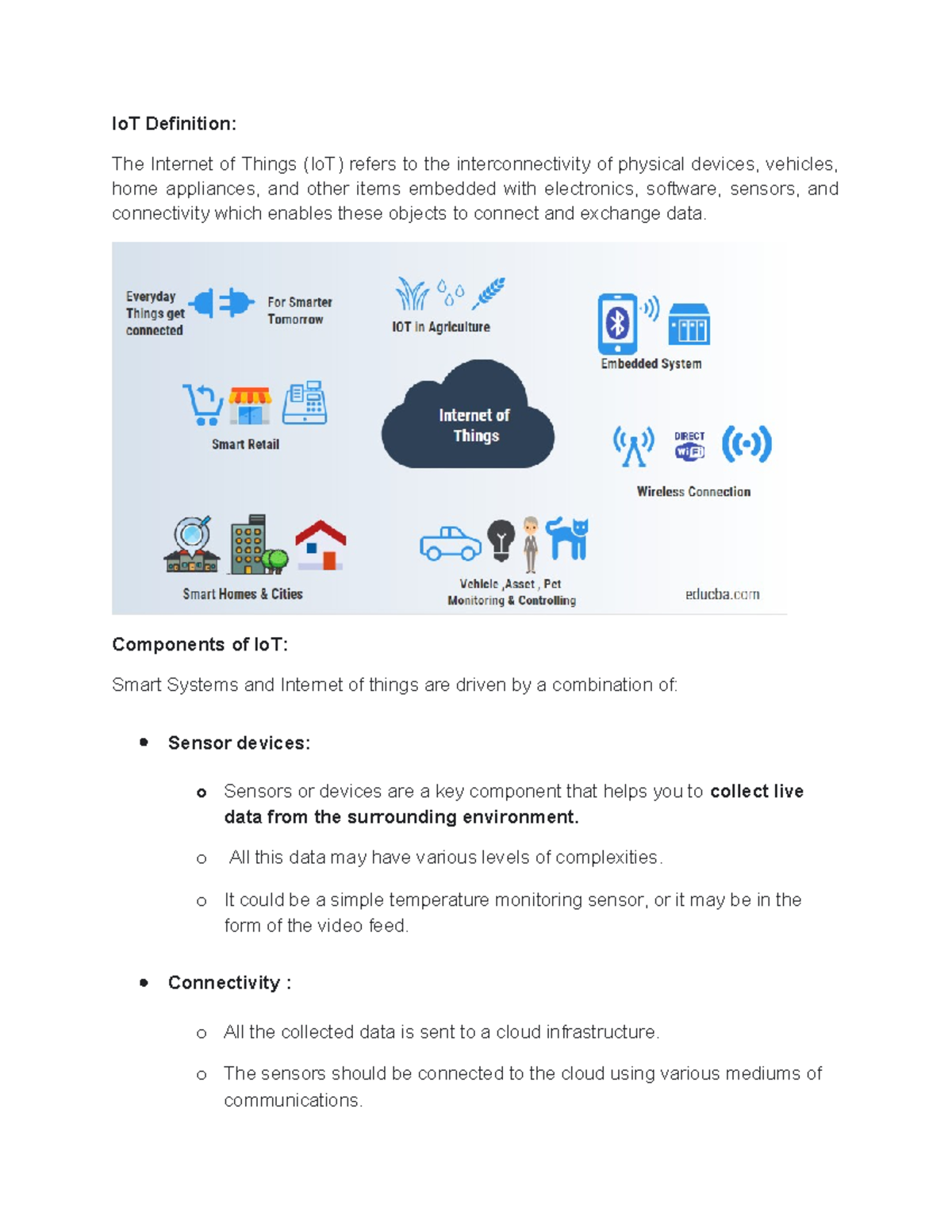
The proliferation of smart sensors, industrial automation machinery, connected vehicles, and consumer electronics has fundamentally transformed how organizations ingest and utilize information. Traditional database management systems (DBMS), optimized for transactional enterprise software or localized reporting, frequently struggle with the sheer velocity, variety, and volume of machine-generated telemetry. To address this gap, engineers rely on the concept of the "database internet for IoT"—a distributed, cloud-integrated ecosystem of specialized databases, message brokers, time-series engines, and edge-computing nodes that act as the backbone for smart infrastructure.
Understanding this architecture requires looking past standard web applications. An IoT deployment does not typically process isolated user clicks or manual database entries. Instead, it handles continuous streams of structured, semi-structured, and unstructured metrics originating from geographically dispersed edge devices. These devices operate under strict power, bandwidth, and latency constraints. Consequently, the supporting database infrastructure must provide high write throughput, efficient compression, multi-region replication, and seamless integration with stream-processing frameworks.
Core Architecture of IoT Data Management
The architectural pipeline of an IoT data system is distinct from standard web application stacks. It bridges physical hardware sensors with high-performance cloud storage and analytics engines.
- [IoT Devices / Sensors]
- (MQTT / CoAP / HTTPS)
- [Edge Gateway / Message Broker]
- (Stream Ingestion)
- [Time-Series / Distributed DB]
- [Analytics & Visualization Layer]
The Ingestion Layer and Edge Caching
Before data ever touches a persistent database, it must traverse a network topology that often includes local gateways, cellular networks, or low-power wide-area networks (LPWAN). Devices rarely write directly to a cloud database over a standard SQL connection due to latency, connection drops, and security risks. Instead, they publish telemetry to an intermediate message broker using lightweight machine-to-machine protocols.
At the edge, local caching and buffering protect against intermittent network connectivity. If a remote turbine or agricultural sensor loses its cellular link, local storage mechanisms temporarily retain the data until synchronization with the central database internet is re-established.
Database Engines Tailored for IoT Workloads
Standard relational databases (RDBMS) utilize row-oriented storage models that scale vertically. While effective for relational integrity, they incur heavy performance penalties when forced to ingest millions of discrete sensor readings per second.
Modern IoT architectures rely heavily on Time-Series Databases (TSDBs) and distributed NoSQL systems. Time-series databases—such as InfluxDB, TimescaleDB, and QuestDB—are purpose-built to handle timestamped data efficiently. They leverage specialized compression algorithms, columnar storage formats, and automatic data retention policies (downsampling and expiration) to maintain predictable query performance over multi-year datasets.
Key Protocols and Network Considerations
The "internet" portion of the database internet for IoT depends heavily on efficient networking protocols designed to bridge constrained hardware with cloud storage backends.
Lightweight Protocols
- MQTT (Message Queuing Telemetry Transport): A publish-subscribe network protocol that sits on top of TCP/IP. It is designed for resource-constrained devices and unreliable networks, utilizing a minimal header footprint to reduce battery and bandwidth consumption.
- CoAP (Constrained Application Protocol): A specialized web transfer protocol for use with constrained nodes and constrained networks, mirroring HTTP semantics (GET, POST, PUT, DELETE) over UDP.
- HTTPS and WebSockets: Frequently used for devices with higher power budgets or when real-time bidirectional streaming is mandatory between the client device and the cloud ingestion service.
Database Connectivity and Security
Exposing database ports directly to the open internet is a critical security vulnerability. IoT data pipelines implement secure tunneling, mutual TLS (mTLS) authentication, and API gateways to ensure that telemetry data is encrypted in transit and ingested via authenticated endpoints before reaching the primary storage cluster.
Comparative Analysis of IoT Storage Solutions
Selecting the appropriate database technology depends on workload characteristics, data schemas, and query patterns. The table below outlines the primary database paradigms utilized in IoT architectures.
| Database Paradigm | Primary Use Case | Strengths | Limitations |
|---|---|---|---|
| Time-Series (TSDB) | High-frequency metric collection (temperature, vibration, energy usage) | Exceptional write throughput, advanced downsampling, efficient columnar compression | Less effective for complex relational joins across unstructured metadata |
| Distributed NoSQL | Device registry, configuration management, sporadic event logs | Horizontal scalability, flexible schemas, high availability | Weak transactional consistency guarantees (eventual consistency) |
| Relational (RDBMS) | Billing, user management, strict transactional asset tracking | ACID compliance, mature tooling, powerful relational queries | High overhead and performance degradation under massive write loads |
| Edge/Embedded DB | Local buffering on gateways and microcontrollers | Operates offline, extremely low memory footprint, minimal dependencies | Limited storage capacity, restricted querying capabilities |
Operational Challenges and Common Pitfalls
Deploying and scaling a database infrastructure for connected devices introduces unique engineering hurdles that require careful planning and monitoring.
Data Growth and Storage Costs
IoT deployments generate exponential volumes of data. Storing raw, uncompressed telemetry indefinitely leads to prohibitive cloud storage and retrieval costs. Organizations must implement effective data retention lifecycles. This involves storing high-resolution data for immediate anomaly detection, while automatically aggregating older data into downsampled summaries or migrating cold data to cost-effective object storage tiers (such as Amazon S3 or Google Cloud Storage).
Schema Evolution
As IoT hardware fleets expand, firmware updates introduce new sensor metrics, changed diagnostic fields, or modified data types. Rigid database schemas cause ingestion pipelines to break when unexpected payloads arrive. Utilizing semi-structured data formats like JSON within adaptable database schemas or employing schema-on-read architectures helps mitigate this friction.
High Availability and Partition Tolerance
In mission-critical deployments—such as smart grids, medical monitoring, or industrial manufacturing—database downtime directly halts operational visibility. Architectures must be geographically distributed and configured with automatic failover mechanisms to handle network partitions and cloud provider outages without data loss.
Frequently Asked Questions
Why can't standard relational databases handle IoT workloads?
Standard relational databases use row-based storage engines optimized for transactional updates and complex cross-table joins. IoT workloads are characterized by massive write velocity and append-only timestamped metrics. Relational databases quickly encounter performance bottlenecks, index bloat, and storage inefficiencies when handling millions of concurrent sensor writes without specialized time-series optimizations.
What is the role of edge computing in the IoT database architecture?
Edge computing processes data locally on gateways or microcontrollers before transmitting it to the cloud. This reduces network bandwidth consumption, lowers latency for critical safety responses, and provides local caching so that data is not lost during temporary internet outages.
How do time-series databases handle older data to save space?
Time-series databases utilize downsampling and retention policies. Downsampling aggregates high-frequency data points (e.g., every second) into broader intervals (e.g., hourly or daily averages) over time, while retention policies automatically purge raw, outdated data once it is no longer required for operational analysis.
Is MQTT used directly to write to databases?
No. MQTT brokers receive messages from devices, but they do not act as databases. Typically, a stream-processing bridge or integration service (such as AWS IoT Core Rules or an Apache Kafka connector) consumes the MQTT messages from the broker and writes them into the persistent time-series or NoSQL database.
Next Actions for Implementation
To successfully build or optimize a database architecture for an IoT ecosystem, start by auditing your current telemetry ingestion rates, device payload sizes, and network reliability constraints. Define clear data retention policies before launching large-scale deployments to control storage costs. Finally, prototype your workload using a dedicated time-series or distributed database environment to benchmark write throughput and query response times under simulated peak load conditions.
Image Gallery