The Comprehensive Guide to the 5-Step Revenue Recognition Model
The 5-step revenue recognition model is the foundational framework established under ASC 606 (FASB) and IFRS 15 (IASB) to standardize how businesses account for revenue from contracts with customers. This model requires entities to ide...
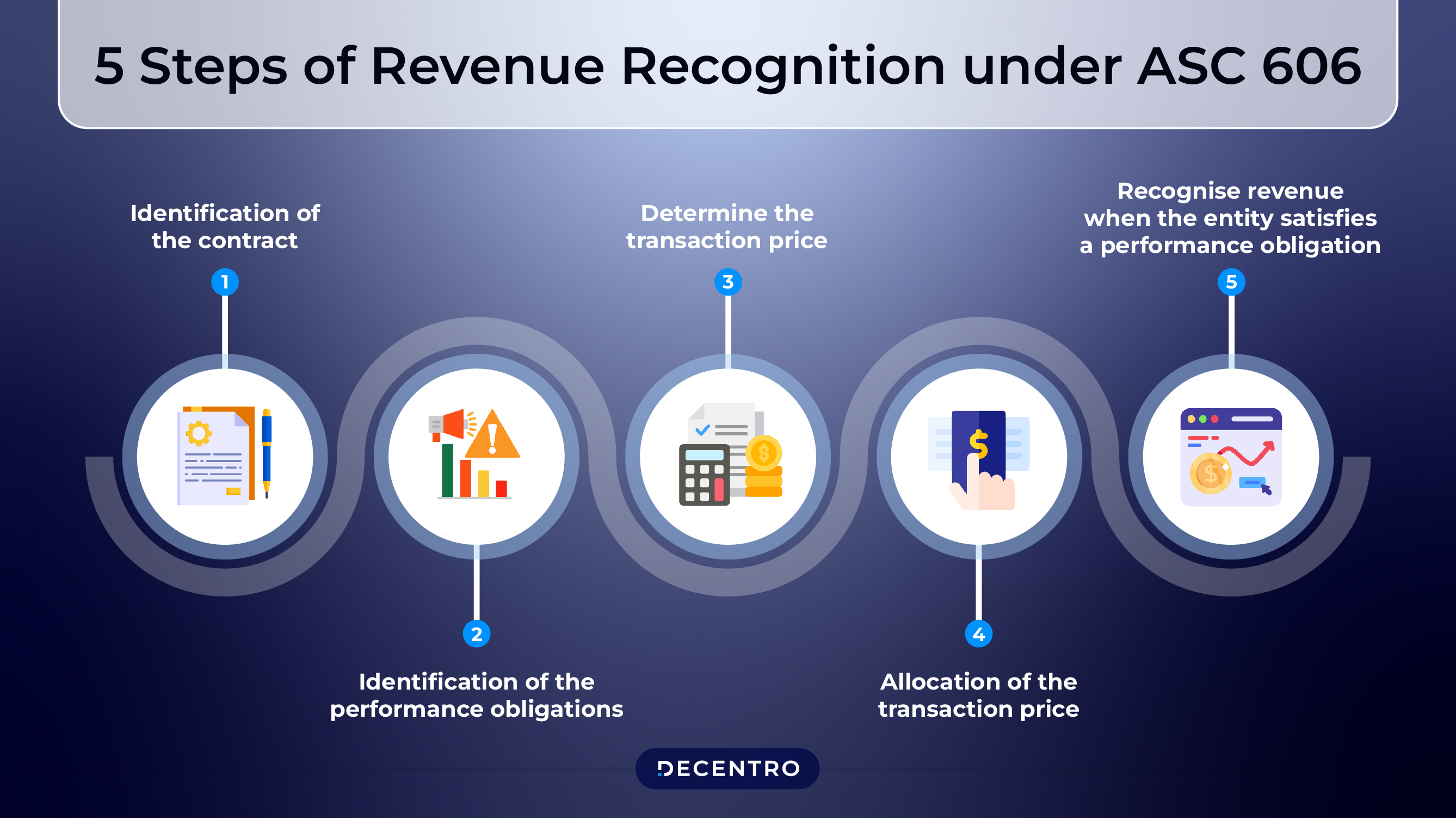
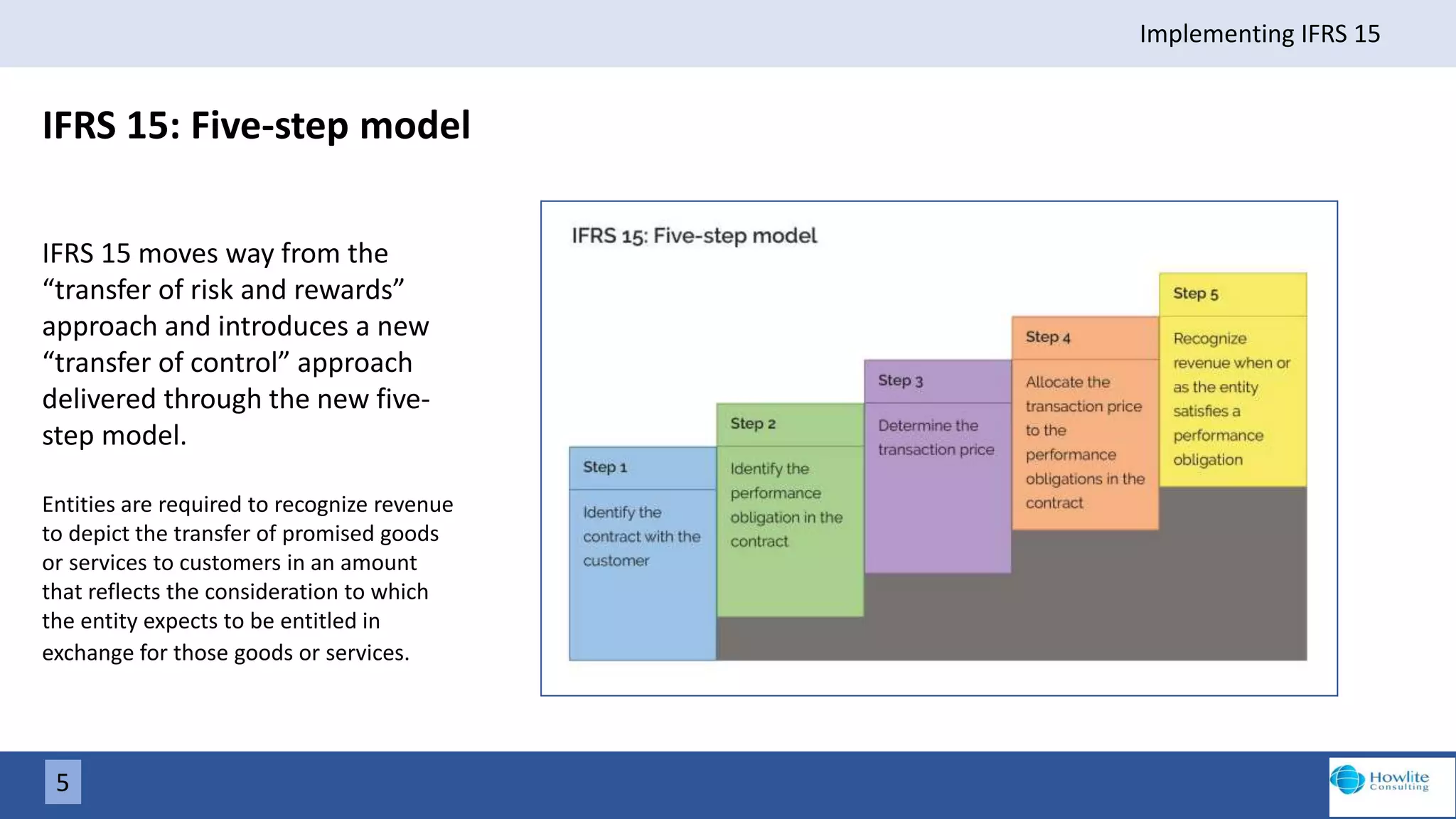
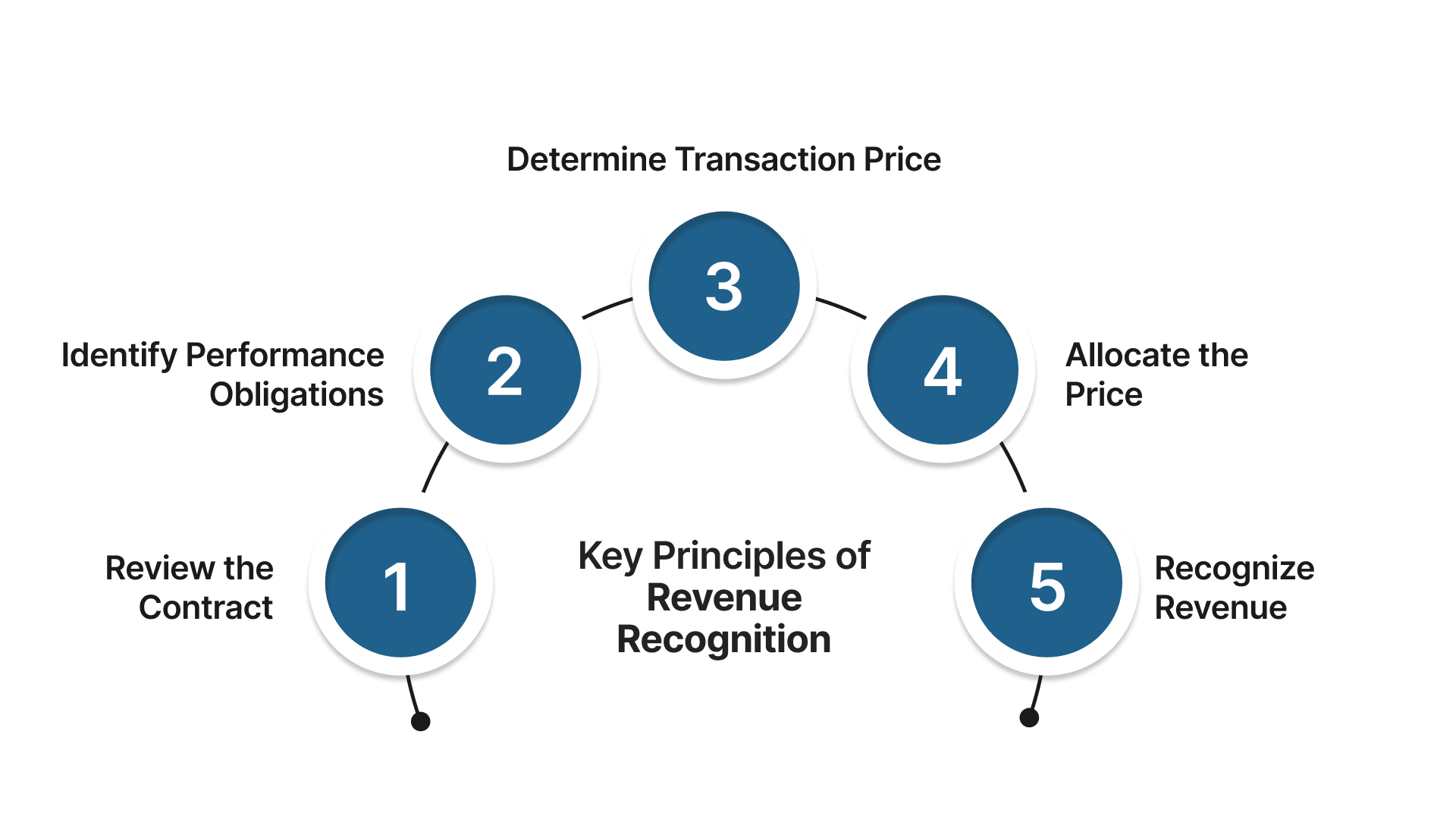
The 5-step revenue recognition model is the foundational framework established under ASC 606 (FASB) and IFRS 15 (IASB) to standardize how businesses account for revenue from contracts with customers. This model requires entities to identify the contract, separate performance obligations, determine and allocate the transaction price, and recognize revenue only when control of the promised goods or services is transferred.
Contents
Since the converged standards became mandatory for public and private entities, the 5-step model has transformed financial reporting from a "rules-based" approach to a "principle-based" methodology. By 2026, this framework has become deeply integrated into enterprise resource planning (ERP) systems and automated revenue engines, yet the underlying professional judgment required for each step remains critical for compliance and audit readiness.
Note: This article provides general educational information regarding accounting standards. It does not constitute formal financial, legal, or tax advice. Organizations should consult with certified public accountants (CPAs) or specialized financial advisors to address specific jurisdictional requirements or complex contract structures.
Understanding the Framework: ASC 606 and IFRS 15
The core principle of the revenue recognition standard is that an entity should recognize revenue to depict the transfer of promised goods or services to customers in an amount that reflects the consideration to which the entity expects to be entitled. This approach eliminated many industry-specific guidelines, creating a unified language for financial analysts and stakeholders.
As of 2026, the global business landscape heavily utilizes hybrid subscription models, consumption-based pricing, and multi-element bundles. The 5-step model provides the necessary structure to deconstruct these complex transactions into clear, reportable events.
Step 1: Identify the Contract with a Customer
The process begins by determining whether a valid contract exists for accounting purposes. Under the 5-step model, a contract is an agreement between two or more parties that creates enforceable rights and obligations.
Criteria for a Valid Contract
For a contract to fall within the scope of the revenue recognition standard, it must meet five specific criteria:
- Approval and Commitment: All parties have approved the contract (in writing, orally, or per customary business practices) and are committed to performing their obligations.
- Identification of Rights: Each party’s rights regarding the goods or services to be transferred can be clearly identified.
- Payment Terms: The payment terms for the goods or services can be identified.
- Commercial Substance: The risk, timing, or amount of the entity’s future cash flows is expected to change as a result of the contract.
- Collectibility: It is probable that the entity will collect substantially all of the consideration to which it will be entitled.
Contract Modifications
In many industries, contracts are frequently modified. A modification exists when the parties approve a change in the scope or price of a contract. In 2026, many SaaS and professional services firms handle modifications by determining if the change adds "distinct" goods or services at their standalone selling prices. If it does, the modification is treated as a separate contract. If not, it may require a cumulative catch-up adjustment or a prospective transition.
Step 2: Identify the Performance Obligations
Once a contract is established, the entity must identify all "performance obligations." A performance obligation is a promise to transfer a good or service (or a bundle of goods/services) to the customer.
The "Distinct" Requirement
A good or service is considered distinct if it meets two conditions:
- Capable of being distinct: The customer can benefit from the good or service on its own or together with other resources readily available to them.
- Distinct within the context of the contract: The promise to transfer the good or service is separately identifiable from other promises in the contract.
If a promise is not distinct (for example, a software license that requires significant customization to function), it is combined with other promised goods or services until a distinct bundle is identified. This prevents companies from "cherry-picking" revenue recognition for components that are integral to a single solution.
Series of Distinct Goods or Services
For recurring services, such as monthly cloud hosting or janitorial services, the standard allows for a "series" of distinct services to be treated as a single performance obligation if they are substantially the same and have the same pattern of transfer over time.
Step 3: Determine the Transaction Price
The transaction price is the amount of consideration an entity expects to receive in exchange for transferring promised goods or services. This is not always the "sticker price" found on the invoice.
Variable Consideration
One of the most complex aspects of Step 3 is estimating variable consideration. This includes discounts, rebates, refunds, credits, price concessions, incentives, or performance bonuses. Entities must estimate these amounts using either:
- The Expected Value Method: The sum of probability-weighted amounts in a range of possible outcomes.
- The Most Likely Amount: The single most likely amount in a range of possible outcomes (best for contracts with only two possible outcomes, like a binary bonus).
The Constraint on Variable Consideration
The standard includes a "constraint" to prevent over-recognition of revenue. An entity can only include variable consideration in the transaction price to the extent that it is highly probable that a significant reversal in the amount of cumulative revenue recognized will not occur when the uncertainty is resolved.
Significant Financing Components
If the timing of payments provides the customer or the entity with a significant benefit of financing (e.g., payment due two years after delivery), the entity must adjust the promised amount of consideration for the effects of the time value of money.
Step 4: Allocate the Transaction Price
For contracts with multiple performance obligations, the total transaction price must be allocated to each obligation in an amount that depicts the consideration the entity expects to be entitled to in exchange for satisfying each obligation.
Standalone Selling Price (SSP)
The allocation is typically based on the relative Standalone Selling Price (SSP) of each performance obligation. The SSP is the price at which an entity would sell a promised good or service separately to a customer.
If the SSP is not directly observable, the entity must estimate it using one of the following methods:
- Adjusted Market Assessment Approach: Evaluating the market in which it sells goods or services and estimating the price that a customer in that market would be willing to pay.
- Expected Cost Plus a Margin Approach: Forecasting expected costs of satisfying a performance obligation and then adding an appropriate margin.
- Residual Approach: Subtracting the sum of the observable SSPs of other goods or services in the contract from the total transaction price (only permitted in limited circumstances where the selling price is highly variable or uncertain).
Step 5: Recognize Revenue as Obligations are Satisfied
Revenue is recognized when (or as) the entity satisfies a performance obligation by transferring a promised good or service to a customer. Transfer occurs when the customer obtains control of that asset.
Point in Time vs. Over Time
A performance obligation can be satisfied either at a point in time (common for physical products) or over time (common for services and subscriptions).
Recognition Over Time occurs if one of the following is met:
- The customer simultaneously receives and consumes the benefits provided by the entity’s performance.
- The entity’s performance creates or enhances an asset that the customer controls as the asset is created or enhanced.
- The entity’s performance does not create an asset with an alternative use to the entity, and the entity has an enforceable right to payment for performance completed to date.
Measuring Progress
For obligations satisfied over time, the entity must choose a consistent method to measure progress:
- Output Methods: Based on direct measurements of the value to the customer (e.g., units produced, milestones reached).
- Input Methods: Based on the entity’s efforts or inputs to the satisfaction of the obligation (e.g., labor hours, costs incurred).
Summary of the 5-Step Model
| Step | Focus Area | Key Decision Point |
|---|---|---|
| 1. Identify Contract | Agreement Validity | Are there enforceable rights and probable collectibility? |
| 2. Identify Obligations | Deliverables | Are the goods or services "distinct" and separable? |
| 3. Determine Price | Consideration | Are there variable amounts, rebates, or financing components? |
| 4. Allocate Price | Relative Value | What is the Standalone Selling Price (SSP) for each obligation? |
| 5. Recognize Revenue | Transfer of Control | Is control transferred at a point in time or over time? |
Common Challenges in 2026 Implementation
As business models evolve, applying the 5-step model remains a dynamic challenge. In 2026, three areas specifically require high-level technical scrutiny:
- Consumption-Based Pricing: Popular in cloud computing, this often blurs the line between Step 3 and Step 5. If a customer pays purely based on usage, the transaction price may fluctuate daily, requiring sophisticated real-time allocation and recognition logic.
- Material Rights (Option for Additional Goods): When a contract gives a customer the option to acquire additional goods or services at a discount (e.g., loyalty points or renewal discounts), that option may be a separate performance obligation if it provides a "material right."
- Principal vs. Agent Considerations: With the rise of marketplace platforms, companies must determine if they are the "principal" (controlling the good/service before transfer) and should recognize gross revenue, or an "agent" (arranging for another party to provide the good/service) and should recognize only the commission.
Frequently Asked Questions
What happens if the contract criteria in Step 1 are not met?
If a contract does not meet the criteria in Step 1, any consideration received from the customer is generally recognized as a liability (deferred revenue) until either the criteria are met or the contract is terminated and the consideration received is non-refundable.
How do I determine the Standalone Selling Price if I never sell the product alone?
In 2026, most firms use the Expected Cost Plus a Margin approach or the Adjusted Market Assessment. If you have a range of prices, you might use the midpoint or a "band" of prices to establish the SSP. The residual approach is only used as a last resort when the selling price is highly volatile.
Can revenue be recognized before a contract is signed?
Generally, no. Under ASC 606 and IFRS 15, a contract must be approved and enforceable. Revenue recognized without a valid Step 1 contract would be a significant audit risk and a violation of the accounting standards.
What is the difference between "Control" and "Risks and Rewards"?
Under older standards, revenue was often recognized based on the transfer of "risks and rewards." The current 5-step model uses "control" as the primary indicator. While risks and rewards are still considered, they are now just one of several indicators that control has passed to the customer.
How are contract acquisition costs handled?
While not one of the five steps, ASC 340-40 requires the incremental costs of obtaining a contract (like sales commissions) to be capitalized as an asset if the entity expects to recover those costs and the amortization period is more than one year.
Strategic Recommendation for Businesses
To ensure compliance with the 5-step revenue recognition model in 2026, organizations should prioritize the integration of their CRM and accounting systems. Manual spreadsheet tracking is increasingly prone to error given the complexity of modern variable consideration and SSP allocations. We recommend conducting an annual "contract audit" to ensure that new product launches or pricing changes are mapped correctly to each of the five steps before they hit the general ledger.
Image Gallery