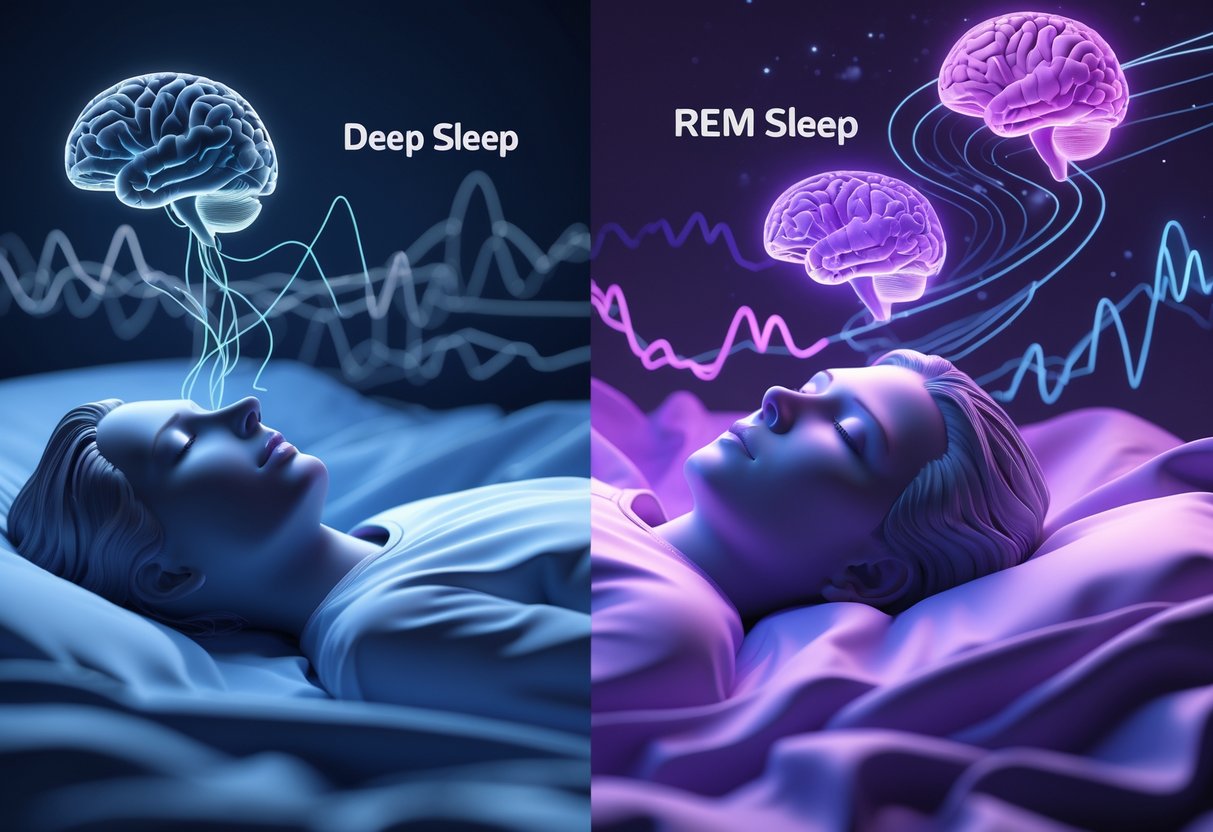
What Are the Signs of REM Sleep? Identifying the Markers of Dreaming
The primary signs of REM (Rapid Eye Movement) sleep include rapid side-to-side movement of the eyes, temporary paralysis of the voluntary muscles (muscle atonia), increased brain activity similar to wakefulness, and fluctuations in hea...
The primary signs of REM (Rapid Eye Movement) sleep include rapid side-to-side movement of the eyes, temporary paralysis of the voluntary muscles (muscle atonia), increased brain activity similar to wakefulness, and fluctuations in heart rate and breathing. These physiological markers indicate the most mentally active stage of the sleep cycle.
Contents
Understanding the Physiology of REM Sleep
Rapid Eye Movement (REM) sleep is often referred to as "paradoxical sleep" because of the striking contrast between the body’s physical state and the brain's internal activity. While the body remains mostly immobile, the brain is nearly as active as it is during the day. In a healthy adult, REM sleep typically accounts for 20% to 25% of the total sleep duration, occurring in cycles that lengthen as the night progresses.
By 2026, sleep science has increasingly focused on the neurological "switches" in the brainstem that trigger these signs. Understanding these markers is essential for distinguishing between healthy rest and potential sleep disorders. When we look for the signs of REM sleep, we are looking for a specific set of biological signals that confirm the brain is performing critical functions like memory consolidation and emotional processing.
1. Rapid Eye Movement (Saccadic Activity)
The namesake of this sleep stage is the most visible sign. During REM, the eyes move rapidly and dart back and forth beneath the eyelids. Unlike the slow, rolling movements seen in the early stages of non-REM (NREM) sleep, these movements are jerky and saccadic.
Researchers at institutions like the National Institutes of Health (NIH) have found that these eye movements often correspond to the visual activity occurring within a dream. If a person is "looking" at an object in their dream, their physical eyes may track that movement. This phenomenon suggests a high level of integration between the visual cortex and the motor systems, even while the rest of the body is suppressed.
2. Muscle Atonia (Temporary Paralysis)
Perhaps the most significant safety feature of REM sleep is muscle atonia. This is the temporary paralysis of the arms, legs, and trunk muscles. It occurs because the brain sends signals to the spinal cord to inhibit motor neurons, effectively "shutting off" the body's ability to move.
Why Muscle Atonia is Necessary:
- Safety: Atonia prevents individuals from "acting out" their dreams. Without it, the vivid scenarios experienced during REM could lead to physical injury to the sleeper or their partner.
- Neurological Control: This process is regulated by the pons and the medulla in the brainstem. Specifically, neurotransmitters like GABA and glycine are released to suppress muscle activity.
- Exceptions: It is important to note that the diaphragm (the muscle responsible for breathing) and the extraocular muscles (which move the eyes) are spared from this paralysis, allowing for continued respiration and the characteristic eye movements.
3. Heightened Brain Activity (The Paradoxical State)
If you were to look at an Electroencephalogram (EEG) of someone in REM sleep, you might mistake it for a person who is wide awake. During this stage, brain waves shift from the slow, high-amplitude delta waves seen in deep NREM sleep to fast, low-amplitude waves.
These waves, known as theta and beta waves, indicate that the brain is highly engaged. The amygdala, which processes emotions, and the hippocampus, which handles memory, are particularly active. This high level of metabolic activity is the reason why REM is the primary stage for vivid, narrative-driven dreaming. The prefrontal cortex—the area responsible for logic and executive function—is less active, which explains why dreams often lack logical consistency.
4. Autonomic Nervous System Fluctuations
Unlike the steady, rhythmic patterns found in deep NREM sleep, REM sleep is characterized by "autonomic instability." This means that the body’s involuntary systems become somewhat erratic.
- Heart Rate: Your pulse may spike or drop suddenly, reflecting the emotional intensity of the dream state.
- Respiration: Breathing becomes faster, shallower, and more irregular. It is not uncommon for a sleeper to experience brief pauses in breathing or sudden gasps during intense dream sequences.
- Blood Pressure: Much like the heart rate, blood pressure fluctuates during REM, sometimes reaching levels seen during physical exertion.
5. Changes in Thermoregulation
A lesser-known but scientifically vital sign of REM sleep is the suspension of the body’s internal temperature control. During NREM sleep, the body maintains a set temperature. However, upon entering REM, the body moves toward "poikilothermia," a state where it no longer actively regulates temperature through shivering or sweating as effectively.
This is why the environment—specifically the room temperature—is so critical for maintaining REM sleep. If the room is too hot or too cold, the brain may trigger an awakening to regain control over body temperature, thereby cutting the REM cycle short.
Comparing REM vs. Non-REM Sleep Stages
To better understand the signs of REM, it is helpful to compare them to the other stages of the sleep cycle. The following table highlights the physiological differences across the four main stages of sleep as defined in clinical settings.
| Feature | Stage 1 (N1) | Stage 2 (N2) | Stage 3 (N3 - Deep) | REM Sleep |
|---|---|---|---|---|
| Brain Waves | Theta waves (Slow) | Spindles & K-complexes | Delta waves (Slowest) | Beta/Theta (Fast) |
| Eye Movement | Slow, rolling | Rare | None | Rapid, darting |
| Muscle Tone | Reduced | Low | Low | Atonia (Paralysis) |
| Heart Rate | Slowing | Steady | Slowest | Irregular/Fast |
| Dreaming | Fragmented | Rare | Low/Conceptual | Vivid/Narrative |
| Purpose | Transition | Memory/Data sorting | Physical repair | Emotional/Cognitive |
How to Detect the Signs of REM Sleep at Home
While a clinical polysomnogram (sleep study) is the only way to verify REM sleep with 100% accuracy, modern technology and simple observation can provide significant clues.
Wearable Technology
By 2026, consumer-grade wearables like smartwatches and rings have reached high levels of accuracy in estimating sleep stages. These devices typically use photoplethysmography (PPG) to monitor heart rate variability (HRV) and accelerometers to detect movement. Because REM is marked by high HRV and a complete lack of limb movement, algorithms can identify REM cycles with reasonable precision.
External Observation
If you are observing a sleeping partner, you can look for:
- Eyelid twitching: Subtle movement under the lids.
- Facial twitching: While the large muscles are paralyzed, small muscles in the face or fingers may occasionally "break through" the atonia.
- Irregular breathing: Watching for a change from deep, steady breaths to shallow, erratic ones.
Factors That Mask or Suppress the Signs of REM
Certain substances and conditions can prevent the body from entering REM sleep or alter its physical signs. This is critical because "REM rebound" can occur when the body is deprived of this stage, leading to exceptionally intense and often disturbing signs when sleep is finally achieved.
- Alcohol: While alcohol helps with sleep onset, it significantly suppresses REM sleep in the first half of the night. As the alcohol wears off, the brain often enters a "rebound" state with vivid nightmares.
- Medications: Many antidepressants (SSRIs and SNRIs) are known to suppress REM sleep. In some cases, they may reduce the signs of REM to the point where they are nearly undetectable on an EEG.
- Sleep Apnea: Obstructive sleep apnea often occurs most severely during REM sleep because the muscle atonia includes the muscles of the throat, leading to airway collapse and frequent awakenings that "snip" the REM cycle.
Clinical Abnormalities: When Signs Fail
Sometimes, the signs of REM sleep do not function correctly, leading to clinical disorders. The most notable is REM Sleep Behavior Disorder (RBD). In individuals with RBD, the muscle atonia (paralysis) is incomplete or absent. This causes the individual to physically act out their dreams—sometimes violently—leading to injury.
In 2026, clinical guidelines from organizations such as the American Academy of Sleep Medicine (AASM) emphasize that a lack of muscle atonia during REM is often a precursor to neurodegenerative conditions, making the observation of REM signs a vital diagnostic tool.
Frequently Asked Questions
Can you have REM sleep without the eyes moving?
While eye movement is a hallmark sign, it does not happen continuously throughout the entire REM stage. REM is divided into "phasic" and "tonic" periods. The eye movements occur during the phasic bursts, while the tonic periods are quieter, though the brain activity and muscle atonia remain present.
How long does it take to show signs of REM after falling asleep?
Usually, it takes about 90 minutes to reach the first REM cycle. The first cycle is relatively short, lasting about 10 minutes. As the night continues, the NREM stages shorten, and the REM stages lengthen, with the longest periods of REM occurring in the early morning hours.
Is sleep paralysis a sign of REM sleep?
Yes, sleep paralysis is essentially the muscle atonia of REM sleep "bleeding" into a wakeful state. It occurs when the brain wakes up before the chemical signals for muscle paralysis have worn off, leaving the person conscious but unable to move.
Do all animals show the same signs of REM?
Most mammals and birds show signs of REM sleep, including eye movements and muscle atonia. However, aquatic mammals like dolphins exhibit "unihemispheric sleep," where only one half of the brain sleeps at a time, allowing them to remain mobile and breathe at the surface, which precludes the traditional signs of REM.
Why do I feel tired if I get a lot of REM sleep?
While REM is vital for cognitive health, it is not the stage responsible for physical restoration. That role belongs to Stage 3 (Deep Sleep). If you are getting plenty of REM but not enough Deep Sleep, you may feel mentally alert but physically exhausted.
Practical Recommendations
To ensure you are experiencing healthy REM sleep cycles, prioritize a consistent sleep-wake schedule. Because REM cycles are longer in the second half of the night, cutting your sleep short (e.g., sleeping 5 hours instead of 7-8) disproportionately deprives you of REM sleep. Additionally, keeping your bedroom cool (around 65°F or 18°C) supports the body's natural thermoregulation shifts during the REM stage. If you or a partner notice a frequent "acting out" of dreams, consult a sleep specialist, as this indicates a failure of the muscle atonia sign and may require medical evaluation.
Image Gallery