Understanding the Quicken Starter Net Worth Feature
The Quicken Starter Net Worth feature provides a centralized view of your financial health by aggregating account balances, debt obligations, and asset values into a single, real-time dashboard. By connecting your banking, credit, and...
The Quicken Starter Net Worth feature provides a centralized view of your financial health by aggregating account balances, debt obligations, and asset values into a single, real-time dashboard. By connecting your banking, credit, and loan institutions, the software calculates your total assets minus your total liabilities, allowing you to track changes in your personal wealth over time without manual spreadsheet updates.
Contents
What is the Quicken Starter Net Worth Feature?
At its core, the Net Worth feature in Quicken Starter is an automated diagnostic tool designed to answer one fundamental question: "How much am I actually worth?" In traditional personal finance, determining this requires logging into multiple disparate portals—checking your savings balance, estimating the value of your vehicle, noting credit card balances, and subtracting your mortgage or student loans. Quicken Starter automates this data retrieval process through secure financial institution aggregation.
When you add your accounts to the software, Quicken pulls the current "as-of" balance for each account. These are categorized into assets (cash, investments, home value) and liabilities (mortgages, credit card debt, personal loans). The Net Worth feature then performs the arithmetic in real-time, visualizing your financial position through reports and trends. This helps users transition from merely tracking transactions to understanding long-term wealth accumulation.
Prerequisites for Accurate Net Worth Tracking
Before you can utilize the feature effectively, you must establish a reliable data pipeline. Quicken Starter relies on "One Step Update," a protocol that connects to your financial institutions via secure APIs.
- Account Aggregation: You must input your login credentials for each financial institution into the Quicken Vault. The software supports thousands of banks, brokerage firms, and credit unions.
- Classification: It is essential to correctly label each account as either an Asset or a Liability. While Quicken often detects these automatically, misclassification is a common source of skewed data.
- Manual Assets: For non-digitized assets—such as real estate, collectibles, or vehicles—you must create manual asset accounts. You should update the estimated market value of these items periodically to ensure your net worth reflects current economic realities rather than historical costs.
- Debt Reconciliation: Ensure all high-interest debt, such as credit card balances and personal loans, is linked so that the "Liability" side of your equation is updated every time you run a sync.
Navigating the Net Worth Dashboard
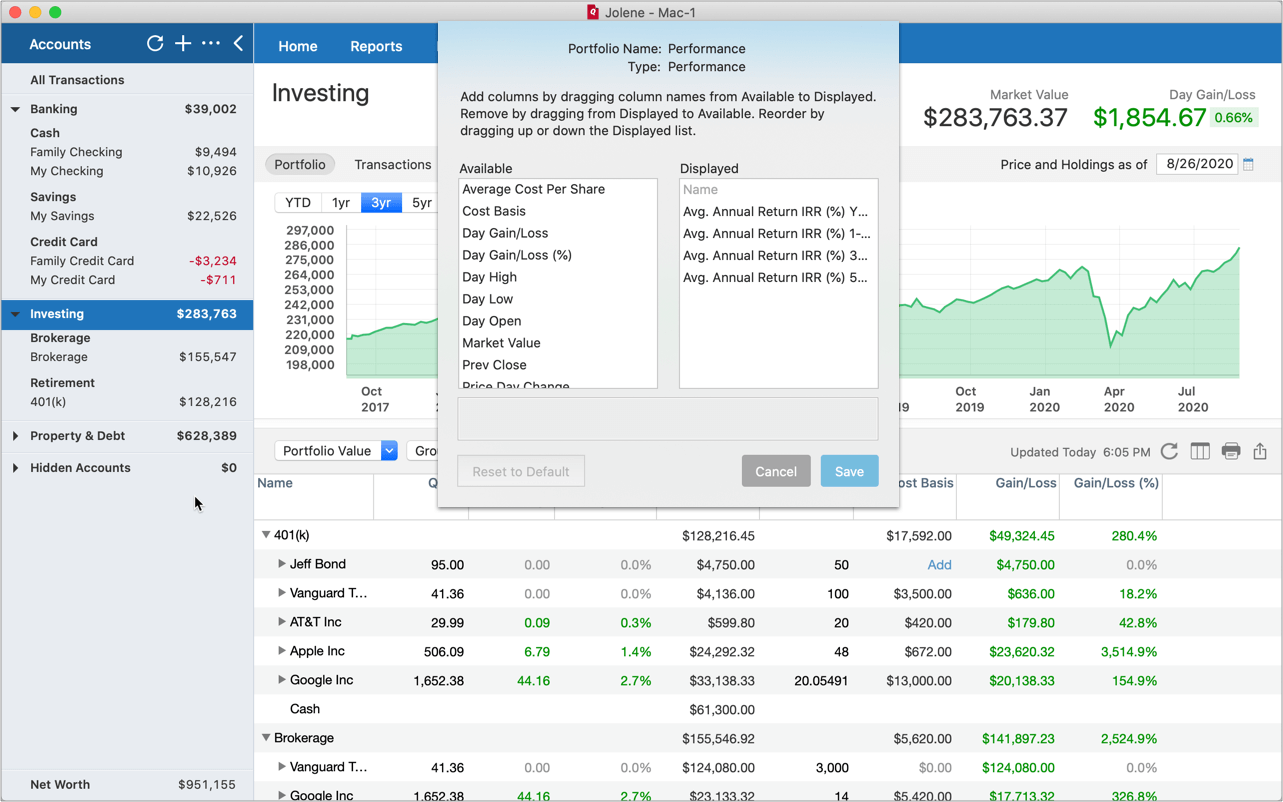
Once your accounts are linked, the Net Worth dashboard acts as your primary command center. Within the Quicken Starter interface, you will find a dedicated "Net Worth" report tab. This visual display typically features a line graph showing your net worth trend over time, allowing you to observe patterns such as the impact of debt repayment strategies or consistent savings habits.
The dashboard breaks down your portfolio into segments:
- Cash and Equivalents: Savings and checking accounts.
- Investments: Tax-advantaged accounts like IRAs or 401(k)s.
- Property: Real estate and high-value personal assets.
- Debts: Secured and unsecured liabilities.
The advantage of this dashboard is the "drilling down" capability. If you notice a sudden dip in your net worth, you can click on the specific category to see which account experienced a significant transaction or adjustment, allowing for rapid troubleshooting of financial discrepancies.
Comparison of Tracking Methods
| Method | Accuracy | Time Commitment | Automation Level |
|---|---|---|---|
| Quicken Starter | High | Low (Automated) | High |
| Spreadsheets | Variable | High (Manual) | None |
| Mobile Apps | Moderate | Low | Moderate |
| Paper Ledgers | Low | Very High | None |
Addressing Common Discrepancies and Limitations
Users occasionally encounter scenarios where their calculated net worth seems inaccurate. The most common cause is "stale data." If a financial institution updates its security protocols, your One Step Update may fail, causing the software to display the last known balance rather than the current one.
Troubleshooting Steps:
- Check Sync Status: Navigate to the "Account Bar" to see if any accounts have a red error indicator. If they do, re-authenticate your login credentials.
- Reconcile Transactions: Ensure that large, pending transactions have cleared. Sometimes a pending charge is subtracted from your balance, but the corresponding asset hasn't yet adjusted, creating a temporary "phantom" dip in net worth.
- Valuation Adjustments: For manual assets like your home, Quicken does not track Zillow or Redfin market changes automatically. You must manually edit the account balance of your home asset account periodically to reflect current fair market value.
Financial Planning and Professional Advice
While the Quicken Starter Net Worth feature is a powerful diagnostic tool, it should not be considered a substitute for professional financial planning. The software provides a historical look at your assets and liabilities, but it does not account for complex variables such as future tax implications, estate planning, or the volatility of private markets.
If your net worth includes complex assets like business equity, offshore accounts, or complex derivative portfolios, you may require a more robust financial advisor relationship. Use the data generated by Quicken to prepare for meetings with a CFP (Certified Financial Planner) or a tax professional. Presenting a printed Net Worth report from Quicken can significantly reduce the billable time spent gathering financial documentation during an initial consultation.
Frequently Asked Questions
Does Quicken Starter automatically update home values? No. Because real estate values fluctuate based on local market conditions, you must update the "Account Value" field for your manual property accounts periodically. It is recommended to perform this update quarterly.
Is my net worth data stored in the cloud? Quicken Starter primarily stores your data locally on your computer’s hard drive. While the software uses cloud-based servers to sync with your financial institutions, your primary financial data remains under your local control, which is a significant factor for users concerned about data privacy.
Why does my credit card balance show up as a positive number? This is a classic configuration error. Ensure the account type for your credit card is set to "Liability" or "Credit Card" rather than "Asset." If an account is mislabeled, the software will add the debt to your net worth instead of subtracting it.
Can I track shared assets with a spouse? Yes. You can add joint accounts, and Quicken will include the full balance in the net worth calculation. If you need to track individual versus shared ownership, you may need to use Quicken’s "Tag" feature to categorize transactions or specific assets by owner.
What happens if I stop paying for the Quicken subscription? If your subscription lapses, you will lose the ability to sync with your financial institutions. You will still have access to your historical data files, but your Net Worth reports will no longer be updated with new transactions or balance changes until the service is renewed.
Next Actions for Better Financial Oversight
To get the most out of the Quicken Starter Net Worth feature, adopt a "Monthly Audit" workflow. Set a recurring task for the first Sunday of each month to log into Quicken, initiate a manual sync, and review your Net Worth report. During this time, update the market value of your home or any other non-linked assets. By treating your personal finances with the same operational discipline as a business balance sheet, you will gain a clearer understanding of your long-term financial trajectory and be better positioned to make informed decisions regarding debt reduction and asset allocation.
Image Gallery