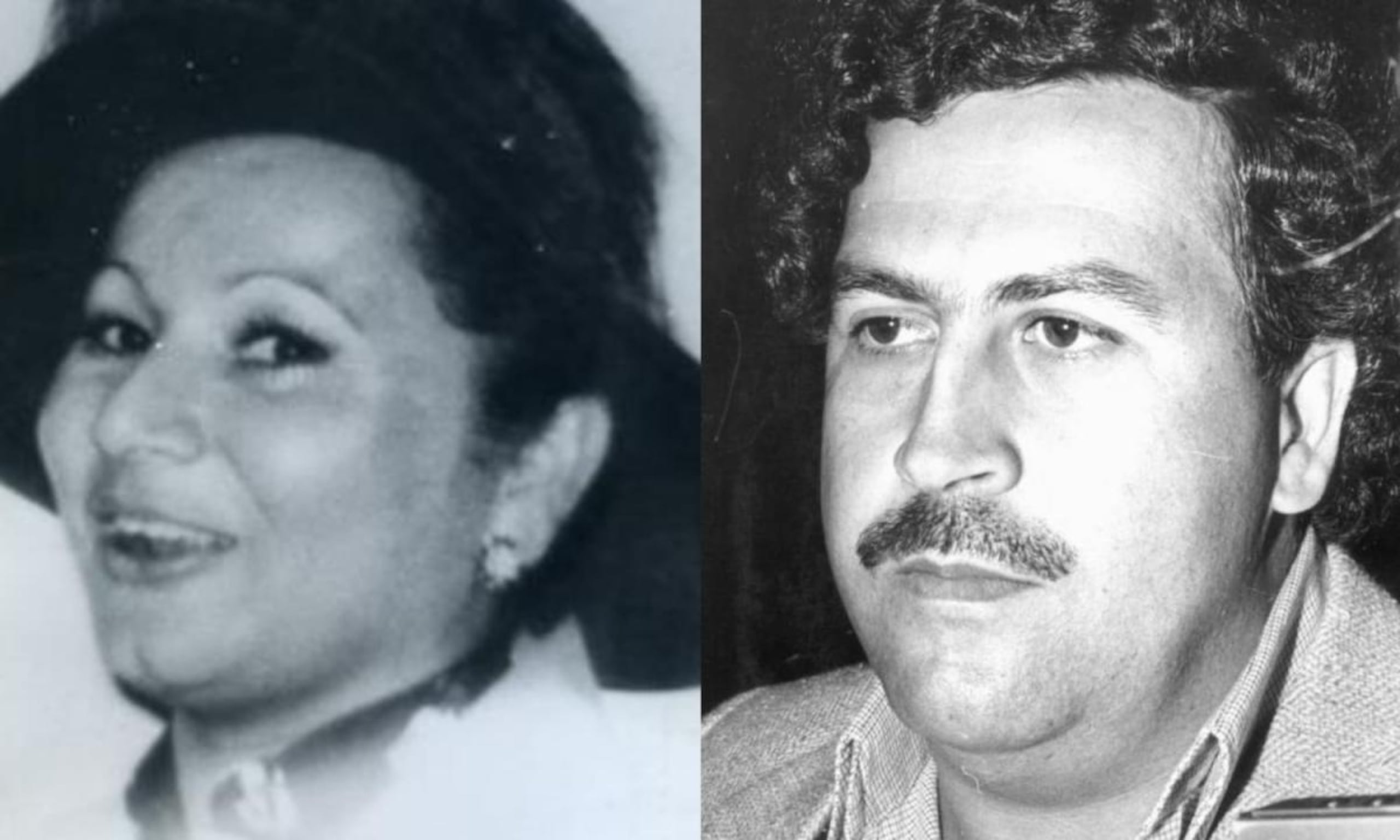
Who Assassinated Griselda Blanco? The Final Chapter of the Black Widow
Griselda Blanco was assassinated on September 3, 2012, in Medellín, Colombia, by an unidentified gunman on a motorcycle. As she exited a butcher shop in the Belén neighborhood, the assassin fired two shots into her head. Despite her ex...
Griselda Blanco was assassinated on September 3, 2012, in Medellín, Colombia, by an unidentified gunman on a motorcycle. As she exited a butcher shop in the Belén neighborhood, the assassin fired two shots into her head. Despite her extensive list of enemies, the specific perpetrator and the mastermind behind the hit remain unknown.
Contents
The death of Griselda Blanco, often referred to as "The Godmother" or "The Black Widow," marked the violent end of one of the most notorious figures in the history of the international drug trade. Her assassination was steeped in irony, as the method used to kill her—the motorcycle-riding assassin—was a tactic she was widely credited with pioneering during her reign of terror in Miami during the 1970s and 1980s. As of 2026, the case remains officially unsolved, categorized by Colombian authorities as a "settling of scores" among criminal factions.
The Events of September 3, 2012
On the afternoon of September 3, 2012, a 69-year-old Griselda Blanco was living a relatively quiet life in Medellín. Having been deported from the United States in 2004 after serving nearly two decades in prison, she had largely faded from the public eye. On this particular Monday, she visited the Cardiso butcher shop in the Belén neighborhood, a middle-class area of the city.
Blanco was accompanied by her pregnant daughter-in-law. As they exited the shop carrying $150 worth of meat, a man on a motorcycle pulled up to the curb. Without dismounting, the passenger or driver (reports vary on whether there was a second person) drew a firearm and discharged two bullets into Blanco’s head. The assassin then sped off into the congested traffic of Medellín, disappearing before police could arrive. Blanco was rushed to a nearby hospital but was pronounced dead shortly thereafter.
The precision and speed of the attack suggested a professional "sicario" (hitman) operation. In the world of Colombian cartels, this was a signature move, often used because it allowed for a quick approach and an even quicker escape through narrow streets where cars could not easily follow.
The Irony of the Motorcycle Assassin
Historians and law enforcement officials often point to the poetic justice, or grim irony, of Blanco’s death. During the "Cocaine Cowboy" era of Miami in the late 1970s, Blanco was known for her ruthless innovation. She is frequently cited by DEA agents and criminal historians as the individual who popularized the motorcycle hit.
By using two-man teams on motorbikes—one to drive and one to shoot—Blanco’s organization could execute targets in broad daylight and navigate through Miami’s gridlocked traffic. This tactic was later adopted globally by various cartels. For Blanco to die by the very method she helped weaponize was viewed by many as the ultimate "settling of accounts."
Potential Suspects and the "Settling of Scores"
The primary reason the assassination of Griselda Blanco remains unsolved is the sheer volume of potential suspects. Over her decades-long career, Blanco was allegedly responsible for hundreds of murders, ranging from rival drug lords to her own husbands.
1. Families of Former Victims
Blanco’s trail of blood in Miami and Colombia left countless grieving families. In the hyper-violent culture of the cartels, "vendettas" do not have an expiration date. It is highly plausible that a relative of someone she murdered decades earlier waited for her to return to Colombia and become vulnerable before seeking revenge.
2. Former Business Associates
The Medellín Cartel, once led by Pablo Escobar, had a complex and often volatile relationship with Blanco. While she was a pioneer, her erratic behavior and penchant for killing business partners often put her at odds with other high-ranking narcos. It is possible that remnants of these organizations or individuals she once crossed decided to eliminate the possibility of her ever returning to power.
3. Rival Factions in Medellín
By 2012, the landscape of organized crime in Medellín had changed significantly. The city was controlled by "Oficina de Envigado" and various smaller gangs. Even though Blanco was elderly and reportedly retired from the trade, her presence alone could have been seen as a threat or an insult to the new generation of traffickers.
The Life of Griselda Blanco Before the Assassination
To understand why she was targeted, one must understand the scale of her operations. Griselda Blanco was a central figure in the Medellín Cartel’s expansion into the United States. She established massive distribution networks in New York and Miami, moving thousands of kilograms of cocaine per month at the height of her power.
Her reputation for violence was unparalleled. She was implicated in the "Dadeland Mall Massacre" of 1979, an event that brought the reality of drug violence into the American consciousness. Law enforcement officials estimated her net worth reached into the billions, yet her later years were defined by legal battles and personal loss. Three of her four sons—Dixon, Uber, and Osvaldo—were murdered, allegedly in retaliation for her own crimes. Only her youngest son, Michael Corleone Blanco, survived her.
| Key Metric | Details of Griselda Blanco's Life and Death |
|---|---|
| Date of Birth | February 15, 1943 |
| Date of Death | September 3, 2012 |
| Location of Death | Medellín, Colombia (Belén neighborhood) |
| Cause of Death | Gunshot wounds (Assassination) |
| Method used | Motorcycle hit (two shots to the head) |
| Primary Alias | The Black Widow, The Godmother of Cocaine |
| Historical Significance | Pioneer of the Miami drug trade and sicario tactics |
| Current Case Status | Unsolved (Cold Case) |
Why Was No One Ever Charged?
The investigation into Blanco's death faced several insurmountable hurdles:
- Lack of Witnesses: Although the shooting happened in public, the "law of silence" often prevails in neighborhoods formerly controlled by cartels. Potential witnesses feared retaliation if they spoke to the authorities.
- The Professional Nature of the Hit: The assassin left no forensic evidence at the scene. The use of a stolen or untraceable motorcycle is a standard practice in these types of executions.
- A Lack of Political Will: Given Blanco’s history and the hundreds of lives she destroyed, there was very little public or political pressure on Colombian authorities to find her killer. In the eyes of many, her death was an inevitable consequence of her chosen lifestyle.
- Decades-Old Motives: When a victim has thousands of enemies spanning 40 years across two continents, narrowing down a suspect list is a near-impossible task for investigators.
The Cultural Impact of the Assassination
Even in 2026, the assassination of Griselda Blanco continues to fascinate the public. Her life has been the subject of numerous documentaries, films, and television series, including the 2024 Netflix production Griselda. These dramatizations often emphasize her brutal rise to power and the tragic, lonely nature of her end.
Her death served as a definitive closing chapter to the "Cocaine Cowboy" era. While modern cartels still exist, the flamboyant and overtly violent methods of the 1980s have largely shifted toward more clandestine operations. Blanco’s death was a reminder that in the world of high-level narcotics trafficking, "retirement" is rarely a peaceful transition.
Frequently Asked Questions
Was Pablo Escobar involved in Griselda Blanco's assassination?
There is no evidence to suggest Pablo Escobar was involved. Escobar died in 1993, nearly 19 years before Blanco was killed. While they were contemporaries and both part of the Medellín drug scene, Blanco’s death occurred long after the original Medellín Cartel leaders were either dead or imprisoned.
Did Griselda Blanco have any bodyguards when she was killed?
No. At the time of her death, Blanco lived a relatively modest and low-profile life. She was accompanied only by her pregnant daughter-in-law. This lack of security made her an easy target for the motorcycle-bound assassin.
Where is Griselda Blanco buried?
Griselda Blanco is buried in the Jardines Montesacro cemetery in Itagüí, south of Medellín. Ironically, this is the same cemetery where Pablo Escobar is buried. Her funeral was a quiet affair compared to the height of her notoriety.
Who is the surviving son of Griselda Blanco?
Michael Corleone Blanco is her only surviving son. He has since transitioned away from the criminal lifestyle, appearing on reality television shows like Cartel Crew and running a lifestyle brand called "Pure Blanco." He has often spoken about the "curse" of his family's history and the trauma of losing his mother and brothers to violence.
Did Griselda Blanco die instantly?
According to medical reports from the Clinica Belén, Blanco was still alive when she was put into an ambulance, but her injuries—two gunshot wounds to the head at close range—were non-survivable. She was pronounced dead shortly after arrival at the hospital.
Practical Considerations for Researchers
For those researching the life and death of Griselda Blanco, it is essential to distinguish between sensationalized media accounts and official records. While she was undoubtedly a high-level criminal, many urban legends have been attributed to her over the years. Reliable information can be found through:
- DEA Historical Records: Documentation regarding the Miami drug wars provides context on her criminal reach.
- Colombian Judicial Archives: Though limited, these records detail her return to Colombia and the immediate aftermath of her assassination.
- Academic Journals on Criminology: These often analyze the "sicario" phenomenon and the evolution of cartel violence which she helped initiate.
The assassination of Griselda Blanco remains a landmark event in true crime history. It was a cold, calculated execution that brought a violent life to a predictably violent end, leaving behind a legacy of unresolved questions and a chilling example of the cyclical nature of cartel retribution.
Image Gallery