Jeep Wrangler vs Toyota RAV4: Choosing Between Extreme Off-Roading and Everyday Practicality
When comparing the Jeep Wrangler and the Toyota RAV4, buyers are looking at two completely different philosophies of modern automotive engineering. The Jeep Wrangler is an iconic, body-on-frame, purpose-built trail machine defined by i...
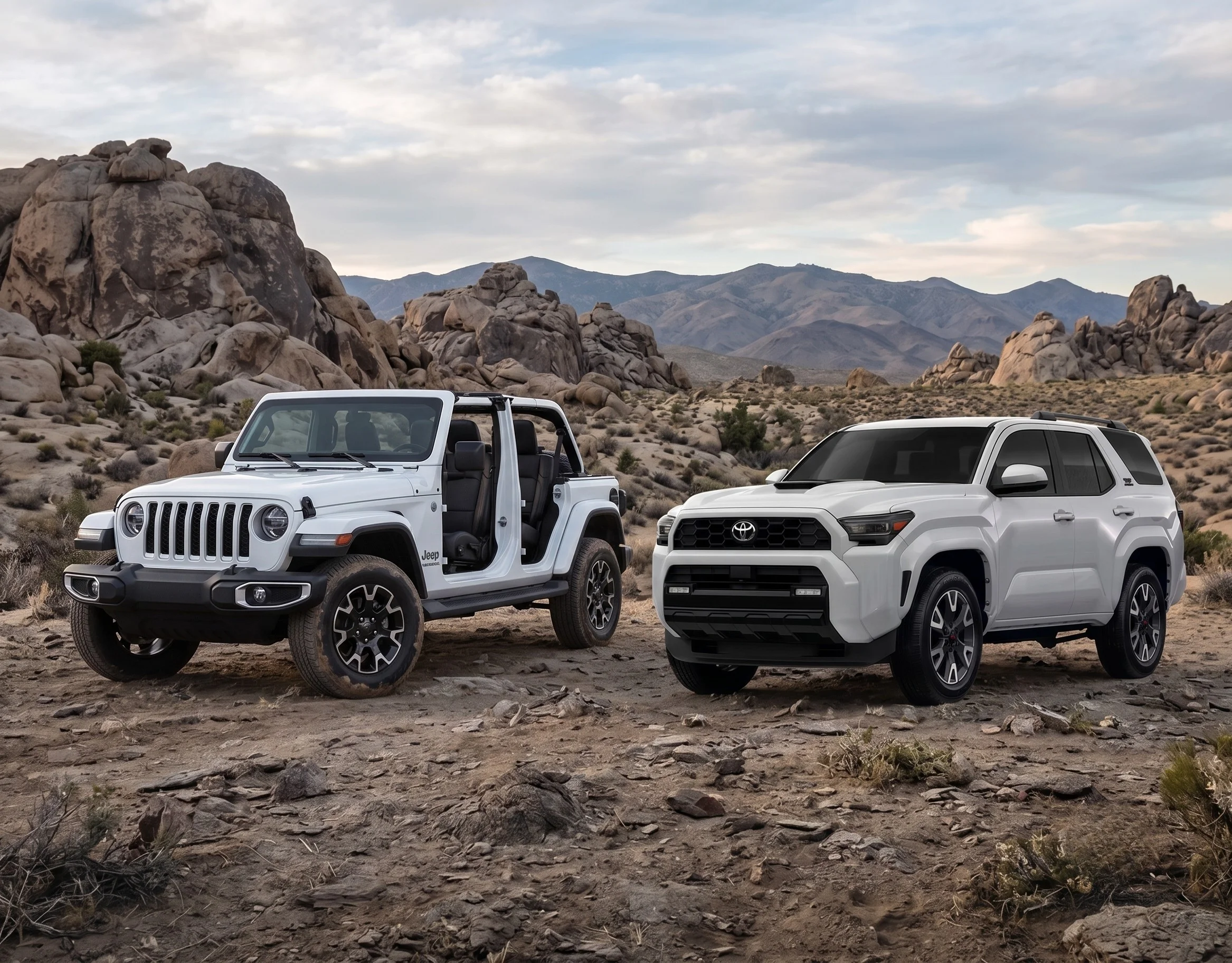
When comparing the Jeep Wrangler and the Toyota RAV4, buyers are looking at two completely different philosophies of modern automotive engineering. The Jeep Wrangler is an iconic, body-on-frame, purpose-built trail machine defined by its removable doors, solid front and rear axles, and legendary rock-crawling pedigree. Conversely, the Toyota RAV4 is the quintessential unibody compact crossover, engineered for efficiency, exceptional everyday comfort, seamless daily commuting, and predictable weather handling. Choosing between them requires a clear understanding of your daily driving needs, your tolerance for compromise, and your passion for outdoor recreation.
Contents
Core Architectural and Design Differences
The foundational mechanical layout of a vehicle dictates how it drives, how much cargo it holds, and how it behaves over various road surfaces. The Jeep Wrangler utilizes a traditional body-on-frame construction. This heavy-duty architecture isolates the cabin from harsh trail impacts and provides the structural rigidity necessary for extreme off-road articulation. However, it also introduces a higher center of gravity, a bouncy ride quality over broken pavement, and heavier steering dynamics that require frequent minor corrections on the highway.
In contrast, the Toyota RAV4 employs a unibody platform, meaning the chassis and body are integrated into a single structure. This engineering approach yields a much lower center of gravity, car-like handling precision, and a smooth, compliant ride quality that absorbs potholes and highway expansions with minimal disruption. The RAV4 feels light and agile in tight parking garages and urban environments, whereas the Wrangler requires a wider turning radius and heightened spatial awareness due to its boxy dimensions and external spare tire.
Powertrain Options, Capability, and Efficiency
Under the hood, these two vehicles cater to drastically different priorities. The Jeep Wrangler offers a diverse lineup of powertrains, including a turbocharged four-cylinder, a robust V6, a high-torque EcoDiesel (historically), a potent 4xe plug-in hybrid, and even a heavy-hitting Rubicon 392 V8. These engines are paired with sophisticated four-wheel-drive systems (such as Command-Trac or Rock-Trac), locking differentials, and electronic sway-bar disconnects, allowing the Wrangler to scale boulders, plow through deep mud, and ford significant water depths straight from the factory.
The Toyota RAV4 focuses heavily on fuel efficiency and practical everyday performance. It features a standard naturally aspirated four-cylinder engine, a highly efficient hybrid variant, and the RAV4 Prime plug-in hybrid. Rather than heavy-duty low-range transfer cases, the RAV4 utilizes front-wheel drive or electronic all-wheel-drive (AWD) systems designed primarily to maintain traction in rain, light snow, and gravel driveways. While the RAV4 can handle well-maintained forest service roads, it lacks the ground clearance, suspension articulation, and underbody protection required for serious rock crawling or technical off-roading.
Feature and Specification Comparison
| Feature/Specification | Jeep Wrangler | Toyota RAV4 |
|---|---|---|
| Chassis Type | Body-on-frame | Unibody crossover |
| Primary Drivetrain | Part-time or full-time 4WD (Low-range transfer case) | FWD or electronic AWD |
| Fuel Economy | Lower (typically 17–22 mpg combined, excluding 4xe) | Higher (typically 27–40+ mpg combined depending on powertrain) |
| Off-Road Capability | Extreme (solid axles, high ground clearance, lockers) | Moderate (light trails, snow, rain, gravel) |
| Interior Comfort | Rugged, utilitarian, wind/road noise present | Refined, quiet, car-like ergonomics |
| Open-Air Experience | Removable soft top/hard top and removable doors | Standard moonroof or panoramic glass roof |
Interior Practicality, Cargo, and Daily Comfort
Cabin ergonomics and daily livability separate these two vehicles decisively. The Toyota RAV4 is designed for maximum family utility, offering generous rear legroom, numerous storage cubbies, a low cargo floor, and a spacious trunk that swallows groceries, luggage, and sports equipment with ease. The RAV4’s interior materials prioritize durability and comfort, featuring intuitive infotainment layouts, supportive seating, and modern driver-assistance suites that reduce driver fatigue on long highway trips.
The Jeep Wrangler trades everyday convenience for rugged versatility. Its interior is styled to withstand the elements, often featuring drain plugs in the floor for easy hose-out cleaning after a muddy day on the trail. While newer generations have modernized with large touchscreens and advanced connectivity, the Wrangler's cabin remains narrower and noisier at highway speeds due to the aerodynamics of a flat windshield and removable roof panels. Cargo loading in the Wrangler is also complicated by its side-hinged rear tailgate, which swings outward rather than lifting upward.
Maintenance, Resale Value, and Long-Term Costs
Ownership costs extend far beyond the initial purchase price. The Toyota RAV4 benefits from Toyota’s legendary reputation for long-term mechanical reliability, lower-than-average maintenance costs, and exceptional fuel economy that saves money at the pump over thousands of miles. Furthermore, RAV4 models hold their resale value remarkably well due to high demand in the used car market.
The Jeep Wrangler also boasts stellar resale value—often ranking among the highest in the entire automotive industry—because of its cult-following and specialized market niche. However, living with a Wrangler often involves higher running costs. Its aggressive off-road tires wear out faster, fuel consumption is significantly higher, and the rugged solid-axle suspension requires attentive alignment and steering component maintenance, especially if larger aftermarket lift kits and oversized tires are installed.
Choosing the Right Vehicle for Your Lifestyle
Selecting the right vehicle ultimately comes down to an honest assessment of your driving habits and recreational pursuits.
- Choose the Jeep Wrangler if: You view driving as an adventure, plan to regularly tackle unpaved trails, rock gardens, or sandy beaches, and value the unique open-air experience of removing the doors and top. You must be willing to accept compromises in fuel economy, highway noise, and ride smoothness.
- Choose the Toyota RAV4 if: Your daily routine consists of commuting, running errands, road-tripping, and dealing with inclement weather like rain and moderate snow. You value high fuel efficiency, low maintenance costs, modern safety technology, and quiet, effortless daily transportation.
Frequently Asked Questions
Can the Toyota RAV4 go off-road?
The Toyota RAV4 can handle light off-road conditions such as gravel roads, dirt paths, and snowy or muddy streets, especially when equipped with electronic AWD and multi-terrain select modes. However, it lacks the ground clearance, robust suspension, and four-wheel-drive low range required for rock crawling and severe off-road obstacles.
Is the Jeep Wrangler comfortable for long highway road trips?
Modern Jeep Wranglers are significantly more refined than older generations, featuring improved seating, better sound insulation, and modern suspension tuning. Nevertheless, due to its boxy aerodynamics, solid axles, and mud-terrain tires, it remains noisier and more utilitarian on long highway drives compared to a car-based crossover like the RAV4.
Which vehicle holds its resale value better?
Both vehicles hold their resale values exceptionally well compared to the automotive market average. The Jeep Wrangler benefits from a passionate enthusiast following and limited direct competition, while the Toyota RAV4 benefits from universal demand for reliable, fuel-efficient daily transportation.
How does fuel economy compare between the two?
The Toyota RAV4 vastly outperforms the Jeep Wrangler in fuel economy. Standard gasoline RAV4 models achieve impressive combined fuel economy, while the RAV4 Hybrid and Prime models exceed 40 mpg. Traditional gasoline-powered Wranglers typically average in the high teens to low twenties, though the 4xe plug-in hybrid offers limited all-electric range for short commutes.
Are Wranglers difficult to maintain?
Wranglers require routine maintenance just like any other vehicle, but their specialized off-road hardware—such as four-wheel-drive transfer cases, solid axles, and suspension joints—can require more frequent inspection and servicing, particularly if the vehicle is driven hard off-road or heavily modified.
Image Gallery