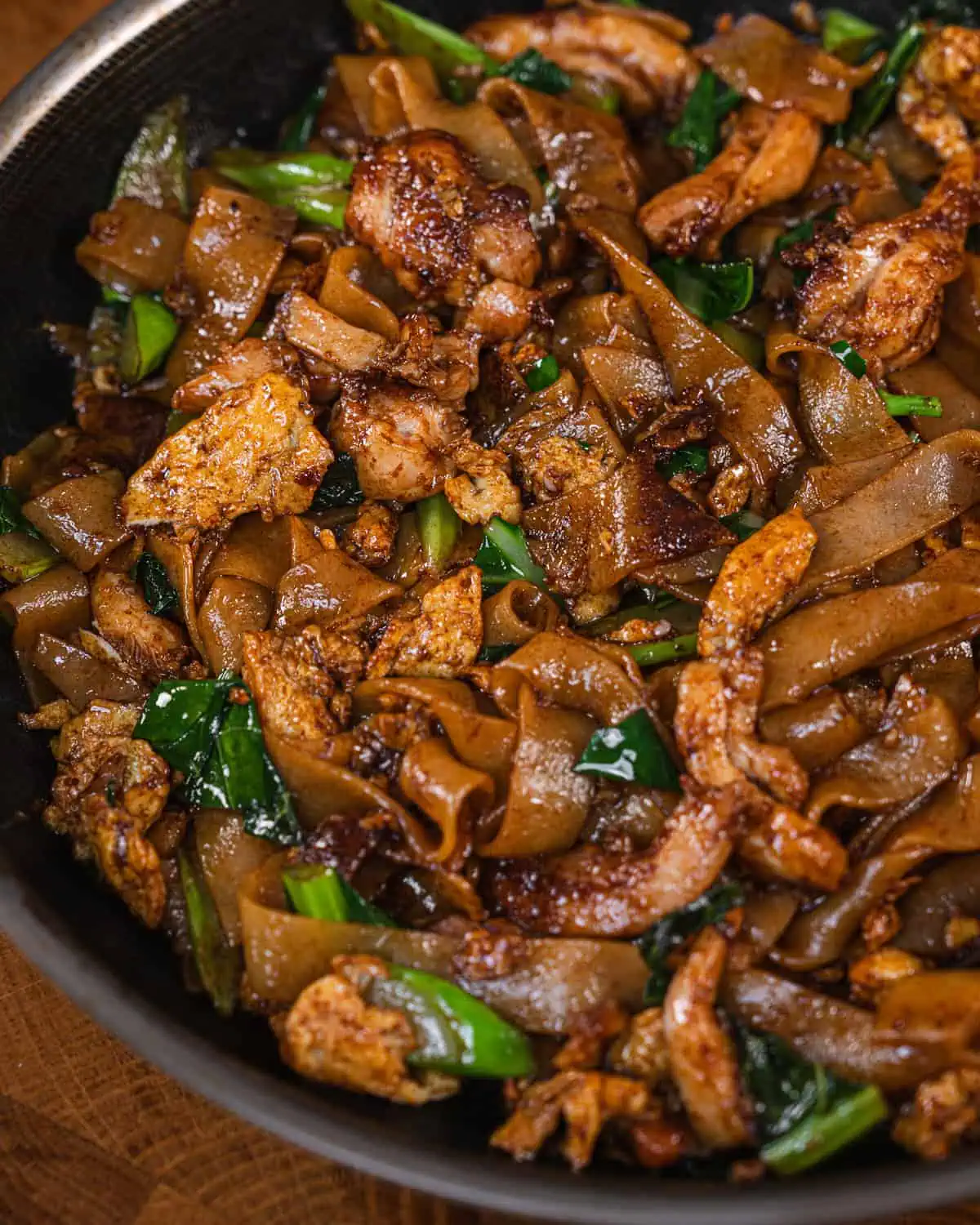
Tofu Pad See Ew Calories Explained: A Comprehensive Nutritional Guide
A standard restaurant serving of tofu pad see ew typically contains between 600 and 850 calories. This range is primarily influenced by the volume of vegetable oil used during the high-heat stir-fry process and the concentration of sug...
A standard restaurant serving of tofu pad see ew typically contains between 600 and 850 calories. This range is primarily influenced by the volume of vegetable oil used during the high-heat stir-fry process and the concentration of sugar in the dark soy sauce. While tofu provides a lean protein base, the wide rice noodles and oil-heavy preparation contribute the majority of the caloric load.
Contents
Understanding the Components of Pad See Ew
To accurately explain the calories in tofu pad see ew, one must first deconstruct the dish into its core architectural elements. Unlike many Western stir-fries, Pad See Ew (which translates to "fried with soy sauce") relies on a specific set of ingredients that interact under intense heat to create its signature caramelized flavor profile.
The Rice Noodles (Sen Yai)
The most significant contributor to the calorie count is the Sen Yai, or wide, flat rice noodles. These noodles are made from rice flour and water, often with a small amount of tapioca starch to provide a chewy texture. Rice noodles are naturally gluten-free but are high in refined carbohydrates. In a typical restaurant portion, you may find 2 to 3 cups of cooked noodles, which can alone account for 400 to 500 calories. Because these noodles have a high surface area, they are prone to sticking together, which leads chefs to use more oil to keep them separate and facilitate the "searing" process.
The Protein: Tofu Varieties
In a "tofu" version of the dish, the type of tofu used and how it is prepared significantly impacts the final nutritional tally. Most Thai restaurants use firm or extra-firm tofu. However, to ensure the tofu maintains its shape and develops a pleasant texture, it is often deep-fried or shallow-fried before being tossed with the noodles. Fried tofu absorbs oil like a sponge, increasing the fat content compared to fresh, steamed, or lightly seared tofu. A half-cup of fried tofu cubes can add 150 to 200 calories, whereas non-fried firm tofu would contribute closer to 80 or 100 calories.
The Vegetable: Gai Lan
The traditional vegetable used is Gai Lan (Chinese broccoli). From a caloric perspective, Gai Lan is negligible, providing vitamins A, C, and K, along with fiber, for very few calories. However, the thick stems and leafy greens are excellent at holding onto the oily sauce, meaning the more vegetables added, the more sauce—and therefore more calories—might be consumed.
Average Caloric Breakdown per Serving
The following table provides an estimated breakdown of a typical 500g to 600g restaurant serving of tofu pad see ew. Note that "restaurant style" implies a generous use of oil and sugar to achieve the traditional "Wok Hei" (breath of the wok) flavor.
| Ingredient Component | Quantity (Estimated) | Calories | Primary Macro |
|---|---|---|---|
| Wide Rice Noodles | 2.5 Cups (Cooked) | 480 kcal | Carbohydrates |
| Fried Tofu Blocks | 100g | 180 kcal | Protein/Fat |
| Egg (Standard) | 1 Large | 70 kcal | Protein/Fat |
| Chinese Broccoli | 1 Cup | 25 kcal | Fiber/Micros |
| Vegetable Oil | 2-3 Tablespoons | 240-360 kcal | Fat |
| Sauce (Soy/Sugar/Oyster) | 3 Tablespoons | 60-90 kcal | Carbohydrates |
| Total Estimated | Standard Serving | 1,055 - 1,205 kcal | Mixed |
Note: Many "health-conscious" estimates online cite 600 calories, but these often underestimate the 30-45ml of oil used in professional kitchens to prevent noodle clumping.
The "Hidden" Calorie Drivers in Thai Stir-Fry
When explaining tofu pad see ew calories, it is essential to look beyond the base ingredients and analyze the preparation method. Two factors—oil and sugar—are the primary reasons why this dish can fluctuate from a moderate 600-calorie meal to an 1,100-calorie feast.
The Role of Vegetable Oil
In traditional Thai cooking, the wok must be incredibly hot. To prevent the wide rice noodles from tearing or turning into a gummy mass, a significant amount of oil is required. This oil coats every strand of noodle. Because oil is calorically dense (approximately 120 calories per tablespoon), even a slight "heavy hand" by the chef can add 200 calories to the dish without changing the portion size or appearance. Most restaurants use soybean, palm, or rice bran oil, all of which are pure fats.
Sugar and the Soy Sauce Blend
The signature dark color of Pad See Ew comes from Black Soy Sauce (Siew Dum). Unlike light soy sauce, which is primarily salty, black soy sauce is viscous and contains added molasses or sugar. Many recipes also call for an additional teaspoon or two of granulated white sugar to balance the saltiness of the soy sauce and the bitterness of the Chinese broccoli. While a few teaspoons of sugar might only add 30 to 60 calories, it contributes to the overall glycemic load of the meal, which can affect satiety and energy levels.
Tofu vs. Other Proteins: Nutritional Impact
Choosing tofu over chicken, beef, or shrimp does not necessarily make the dish "low calorie," though it does alter the fat profile.
- Tofu vs. Chicken: Chicken breast is leaner than fried tofu. However, tofu contains no cholesterol and provides soy isoflavones. If the tofu is not fried, it is generally lower in calories than beef or pork.
- Tofu vs. Shrimp: Shrimp is the lowest-calorie protein option for Pad See Ew, as it is very high in protein and very low in fat.
- The Satiety Factor: Tofu is highly porous. While it offers good plant-based protein, its ability to soak up the cooking oil means that "tofu" versions of the dish are often higher in fat than versions using sliced chicken breast, which does not absorb oil as readily.
Macros and Micronutrients in Tofu Pad See Ew
While the calorie count is high, Tofu Pad See Ew offers a relatively balanced macronutrient profile, provided you account for the high carbohydrate count.
- Carbohydrates: This is a carb-dominant dish. The rice noodles provide quick-release energy. For individuals following a low-carb or ketogenic diet, this dish is difficult to modify without removing the noodles entirely.
- Protein: Tofu and the scrambled egg provide a complete amino acid profile. A standard serving usually contains 20g to 30g of protein, which is sufficient for a main meal.
- Fats: Most of the fats are unsaturated (if using vegetable oils), but the total fat content can exceed 40g in restaurant portions.
- Sodium: This is a major consideration. Between the light soy sauce, dark soy sauce, and vegetarian oyster sauce (often made from mushrooms), the sodium content can easily exceed 2,000mg—nearly the entire daily recommended limit for an adult.
Strategies for Reducing Calories Without Losing Flavor
If you are cooking at home in 2026 or looking for ways to order more healthily, several modifications can significantly reduce the caloric density of tofu pad see ew.
1. Control the Oil
The most effective way to drop the calorie count is to use a high-quality non-stick wok or skillet. By using a spray oil or limiting the amount to one tablespoon, you can save 240+ calories immediately.
2. Air-Fry the Tofu
Instead of deep-frying the tofu in the wok, press the tofu to remove excess water, dice it, and air-fry it until crisp. This gives you the desired "fried" texture without the added 10-15g of absorbed fat.
3. Increase the Vegetable-to-Noodle Ratio
Ask for "double vegetables" and "half noodles." Since the Gai Lan is very low in calories, this increases the volume of the meal and the fiber content—which slows down the digestion of the rice noodles—without adding significant calories.
4. Sauce Substitutions
Use a low-sodium soy sauce base and replace half of the sugar with a natural sweetener like stevia or monk fruit if cooking at home. While restaurants likely won't do this, you can ask for the dish "less sweet" to reduce the sugar-based calories.
Restaurant vs. Homemade: Why the Numbers Differ
There is often a "disconnect" between what a calorie-tracking app says and what you actually consume at a restaurant. Most apps use a "standardized" recipe that assumes 1 tablespoon of oil and a specific weight of noodles.
In a commercial kitchen, the focus is on speed and flavor. High-flame burners require more oil to prevent burning. Furthermore, restaurant portions are often 1.5 to 2 times the size of a "standard" home serving. If you are tracking calories for weight management, it is safer to estimate a restaurant portion of tofu pad see ew at 900 calories rather than the optimistic 500-600 often found in generic databases.
Common Mistakes When Estimating Pad See Ew Calories
- Ignoring the Egg: A single egg adds 70 calories and 5g of fat. Some restaurants use two eggs or extra-large eggs, which many people forget to log.
- Underestimating the Noodles: Because rice noodles are dense and heavy, a "bowl" might actually contain three servings of grain.
- Assuming Tofu is "Diet Food": As established, the preparation of the tofu (frying) often makes it as calorically dense as fatty cuts of pork.
Frequently Asked Questions
Is Tofu Pad See Ew healthier than Pad Thai?
Generally, yes. Pad See Ew usually contains fewer crushed peanuts and less palm sugar than Pad Thai. It also relies on Gai Lan, providing more green leafy vegetables than the bean sprouts typically found in Pad Thai. However, Pad See Ew can be oilier.
How many calories are in a "lunch special" size?
Lunch specials are typically smaller, ranging from 450 to 600 calories. They often include a side salad or a spring roll, which must be calculated separately.
Does the calorie count change if I get "crispy" tofu?
Yes. "Crispy" tofu is almost always deep-fried. This adds roughly 100-150 calories per serving compared to "steamed" or "soft" tofu added at the end of the cooking process.
Is the sodium in Tofu Pad See Ew a concern for weight loss?
Sodium doesn't contain calories, but it causes significant water retention. A high-sodium meal like Pad See Ew can cause the scale to jump by 2-3 pounds overnight, though this is water weight, not fat gain.
Are the noodles in Pad See Ew gluten-free?
Pure rice noodles are gluten-free, but the soy sauces used in Pad See Ew typically contain wheat. From a calorie perspective, gluten-free soy sauce (tamari) has a similar profile to regular soy sauce.
Practical Recommendation
When consuming tofu pad see ew, treat it as a high-carbohydrate, high-energy meal. If you are ordering from a restaurant, consider eating half the portion and saving the rest for the next day; the flavors often hold up well when reheated. To mitigate the glycemic impact, eat the Gai Lan (fiber) and tofu (protein) first before diving into the noodles. This "sequential eating" can help manage blood sugar spikes associated with high-calorie noodle dishes.
Image Gallery