Workers’ Compensation in Oxnard, CA: A Comprehensive 2026 Guide for Employees and Employers
In 2026, workers’ compensation in Oxnard, California, serves as a mandatory, no-fault insurance system designed to provide medical care, wage replacement, and rehabilitation benefits to employees injured on the job. Administered under...
In 2026, workers’ compensation in Oxnard, California, serves as a mandatory, no-fault insurance system designed to provide medical care, wage replacement, and rehabilitation benefits to employees injured on the job. Administered under California state law, it ensures workers receive support regardless of who caused the accident while protecting employers from costly civil litigation.
Contents
The landscape of labor in Oxnard—ranging from the agricultural fields of the Oxnard Plain to the industrial sectors near the Port of Hueneme—requires a nuanced understanding of how California’s workers’ compensation laws apply locally. Whether you are a farmworker, a logistics professional, or a retail employee, navigating the claims process involves specific timelines, medical evaluations, and legal protections that are strictly enforced by the California Division of Workers’ Compensation (DWC).
The Legal Framework of California Workers’ Compensation
California’s workers’ compensation system is governed by the Labor Code and regulated by the Department of Industrial Relations (DIR). The primary principle of the system is the "exclusive remedy" rule. This means that in exchange for guaranteed benefits like medical coverage and disability payments, employees generally give up their right to sue their employer in civil court for negligence.
In Oxnard, every employer—even those with only one employee—is legally required to carry workers’ compensation insurance. This includes full-time, part-time, and even some seasonal agricultural workers. Failure to provide this coverage is a criminal offense in California, punishable by fines and potential imprisonment, and it allows the injured worker to sue the employer in civil court in addition to filing a claim with the Uninsured Employers Benefits Trust Fund (UEBTF).
No-Fault Nature of the System
Unlike a standard personal injury lawsuit, you do not need to prove that your employer did something wrong to receive benefits. As long as the injury or illness arose out of and in the course of employment (AOE/COE), the worker is eligible. This covers sudden accidents, such as a fall from a ladder, as well as cumulative trauma injuries, such as carpal tunnel syndrome or respiratory issues caused by long-term exposure to pesticides in Ventura County fields.
Key Benefits Available to Oxnard Workers in 2026
The benefits provided under the California system are standardized but depend heavily on the severity of the injury and the worker’s pre-injury wages. As of 2026, these benefits are categorized into five primary areas:
1. Medical Care
The employer is responsible for paying all reasonable and necessary medical treatment to cure or relieve the effects of the injury. In Oxnard, most employers utilize a Medical Provider Network (MPN). This is a pre-approved list of doctors and specialists. Unless you pre-designated your personal physician before the injury occurred, you will likely be required to see a doctor within the MPN for your initial treatment.
2. Temporary Disability (TD) Benefits
If your injury prevents you from doing your usual job while recovering, you are entitled to Temporary Disability payments. These typically amount to two-thirds of your gross average weekly wage, subject to minimum and maximum limits set by the state annually. In 2026, these payments continue until you return to work or a doctor declares your condition "permanent and stationary."
3. Permanent Disability (PD) Benefits
If you do not fully recover and are left with a lasting physical or mental impairment, you may be eligible for Permanent Disability benefits. A doctor will assign a "disability rating," which is then converted into a dollar amount based on state formulas. This rating takes into account the nature of the injury, your age, and your occupation.
4. Supplemental Job Displacement Benefits (SJDB)
Also known as a "retraining voucher," this is a non-transferable $6,000 voucher for workers who have a permanent partial disability and whose employer does not offer them regular, modified, or alternative work. This voucher can be used for tuition, books, and professional certification at California-accredited schools.
5. Death Benefits
If a work-related injury or illness results in death, surviving dependents may receive death benefit payments. These are intended to provide financial support to spouses, children, or other family members who relied on the deceased worker’s income.
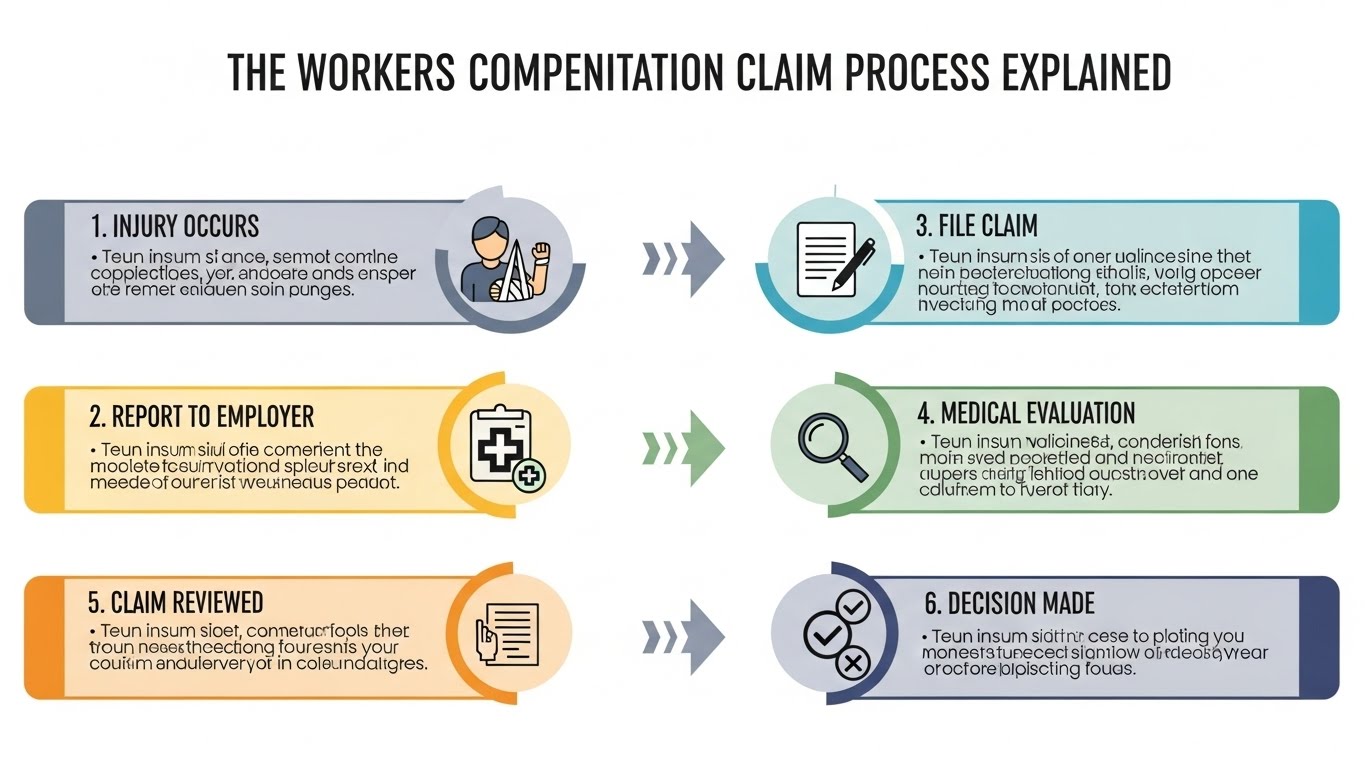
The Claims Process: Essential Steps for Oxnard Employees
Navigating a claim requires strict adherence to timelines. Missing a deadline can result in the loss of benefits or the outright denial of a claim.
- Report the Injury Immediately: You must notify your supervisor or employer as soon as possible. Under California law, you generally have 30 days to report an injury. For cumulative trauma, the clock starts when you first realized the injury was work-related.
- Fill Out Form DWC-1: Within one working day of learning about your injury, your employer must provide you with a Workers' Compensation Claim Form (DWC-1). Filling this out and returning it officially opens your claim.
- Seek Medical Treatment: Your employer must authorize up to $10,000 in medical treatment while they investigate your claim (which they have up to 90 days to do). If they fail to provide the form or medical access, you should seek treatment from an urgent care facility and inform them it is a work-related injury.
- The 90-Day Rule: If the claims administrator does not deny your claim within 90 days of you filing the DWC-1, the injury is presumed to be compensable (covered) by the employer.
Navigating the Oxnard District Office
For residents of Oxnard and surrounding Ventura County cities like Port Hueneme or Camarillo, the local hub for legal proceedings is the Division of Workers' Compensation (DWC) Oxnard District Office.
- Location: 1901 N. Rice Ave., Suite 100, Oxnard, CA 93030.
- Role: This office hosts administrative law judges who hear disputes regarding medical treatment, disability ratings, and claim denials.
- Information & Assistance (I&A) Officers: The Oxnard office provides free I&A officers who help unrepresented workers understand their rights, fill out forms, and navigate the complexities of the system.
If a dispute arises—for example, if the insurance company denies a surgery recommended by your doctor—the case may be set for a Mandatory Settlement Conference (MSC) or a trial at this location.
Common Challenges and the Role of Medical Evaluations
One of the most complex aspects of an Oxnard workers’ comp claim is the medical-legal evaluation. If there is a disagreement between your treating physician and the insurance company’s consultant, the state utilizes a Qualified Medical Evaluator (QME).
A QME is an independent physician certified by the DWC to conduct examinations and provide expert opinions. The process involves selecting a name from a randomly generated three-doctor panel provided by the state. The QME's report carries significant weight in determining your disability rating and future medical needs. Because these reports are technical and highly influential, many workers in Oxnard seek legal counsel to ensure the QME process is handled fairly.
| Benefit Category | Description | 2026 Typical Duration/Limit |
|---|---|---|
| Medical Care | Hospital stays, surgery, PT, and medication. | No monetary cap; based on necessity. |
| Temporary Disability | 2/3 of weekly wages for lost time. | Max 104 weeks within 5 years. |
| Permanent Disability | Compensation for lasting impairment. | Fixed amount based on % rating. |
| Retraining Voucher | Education and skill development. | $6,000 (fixed amount). |
| Mileage Reimbursement | Travel to and from medical appointments. | Current IRS rate (standardized). |
Employer Responsibilities and Compliance
Employers in Oxnard must be proactive in maintaining a safe workplace and adhering to DWC regulations. Compliance is not just about having an insurance policy; it involves:
- Posting the "Notice to Employees": A poster must be visible in the workplace identifying the insurance carrier and explaining worker rights.
- Providing the DWC-1 Form: As mentioned, this must be provided within 24 hours of injury knowledge.
- Adhering to OSHA Standards: Cal/OSHA (California Occupational Safety and Health Administration) frequently inspects Oxnard businesses, particularly in the construction and agricultural sectors, to ensure safety protocols are preventing injuries before they happen.
Employers who fail to secure insurance are subject to a "Stop Order" from the Division of Labor Standards Enforcement (DLSE), effectively shutting down the business until coverage is obtained.
Frequently Asked Questions
Can I see my own doctor for a work injury in Oxnard?
You can only see your own doctor if you "pre-designated" them in writing before the injury occurred. To do this, your doctor must have agreed to treat you for work injuries and must hold your medical records. If you did not do this, you generally must choose a doctor from your employer’s Medical Provider Network (MPN).
What should I do if my workers' comp claim is denied?
If your claim is denied, you will receive a formal letter explaining the reasons. You have the right to challenge this denial by filing an Adjudication of Claim at the Oxnard DWC office. This usually moves the case toward a hearing before a judge. Legal representation is highly recommended if a claim is formally denied.
Are undocumented workers in Oxnard eligible for workers’ compensation?
Yes. Under California law, all workers are entitled to workers’ compensation benefits regardless of their immigration status. Employers and insurance companies are prohibited from using a worker’s immigration status as a defense to deny benefits for a legitimate work-related injury.
How long do I have to file a claim?
While you should report the injury within 30 days, the formal statute of limitations to file an Adjudication of Claim with the court is generally one year from the date of injury or the date of the last benefit payment. However, exceptions exist, so consulting with an Information & Assistance officer is vital.
Can my employer fire me for filing a workers' comp claim?
No. California Labor Code Section 132a prohibits employers from discriminating against or terminating an employee for filing or intending to file a workers' compensation claim. If an employer does this, they may be forced to pay increased compensation and reinstate the employee.
Final Recommendations for Oxnard Residents
If you sustain an injury in Oxnard, documentation is your best defense. Keep a detailed log of every medical appointment, copies of all forms submitted to your employer, and a record of any out-of-pocket expenses, including mileage to and from doctors.
Because the system is administrative and governed by strict formulas, small errors in paperwork can lead to significant delays in payment. If your injury is severe, involves surgery, or results in a permanent change in your ability to work, consulting with a specialized workers' compensation attorney in Ventura County can ensure your disability rating is calculated accurately and your future medical needs are fully funded.
Note: This information is provided for educational purposes and does not constitute legal advice. Workers' compensation laws are subject to legislative changes. Consult with a licensed attorney or the DWC Information & Assistance office for specific legal guidance.
Image Gallery