What to Know About Trust Fiduciary Fees: Rates, Legal Standards, and Costs
Trust fiduciary fees are the compensation paid to a trustee for managing, investing, and distributing assets according to the terms of a trust agreement. These fees generally range from 0.5% to 2.0% of the trust’s total assets annually...
Trust fiduciary fees are the compensation paid to a trustee for managing, investing, and distributing assets according to the terms of a trust agreement. These fees generally range from 0.5% to 2.0% of the trust’s total assets annually, though exact costs depend on whether the trustee is an institution or an individual, state statutory fee schedules, and the administrative complexity of the estate.
Contents
What Are Trust Fiduciary Fees?
A fiduciary fee is a statutory or contractually agreed-upon payment made from trust assets to compensate a trustee for fulfilling their legal and operational responsibilities. When a settlor creates a revocable or irrevocable trust, they designate a trustee—either an individual (such as a family member or trusted advisor) or a corporate entity (such as a bank or trust company)—to hold legal title to trust property for the benefit of named beneficiaries.
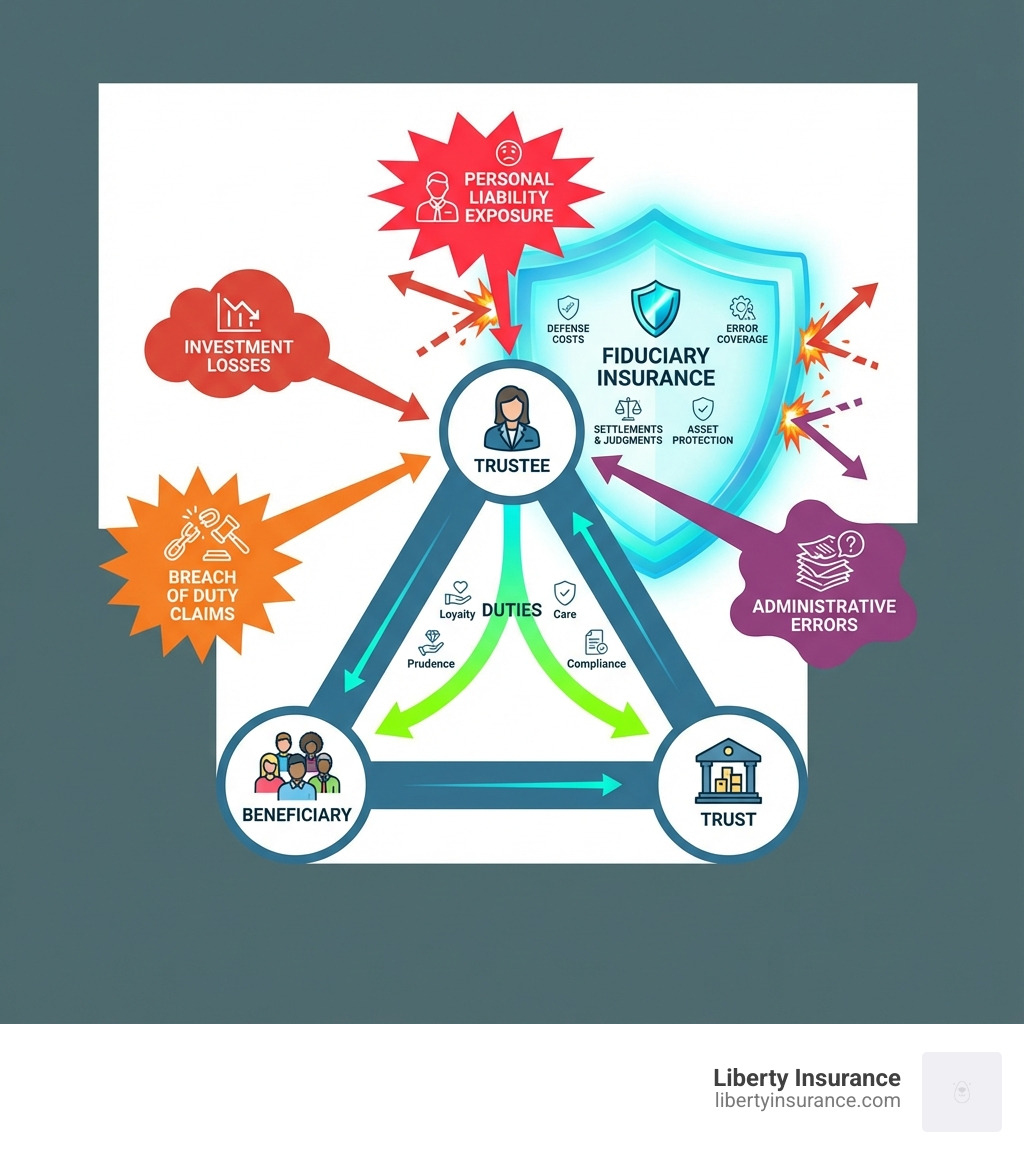
Serving as a trustee carries significant legal liability. Trustees owe beneficiaries strict fiduciary duties, including the duty of loyalty, the duty of prudence, and the duty to keep accurate accounts. Fiduciary fees compensate the trustee for the time, labor, expertise, and personal risk associated with managing these responsibilities.
Key Responsibilities Covered by Fiduciary Fees
Fiduciary compensation is not simply an investment fee; it covers a wide spectrum of administrative duties required to keep a trust compliant and operational:
- Asset Management and Safekeeping: Overseeing real estate, closely held business interests, brokerage accounts, and physical property held within the trust.
- Accounting and Recordkeeping: Tracking principal and income accounting entries, tracking cost bases, and preparing annual accountings for beneficiaries.
- Tax Compliance: Gathering financial records, coordinating with certified public accountants (CPAs), and filing state and federal income tax returns (IRS Form 1041).
- Distribution Management: Evaluating beneficiary requests for discretionary distributions according to the trust’s standard (such as health, education, maintenance, and support standards).
- Legal Compliance: Ensuring trust actions comply with local probate codes, state trust codes, and federal tax laws.
Common Trustee Fee Structures Explained
Trustee compensation structures vary based on local customs, state statutes, and the administrative model of the chosen trustee. Understanding how these fees are calculated helps grantors structure trust documents effectively and helps beneficiaries verify that fees remain reasonable.
Common Fiduciary Fee Models
- Percentage of AUM: Tiered annual % based on asset valuation
- Hourly Rates: Fixed rate per hour for time expended
- Flat Annual Fees: Fixed yearly fee for standard administration
- Statutory Rates: Fee schedules established by state law
- Extraordinary Fees: Separate charges for non-routine tasks
1. Percentage of Assets Under Management (AUM)
The percentage of Assets Under Management (AUM) model is the standard pricing method used by corporate trustees, wealth management institutions, and professional trust companies. The trustee charges an annual percentage based on the fair market value of the trust’s total assets, usually assessed quarterly.
Corporate trustees typically apply a tiered fee schedule, where the percentage rate decreases as the trust’s total asset value increases:
- First $1 Million: 1.00% to 1.50%
- Next $4 Million: 0.75% to 1.00%
- Next $5 Million: 0.50% to 0.75%
- Assets over $10 Million: Negotiated rates (often 0.25% to 0.50%)
For example, a $3 million trust under a standard tiered corporate schedule might pay 1.00% on the first $1 million ($10,000) and 0.75% on the remaining $2 million ($15,000), resulting in an annual total fiduciary fee of $25,000 (an effective rate of 0.83%).
2. Hourly Rates
Professional individual trustees, such as estate planning attorneys, licensed private fiduciaries, or CPAs, often charge hourly rates rather than an AUM fee. This approach is common when trust assets consist primarily of non-liquid or hard-to-value holdings, such as commercial real estate or private enterprise stock.
- Licensed Private Fiduciaries: $150 to $350 per hour
- Attorneys acting as Trustees: $300 to $600+ per hour
- CPAs acting as Trustees: $250 to $500+ per hour
Hourly pricing ensures the trust pays only for the actual time spent on administration. However, for trusts that require active monthly management, hourly billing can quickly add up if not monitored against budget expectations.
3. Flat Annual Fees and Minimum Fees
Corporate trustees usually enforce a minimum annual fee regardless of the total asset balance. Minimum annual fees typically range from $2,500 to $10,000. If a trust holds $150,000 in cash, a $3,000 minimum fee translates to an effective rate of 2.0%, which can quickly diminish small trust principals.
Flat annual fees are also utilized for specialized trusts that require minimal ongoing interaction, such as Irrevocable Life Insurance Trusts (ILITs) or Directed Trusts where investment authority is delegated to an external advisor.
4. Statutory Fee Schedules vs. "Reasonable Compensation"
State legal frameworks govern trustee compensation when a trust agreement does not explicitly state a fee structure.
- Statutory States: Certain states (such as New York and Georgia) set specific statutory schedules into state law. For instance, New York Surrogate's Court Procedure Act (SCPA) § 2308 and § 2309 establish statutory annual commissions based on multi-tiered asset caps and income collected.
- Reasonable Compensation States: Most states have adopted the Uniform Trust Code (UTC). Under UTC Section 708, if the trust instrument is silent regarding compensation, the trustee is entitled to compensation that is "reasonable under the circumstances."
If a dispute over "reasonable compensation" reaches a court, probate judges evaluate several key factors:
- The total financial size and gross income of the trust.
- The degree of responsibility, risk, and specialized skill required.
- The time spent by the trustee and accuracy of contemporaneous logs.
- The custom in the community for similar fiduciary work.
- The performance and protection of trust assets achieved by the trustee.
5. Extraordinary Service Fees
Standard trustee compensation covers routine administrative, tax, and investment duties. If non-routine, highly complex challenges arise, trustees may charge additional extraordinary fees. Situations justifying extraordinary compensation include:
- Managing or liquidating a closely held business.
- Overseeing complex environmental remediation or real estate development.
- Defending the trust in beneficiary litigation or court proceedings.
- Handling IRS audit examinations of historic trust tax returns.
Corporate Trustees vs. Individual Trustees: Fee Breakdown
Choosing between an institutional corporate trustee and an individual trustee significantly impacts total trust administration costs, operational efficiency, and overall administration risks.
| Feature / Metric | Corporate Trustee (Bank / Trust Company) | Professional Individual Trustee (Attorney / CPA / Private Fiduciary) | Non-Professional Individual (Family Member / Friend) |
|---|---|---|---|
| Typical Fee Model | Tiered % of AUM + Minimum Annual Fee | Hourly rate ($150–$600/hr) or reduced AUM % | Out-of-pocket expenses; lower or waived fee |
| Average Cost Burden | $5,000–$50,000+ per year (based on asset tier) | Billed according to direct time spent | Minimal direct fee; high reliance on hired experts |
| Minimum Asset Threshold | Often requires $500,000 to $1,000,000+ | Usually no strict minimum asset requirement | No minimum asset requirement |
| Investment Expertise | Built-in institutional investment management | Outsources investment management to third parties | Outsources investment management to third parties |
| Continuity & Permanence | Perpetual corporate life; no risk of incapacity | Subject to personal retirement, illness, or death | Subject to personal retirement, illness, or death |
| Litigation Risk | High institutional accountability and insurance | Professional liability (E&O) insurance coverage | Personal assets exposed; rarely carries fiduciary insurance |
Institutional Corporate Trustees
Corporate trustees provide continuity, deep expertise, regulatory oversight, and neutral third-party administration. However, their fee schedules reflect high overhead costs. In addition to standard tiered AUM charges, corporate trust departments may assess specific operational fees, such as trust opening/closing fees, fee surcharges for holding real estate or unique non-financial assets, and tax preparation surcharges.
Family Members or Friends as Individual Trustees
Grantors frequently name family members or friends as trustees, expecting them to serve for free or for modest compensation. While an individual trustee may waive a formal trustee fee, overall expenses for the trust may not drop to zero. Non-professional trustees often need to hire third-party experts—such as trust accountants, financial advisors, and estate attorneys—to fulfill their legal obligations correctly. These external fees are paid directly out of the trust assets as administrative expenses.
Comprehensive Comparison of Fiduciary Fee Models
To evaluate which fee model aligns best with your trust's size and asset composition, compare the primary pricing structures below:
| Fee Structure | Typical Cost Range | Primary Application | Pros | Cons / Considerations |
|---|---|---|---|---|
| Tiered AUM Fee | 0.50% – 1.50% annually | Liquid portfolios, marketable securities, institutional trust administration | Predictable costs; aligns trustee incentive with asset growth | Can be expensive for large, passive liquid portfolios |
| Hourly Billing | $150 – $600+ per hour | Real estate trusts, illiquid assets, short-term estate settlement | Pay only for exact time worked; cost-effective for static trusts | Requires strict review of itemized invoices; risk of cost overruns |
| Flat Annual Fee | $1,500 – $7,500 per year | Directed trusts, ILITs, low-activity special needs trusts | Highly predictable fixed cost; easy to budget | May not cover unexpected legal or administrative spikes |
| Statutory Fee Schedule | Dictated by state statute (e.g., NY SCPA rates) | Probate estates and testamentary trusts in statutory states | Transparent, legally defined thresholds | Standard rates may be disproportionate to actual effort expended |
Tax Treatment of Fiduciary Fees on Form 1041
Understanding how fiduciary fees affect trust income tax returns is critical for maximizing tax efficiency.
Deductibility Under IRC Section 67(e)
Under the Tax Cuts and Jobs Act (TCJA) and subsequent IRS regulations under 26 U.S. Code § 67(e), individual taxpayers faced limits on miscellaneous itemized deductions. However, trusts and estates maintain a specific statutory exception.
Expenses paid or incurred in connection with trust administration that would not have been incurred if the property were not held in trust are deductible above-the-line from the trust's gross income. Fiduciary management fees, trust accounting costs, legal fees for trust administration, and court costs qualify under IRC Section 67(e).
Trust Income Tax Impact (Form 1041)
- Trust Gross Income (Dividends, Interest, Capital Gains)
- Less: Tax-Deductible Fiduciary Fees (IRC § 67(e))
- Equals: Adjusted Total Income / Distributable Net Income (DNI)
Allocation Between Principal and Income
For accounting purposes, local trust accounting income rules dictate whether fiduciary fees are charged against trust income or trust principal:
- Most jurisdictions mandate splitting standard fiduciary fees equally (50% paid from trust accounting income, 50% paid from trust principal).
- Tax preparation fees directly tied to income returns are typically charged against trust income.
- Capital transaction fees or litigation expenses protecting trust assets are generally charged against principal.
Taxability to the Trustee
Fiduciary fees paid out of the trust represent taxable earned income to the recipient. Individual trustees must report fiduciary fees as ordinary income on Form 1040. If the trustee serves as a professional fiduciary business, the income may also be subject to self-employment taxes (SECA).
Rights of Beneficiaries: Monitoring and Challenging Excessive Fees
Beneficiaries have a legal right to inspect trust accounting reports and verify that fiduciary compensation remains within reasonable bounds.
Spotting Red Flags and Excessive Fees
Beneficiaries should review annual accounting statements carefully for common red flags, including:
- Double-Dipping: A corporate or professional trustee charging a full 1.0% fiduciary administrative fee and placing trust assets into proprietary mutual funds or affiliate advisory programs that charge an independent management fee, without applying an offsetting credit.
- Vague Hourly Invoices: Hourly billing statements from individual trustees that lack itemized descriptions, listing lump-sum charges like "administrative duties - 20 hours."
- Duplicative Professional Fees: A trustee billing high hourly rates for routine clerical tasks (such as filing papers or opening mail) that should be handled as basic administrative overhead.
- Unauthorized Pre-Payments: Taking advance fiduciary compensation prior to completing administrative duties or prior to court authorization where required by local rules.
Legal Steps to Challenge Unreasonable Fees
If a beneficiary suspects that a trustee is charging excessive fees, they can take several steps:
- Request an Itemized Accounting: Request a detailed accounting log of all fees collected, time records, rates, and explicit justifications for extraordinary charges.
- Issue a Formal Demand Letter: Point out specific unallowed charges or math errors and request a voluntary reduction or refund to the trust principal.
- Petition the Probate Court: If informal resolution fails, a beneficiary can file a petition in the local probate or chancery court. The court can order an audit, surcharge the trustee (requiring them to repay unauthorized fees out of personal funds), reduce future compensation, or remove the trustee.
How Grantors Can Control Fiduciary Costs in Trust Planning
Settlors designing an estate plan can use several practical techniques to keep fiduciary costs reasonable while ensuring proper management:
1. Embed Clear Fee Terms in the Trust Agreement
Do not rely entirely on state default rules. The trust instrument can specifically define compensation terms, cap annual fees at a fixed percentage, or mandate that any individual trustee receive compensation matching a published commercial bank rate or statutory metric.
2. Utilize a Directed Trust Structure
In a Directed Trust, responsibilities are split between parties. An external Investment Management Advisor manages the portfolio, while a Administrative Trustee handles distributions and recordkeeping. Because the administrative trustee assumes no investment liability, their administrative fee is significantly lower (often 0.15% to 0.30%).
Directed Trust Model
- Grantor / Settlor
- Investment Committee / Advisor: Manages Investments (Lower Investment Fee)
- Administrative Trustee: Handles Tax & Accounting (Reduced Admin Fee)
3. Appoint a Trust Protector
A Trust Protector is an independent third party granted specific powers in the trust document, including the explicit authority to review trustee compensation, audit accounting logs, and remove and replace an overly expensive corporate or individual trustee without going to court.
Frequently Asked Questions About Trust Fiduciary Fees
Can a trustee charge both an administrative fee and an investment management fee?
A corporate trustee or advisor generally cannot double-dip by charging full, unadjusted fees for both administrative trustee services and internal investment management on the exact same pool of assets. Under modern trust laws, institutions must either offer a bundled fee schedule or provide a fee credit offsetting investment fees against fiduciary commissions.
Are trustee fees paid to family members taxable income?
Yes. Any fiduciary fee received by an individual trustee—even a close family member—is treated as taxable compensation for services rendered and must be reported on their personal income tax return. If a family member acts as trustee and is also a primary beneficiary, waiving the fee may be tax-advantageous, allowing funds to pass to them as tax-free inheritance distributions instead of taxable income.
What happens if the trust document does not mention trustee compensation?
If the trust agreement is silent, state law governs compensation. In Uniform Trust Code (UTC) jurisdictions, the trustee is entitled to "reasonable compensation under the circumstances." In statutory states (such as New York), the trustee is compensated according to fixed percentage calculations established by probate statute.
How often are trustee fees paid out of the trust?
Fee withdrawal schedules depend on the governing trust agreement and institutional policy. Corporate trustees typically deduct their fees quarterly in arrears based on average asset values during that quarter. Individual professional trustees billing hourly usually submit monthly or quarterly invoices to the trust principal.
Can a beneficiary refuse to approve a trustee's requested fee?
Beneficiaries can decline to sign a release or informal accounting approval if they believe the requested fee is excessive. If the beneficiary refuses to approve the fee, the trustee must petition the local court to review their billing logs and formally approve the compensation.
Practical Next Steps for Estate Planning and Trust Oversight
Whether you are creating a new estate plan or supervising an existing trust, taking deliberate steps to address fiduciary costs protects trust assets over the long term:
- For Grantors: When drafting trust instruments, explicitly define trustee fee formulas. If naming an institutional trustee, negotiate their published fee schedule upfront and include an explicit Trust Protector clause allowing easy trustee removal.
- For Trustees: Maintain detailed, contemporaneous time logs and billing invoices. Keep trust accounting clear and transparent, provide beneficiaries with timely annual statements, and separate standard administration costs from extraordinary service charges.
- For Beneficiaries: Review annual trust accountings promptly. Compare corporate AUM charges against published schedules, verify that investment and administrative fees are not duplicated, and request itemized fee breakdowns whenever hourly charges appear unexpected.
Image Gallery