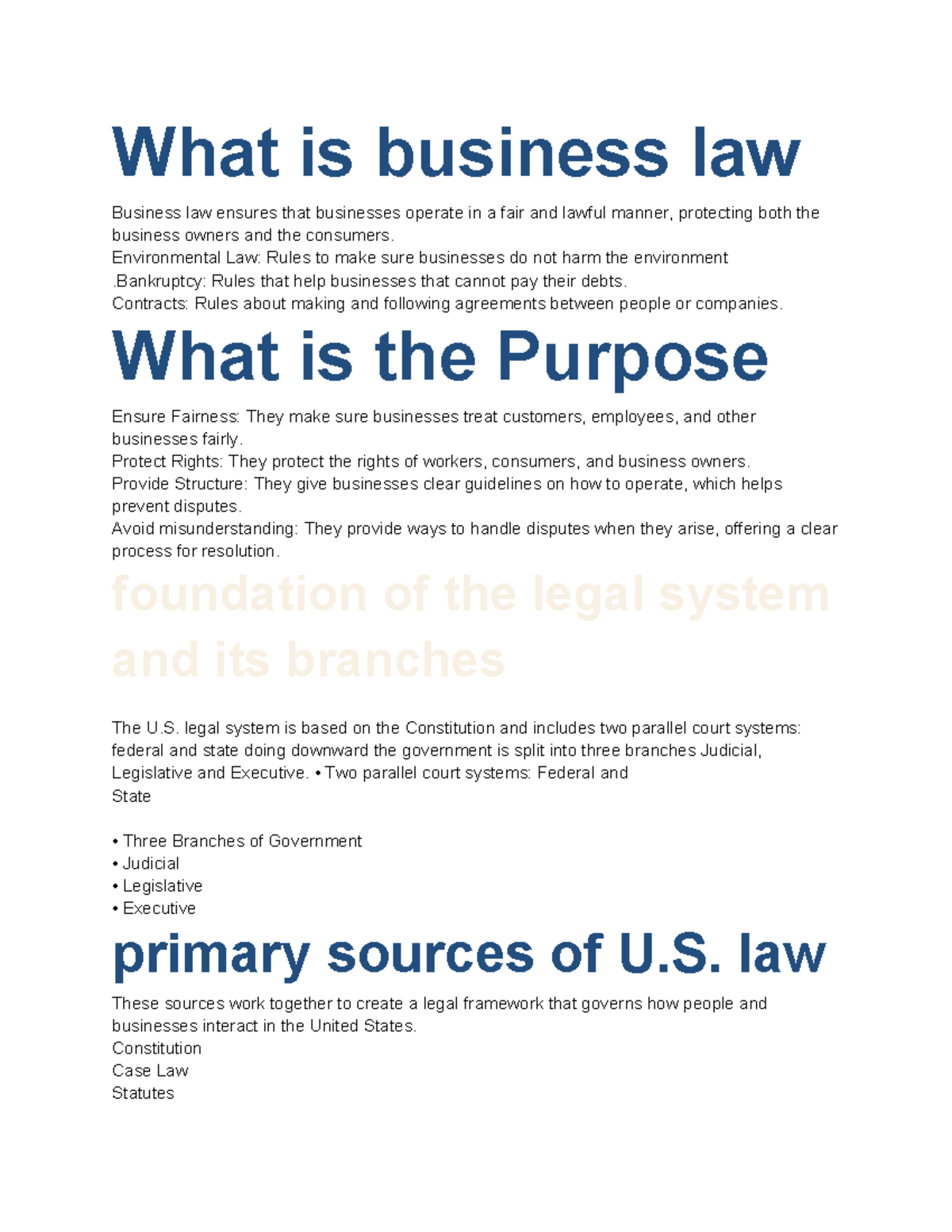
What a Business Law Undergraduate Experiences: A Comprehensive Guide
An undergraduate in business law experiences a rigorous, interdisciplinary education that bridges the gap between commercial strategy and legal frameworks. Students navigate a demanding curriculum involving case law analysis, financial...
An undergraduate in business law experiences a rigorous, interdisciplinary education that bridges the gap between commercial strategy and legal frameworks. Students navigate a demanding curriculum involving case law analysis, financial accounting, and regulatory compliance, preparing them for roles in corporate governance, contract management, or future legal practice.
Contents
The journey of a business law undergraduate is distinct from both a traditional liberal arts pre-law track and a standard business administration major. It is a specialized path that requires a dual mindset: the analytical precision of a lawyer and the pragmatic, results-oriented focus of a business executive. As of 2026, this discipline has evolved to include significant focus on digital assets, AI ethics, and global ESG (Environmental, Social, and Governance) standards, making the undergraduate experience more complex and technologically integrated than ever before.
The Intersection of Two Disciplines: The Curriculum
The core of the business law undergraduate experience is the curriculum. Unlike a general management degree, which might touch upon law in a single elective, a business law major dives deep into the statutes and regulations that govern the marketplace.
Core Business Foundations
Before a student can understand how to litigate a contract, they must understand why the contract exists. Undergraduates spend their first two years mastering "The Language of Business." This includes:
- Financial and Managerial Accounting: Understanding balance sheets and income statements is vital for identifying corporate fraud or assessing damages in a legal dispute.
- Corporate Finance: Students learn about capital structures, which provides the necessary context for understanding mergers, acquisitions, and securities law.
- Organizational Behavior: This subject helps students understand the human element of corporate legal issues, such as employment law and workplace discrimination.
Legal Specialties and Frameworks
Once the business foundation is laid, the "Law" portion of the degree takes center stage. In 2026, the focus has shifted heavily toward the digital economy. Students spend significant time on:
- The Uniform Commercial Code (UCC): This remains the bedrock of business law education, governing the sale of goods, negotiable instruments, and secured transactions.
- Intellectual Property (IP): In a world driven by intangible assets, undergraduates learn the nuances of patents, trademarks, and copyrights, often focusing on how AI-generated content fits into existing legal frameworks.
- Administrative Law: Understanding the role of agencies like the Securities and Exchange Commission (SEC) or the Federal Trade Commission (FTC) is essential for any student looking toward a career in compliance.
The Academic Grind: Daily Life and Study Habits
The daily life of a business law undergraduate is defined by a high volume of reading and the constant application of the IRAC method (Issue, Rule, Analysis, and Conclusion). This is the standard methodology for legal writing and analysis, and mastering it is often the most significant hurdle for new students.
From Memorization to Analysis
In high school or general education courses, students are often rewarded for memorizing facts. In business law, facts are merely the starting point. The undergraduate experience involves reading dense judicial opinions (cases) and "briefing" them. A student might spend four hours reading 60 pages of case law regarding a breach of fiduciary duty, only to spend the class period debating a single footnote in the judge’s decision.
The Shift to "Cold Calling" and Socratic Debate
Many business law professors adopt a modified Socratic Method. Undergraduates must come to class prepared to be "called on" to explain a case’s holding or to defend a specific legal position. This builds the "thick skin" and quick-thinking skills required for real-world negotiations and courtroom appearances. It creates an environment of high pressure but also high engagement.
Practical Skills and Experiential Learning
By 2026, the business law undergraduate experience has moved beyond the lecture hall. Universities now emphasize experiential learning to ensure students are "practice-ready" upon graduation.
Moot Court and Mock Negotiations
Students often participate in moot court competitions, where they argue hypothetical cases before a panel of judges. In a business law context, these cases usually revolve around commercial disputes, such as a shareholder derivative suit or an antitrust violation. Mock negotiations are equally common, where students are split into teams—representing a buyer and a seller—to finalize a complex merger agreement while navigating regulatory hurdles.
Internships and Clinics
Most undergraduates seek internships during their junior and senior years. Common placements include:
- In-House Legal Departments: Working under a General Counsel at a corporation to learn about contract lifecycle management.
- Compliance Offices: Helping firms navigate Financial Industry Regulatory Authority (FINRA) requirements or data privacy laws.
- Government Agencies: Interning at the Department of Commerce or local state attorney general offices.
2026 Trends: Technology and Globalism
The undergraduate experience in 2026 is heavily influenced by the integration of LegalTech. Students are no longer just learning the law; they are learning how to use software to analyze it.
- Generative AI in Legal Research: Students learn to use AI-driven tools to perform initial case law searches and to draft boilerplate contract clauses. However, they also spend significant time learning about "AI hallucination" and the ethical implications of using automated systems in legal practice.
- ESG and Sustainability Law: With global regulations tightening, 2026 undergraduates study the legal requirements for corporate carbon reporting and supply chain transparency.
- International Business Law: As trade remains global, students must understand the United Nations Convention on Contracts for the International Sale of Goods (CISG) and how different legal systems (Civil Law vs. Common Law) interact.
Comparison of Undergraduate Paths
Choosing between a general business degree and a specialized business law degree is a common decision point for students. The table below outlines the primary differences in focus and outcome.
| Feature | General Business Administration | Business Law (Undergraduate) | Pre-Law (Political Science/English) |
|---|---|---|---|
| Primary Focus | Management, Marketing, Operations | Legal Frameworks, Compliance, Ethics | Theory, History, Logic, Writing |
| Quantitative Depth | High (Calculus, Statistics, Finance) | Moderate (Accounting, Data Analysis) | Low (General Ed requirements) |
| Writing Style | Business Reports, Memos | Case Briefs, Legal Analysis (IRAC) | Essays, Research Papers |
| Core Skillset | Strategic Execution | Risk Mitigation & Rule Application | Critical Inquiry & Advocacy |
| Typical 2026 Tool | CRM & ERP Systems | Legal AI & Contract Management Software | Academic Databases |
| Common Career Path | Project Manager, Analyst | Compliance Officer, Contract Specialist | Attorney (Requires JD), Public Policy |
Career Outcomes and Post-Graduation Pathways
What happens after the degree is completed? A business law undergraduate has several distinct paths available, many of which do not require a Juris Doctor (JD).
- Corporate Compliance: This is one of the fastest-growing fields in 2026. Companies need professionals who can interpret complex regulations (like GDPR or new AI laws) and ensure the firm is following them to avoid massive fines.
- Contract Management: These professionals handle the drafting, negotiation, and renewal of business agreements. It is a high-responsibility role that requires the exact blend of business acumen and legal knowledge taught in the major.
- Human Resources (ER/LR): Labor Relations and Employee Relations specialists use their knowledge of employment law to manage union negotiations and workplace disputes.
- Law School (The JD Path): For many, the undergraduate degree is a stepping stone. Business law majors often have an advantage in law school because they have already mastered the IRAC method and have a deep understanding of corporate structures, which is a major component of the first-year Law School curriculum.
Frequently Asked Questions
Is an undergraduate business law degree the same as a law degree?
No. An undergraduate business law degree is a Bachelor’s degree (BA or BS). To practice as an attorney in most jurisdictions, you must subsequently earn a Juris Doctor (JD) from an accredited law school and pass the bar exam. The undergraduate degree prepares you for business-legal roles but does not grant the license to practice law.
How difficult is the coursework compared to a regular business major?
The difficulty is subjective but generally considered higher in terms of reading and analytical writing. While a marketing major might focus on creative projects or data trends, a business law major must parse complex statutes and judicial opinions. The "grading curve" in business law classes is often more competitive, mirroring the rigor of law school.
Can I get a job in a law firm with this degree?
Yes, many business law undergraduates work as paralegals, legal assistants, or "Legal Operations" (LegalOps) specialists. These roles involve managing the business side of a law firm, such as billing, technology implementation, and project management for large cases.
Do I need to be good at math for this major?
You need to be comfortable with "business math." While you won't typically need advanced calculus, you must be proficient in accounting and financial analysis. Understanding a company's financial health is a prerequisite for understanding its legal liabilities.
What is the average starting salary for this degree in 2026?
By 2026, starting salaries for business law undergraduates in compliance or contract management roles typically range from $65,000 to $85,000, depending on the industry and geographic location. Those entering high-demand sectors like FinTech or Cybersecurity compliance may see higher starting offers.
Final Recommendation
If you enjoy analytical thinking, have a strong interest in how rules shape the economy, and are prepared for a heavy reading load, an undergraduate degree in business law is an excellent choice. To succeed, focus on building a strong foundation in accounting during your early years, as this will make your upper-level legal courses much more intuitive. Additionally, seek out at least one internship in a compliance or corporate setting by your junior year to translate classroom theory into marketable professional skills.
Image Gallery