The Oldest Tattoo Ever: Discovery, Meaning, and Ancient Origins
The oldest known tattoos belong to Ötzi the Iceman, a naturally preserved mummy dating back to approximately 3300 BCE. Found in the Alps in 1991, his 61 tattoos were likely therapeutic, applied to joints to treat pain. Simultaneously,...
The oldest known tattoos belong to Ötzi the Iceman, a naturally preserved mummy dating back to approximately 3300 BCE. Found in the Alps in 1991, his 61 tattoos were likely therapeutic, applied to joints to treat pain. Simultaneously, the Gebelein mummies from Egypt (c. 3351–3017 BCE) exhibit the world's oldest figurative tattoos.
Contents
The Discovery of Ötzi the Iceman’s Tattoos
As of 2026, the scientific community recognizes Ötzi the Iceman as the primary record holder for the world’s oldest tattoos. Discovered by hikers in the Ötztal Alps on the border of Austria and Italy, Ötzi was preserved by glacial ice for over 5,000 years. While his discovery revolutionized our understanding of the Copper Age, it wasn't until several years of intensive multispectral imaging that the full extent of his body art was revealed.
Ötzi possesses a total of 61 tattoos, organized into 19 distinct groups. Unlike modern tattoos, which are often prominent and colorful, Ötzi’s marks are subtle, consisting of fine lines and crosses. These tattoos were not created with needles as we know them today; instead, they were made by rubbing charcoal or soot into small incisions in the skin.
The placement of these marks is significant. Most are located on the lower back, the backs of the knees, and the ankles. When researchers performed radiological scans of the mummy, they found evidence of degenerative bone conditions, including arthritis, in the exact areas where the tattoos were placed. This led to the groundbreaking conclusion that the oldest tattoos in human history were likely medicinal or therapeutic rather than purely decorative.
The Gebelein Mummies: The Birth of Figurative Art
While Ötzi holds the record for the oldest tattoos, he shares the "oldest" era with two Predynastic Egyptian mummies known as the Gebelein mummies. Housed in the British Museum, these remains were discovered at the end of the 19th century, but their tattoos remained hidden from the naked eye for over a hundred years. It was only through infrared imaging in 2018 that the dark smudges on their skin were identified as complex illustrations.
The Gebelein Man A and Gebelein Woman represent a different branch of ancient tattooing. While Ötzi's tattoos were geometric and therapeutic, the Egyptian tattoos were figurative:
- Gebelein Man A: Features a tattoo of a wild bull (aurochs) and a Barbary sheep on his upper arm. These animals were symbols of power and virility in ancient Egyptian culture.
- Gebelein Woman: Displays four small "S" shapes on her shoulder and a linear motif on her arm, which may represent staves used in ritual dances or symbols of protection.
The Gebelein mummies date back to between 3351 and 3017 BCE, making them roughly contemporaneous with Ötzi. This suggests that tattooing was a widespread practice across different continents and cultures even 5,000 years ago, serving diverse roles ranging from pain management to social identity.
Interpreting the Meaning: Therapy vs. Symbolism
Understanding what the oldest tattoos mean requires a deep dive into the specific cultures of the Neolithic and Copper Ages. The contrast between Ötzi and the Gebelein mummies suggests that tattooing served at least two primary functions in antiquity.
Therapeutic and Medicinal Tattoos
In the case of Ötzi, the tattoos correspond to acupuncture points that are still used today to treat back pain and gastrointestinal issues. Before the discovery of the Iceman, it was widely believed that acupuncture originated in Asia thousands of years later. Ötzi’s tattoos suggest that a sophisticated understanding of the body's pressure points existed in Europe long before the written record.
These tattoos were likely "prescribed" by a healer or shaman. The process involved cutting the skin and packing it with medicinal soot, creating a permanent mark that signaled both a treatment and perhaps a protective ward against the spirits believed to cause physical pain.
Symbolic and Ritualistic Tattoos
The Gebelein tattoos represent the early use of tattoos as status markers or religious symbols. The bull and sheep were not just animals; they were depictions of the natural world that the wearer wished to harness or honor. In Predynastic Egypt, such imagery was common on pottery and in rock art, suggesting that the skin was simply another canvas for expressing cultural values, lineage, or religious devotion.
The "S" motifs on the Gebelein Woman are particularly interesting to anthropologists. Similar markings appear in later Egyptian history associated with priestesses or women of high social standing, indicating that tattooing may have been a gendered practice used to denote specific roles within the community.
Comparison of the World's Oldest Tattoos
| Feature | Ötzi the Iceman | Gebelein Man A | Gebelein Woman |
|---|---|---|---|
| Approximate Date | 3300 BCE | 3351–3017 BCE | 3351–3017 BCE |
| Location Found | Ötztal Alps (Italy/Austria) | Gebelein, Egypt | Gebelein, Egypt |
| Number of Tattoos | 61 | 2 | 2+ |
| Primary Motif | Lines and Crosses | Animals (Bull/Sheep) | S-shapes and Staves |
| Likely Purpose | Therapeutic / Pain Relief | Status / Symbolism | Ritual / Protection |
| Pigment Type | Carbon-based (Soot/Charcoal) | Carbon-based (Soot) | Carbon-based (Soot) |
The Ancient Tattooing Process
To understand the oldest tattoos, one must look at the technical limitations of the era. The Copper Age did not offer the fine steel needles used by modern artists. Instead, the process was more invasive and required significant skill.
- Skin Preparation: The skin was likely cleaned with water or natural oils. In Ötzi's case, the precise placement of the lines suggests that the area was marked beforehand to ensure the therapeutic benefit was maximized.
- Incision vs. Puncture: There are two main theories on how these marks were made. The "incision" method involves making a shallow cut with a flint flake or bone tool and then rubbing pigment into the wound. The "puncture" method, more common in Egypt, involves tapping a sharp point (like a bone awl or cactus spine) into the skin repeatedly to deposit ink.
- Pigment Selection: All the oldest tattoos found to date use carbon-based pigments. Soot was gathered from hearths or fires, sometimes mixed with water, plant extracts, or even animal fats to create a paste. Carbon is highly stable, which is why these marks have remained visible for over five millennia.
- Healing and Aftercare: While we have no written records of Neolithic aftercare, the presence of medicinal herbs in Ötzi’s belongings—such as birch polypore fungus, which has antibiotic properties—suggests that these ancient people had the knowledge to treat wounds and prevent infection during the tattooing process.
Why the "Chinchorro Mummy" Is No Longer the Record Holder
For several decades, many textbooks and articles claimed that a mummy from the Chinchorro culture in Chile held the record for the oldest tattoo. This mummy, an adult male, featured a "mustache" of dots tattooed on his upper lip. Early radiocarbon dating in the 1980s suggested the mummy was from 4000 BCE, which would have predated Ötzi by nearly a millennium.
However, as of the late 2010s and confirmed through research continuing into 2026, scientific recalibration of the dates has corrected this. New tests on the Chinchorro remains revealed that the tattooed individual actually lived around 2500 BCE. This correction solidified Ötzi’s position as the earliest confirmed example of tattooing in human history.
The Evolutionary Significance of Ancient Ink
The existence of tattoos 5,300 years ago tells us that the human desire to modify the body is not a modern trend but a fundamental part of our social evolution. These marks served as a "visual language" long before the widespread use of writing.
In a world where life was short and often defined by physical labor or tribal affiliation, tattoos provided:
- Identity: A way to recognize members of a specific clan or family.
- Protection: Spiritual insurance against the unknown.
- Continuity: A link between the physical body and the cultural or spiritual world.
The fact that the oldest tattoos appear almost simultaneously in the mountains of Europe and the deserts of Egypt suggests that tattooing may have been an even older practice that simply hasn't survived on less-preserved remains. Because skin decomposes quickly, we only see the "tip of the iceberg" through naturally or artificially mummified remains.
Frequently Asked Questions
What is the oldest tattoo in the world?
The oldest tattoos belong to Ötzi the Iceman, dating back to approximately 3300 BCE. He has 61 tattoos consisting of lines and crosses, primarily located on his joints and lower back.
Were the first tattoos for decoration?
Not necessarily. While the Gebelein mummies in Egypt had figurative tattoos (bulls and sheep) that may have been for status or symbolism, Ötzi’s tattoos were likely medicinal. Their placement over arthritic joints suggests they were used as a form of early acupuncture or pain management.
How did ancient people get tattooed without modern needles?
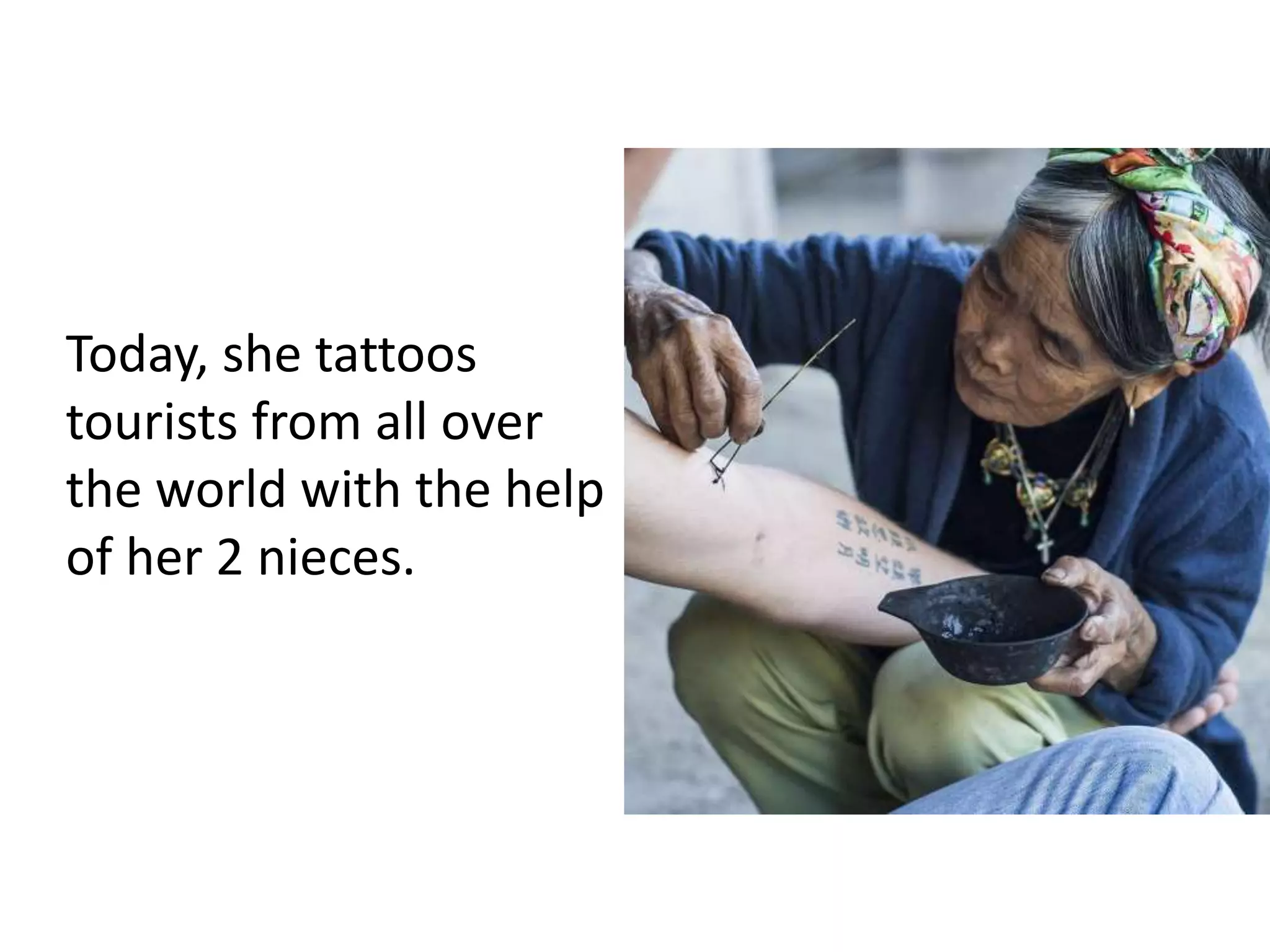
Ancient tattooing was performed by making small incisions with sharp flint or bone tools and then rubbing charcoal or soot into the cuts. In some cultures, they used bone awls or thorns to "tap" the pigment into the skin.
Did the oldest tattoos have colors?
No, the oldest known tattoos were exclusively black or dark grey. They used carbon-based pigments, such as soot or pulverized charcoal. Colorful pigments like reds or blues appeared much later in human history as mineral processing techniques evolved.
Is Ötzi the Iceman’s tattoo record final?
While Ötzi currently holds the record, archaeology is an evolving field. If a well-preserved mummy is discovered in a permafrost or arid environment that predates 3300 BCE, the record could change. However, as of 2026, Ötzi remains the verified champion of ancient ink.
Final Recommendation for History Enthusiasts
If you are interested in the history of tattooing, the best way to understand its origins is to study the multispectral imaging reports from the South Tyrol Museum of Archaeology (Italy) and the British Museum (UK). These institutions hold the primary remains of Ötzi and the Gebelein mummies, respectively. Understanding the transition from medicinal "lines" to symbolic "figures" provides a profound look into how our ancestors viewed the human body as both a biological entity and a cultural canvas.
Image Gallery