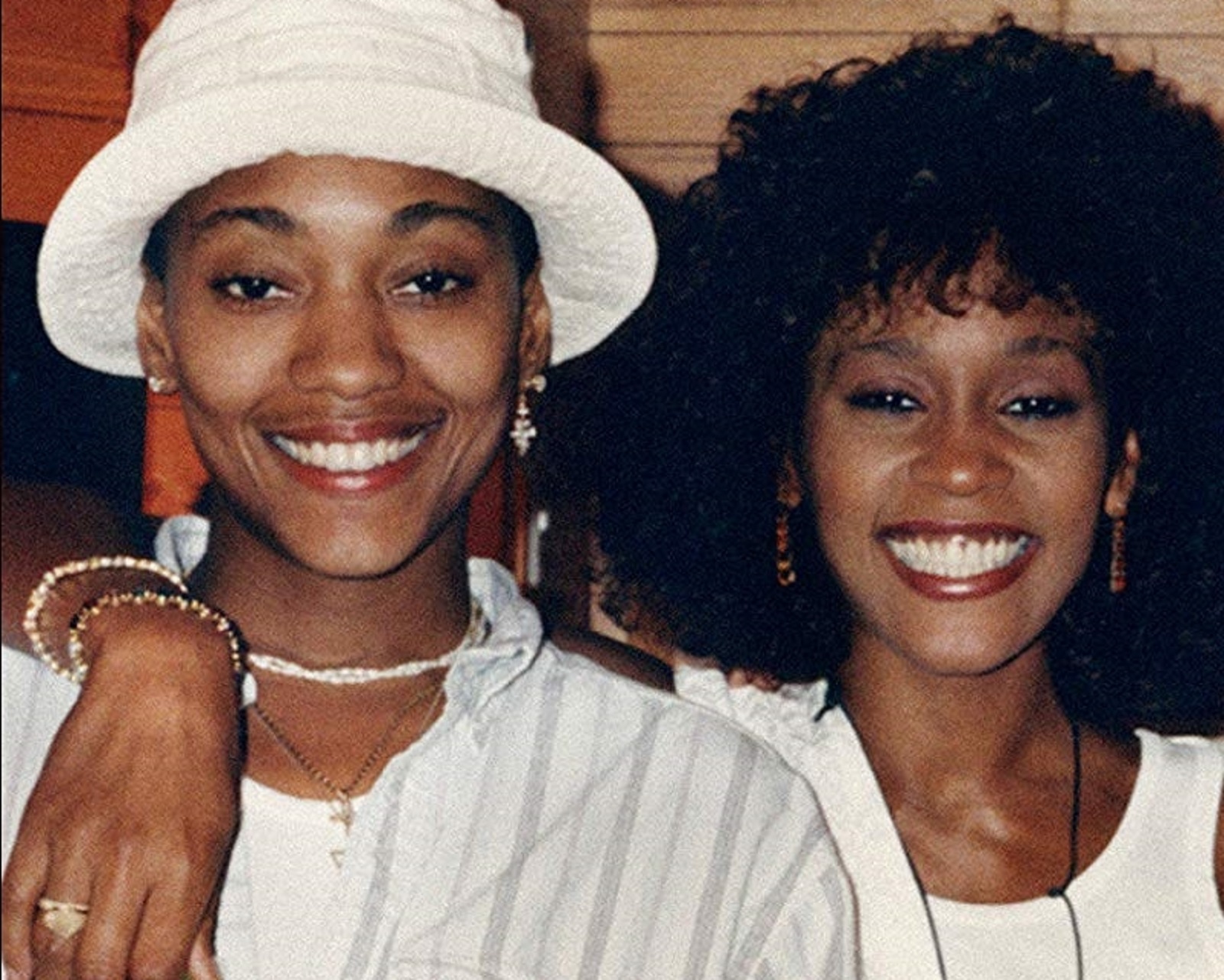
Whitney Houston and Robyn Crawford: A Historical Overview of Their Relationship and Legacy
The relationship between Whitney Houston and Robyn Crawford was the most enduring, complex, and influential partnership in the legendary singer’s life. Spanning more than two decades, their bond evolved from a teenage summer romance in...
The relationship between Whitney Houston and Robyn Crawford was the most enduring, complex, and influential partnership in the legendary singer’s life. Spanning more than two decades, their bond evolved from a teenage summer romance into a profound professional alliance, characterized by Crawford’s role as Houston's most trusted confidante and protector during her rise to global superstardom.
Contents
The Genesis of the Bond: East Orange, 1980
The foundation of the relationship between Whitney Houston and Robyn Crawford was laid in the summer of 1980 at a community center in East Orange, New Jersey. At the time, Houston was a 16-year-old with a burgeoning modeling career and a voice nurtured in the New Hope Baptist Church, while Crawford was a 19-year-old student-athlete.
The connection was instantaneous. Crawford has historically described their meeting as a moment where she felt a deep-seated need to protect Houston. Within their first year of friendship, the relationship moved beyond the platonic. In her 2019 memoir, A Song for You: My Life with Whitney Houston, Crawford confirmed what had been rumored for decades: the two were romantically and physically involved during their late teens and early twenties.
During this period, they were inseparable. They shared a rented apartment and supported each other’s ambitions. For Houston, Crawford represented a safe harbor—a person who knew "Nippy" (Houston’s childhood nickname) before the world knew the "The Voice."
The Pivot to Professionalism and Secrecy
As Whitney Houston’s career began its meteoric ascent following her signing with Clive Davis at Arista Records in 1983, the nature of her relationship with Crawford underwent a forced evolution. The social and industry climate of the early 1980s was significantly less hospitable to LGBTQ+ identities, particularly for a performer being marketed as "America’s Sweetheart" with deep roots in the gospel community.
Shortly after signing her record deal, Houston told Crawford that their physical relationship had to end. She presented Crawford with a slate-blue Bible and explained that the intimacy would make their journey even more difficult. Furthermore, Houston’s mother, Cissy Houston, was vocal about her disapproval of the closeness between the two women, later admitting in her own 2013 book that she "didn't particularly like" Crawford and would have been "bothered" if her daughter were gay.
Despite the cessation of their physical romance, their partnership deepened in other ways:
- Executive Assistant and Creative Director: Crawford became Houston’s right-hand person, managing her daily schedule, travel, and wardrobe.
- Gatekeeper: Crawford was the primary filter through which the outside world reached Houston, protecting her from the pressures of fame and industry exploitation.
- Emotional Anchor: As Houston transitioned into a global icon with the release of her self-titled debut (1985) and Whitney (1987), Crawford remained the only person in the inner circle who could speak to her with total candor.
The Public Narrative vs. Private Reality
Throughout the 1980s and 1990s, the mainstream media frequently speculated about Houston’s sexuality. Tabloids often framed the relationship with Crawford in a suspicious light, questioning why a beautiful, successful woman was not publicly dating men.
To counter these rumors, Houston’s PR team emphasized her "good girl" image and publicized her dates with high-profile figures like Eddie Murphy and Jermaine Jackson. However, Crawford remained a constant fixture at every award show, concert tour, and film set, including the production of The Bodyguard (1992).
The dynamic changed permanently in 1992 when Houston married R&B singer Bobby Brown. The marriage introduced a new level of friction. Brown and Crawford often clashed, representing two different worlds vying for Houston’s loyalty. While Crawford represented the disciplined, protective structure of Houston’s early career, Brown represented a more volatile, personal chapter of her life.
Comparison of Relationship Phases
| Period | Nature of Relationship | Primary Role of Robyn Crawford | Key External Influence |
|---|---|---|---|
| 1980–1982 | Romantic & Platonic | Best Friend / Lover | Local Community / Family |
| 1983–1991 | Professional & Confidential | Executive Assistant / Protector | Arista Records / Global Fame |
| 1992–2000 | Strained Partnership | Creative Director / Confidante | Bobby Brown / Media Scrutiny |
| 2000–2012 | Estrangement | None (Physical distance) | Substance Abuse / Career Decline |
| 2019–Present | Legacy & Record-Setting | Historical Witness (Memoir) | Cultural Retrospective |
The Departure and the Aftermath
The tension between Houston’s personal life and her professional requirements reached a breaking point in 2000. Crawford, witnessing Houston’s increasing struggle with substance abuse and the chaotic environment of her marriage, realized she could no longer protect the singer from herself.
After a series of confrontations and a sense that she was losing the battle for Houston’s well-being, Crawford resigned from her position and moved away from the singer’s immediate circle. Her departure marked the end of an era. Many biographers and close associates, including those interviewed for the 2017 documentary Whitney: Can I Be Me, have suggested that Crawford’s exit removed the "floor" that held Houston up. Without Crawford’s organizational discipline and unwavering loyalty, Houston’s personal and professional life began to unravel more rapidly.
Between 2000 and Houston’s tragic passing in 2012, the two women had minimal contact. Crawford built a new life, eventually marrying and starting a family, while Houston’s struggles became a matter of public record.
Historical Verification and the 2019 Memoir
For years, the truth about Houston and Crawford was buried under non-disclosure agreements and the protective silence of the Houston estate. It was not until the late 2010s that the historical record was clarified.
The 2018 documentary Whitney, authorized by the estate, acknowledged the significance of Crawford in Houston's life. However, it was Crawford’s own book, A Song for You: My Life with Whitney Houston, published in November 2019, that provided the definitive historical overview. Crawford stated that her reason for coming forward was not to "out" Houston or create scandal, but to ensure that the world understood the depth of the love and loyalty that defined Houston’s early years.
In 2026, looking back at the decade since those revelations, historians generally view Crawford not just as a "friend," but as a critical architect of Houston’s career. Her account has helped shift the narrative from one of tragedy to one of a woman who found profound, albeit complicated, love and support during her most formative years.
FAQ
When did Whitney Houston and Robyn Crawford first meet?
They met in June 1980 at the Mount Vernon School in East Orange, New Jersey. Both were working as summer camp counselors. Whitney was 16 and Robyn was 19.
Did Robyn Crawford confirm they had a romantic relationship?
Yes. In her 2019 memoir, Crawford confirmed that their relationship was physical and romantic in the early 1980s, though they decided to stop the physical aspect of their relationship shortly after Whitney signed her record deal with Arista.
Why did Robyn Crawford leave Whitney Houston's team in 2000?
Crawford left because she felt she could no longer help or protect Houston as the singer’s drug use and marriage to Bobby Brown became increasingly volatile. She expressed that she had reached a point of exhaustion and realized she was "losing" Houston to the chaos of her lifestyle.
What did the Whitney Houston estate say about Robyn Crawford?
While the estate was historically silent or dismissive of the relationship, the 2018 authorized documentary Whitney finally acknowledged Crawford as a vital figure in Whitney’s life. The estate has generally moved toward a more inclusive history of the singer's life, though they did not officially collaborate on Crawford's memoir.
How is the relationship viewed by historians today?
In 2026, the relationship is viewed as a foundational pillar of Whitney Houston's life. It is cited as a significant example of the pressures faced by Black female artists in the 20th century regarding their public image and private identities. Crawford is recognized as the person who provided the most stability during the peak of Houston’s fame.
Practical Recommendation for Further Research
To gain a complete understanding of this historical relationship, researchers should consult both the 2019 memoir A Song for You and the 2017 documentary Whitney: Can I Be Me. These sources offer a balanced view of how their bond functioned both as a personal sanctuary and a professional engine. For those studying the intersection of pop culture and LGBTQ+ history, this relationship serves as a primary case study in the evolution of media transparency and the personal costs of celebrity image-making.
Image Gallery