What the AAA Auto Insurance Rating by Better Business Bureau Means
The Better Business Bureau (BBB) rating for AAA auto insurance evaluates how effectively a regional AAA motor club or its affiliated insurance exchange responds to consumer complaints, resolves billing or claims disputes, and maintains...
The Better Business Bureau (BBB) rating for AAA auto insurance evaluates how effectively a regional AAA motor club or its affiliated insurance exchange responds to consumer complaints, resolves billing or claims disputes, and maintains transparent business practices. A high BBB rating indicates strong complaint management and marketplace transparency, though it does not reflect the insurer's financial ability to pay claims.
Contents
Understanding the Better Business Bureau Rating System
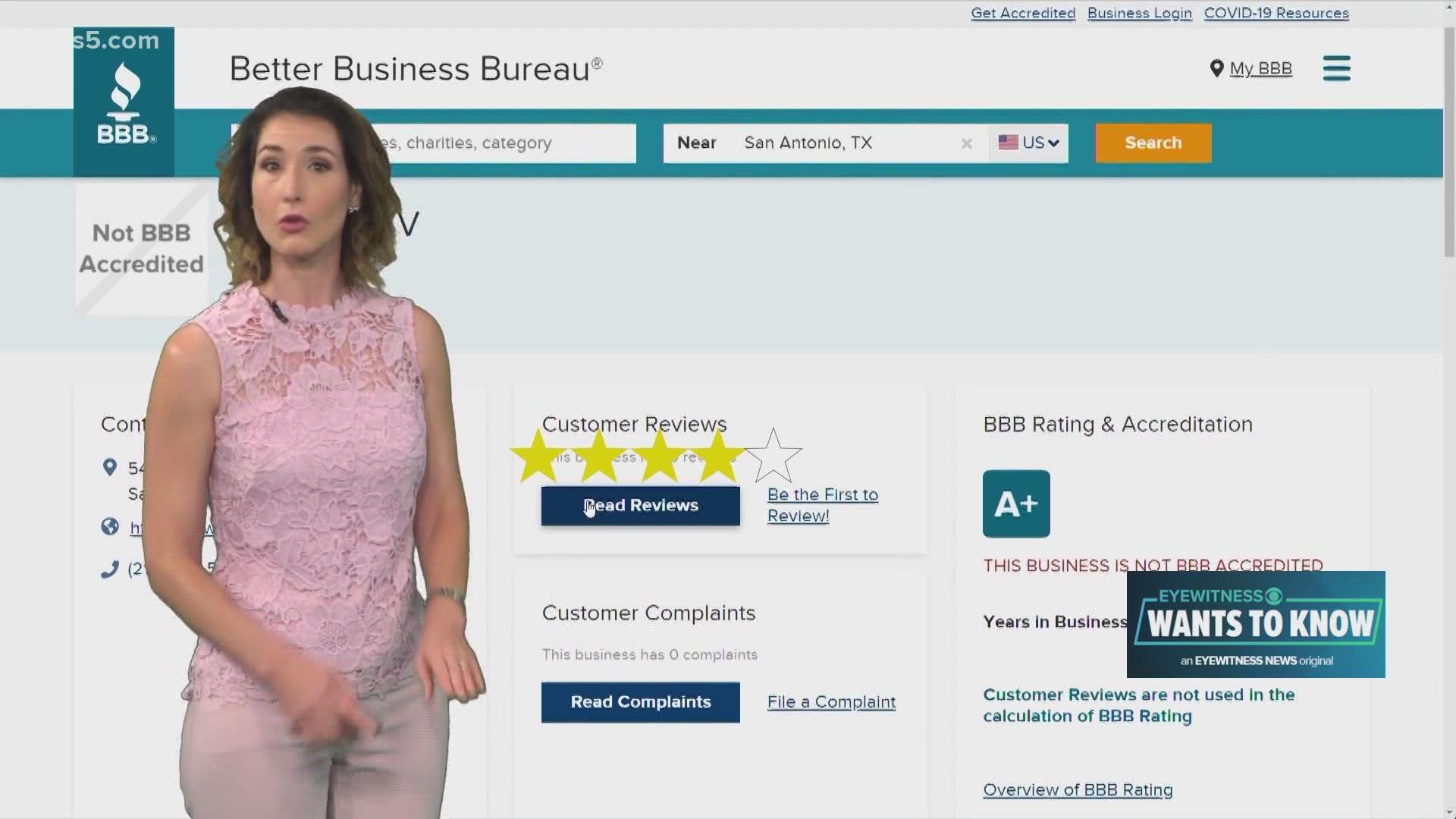
The Better Business Bureau is a non-profit organization focused on marketplace trust. It collects consumer feedback, tracks business complaints, and assigns letter grades ranging from A+ (highest) to F (lowest). Understanding how the BBB establishes these grades helps policyholders interpret what an auto insurer's rating actually represents.
Unlike government regulatory bodies, the BBB does not hold legal enforcement authority over insurance companies. Instead, its ratings function as a measure of customer service responsiveness, complaint resolution, and public accountability.
| Grade | Description |
|---|---|
| A+ to A- | Excellent complaint response & low dispute history |
| B+ to B- | Good performance; minor unresolved concerns |
| C+ to C- | Fair; moderate complaint volume or response delays |
| D+ to D- | Poor responsiveness; patterns of unresolved issues |
| F | Failure to respond or severe regulatory issues |
How the BBB Calculates Grades
The BBB assigns letter grades based on a proprietary 100-point scale evaluating 13 specific rating factors. For insurance providers like AAA, the most critical evaluation categories include:
- Complaint History: The total volume of complaints filed against the business relative to its size, along with the percentage of complaints that the business successfully resolves.
- Response Integrity: How quickly and thoroughly the insurer responds to consumer claims filed through the BBB platform, as well as whether the company fulfills agreed-upon settlements.
- Unresolved Disputes: Failure to respond to a customer complaint or refusal to make a good-faith effort to resolve a dispute heavily penalizes an insurer's grade.
- Time in Business: Companies with a long established operating history receive higher baseline points for stability.
- Transparency Practices: The BBB monitors whether businesses clearly disclose ownership, physical addresses, and nature of services on their public platforms.
- Government and Administrative Actions: If a state department of insurance issues final disciplinary actions or sanctions against an insurer, the BBB subtracts points from the company's profile.
BBB Ratings vs. Financial Strength Ratings
A common misconception among drivers is assuming a high BBB grade means an insurance company is financially secure. The BBB rates customer service interactions and dispute resolution, not financial solvency.
To evaluate an auto insurer's financial health, insurance buyers rely on credit rating agencies such as A.M. Best, S&P Global, or Moody's. An insurance carrier could earn an A+ rating from the BBB for responding promptly to billing inquiries while simultaneously holding a weak financial rating from A.M. Best, indicating potential difficulty fulfilling large catastrophe claims.
Why AAA Auto Insurance Has Multiple BBB Ratings
Consumers searching for "the" AAA BBB rating often discover conflicting letter grades across different search results. This occurs because the American Automobile Association (AAA) is not a single, centralized corporation providing insurance under one nationwide permit.
AAA is a national federation of independent, regionally operated motor clubs. Depending on where a policyholder resides, auto insurance is underwritten and sold by different regional AAA entities or their affiliated insurance exchanges.
- National AAA Federation (Brand)
- Regional Club A (e.g., CSAA Insurance)
- BBB Rating Profile A (Underwriting Region 1)
- Regional Club B (e.g., Auto Club Group)
- BBB Rating Profile B (Underwriting Region 2)
- Regional Club A (e.g., CSAA Insurance)
The Federation Model of AAA Insurance
When a driver buys AAA car insurance, the policy is underwritten by a specific regional organization authorized to use the AAA brand. Because each regional club operates under separate management, separate state insurance licenses, and distinct customer support teams, each regional entity maintains its own BBB profile and letter grade.
For example:
- CSAA Insurance Group: Underwrites AAA auto insurance policies across Northern California, Nevada, Utah, Arizona, and parts of the Midwest and East Coast.
- Auto Club Enterprises (Automobile Club of Southern California): Operates through the Interinsurance Exchange of the Automobile Club, servicing Southern California, Texas, Missouri, Alabama, and other territories.
- The Auto Club Group (ACG): Underwrites AAA policies across Florida, Michigan, Georgia, Tennessee, Iowa, Nebraska, Wisconsin, and surrounding regions.
- AAA Northeast: Services insurance policyholders across Massachusetts, New York, Rhode Island, Connecticut, and northern New Jersey.
Because of this structure, an A+ BBB rating for an AAA entity in California does not automatically apply to an AAA insurance provider operating in Florida or Michigan.
What a BBB Rating Tells You About AAA Auto Insurance
Evaluating a regional AAA club's BBB profile provides practical insights into how the insurer treats customers when friction occurs.
What an A+ BBB Rating Indicates
If your regional AAA insurance carrier holds an A+ BBB rating, it signifies that the underwriting club:
- Maintains a Responsive Support System: The insurer actively monitors and answers consumer complaints submitted to the BBB, usually responding within standard 14-to-30-day windows.
- Resolves Disputes in Good Faith: The company demonstrates a pattern of addressing policy issues—such as towing reimbursements, claim payout delays, or policy cancellation adjustments—to the satisfaction of the customer or standard industry resolution criteria.
- Operates Transparently: The business provides clear business details, verified licensing, and transparent contact information to regulatory and consumer protection platforms.
What BBB Ratings Fail to Measure
While a positive BBB score reflects good customer service protocol, insurance applicants should recognize the limitations of BBB ratings:
- Premium Pricing and Affordability: The BBB does not track policy rates, discounts, rate hike histories, or competitive pricing metrics.
- Claims Payout Generosity: A high BBB rating does not guarantee that AAA will pay out claims above mandatory policy limits or approve optional repair upgrades.
- Overall Satisfaction Rates: Most policyholders never file a complaint with the BBB. Consequently, BBB files represent an isolated sample of dissatisfied policyholders rather than an average customer experience survey.
- Financial Solvency: As noted, BBB grades assess consumer relations, not an insurer’s reserve capital or reinsurance protection against natural disasters.
Comparing Insurance Evaluation Metrics
To gain an accurate understanding of an AAA insurance provider's quality, consumers should cross-reference BBB ratings against other key industry benchmarks.
| Rating Agency / Index | What It Measures | Target Score / Ideal Grade | Primary Focus |
|---|---|---|---|
| Better Business Bureau (BBB) | Customer dispute response, marketplace ethics, complaint handling | A+ to A | Customer Service & Accountability |
| A.M. Best | Financial stability, balance sheet strength, ability to pay claims | A++ to A- (Superior/Excellent) | Financial Solvency |
| NAIC Complaint Index | State insurance department complaints relative to market share | Below 1.00 (National Average) | Regulatory Compliance |
| J.D. Power Auto Insurance Study | Policyholder satisfaction across billing, claims, and shopping | Above Regional Average | Customer Satisfaction |
| S&P Global Ratings | Counterparty credit risk and long-term financial obligation capacity | AA- or higher | Credit & Solvency Risk |
How to Research Your Specific Regional AAA Insurance Provider
Because BBB ratings apply regionally, policyholders should follow a structured verification process to evaluate their specific AAA insurance club.
- Identify Underwriter Name on Policy Declarations Page
- Search Local BBB Directory for Specific Club Name
- Check NAIC Complaint Index for Underwriting Entity
- Verify Financial Strength on A.M. Best
Step 1: Identify Your Exact AAA Underwriting Entity
Look at your insurance card, coverage quote, or policy declarations page. Identify the legal name of the underwriting entity. Examples include:
- Interinsurance Exchange of the Automobile Club
- CSAA Mid-America Insurance Company
- Auto Club Insurance Association
- ACA Insurance Company
Step 2: Search the BBB Directory by Regional Name
Visit the official Better Business Bureau Directory and search using the full legal entity name or your regional club title (e.g., "AAA Northeast" or "Automobile Club of Southern California") alongside your local zip code. Review the following details on the profile:
- Letter Grade: Confirm the letter rating assigned to that regional office.
- Accreditation Status: Note whether the club is "BBB Accredited." Accreditation means the business pays a fee and commits to BBB standards, though non-accredited entities can still earn A+ grades based purely on performance.
- Closed Complaints: Review the breakdown of complaints closed over the past 12 and 36 months, specifically focusing on claims handling and billing categories.
Step 3: Check the NAIC Complaint Index
To complement the BBB rating, visit the National Association of Insurance Commissioners (NAIC) Consumer Insurance Search. Input your underwriting company's name or CIZ/NAIC code.
The NAIC Complaint Index measures state insurance department complaints against an insurer's total written premiums:
- An index score of 1.00 indicates an average volume of formal complaints.
- An index score below 1.00 indicates fewer complaints than expected for a company of its size.
- An index score above 1.00 indicates a higher-than-average volume of official regulatory complaints.
Step 4: Verify Financial Strength via A.M. Best
Search the underwriting entity's rating on the A.M. Best Rating Directory. Secure carriers typically maintain financial strength ratings in the A (Excellent) or A+ (Superior) tiers, confirming their capacity to handle severe loss events across state lines.
Common Complaints Found on AAA BBB Profiles
When reviewing BBB complaints for AAA auto insurance, consumer grievances generally cluster around three primary areas:
1. Roadside Assistance Integration with Claims
Because AAA offers both roadside emergency assistance and auto insurance, policyholders sometimes confuse membership benefits with insurance policy terms. BBB complaints often involve delays in towing dispatches following an accident or misunderstandings regarding whether towing fees fall under membership privileges or insurance policy claims.
2. Claims Payout Timelines and Repair Authorization
During claims processing, disputes frequently arise over initial repair estimates versus actual body shop repair costs. Policyholders submit BBB complaints when claim adjustments take longer than anticipated or when an insurer specifies original equipment manufacturer (OEM) versus aftermarket replacement parts according to policy language.
3. Automatic Membership Renewal and Insurance Premium Billing
AAA auto insurance policies typically require an active AAA club membership. Consumers sometimes submit BBB complaints regarding combined billing schedules, where non-payment of club dues impacts auto policy discounts or leads to automatic policy cancellation notices.
Frequently Asked Questions
Is an A+ BBB rating mandatory for a good auto insurance company?
No. An A+ BBB rating indicates good dispute resolution and communication practices, but many reputable insurance providers maintain strong customer bases without formally participating in BBB accreditation programs. Always cross-reference BBB ratings with financial metrics from A.M. Best and complaint ratios from the NAIC.
Why does my local AAA club have a different BBB grade than AAA in another state?
AAA operates as a federation of independent regional clubs. Each club handles customer service, billing, and insurance underwriting through distinct regional companies. Consequently, BBB profiles reflect the specific performance and complaint history of your regional club, not the national brand as a whole.
Can an insurance company buy an A+ rating from the BBB?
No. While businesses pay dues for BBB accreditation, accreditation status does not guarantee an A+ rating. The letter grade is calculated using the BBB's scoring algorithm based on complaint responses, regulatory actions, and transparent business operations.
Does a low BBB rating mean AAA won't pay my claim?
Not necessarily. A lower BBB rating typically reflects unresolved administrative disputes, billing miscommunications, or delayed responses to consumer inquiries. A company's legal obligation and financial ability to pay valid claims are governed by state insurance regulations and its financial reserves, evaluated by rating agencies like A.M. Best.
How do I file a official complaint against AAA auto insurance?
If you have an unresolved dispute regarding an auto insurance claim or coverage issue, you can submit a complaint directly through the BBB online portal. If the dispute involves potential insurance law violations, bad-faith claims handling, or unauthorized policy cancellations, file an official complaint with your state's Department of Insurance or Insurance Commissioner's office.
Practical Recommendation for Insurance Buyers
When evaluating AAA auto insurance, treat the BBB rating as one component of a broader evaluation strategy:
- Check the Specific Regional Underwriter: Identify your state's AAA underwriting entity and check its local BBB profile for complaint responsiveness.
- Verify Financial Stability: Ensure the insurer holds an A- or higher financial strength rating from A.M. Best to guarantee long-term solvency.
- Review the NAIC Ratio: Confirm that the underwriter's NAIC Complaint Index is at or below 1.00 to ensure low regulatory friction.
- Compare Quotes and Coverage: Weigh the customer service ratings against competitive premiums, available discounts (such as bundle or safe-driver savings), and deductible options to ensure the policy fits your coverage needs.
Image Gallery