Average Carb Intake for Male: Guidelines, Daily Needs, and Fitness Goals
The average daily carbohydrate intake for an adult male ranges between 225 and 325 grams per day, which accounts for 45% to 65% of a standard 2,000 to 2,500 calorie daily diet. Individual carbohydrate requirements depend significantly...
The average daily carbohydrate intake for an adult male ranges between 225 and 325 grams per day, which accounts for 45% to 65% of a standard 2,000 to 2,500 calorie daily diet. Individual carbohydrate requirements depend significantly on age, total daily expenditure, metabolic health, and primary training goals such as weight loss, muscle gain, or athletic performance.
Contents
Medical Disclaimer: The nutritional information provided in this guide is for educational purposes only and does not constitute formal medical or dietary advice. Individual nutritional requirements vary based on personal health status, medical history, and physical demands. Consult a registered dietitian or licensed medical practitioner before making substantial changes to your macronutrient intake.
Understanding Carbohydrate Guidelines: RDA vs. Actual Average Intake
Determining the ideal carbohydrate intake for men requires distinguishing between established public health baselines and observed population averages. Government dietary standards establish minimum functional levels alongside recommended intake ranges, while population studies measure actual real-world consumption patterns.
Recommended Dietary Allowance (RDA)
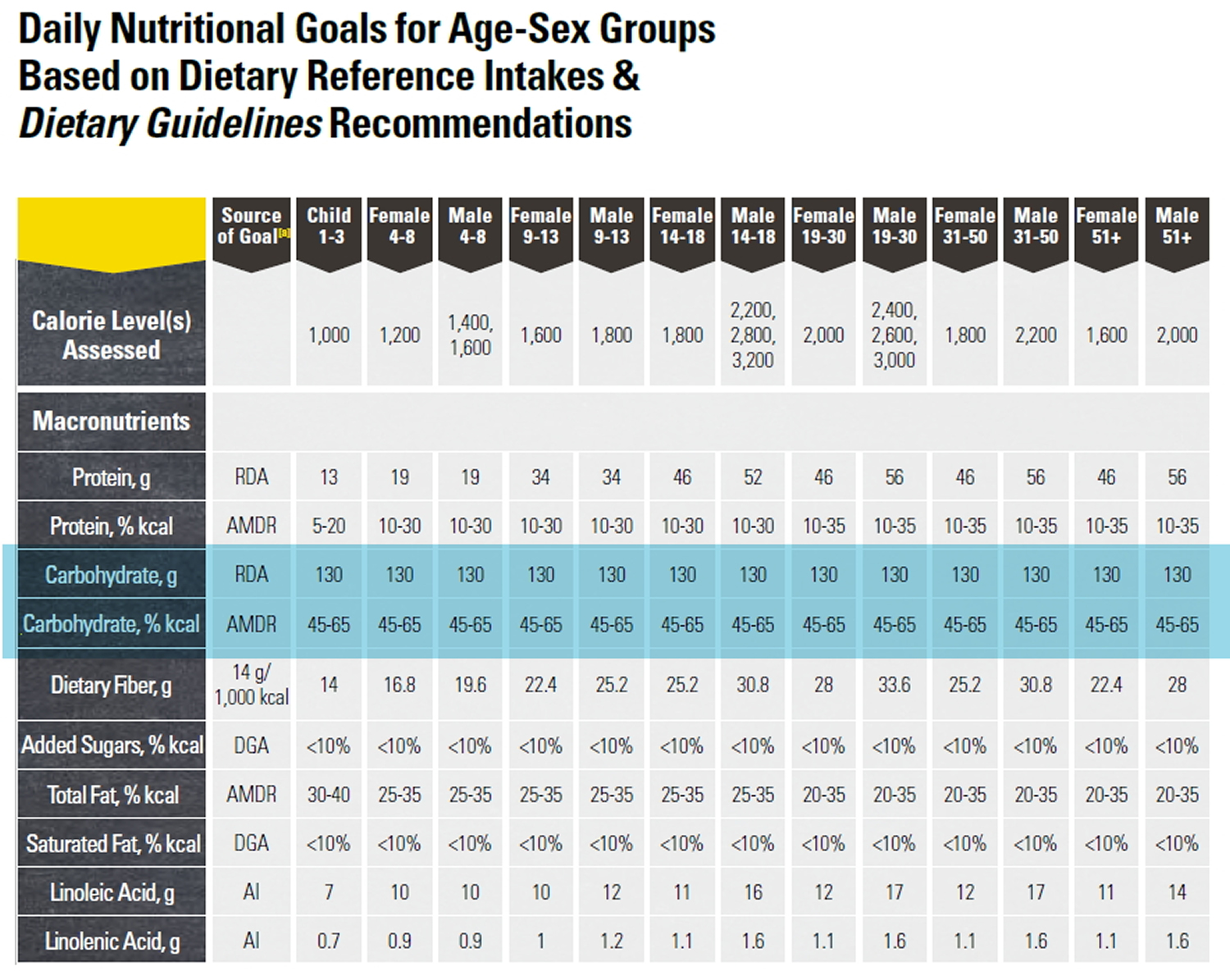
The Food and Nutrition Board of the National Academies of Sciences, Engineering, and Medicine sets the Recommended Dietary Allowance (RDA) for carbohydrates at 130 grams per day for adult men. This figure represents the minimal quantity of carbohydrates required to provide adequate glucose to the central nervous system and brain without forcing the body to rely entirely on gluconeogenesis or ketone production. It is not an optimal target for active individuals, but rather a baseline functional requirement.
Acceptable Macronutrient Distribution Range (AMDR)
The USDA Dietary Guidelines for Americans establish the Acceptable Macronutrient Distribution Range (AMDR) for carbohydrates at 45% to 65% of total daily calories. For an adult male consuming a standard 2,400-calorie daily diet, this range translates directly to:
$$\text{Daily Calories from Carbs} = 2,400 \times 0.45 \text{ to } 2,400 \times 0.65 = 1,080 \text{ to } 1,560 \text{ kcal}$$
Because carbohydrates provide 4 calories per gram:
$$\text{Daily Carbohydrate Intake} = \frac{1,080 \text{ to } 1,560}{4} = 270 \text{ to } 390 \text{ grams per day}$$
Measured Population Averages
National surveillance data collected through the CDC National Health and Nutrition Examination Survey (NHANES) indicates that the average American adult male consumes approximately 280 to 310 grams of carbohydrates daily. This average falls neatly within the 45% to 65% caloric guideline, though the quality of these carbohydrates often skews toward refined grains and added sugars rather than fiber-dense, complex sources.
Calculating Personal Carbohydrate Requirements
Because an single broad average does not account for variance in metabolic rate, lean tissue mass, or physical work, men should calculate their personal carbohydrate targets using a systematic step-by-step approach.
- Total Daily Energy Expenditure (TDEE)
- Protein Target (1.6 - 2.2g per kg body weight)
- Dietary Fat Target (20% - 35% of total calories)
- Remaining Caloric Allowance ÷ 4 = Carbohydrate Target (g)
Step 1: Calculate Total Daily Energy Expenditure (TDEE)
First, estimate your Basal Metabolic Rate (BMR) using the Mifflin-St Jeor equation, which accounts for weight, height, and age:
$$\text{BMR (Men)} = (10 \times \text{weight in kg}) + (6.25 \times \text{height in cm}) - (5 \times \text{age in years}) + 5$$
Multiply your BMR by an Activity Factor to determine TDEE:
- Sedentary (desk job, minimal exercise): $\text{BMR} \times 1.2$
- Lightly Active (light exercise 1–3 days/week): $\text{BMR} \times 1.375$
- Moderately Active (moderate exercise 3–5 days/week): $\text{BMR} \times 1.55$
- Very Active (hard exercise 6–7 days/week): $\text{BMR} \times 1.725$
Step 2: Subtract Fixed Protein and Fat Allocations
Prioritize protein and essential fatty acids to preserve muscle mass and support hormone synthesis:
- Protein: Allocate 1.6 to 2.2 grams per kilogram of total body weight (approx. 0.7 to 1.0 grams per pound). Multiplied by 4 calories per gram.
- Dietary Fat: Allocate 20% to 35% of total TDEE calories. Divided by 9 calories per gram.
Step 3: Assign Remaining Calories to Carbohydrates
The remaining calorie budget is assigned to carbohydrates. Divide the remaining calories by 4 to find your exact target in grams.
Example Calculation for an Active Male:
- Profile: 35 years old, 180 lbs (81.6 kg), 5'10" (178 cm), Moderately Active.
- Estimated TDEE: 2,400 kcal/day.
- Protein Allocation: $81.6 \text{ kg} \times 2.0\text{g} = 163\text{g protein} \times 4 \text{ kcal/g} = 652 \text{ kcal}$.
- Fat Allocation: $25% \text{ of } 2,400 \text{ kcal} = 600 \text{ kcal} \div 9 \text{ kcal/g} \approx 67\text{g fat}$.
- Carbohydrate Allocation: $2,400 - (652 + 600) = 1,148 \text{ kcal}$.
- Carbohydrate Grams: $1,148 \text{ kcal} \div 4 \text{ kcal/g} = \mathbf{287\text{ grams of carbs per day}}$.
Carbohydrate Intake Targets by Fitness and Health Goals
Carbohydrate requirements vary dramatically depending on whether a man is seeking to shed body fat, maintain body composition, or optimize heavy resistance training and endurance output.
| Fitness Goal / Protocol | Daily Carb Range (Grams) | % of Total Calories | Primary Focus & Characteristics | Ideal Candidate Profile |
|---|---|---|---|---|
| Ketogenic Diet | 20 – 50 g | 5% – 10% | Strict restriction; shifts energy metabolism from glucose to ketone bodies. | Men seeking rapid glycemic control or therapeutic ketosis under medical supervision. |
| Strict Low-Carb | 50 – 100 g | 10% – 20% | Restricts starches and fruit; relies on fats and proteins for primary energy. | Sedentary men with insulin resistance or type 2 diabetes management goals. |
| Moderate Low-Carb | 100 – 150 g | 20% – 30% | Supports weight maintenance while curbing refined sugar and processing. | Lightly active men aiming for weight loss without performance drops. |
| Balanced / Maintenance | 225 – 325 g | 45% – 55% | Standard macronutrient distribution; supports stable energy and strength. | Average men engaging in moderate exercise 3 to 4 times per week. |
| Hypertrophy / Strength | 350 – 450 g | 50% – 60% | High glycogen availability to fuel resistance training and muscle growth. | Weightlifters and bodybuilders in a caloric surplus. |
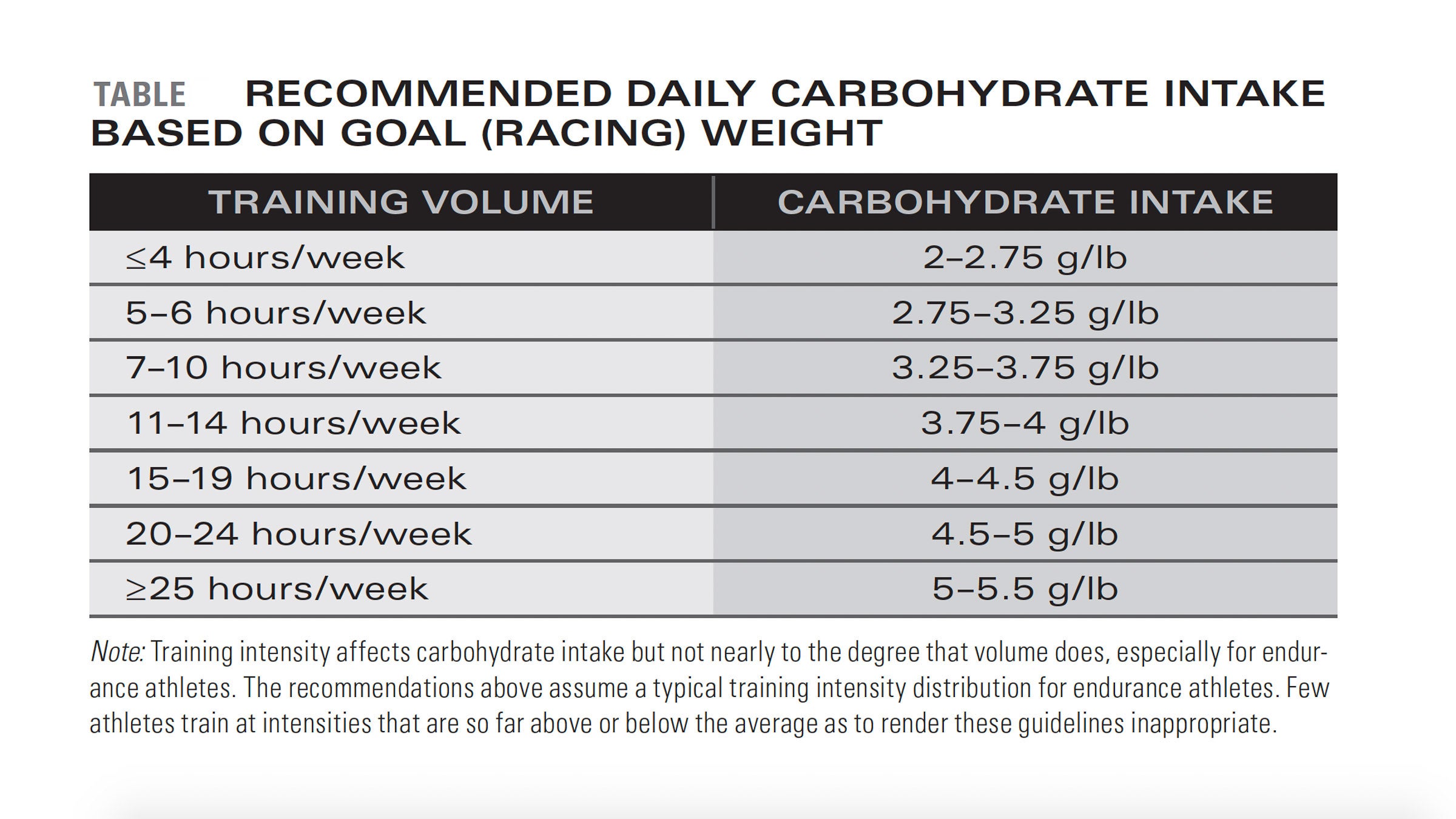
| Endurance Athletics | 450 – 600+ g | 60% – 70% | Maximizes muscle glycogen storage for sustained aerobic output. | Marathoners, triathletes, and cyclists training over 90 minutes daily. |
Quality Matters: Complex Carbs, Glycemic Index, and Fiber
Focusing strictly on total carbohydrate weight neglects how different carbohydrate structures impact blood glucose, insulin sensitivity, and digestive health.
- Carbohydrate Classification
- Simple Carbohydrates (Fast Digesting)
- Monosaccharides (Glucose, Fructose)
- Disaccharides (Sucrose, Lactose)
- Complex Carbohydrates (Slow Digesting)
- Polysaccharides (Starches: Sweet Potatoes, Oats, Rice)
- Dietary Fiber (Soluble & Insoluble)
- Simple Carbohydrates (Fast Digesting)
Simple vs. Complex Carbohydrates
- Simple Carbohydrates: Composed of short sugar chains (monosaccharides and disaccharides). They digest rapidly, causing rapid spikes in blood glucose followed by insulin surges. Examples include table sugar, high-fructose corn syrup, fruit juices, and refined flour products.
- Complex Carbohydrates: Composed of long, branched polysaccharide chains. These require extended enzymatic breakdown in the gastrointestinal tract, yielding a sustained release of glucose into the bloodstream. Examples include whole grains, legumes, tubers, and vegetables.
Essential Fiber Recommendations for Men
Dietary fiber is a non-digestible complex carbohydrate vital for metabolic, cardiovascular, and gastrointestinal health. According to the Institute of Medicine dietary reference standards:
- Men aged 19–50: Require 38 grams of fiber per day.
- Men aged 51 and older: Require 30 grams of fiber per day.
Adequate fiber intake reduces low-density lipoprotein (LDL) cholesterol, improves postprandial insulin sensitivity, and promotes a healthy gut microbiome. Men should prioritize high-fiber carbohydrate sources such as black beans, lentils, steel-cut oats, quinoa, berries, and broccoli over processed starches.
Strategic Carbohydrate Timing for Active Men
For active men, carbohydrate timing can enhance athletic performance, support workout intensity, and accelerate glycogen replenishment.
- Daily Workout Timeline
- Pre-Workout (1-3 hrs prior): 0.5-1.0 g/kg Complex Carbs + Protein
- Intra-Workout (Exertion >90 min): 30-60 g/hr Rapid-acting Carbs
- Post-Workout (Within 2 hrs): 1.0-1.2 g/kg Carbs + 30-40g Protein
Pre-Workout Fueling
Consuming complex carbohydrates 1 to 3 hours prior to intense exercise ensures adequate hepatic (liver) and intramuscular glycogen stores. A target of 0.5 to 1.0 grams of carbohydrate per kilogram of body weight paired with moderate protein provides sustained energy without triggering gastrointestinal distress.
Post-Workout Glycogen Resynthesis
Following vigorous exercise, insulin sensitivity in skeletal muscle tissue peaks. Consuming 1.0 to 1.2 grams of fast-digesting carbohydrates per kilogram of body weight alongside 30 to 40 grams of high-quality protein within 2 hours of exercise maximizes the rate of muscle glycogen resynthesis and initiates protein synthesis.
Carbohydrate Cycling Strategies
Carbohydrate cycling involves altering carb intake based on daily physical demands:
- High-Carb Days: Scheduled on heavy training days (e.g., leg sessions, intense conditioning) to fuel performance and replenish depleted glycogen reserves.
- Low-Carb Days: Scheduled on rest or light recovery days to improve fat oxidation and maintain overall weekly energy balance.
Common Carbohydrate Mistakes Men Make
1. Eliminating Carbohydrates Entirely During Weight Loss
Severe carbohydrate restriction can lower circulating free testosterone levels and increase cortisol production in men engaged in intense exercise routines. Cutting carbs too aggressively often leads to rapid strength loss, lethargy, and degraded sleep quality.
2. Overestimating Physical Energy Expenditure
Men routinely overestimate calorie burn during workout sessions, leading to an overconsumption of sports drinks, energy bars, and high-carb meals that outpaces actual caloric output.
3. Ignoring Fiber for "Net Carbs" Products
Many processed "low-carb" or "keto-friendly" products utilize synthetic fibers (such as soluble corn fiber or modified wheat starch) and sugar alcohols that can still cause gastrointestinal discomfort or partial blood glucose spikes. Prioritize whole-food fiber sources over ultra-processed low-net-carb substitutes.
4. Over-Relying on Liquid Carbohydrates
Consuming carbs through sodas, sweetened coffees, energy drinks, and excessive alcohol supplies calories with minimal satiety, leading to hypercaloric states, elevated visceral fat accumulation, and increased liver fat storage.
Frequently Asked Questions
How many carbs should a man consume daily to lose weight?
To lose body fat while preserving lean muscle mass, a man typically needs between 100 and 175 grams of carbohydrates per day, provided he remains in an overall caloric deficit of 300 to 500 calories. The exact amount depends on his body weight and training volume.
What is the absolute minimum carbohydrate requirement for adult males?
The physiological minimum requirement for digestible carbohydrates is technically zero, provided adequate dietary fat and protein are consumed, as the liver can produce glucose via gluconeogenesis. However, the Recommended Dietary Allowance (RDA) sets 130 grams per day as the functional baseline for healthy brain function.
Do older men require fewer carbohydrates than younger men?
Older men generally require fewer total calories due to age-related reductions in basal metabolic rate and muscle mass (sarcopenia). As total caloric needs drop, carbohydrate intake should decrease proportionally unless physical activity levels remain high. Fiber recommendations also shift from 38 grams daily for men under 50 down to 30 grams for men aged 51 and older.
Should men eat carbohydrates late at night?
Eating carbohydrates late at night does not inherently cause fat gain; total daily energy balance dictates body composition changes. However, heavy, high-glycemic meals consumed immediately before sleep can disrupt sleep architecture, elevate resting heart rate, and impair nocturnal heart rate variability.
What is the difference between total carbs and net carbs?
Total carbohydrates represent the complete amount of fiber, starches, and sugars in a food item. Net carbohydrates are calculated by subtracting dietary fiber and certain sugar alcohols from total carbohydrates:
$$\text{Net Carbohydrates} = \text{Total Carbohydrates} - \text{Dietary Fiber} - \text{Sugar Alcohols (if applicable)}$$
Net carbs reflect the portion of carbohydrates that directly elevate blood glucose levels.
Actionable Recommendations for Optimizing Male Carb Intake
- Establish Your Baseline: Track your current food intake for 5 to 7 days using a digital macro tracker to determine your actual daily carbohydrate consumption and fiber levels.
- Calculate Your Target: Use your total daily energy expenditure (TDEE) to set an initial target: 45%–55% of calories from carbs for general fitness, 10%–30% for targeted weight loss, or 55%–65% for athletic endurance.
- Prioritize Fiber-Rich Whole Foods: Shift 80% of your daily carbohydrate intake to complex, unrefined sources such as oats, sweet potatoes, brown rice, quinoa, legumes, and cruciferous vegetables to hit the daily target of 30 to 38 grams of fiber.
- Time Carbs Around Workouts: Place 50% of your daily carbohydrate allocation in the meals immediately preceding and following your primary physical exercise sessions.
- Adjust Based on Performance: Evaluate body weight, waist circumference, energy levels, and gym performance every two weeks. Adjust carbohydrate intake up or down by 25 to 50 grams per day based on your body composition progress.
Image Gallery