Why You Smell Rotten Eggs in Your Car: Causes, Risks, and Solutions
The sulfurous "rotten egg" smell in a vehicle is almost always caused by the presence of hydrogen sulfide. This typically occurs when a failing catalytic converter cannot properly process fuel byproducts, a battery is overcharging and...
The sulfurous "rotten egg" smell in a vehicle is almost always caused by the presence of hydrogen sulfide. This typically occurs when a failing catalytic converter cannot properly process fuel byproducts, a battery is overcharging and leaking gas, or a fuel system malfunction is causing the engine to run too rich.
Contents
A car that suddenly begins to emit the odor of rotten eggs is more than a localized nuisance; it is a chemical warning sign. In the vast majority of internal combustion engine (ICE) and hybrid vehicles, this scent is the byproduct of sulfur, which is naturally present in gasoline. While modern refining processes have reduced sulfur content, it remains a persistent element that the vehicle's emissions and electrical systems must manage. When these systems fail, the chemical transformation of sulfur compounds is interrupted, leading to the release of hydrogen sulfide gas into the cabin or around the exterior of the vehicle.
Understanding why this happens requires a look at the specific components responsible for neutralizing these odors and the mechanical failures that allow them to escape.
The Role of the Catalytic Converter
The most common culprit behind a rotten egg smell is the catalytic converter. This component is a critical part of your vehicle's exhaust system, designed to convert harmful pollutants into less toxic gases before they exit the tailpipe.
How the Process Fails
Gasoline contains trace amounts of sulfur. During the combustion process, this sulfur turns into hydrogen sulfide ($H_2S$), which possesses that characteristic pungent, "rotten egg" odor. Under normal operating conditions, the catalytic converter uses precious metals—usually platinum, palladium, and rhodium—to oxidize the hydrogen sulfide, turning it into odorless sulfur dioxide ($SO_2$).
When the catalytic converter becomes "poisoned," clogged, or physically damaged, it loses its ability to perform this oxidation. As a result, the raw hydrogen sulfide passes through the exhaust system and into the atmosphere. Because the smell is so potent, even a small amount of unprocessed gas can overwhelm the cabin.
Why Converters Fail
Catalytic converters are generally designed to last the lifetime of the vehicle, but they can be compromised by external factors. A common cause is a "rich" fuel mixture—where the engine is receiving too much gasoline and not enough air. This unburned fuel enters the exhaust system and can overheat the converter's ceramic honeycomb structure, melting it and rendering the component useless. Additionally, oil or coolant leaks that find their way into the combustion chamber can "coat" the precious metals inside the converter, preventing the necessary chemical reactions from occurring.
Battery Malfunctions and Sulfuric Acid
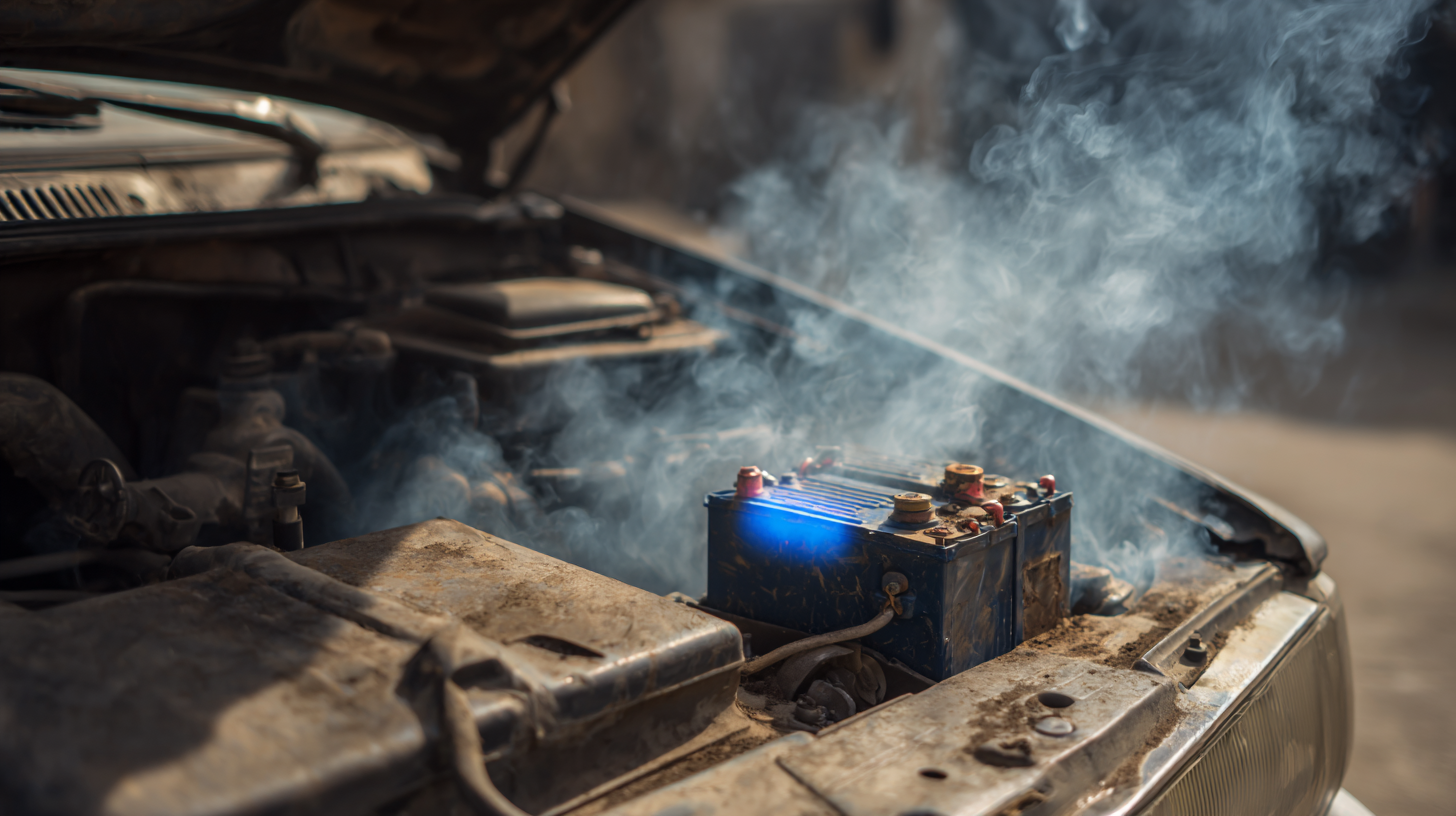
If the smell is present even when the engine is relatively cool or if the scent seems to be emanating from under the hood rather than the tailpipe, the culprit may be the 12-volt lead-acid battery.
Overcharging and Off-Gassing
Vehicle batteries contain a mixture of water and sulfuric acid. If the vehicle’s alternator or voltage regulator fails, it may "overcharge" the battery. This sends excessive current into the battery cells, causing the electrolyte solution to boil. As the liquid reaches high temperatures, it releases sulfuric acid vapor through the battery's vents.
This vapor is not only foul-smelling but also highly corrosive and potentially explosive. In a 2026 automotive landscape where electronics are more integrated than ever, an overcharging battery can also damage sensitive control modules and sensors. If you notice a "bloated" or swollen battery case alongside the smell, this confirms the battery is being cooked by an improper electrical charge.
The Danger of Hydrogen Gas
While the smell itself is the primary indicator, the underlying chemical reaction produces hydrogen gas. In a confined space like an engine bay, this creates a significant fire risk. If you suspect the battery is the source, it is imperative to avoid creating sparks near the engine and to have the charging system tested immediately.
Fuel System and Engine Management Issues
Sometimes the smell of rotten eggs is a secondary symptom of a primary failure in the fuel delivery system. If the engine is not burning fuel efficiently, it places an impossible load on the catalytic converter.
Failing Fuel Pressure Regulators
A fuel pressure regulator controls the flow of fuel to the injectors. If the regulator fails and allows too much fuel into the combustion chamber, the mixture becomes "rich." As mentioned previously, this excess fuel eventually reaches the catalytic converter. The converter tries to process the surplus, but the sheer volume of sulfur compounds overwhelms the system, leading to the release of $H_2S$.
Worn Fuel Filters and Sensors
Similarly, a clogged fuel filter or a malfunctioning Mass Air Flow (MAF) sensor can disrupt the air-fuel ratio. Modern vehicles rely on O2 (Oxygen) sensors to monitor exhaust gases and adjust fuel intake. If an O2 sensor provides faulty data, the engine computer (ECU) may default to a rich setting as a safety precaution, inadvertently causing the sulfur smell.
Transmission Fluid Degradation
In some older manual transmission vehicles or specific high-performance models, the smell may originate from the transmission or differential. Gear oil often contains sulfur-based extreme-pressure additives.
When gear oil gets old or begins to leak onto hot engine components, these sulfur additives can break down and release a smell very similar to rotten eggs. This is distinct from the "burnt toast" smell associated with failing automatic transmission fluid. If the smell is most noticeable after a long drive or when the car is stationary after heavy use, checking for gear oil leaks is a necessary diagnostic step.
Identifying the Source: A Comparison Table
| Potential Source | Primary Symptom | Location of Smell | Common Cause |
|---|---|---|---|
| Catalytic Converter | Check Engine Light (CEL), reduced power | Tailpipe / Exhaust | Clogging or "poisoning" from fuel/oil |
| Battery | Corroded terminals, swollen case | Under the hood | Overcharging by the alternator |
| Fuel Pressure Regulator | Poor fuel economy, rough idling | Cabin and Exhaust | Internal diaphragm failure |
| Transmission/Gear Oil | Visible oily leaks on the ground | Under the chassis | High-temperature breakdown of additives |
| Dead Animal | Persistent smell even when off | Air vents | Small rodent nesting in the HVAC system |
Diagnostic Steps for Car Owners
Before heading to a mechanic in 2026, there are several steps a vehicle owner can take to narrow down the cause of the sulfur odor.
- Check for Warning Lights: Modern On-Board Diagnostics (OBD-II) systems are highly sensitive. If the catalytic converter or an O2 sensor is failing, the "Check Engine" light will likely illuminate. Using a basic OBD-II scanner can reveal codes such as P0420 (Catalyst System Efficiency Below Threshold).
- Observe the Timing: Does the smell happen immediately upon starting the car? This points toward the battery. Does it only happen after the car has warmed up and you are driving at highway speeds? This points toward the catalytic converter.
- Visual Battery Inspection: Look for signs of leakage or "furry" white/green deposits on the battery terminals. If the battery feels hot to the touch after a short drive, it is likely being overcharged.
- Tailpipe Test: While the car is idling, have someone safely stand near the rear of the vehicle. If the smell is concentrated at the exhaust exit, the issue is almost certainly within the emissions system.
Repair Costs and Professional Interventions
As of 2026, repair costs for sulfur-related issues vary significantly based on the root cause and the vehicle's technology level (Internal Combustion vs. Hybrid).
- Catalytic Converter Replacement: This is the most expensive fix. Due to the high cost of precious metals and the complexity of modern integrated exhaust manifolds, replacement can range from $1,500 to $3,500. In many jurisdictions, using aftermarket converters is restricted, necessitating more expensive OEM parts.
- Battery and Alternator Repair: Replacing a standard 12V battery typically costs between $150 and $300. However, if the alternator is the cause of the overcharging, you may face an additional $400 to $800 in parts and labor.
- Fuel System Components: Replacing a fuel pressure regulator or an O2 sensor is relatively mid-range, usually costing between $250 and $600 including diagnostic time.
Frequently Asked Questions
Is the rotten egg smell in a car dangerous?
Yes, it can be. If the smell is caused by an overcharging battery, it indicates the release of sulfuric acid vapors and hydrogen gas, which are both toxic and flammable. If the smell is coming from the exhaust, it may indicate a leak that could allow carbon monoxide to enter the cabin. While hydrogen sulfide is toxic in high concentrations, the small amounts usually detected in a car are primarily a warning of mechanical failure rather than an immediate poison risk, but they should not be ignored.
Can I drive my car if it smells like rotten eggs?
It is not recommended. If the issue is a failing catalytic converter, continued driving can cause the unit to overheat or melt, potentially leading to a total engine stall or even a vehicle fire. If the battery is the source, it could explode or cause a complete electrical system failure while you are in motion. It is best to have the vehicle inspected immediately.
Will the smell go away on its own?
No. Mechanical failures involving sulfur compounds do not self-correct. In fact, ignoring the smell usually leads to more expensive repairs. For example, ignoring a faulty O2 sensor (cheap to fix) can lead to the destruction of the catalytic converter (very expensive to fix).
Can a dead animal in the car smell like rotten eggs?
While decomposing organic matter produces a foul odor, it is usually described as "sweet and sickly" or "fleshy" rather than strictly sulfurous. However, if a rodent has chewed through battery insulation or nested near the exhaust, the two smells can mingle. If the smell is persistent even when the car has been turned off for days, an animal in the HVAC ducts is a possibility.
Does this happen in Electric Vehicles (EVs)?
While EVs do not have exhaust systems or catalytic converters, they still utilize a 12-volt lead-acid battery to power auxiliary systems (lights, infotainment). If this 12V battery fails or is overcharged by the DC-to-DC converter, an EV can still produce a rotten egg smell. The main traction battery (Lithium-ion) does not produce a sulfur smell when it fails; instead, it typically produces a sweet, chemical, or "cherry" odor if the coolant or cells are compromised.
Final Recommendation
If you detect a rotten egg smell in your vehicle, your first action should be to check the battery. Because a malfunctioning battery poses an immediate risk of fire or acid damage, it is the most critical component to rule out. If the battery appears normal, proceed to an emissions check. In 2026, the complexity of vehicle sensors means that a professional diagnostic tool is the most efficient way to pinpoint whether the issue lies in the fuel mixture, the O2 sensors, or the catalytic converter itself. Addressing the problem early can save thousands of dollars in secondary damage to the engine's exhaust and electrical systems.
Image Gallery