How to Wear a Mask Properly in Everyday Settings
To wear a mask properly in everyday settings, you must ensure a tight seal against the face without gaps, covering both the nose and mouth completely. Start with clean hands, secure the ties or ear loops, and mold the metal nose wire t...
To wear a mask properly in everyday settings, you must ensure a tight seal against the face without gaps, covering both the nose and mouth completely. Start with clean hands, secure the ties or ear loops, and mold the metal nose wire to the bridge of your nose. Perform a "user seal check" by exhaling sharply to ensure no air escapes near your eyes or cheeks.
Contents
Respiratory protection has transitioned from an emergency measure to a standard health tool in 2026. Whether you are navigating seasonal flu peaks, managing urban air pollution, or protecting yourself in crowded transit hubs, the efficacy of any mask is fundamentally dependent on two factors: the quality of the filtration material and the integrity of the seal against the skin. A high-quality N95 mask worn loosely provides significantly less protection than a well-fitted, lower-grade mask. This guide details the technical nuances of mask-wearing to ensure maximum personal and community safety.
Selecting the Right Mask for Your Environment
Before addressing the "how," one must address the "what." In 2026, the market offers a wide variety of respirators and masks. Understanding the technical specifications of each ensures you are equipped for the specific risks of your environment.
High-Filtration Respirators (N95, KN95, KF94)
These are the gold standard for personal protection. An N95 respirator is certified by NIOSH (National Institute for Occupational Safety and Health) and filters at least 95% of airborne particles. The distinguishing feature of a true N95 is the head-strap design, which provides a tighter seal than ear loops. KN95s (Chinese standard) and KF94s (Korean standard) typically use ear loops and are excellent for everyday high-risk settings like airplanes or clinics, provided they are sourced from reputable manufacturers to avoid counterfeits.
Surgical and Procedure Masks
These loose-fitting, disposable masks are designed to protect others from the wearer’s respiratory droplets (source control). While they have high-quality filtration media, the lack of a tight seal allows air to leak around the edges. In 2026, these are best utilized in low-risk, outdoor settings or in combination with a mask fitter to improve the seal.
Cloth Masks and Barriers
By 2026, cloth masks are largely viewed as secondary protection. If using cloth, it should consist of at least three layers of tightly woven fabric, such as cotton or a cotton-synthetic blend. They are most effective when worn over a surgical mask (double-masking) to improve the fit of the underlying disposable layer.
The Anatomy of a Proper Fit: The "Three Fs"
To achieve maximum efficacy, you must adhere to the three pillars of masking: Filtration, Fit, and Function.
- Filtration: The material must be capable of capturing microscopic particles. Look for Melt-blown polypropylene layers, which use electrostatic charges to trap viruses and pollutants.
- Fit: The mask must contour to the unique shape of your face. Any gap—at the bridge of the nose, the jawline, or the cheeks—acts as a chimney, allowing unfiltered air to enter and exit.
- Function: The mask must remain comfortable enough to wear for the duration of your exposure. If you find yourself constantly adjusting the mask or pulling it down to speak, the functional protection is lost.
Step-by-Step Guide to Putting on a Mask
Proper application prevents the contamination of the mask and ensures the seal is established before you enter a high-risk zone.
Step 1: Pre-Application Hygiene
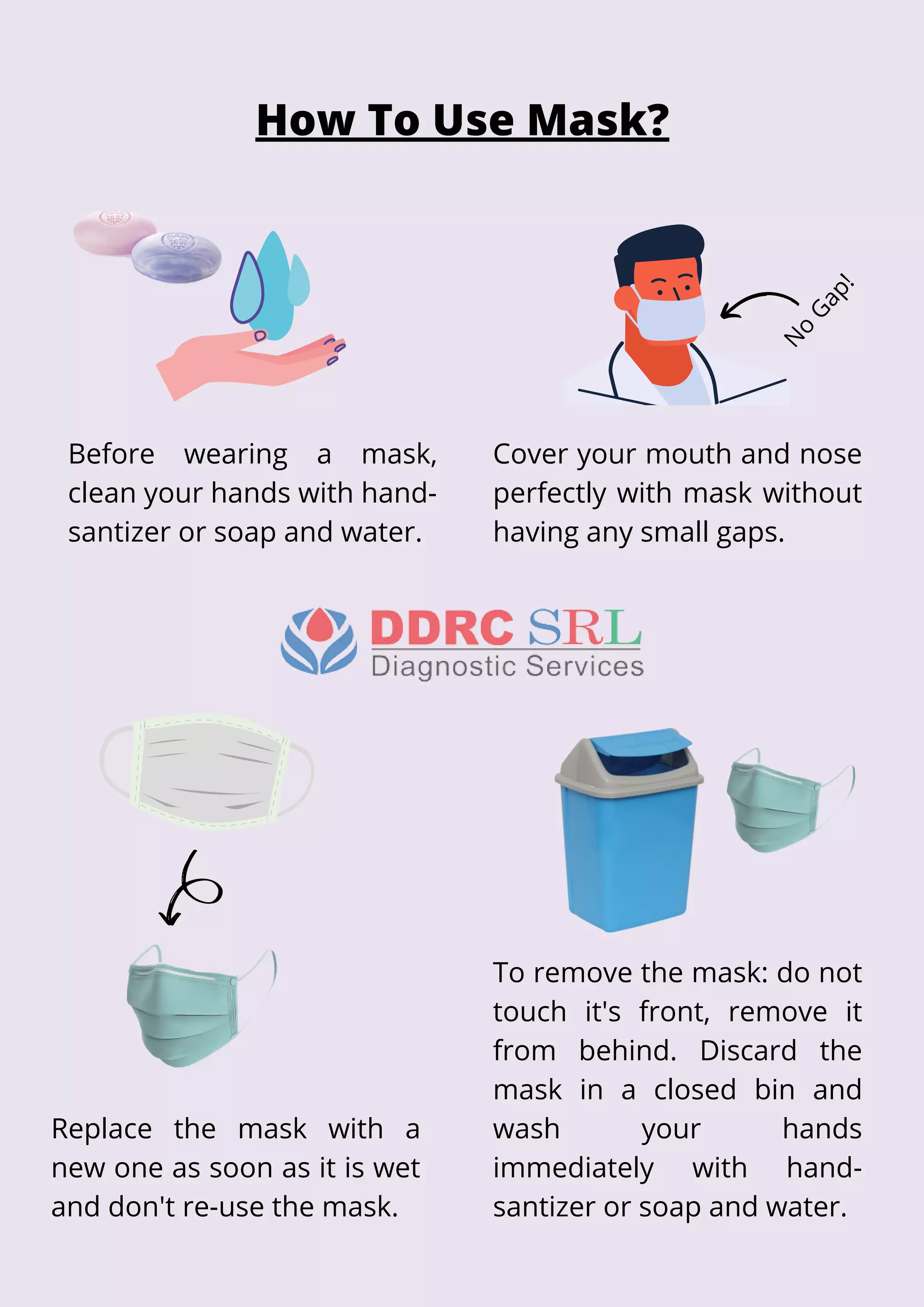
Always wash your hands with soap and water or use an alcohol-based hand sanitizer before touching the mask. This prevents the transfer of pathogens from your hands to the interior "clean" surface of the mask or your face.
Step 2: Inspection
Examine the mask for any defects. Check for broken straps, holes in the material, or a disconnected nose wire. If the mask appears soiled or damp from previous use, discard it.
Step 3: Positioning
Hold the mask by the ear loops or straps. For an N95 with head straps, position the mask over your nose and mouth, pull the top strap over your head so it rests at the crown, and pull the bottom strap over to the nape of your neck. For ear-loop masks, hook the loops firmly behind each ear.
Step 4: Setting the Nose Bridge
Most high-quality masks contain a malleable metal or plastic strip at the top. Use both hands to press the strip down against the bridge of your nose. Do not pinch it with one hand, as this creates a sharp "V" shape that actually facilitates air leakage. Instead, mold it into a smooth curve that matches your anatomy.
Step 5: The User Seal Check
This is the most critical step. Place both hands over the mask, being careful not to move it. Exhale deeply. If you feel air blowing against your eyes or see your glasses fog up, the top seal is weak. If you feel air escaping from the sides, adjust the straps. A successful seal check will cause the mask to slightly collapse inward during inhalation and expand outward during exhalation.
Professional Use and Technical Comparison
The following table compares the most common mask types used in everyday settings as of 2026.
| Mask Type | Standard/Certification | Primary Mechanism | Seal Quality | Best Use Case |
|---|---|---|---|---|
| N95 Respirator | NIOSH (US) | Electrostatic Filtration | Excellent (Head Straps) | High-risk indoor/crowded settings |
| KN95/KF94 | GB2626 / KMOEL | Electrostatic Filtration | Good (Ear Loops) | Shopping, public transit, offices |
| Surgical Mask | ASTM F2100 | Physical Barrier | Moderate to Poor | Source control in low-risk areas |
| Mask Fitter | N/A | Mechanical Compression | Enhances others | Improving surgical mask performance |
| Cloth Mask | N/A | Physical Barrier | Variable | Exercise or low-occupancy outdoors |
Safe Removal and Disposal Protocols
Removing a mask improperly (doffing) can lead to self-contamination. The exterior of the mask should always be treated as contaminated.
- Do Not Touch the Front: Avoid touching the filter area of the mask. Pathogens and pollutants are concentrated on this surface.
- Remove via Straps: Reach behind your ears or head to unhook the straps. Pull the mask forward and away from your face.
- Disposal or Storage: If the mask is disposable, place it directly into a waste bin. If it is a reusable respirator (like an N95 being rotated), place it in a breathable paper bag.
- Post-Removal Hygiene: Immediately wash or sanitize your hands after handling the used mask.
Common Masking Errors to Avoid
Despite years of public health education, several common mistakes persist in everyday settings that negate the benefits of masking.
- The "Chin Strap": Pulling the mask down to your chin exposes your mouth and nose while contaminating the inside of the mask with any pathogens present on your neck.
- Exposed Nose: Wearing the mask below the nose renders it nearly useless, as the nasal passages are a primary route for respiratory infection.
- Facial Hair Interference: Even a few days of stubble can break the seal of an N95 or KN95. For maximum protection, a clean-shaven face is recommended where the mask meets the skin.
- Overusing Disposable Masks: Disposable masks lose their electrostatic charge and structural integrity over time. In 2026, it is recommended to replace an N95 after roughly 40 hours of cumulative use, or sooner if it becomes damp, soiled, or difficult to breathe through.
Masking in Specific 2026 Scenarios
Public Transportation and Air Travel
In high-density environments with recycled air, the N95 or KF94 is the preferred choice. Ensure the mask is donned before entering the station or terminal. High-altitude flight can lead to lower humidity, which may dry out nasal passages and make them more susceptible to irritation; a well-fitted mask helps retain some moisture in the inhaled air.
Workplaces and Schools
For long-duration wear (8+ hours), comfort becomes as important as filtration. Many 2026 designs feature "duckbill" shapes or expanded internal chambers that provide more breathing room, reducing the urge to adjust the mask throughout the day.
Air Quality and Wildfire Smoke
Masks are increasingly used to filter particulate matter (PM2.5) from wildfire smoke or urban smog. Only respirators (N95/KN95) are effective against these microscopic particles. Surgical and cloth masks do not provide adequate protection against the chemical irritants in smoke.
Frequently Asked Questions
Can I reuse an N95 mask for everyday use?
Yes, N95 masks can be reused in non-medical settings if handled properly. The most effective method is "rotation." Use one mask, then place it in a labeled paper bag for 48–72 hours. This allows any viral load to degrade before the next use. Discard the mask if the straps lose elasticity or the material becomes physically damaged.
How do I prevent my glasses from fogging while wearing a mask?
Fogging is a sign of a poor seal at the nose bridge. To fix this, ensure the nose wire is molded tightly to your face. You can also tuck the top of the mask under the bottom rim of your glasses. For a more permanent solution, use a small piece of medical tape to secure the top edge of the mask to your skin.
Are there specific masks for children in 2026?
Yes. Children should never wear adult-sized masks, as the gaps will render the protection ineffective. Look for "KM95" or "KF94" masks specifically labeled for pediatric use. These are designed for smaller facial structures and provide the necessary seal while maintaining breathability for smaller lungs.
Does double-masking still provide benefits?
Double-masking—wearing a cloth mask over a surgical mask—is beneficial if it improves the fit. The cloth mask acts as a "fitter," pressing the edges of the surgical mask against the face. However, wearing two high-filtration respirators (like two N95s) is not recommended, as it can make breathing too difficult and may actually break the seal of the inner mask.
How do I know if my mask is a counterfeit?
In 2026, counterfeit masks remain a concern. For N95s, check for the NIOSH approval label and a TC (Testing and Certification) number. Genuine respirators will not have decorative sequins or "fashion" prints that compromise the integrity of the filter. For KN95s, check the CDC's list of trusted manufacturers or the manufacturer’s QR code verification system.
Practical Recommendation
For the best balance of safety and comfort in 2026, maintain a "mask kit" containing two high-filtration respirators (N95 or KF94) and a few backup surgical masks. Prioritize the respirator for indoor public spaces, transit, and periods of poor air quality. Always perform the seal check every time you put a mask on, as a proper fit is the only way to ensure the technical specifications of the mask are actually protecting your health.
Image Gallery