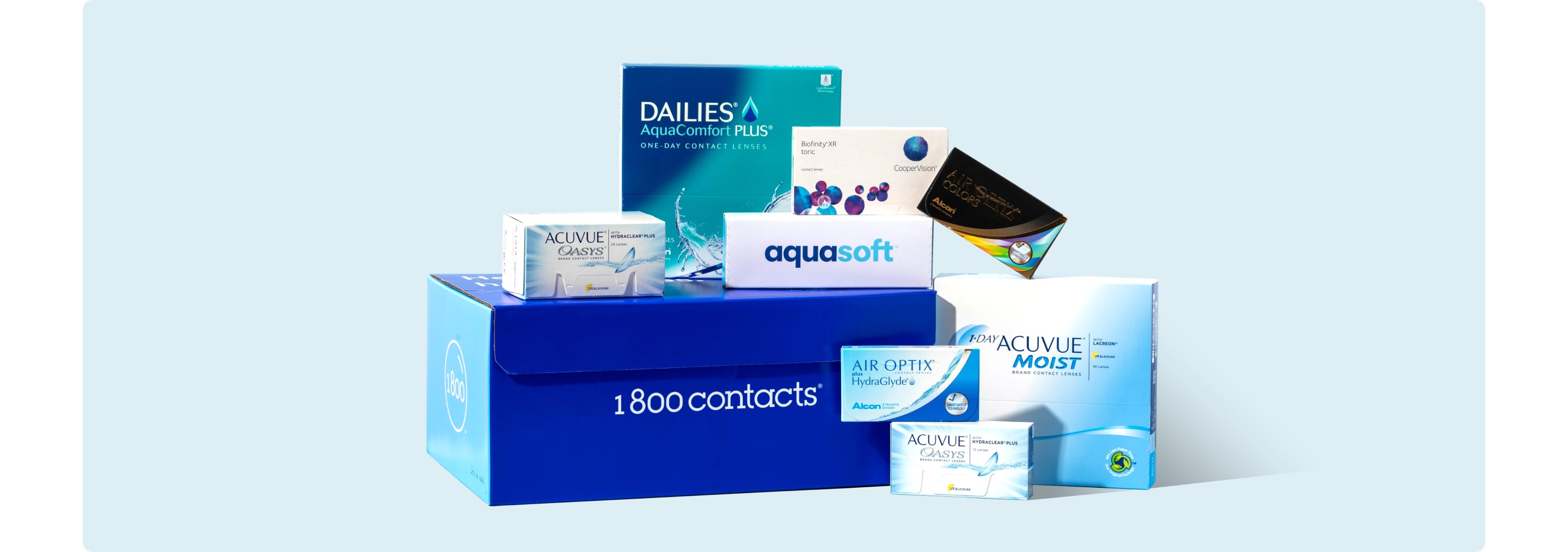
Finding the Best Value for Contact Lenses on 1800 Contacts
Purchasing contact lenses through 1800 Contacts involves balancing retail pricing with potential savings from manufacturer rebates, vision insurance benefits, and seasonal promotions. While the platform is known for its price match gua...
Purchasing contact lenses through 1800 Contacts involves balancing retail pricing with potential savings from manufacturer rebates, vision insurance benefits, and seasonal promotions. While the platform is known for its price match guarantee and convenience, "cheapest" often depends on your specific brand prescription, insurance network eligibility, and the availability of current promotional codes or bulk-buy incentives.
Contents
Understanding the Pricing Landscape at 1800 Contacts
When searching for the lowest prices on 1800 Contacts, it is essential to distinguish between the base retail price and the final cost after deductions. 1800 Contacts operates as a high-volume retailer, meaning their pricing is often dictated by contracts with major manufacturers like Alcon, CooperVision, Bausch + Lomb, and Johnson & Johnson Vision.
Because contact lenses are medical devices, pricing can appear rigid. However, the retailer frequently updates its site to reflect competitive benchmarks. The "cheapest" option on the platform is rarely a single static product; rather, it is the result of combining the lowest-priced lens that meets your clinical needs with every available discount vehicle. Before finalizing any purchase, ensure you are not merely looking at the sticker price, but the price per box after accounting for rebates that may be provided by the lens manufacturer rather than the retailer itself.
The Role of the Price Match Guarantee
One of the most effective ways to ensure you are getting the cheapest price on the site is by utilizing their "Best Price Guarantee." If you find a lower price on another authorized retailer’s website, 1800 Contacts will match it. To leverage this, you must be prepared with the following documentation:
- The name of the competing website.
- The specific brand and lens type (e.g., daily disposable vs. monthly replacement).
- The price including shipping and handling, as many competitors hide costs in fees.
This policy effectively caps the cost of your lenses at the lowest market rate available, removing the need to hop between multiple vendors to find a deal. It is important to note that this guarantee applies to authorized US-based retailers. Prices found on auction sites, unauthorized marketplaces, or non-prescription international vendors do not qualify.
Leveraging Vision Insurance Benefits
Many consumers overlook the fact that their vision insurance plan—such as VSP, EyeMed, or Davis Vision—can significantly lower the cost of lenses purchased at 1800 Contacts. As an in-network provider for several major plans, the platform allows users to apply their benefits directly at checkout.
To maximize these savings, follow these steps:
- Verify Coverage: Log into your insurance provider's portal to confirm your eligibility for contact lens benefits for the 2026 plan year.
- Link Your Account: Within your 1800 Contacts profile, input your insurance details. The system will automatically calculate the co-pay or allowance.
- Check for "In-Network" Status: Even if 1800 Contacts is out-of-network for your specific plan, you may still be able to submit an itemized receipt for reimbursement. Always check your Summary of Benefits to see if you can claim partial costs back after the purchase.
Comparing Lens Modality and Cost Efficiency
The "cheapest" contact lens is not always the lowest price per box. It is the lowest cost over the lifespan of the usage period. Daily disposables have a higher upfront cost, but they eliminate the recurring expense of cleaning solutions, cases, and enzymatic tablets required for two-week or monthly lenses.
| Lens Type | Upfront Cost | Additional Supplies | Total Annual Cost Context |
|---|---|---|---|
| Daily Disposables | Higher | None (No solution) | Competitive for convenience |
| Bi-Weekly | Moderate | Solution Required | Medium |
| Monthly | Lower | Solution Required | Often the most economical |
If your primary goal is minimizing spend, monthly replacement lenses generally offer the best price-per-day ratio. However, ensure that your optometrist has verified your eyes are suitable for monthly wear, as material breathability and deposit resistance vary by brand.
Manufacturer Rebates vs. Retailer Discounts
A common point of confusion is the difference between retailer-led discounts and manufacturer rebates. 1800 Contacts often highlights "deals," but the most substantial savings often come from the manufacturer.
- Manufacturer Rebates: These are usually processed after the purchase. You buy a year's supply, and the manufacturer sends a prepaid card or check. These rebates are often the largest single source of savings.
- Retailer Discounts: These are applied instantly at checkout.
- Combined Savings: Some of the best deals occur when 1800 Contacts runs a promotion that stacks with a manufacturer’s existing rebate program. Always check the "Rebates" tab on the specific product page before adding items to your cart.
Practical Tips for Lowering Your Costs
Beyond active price matching and insurance, consider these tactical approaches to reduce your total expenditure:
- Purchase in Annual Quantities: Most manufacturers offer significantly higher rebate values for purchasing a 12-month supply compared to a 6-month supply. While the initial cash outlay is higher, the "cheapest" price per box is achieved through volume.
- Review Expired Prescriptions: You cannot purchase lenses with an expired prescription. If your prescription is nearing its end date, prioritize a professional eye exam. Attempting to buy lenses without a valid prescription will result in order delays or cancellations, forcing you to pay higher "rush" prices if you run out of lenses.
- Newsletter and Account Promotions: Creating an account and opting into email communications occasionally yields one-time discount codes for new customers or periodic "reorder" incentives for existing ones.
Frequently Asked Questions
Does 1800 Contacts have an in-house brand that is cheaper? 1800 Contacts offers private-label lenses, such as "aqua" lines, which are often manufactured by major labs. These are frequently priced lower than name-brand equivalents because they do not carry the same marketing overhead. They are often clinical equivalents to popular national brands.
Can I use a flexible spending account (FSA) or health savings account (HSA)? Yes, 1800 Contacts accepts FSA and HSA cards. Using pre-tax dollars effectively provides a discount equal to your marginal tax rate, making them an excellent way to pay for your annual supply.
What happens if my prescription changes after I order? The company provides a "replace it" guarantee. If your prescription changes, they will exchange your unopened, non-expired boxes for your new prescription at no extra cost, which prevents you from losing money on inventory you can no longer use.
Are there extra fees for shipping? Shipping is generally free on all orders. However, if you require expedited shipping for an emergency, those costs are not included in the base price and can raise the total order cost significantly.
Does the price match guarantee apply to Amazon or third-party sellers? No. The price match guarantee is limited to authorized retailers. Amazon often lists products from third-party sellers that do not meet the criteria for authorized distribution, so those prices are not eligible for matching.
Recommendation for Next Steps
To secure the lowest price in 2026, start by gathering your current, valid prescription and your vision insurance card. Check if your insurance allows for an in-network discount on the 1800 Contacts portal. Next, search for the specific brand you wear and apply the price match tool if you see a lower price on a reputable, authorized competitor's site. Finally, commit to a 12-month supply to unlock the maximum manufacturer rebate, and pay with an FSA or HSA card to leverage tax-advantaged savings.
Image Gallery