Understanding the Third Amendment of the United States Constitution
The Third Amendment of the U.S. Constitution prohibits the federal government from forcing citizens to house soldiers in their private homes during peacetime without the owner's consent, and only in a manner prescribed by law during ti...
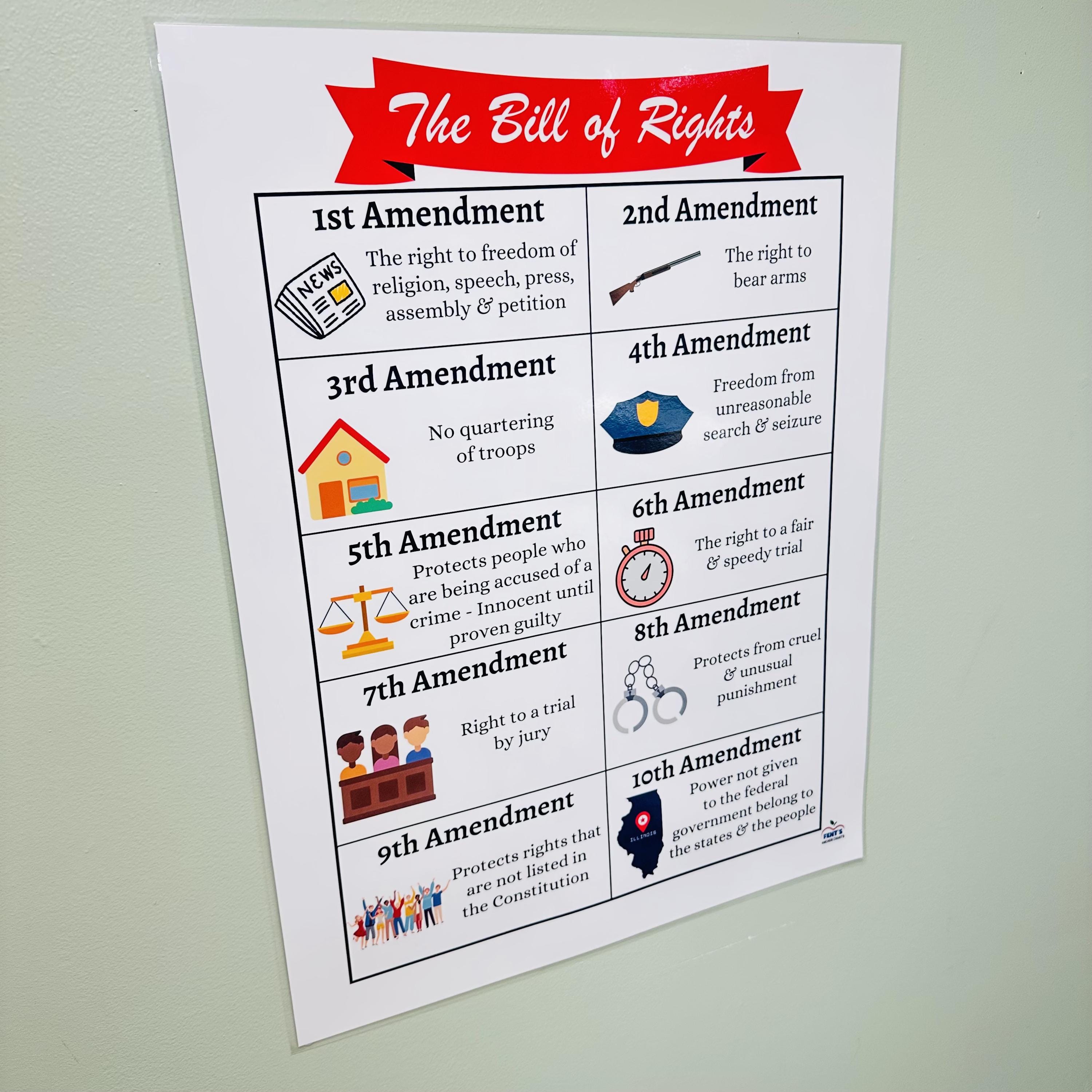
The Third Amendment of the U.S. Constitution prohibits the federal government from forcing citizens to house soldiers in their private homes during peacetime without the owner's consent, and only in a manner prescribed by law during times of war. It stands as a foundational protection for domestic privacy and the sanctity of the private residence against military intrusion.
Contents
Historical Origins and Rationale
The Third Amendment was ratified on December 15, 1791, as part of the Bill of Rights. Its inclusion was a direct response to the abuses perceived during the colonial era, particularly under British rule. Prior to the American Revolution, the British Parliament passed a series of Quartering Acts (1765 and 1774), which allowed British troops to be housed in public houses, inns, alehouses, and, in certain circumstances, uninhabited houses or barns. The colonists viewed this as a severe violation of their property rights and personal liberty, as it compelled them to support a military force that they largely viewed as an occupying power.
By the time the Constitutional Convention convened, the memory of these forced quarterings remained a potent symbol of tyranny. James Madison, who drafted the Bill of Rights, included the amendment to ensure that the civilian population remained independent of the military. The amendment reflects the Framers’ fundamental commitment to the principle that in a free society, the home is a castle, and the military apparatus of the state should remain separate from the daily lives of private citizens.
The Text and Constitutional Scope
The text of the Third Amendment is concise: "No Soldier shall, in time of peace be quartered in any house, without the consent of the Owner, nor in time of war, but in a manner to be prescribed by law."
The language differentiates between two specific conditions:
- Peacetime: The prohibition is absolute. Without the owner’s explicit consent, the government has no authority to quarter soldiers in a private residence.
- Wartime: The restriction is modified. Congress may pass legislation that allows for the quartering of troops, provided the process follows a legal framework. This ensures that even during national emergencies, the government cannot arbitrarily seize private housing without a formal, democratically approved process.
While the amendment uses the term "Soldier," legal scholars have long debated whether this extends to modern-day police or federal agents. While the Third Amendment specifically addresses the military, it has been cited in privacy discourse as part of a "penumbra" of rights that protect the home from government intrusion, connecting it to the broader protections found in the First, Fourth, and Fifth Amendments.
Judicial Interpretation and Legal Precedent
The Third Amendment is one of the least litigated provisions in the U.S. Constitution. Because the United States has largely avoided large-scale military conflicts on domestic soil since the 19th century, few cases have reached the Supreme Court. However, it was definitively addressed in the case of Engblom v. Carey (1982).
In this case, correction officers at a New York state prison were evicted from their employee housing during a labor strike. The state replaced the striking guards with National Guard troops, who were then housed in the vacant employee residences. The officers sued, claiming a violation of their Third Amendment rights. The U.S. Court of Appeals for the Second Circuit ruled that:
- The National Guard members qualify as "soldiers" for the purposes of the Third Amendment.
- The protection of the Third Amendment extends to anyone who has a legal expectation of privacy and a property interest in the residence.
- The amendment is incorporated against the states through the Fourteenth Amendment, meaning state governments are also prohibited from violating this right.
This landmark ruling solidified the amendment as a living protection rather than a vestigial historical artifact. It confirmed that the right against forced quartering is a fundamental element of the right to privacy in the home.
Comparison of Privacy Protections
The Third Amendment is often analyzed alongside other constitutional provisions that guard the privacy and integrity of the home. The following table illustrates how these protections differ in scope and focus.
| Amendment | Core Focus | Primary Legal Function |
|---|---|---|
| Third | Military Quartering | Prohibits forced housing of soldiers in private homes. |
| Fourth | Searches and Seizures | Requires warrants based on probable cause for government entry. |
| Fifth | Due Process | Prevents the government from taking private property without just compensation. |
| Ninth | Unenumerated Rights | Signals that the Bill of Rights is not an exhaustive list of liberties. |
Practical Relevance in the 21st Century
While the physical quartering of troops in private homes is unlikely in modern American society, the principles underlying the Third Amendment remain relevant. The amendment represents the constitutional boundary between the state’s military power and the private sphere of the individual.
In contemporary legal discussions, the Third Amendment is often invoked in debates regarding digital privacy, government surveillance, and the potential for federal agents to exert control over private property. For example, some legal scholars argue that the "digital occupation" of private data or the commandeering of private infrastructure by state actors for security purposes mirrors the concerns that led to the adoption of the amendment. As the nature of the "home" evolves to include virtual spaces and smart-home technology, the legal community continues to look to the spirit of the Third Amendment to define what it means for a citizen’s residence to be free from government commandeering.
Essential Considerations for Citizens
For those interested in the legal standing of the Third Amendment, it is important to note the following:
- Property Rights: The amendment protects the sanctity of the residence, which is a protected interest under the law.
- Legal Standing: In Engblom, the court clarified that you do not need to be the legal "owner" (deed holder) to be protected; having a legal right to exclude others from the residence is sufficient to invoke the protection.
- Non-Military Actors: The amendment specifically addresses "soldiers." It does not directly cover civilian police forces, which are instead regulated primarily by the Fourth Amendment’s prohibition against unreasonable searches and seizures.
Frequently Asked Questions
Does the Third Amendment protect me from police searching my home? No, the Third Amendment specifically addresses the quartering of soldiers. Protections against police searches and the seizure of property are covered under the Fourth Amendment, which requires law enforcement to obtain a warrant based on probable cause.
Could the government ever force me to house soldiers? In peacetime, absolutely not. In wartime, it is theoretically possible, but only if Congress passes a specific law authorizing it. Such a law would still be subject to judicial review to ensure it does not violate other constitutional protections, such as the Takings Clause of the Fifth Amendment.
Why is it called the "Third" Amendment? It is named based on the order in which it was ratified as part of the Bill of Rights in 1791. It follows the First Amendment (freedom of expression) and the Second Amendment (the right to keep and bear arms).
Is the Third Amendment considered "obsolete"? While rarely invoked in court, it is not obsolete. The legal precedent set in Engblom v. Carey ensures that it remains an active constitutional check on government power. Its existence serves as a structural barrier, reinforcing the broader American legal tradition that the home is a private sanctuary.
Does this amendment apply to the National Guard? Yes, as determined by the Second Circuit Court of Appeals in 1982, the National Guard are considered soldiers under the Third Amendment, and the prohibition against forced quartering applies to them.
Next Steps and Further Research
For individuals looking to deepen their understanding of constitutional privacy protections, reviewing the original text of the Bill of Rights via the National Archives is the recommended starting point. Those interested in the specific legal mechanics of how this right is upheld should examine the full text of Engblom v. Carey (677 F.2d 957) to understand how the courts bridge the gap between 18th-century language and modern administrative structures. Understanding the intersection of the Third, Fourth, and Fifth Amendments provides a comprehensive view of how the American legal system shields the private citizen from overreach.
Image Gallery