The Sunrise Movement DC in the Climate Fight: Organization, Strategy, and Local Impact
The Sunrise Movement in Washington, D.C., functions as a prominent local hub of a national youth-led political organization dedicated to stopping climate change and creating millions of good-paying jobs. By combining direct action, leg...
The Sunrise Movement in Washington, D.C., functions as a prominent local hub of a national youth-led political organization dedicated to stopping climate change and creating millions of good-paying jobs. By combining direct action, legislative lobbying, and community organizing, the D.C. chapter targets federal policymakers and urban municipal structures to demand rapid, equitable decarbonization.
Contents
The climate crisis requires not only technological shifts but also profound political and economic transformations. Within the United States, Washington, D.C., occupies a unique and strategic position. It is both a home for local residents facing environmental justice challenges and the physical capital where federal laws, budgets, and energy policies are enacted.
The Sunrise Movement DC operates at this exact intersection. By mobilizing young people, students, and allied organizations, the group applies pressure directly to the levers of federal power while advocating for local sustainability solutions. Understanding how this chapter functions provides clear insight into modern youth climate activism, grassroots political strategies, and the structural challenges of transforming environmental policy in the United States.
Understanding the Sunrise Movement and Its D.C. Hub
The national Sunrise Movement emerged in 2017, propelled by a core group of young organizers who believed that building political power through mass mobilization was the only way to address climate change effectively. The organization gained widespread national attention in late 2018 when members staged a sit-in at the office of then-House Democratic Leader Nancy Pelosi, demanding a select committee to draft a Green New Deal.
The Washington, D.C., hub represents one of the most strategically significant chapters in the national network. Because D.C. is home to the United States Congress, federal agencies, and numerous think tanks, local activists have immediate geographical access to decision-makers. However, the chapter's focus extends beyond federal lobbying. Sunrise Movement DC actively engages in local municipal politics, partnering with D.C. residents to address environmental inequities within the District itself.
The demographic makeup of the hub consists primarily of high school students, college undergraduates, and young workers. This generational focus is intentional. Young people will experience the most severe long-term consequences of global temperature increases, yet they are systematically underrepresented in traditional electoral and legislative processes. By organizing collectively, these youth activists build institutional power that rivals traditional corporate lobbying groups, utilizing public visibility and moral urgency to shift political debates.
Core Strategies and Tactics in the Capital
Effective climate advocacy in Washington requires a multifaceted toolkit. Sunrise Movement DC relies on a blend of nonviolent direct action, electoral organizing, and legislative advocacy to advance its goals. Each tactic serves a distinct purpose within a broader theory of change that prioritizes escalation when institutional channels fail.
Nonviolent Direct Action and Public Disruption
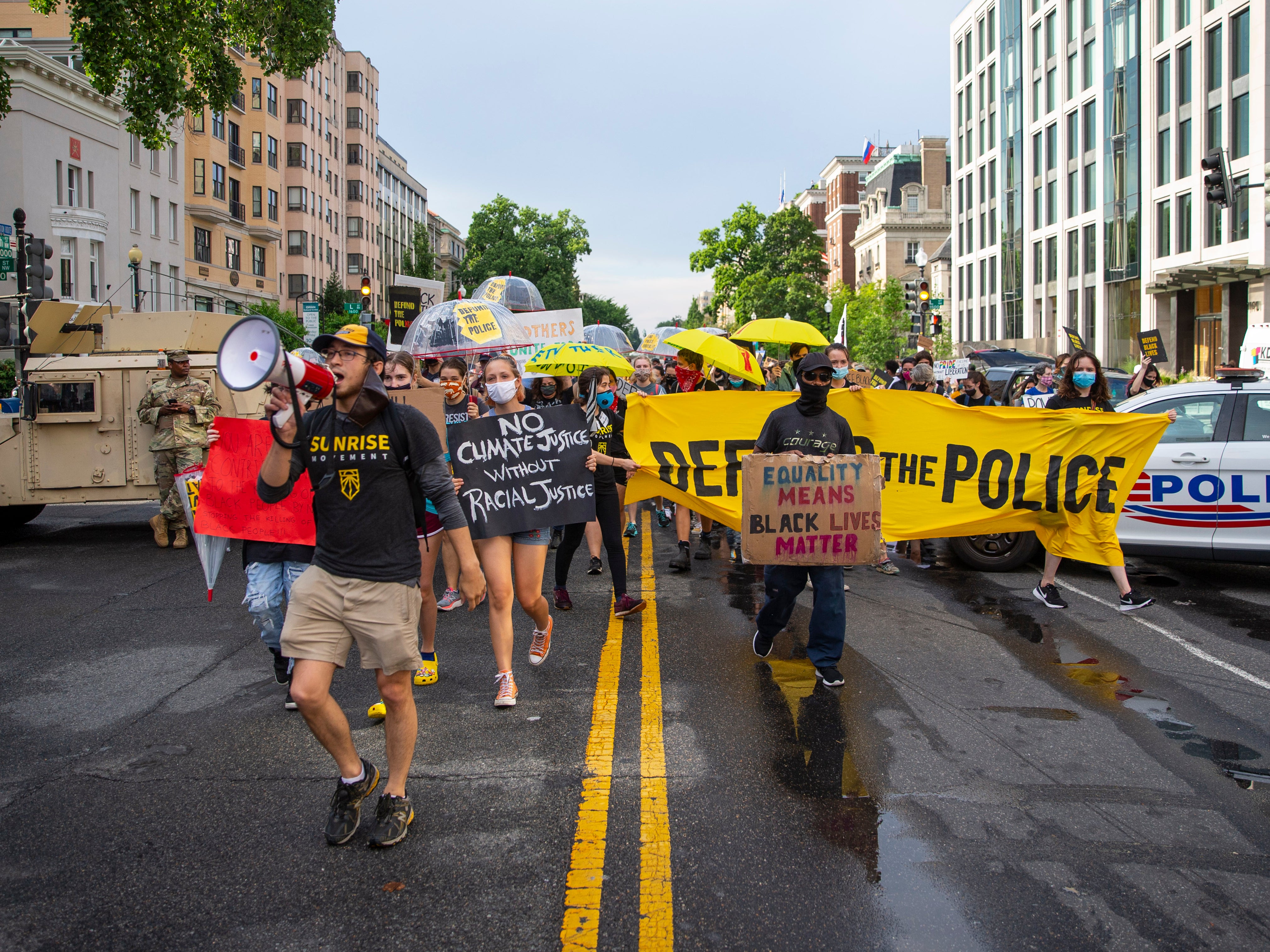
Direct action remains one of the most visible hallmarks of the Sunrise Movement. In the context of Washington, D.C., this often involves rallies, marches, sit-ins, and banner drops at federal office buildings, congressional offices, and the headquarters of major financial institutions that fund fossil fuel projects.
These actions are carefully planned, emphasizing nonviolence and civil disobedience to generate media coverage and force public accountability. When activists risk arrest outside a senator's office or block intersections near regulatory agencies, they disrupt the normal operations of government and demand that elected officials acknowledge the urgency of the climate crisis. This visibility helps shift public discourse, turning abstract scientific reports into immediate political crises for lawmakers.
Legislative Lobbying and Policy Pressure
While disruptive actions capture headlines, sustained legislative pressure forms the backbone of the chapter's work. Sunrise DC members routinely meet with congressional staffers, submit public comments on federal environmental rules, and participate in legislative hearings.
The primary policy framework championed by the movement is the Green New Deal, a comprehensive legislative blueprint aimed at achieving net-zero greenhouse gas emissions through a massive mobilization of public resources. In addition to federal ambitions, the chapter engages with the Council of the District of Columbia to advocate for local building decarbonization, public transit expansion, and equitable green infrastructure investments that benefit historically underserved wards in the District.
Electoral Organizing and Accountability
Electoral politics offer another vital arena for the chapter. During election cycles, Sunrise DC members mobilize volunteers for phone banks, door-to-door canvassing, and voter registration drives, supporting candidates who pledge to reject fossil fuel campaign contributions and endorse aggressive climate policies.
Conversely, the chapter holds elected officials accountable through public scorecards and town hall interrogations. By demonstrating that a mobilized block of young voters can influence primary and general elections, the movement incentivizes politicians to adopt stronger environmental platforms.
Key Focus Areas: Federal vs. Local Advocacy
A defining characteristic of Sunrise Movement DC is its dual-track approach, balancing national federal campaigns with hyper-local D.C. environmental justice initiatives. This dual focus addresses the reality that while federal policies dictate national emissions trajectories, local municipal decisions directly impact the health and daily lives of D.C. residents.
| SUNRISE MOVEMENT DC STRATEGIC FOCUS | |
|---|---|
| FEDERAL / NATIONAL FOCUS | LOCAL D.C. MUNICIPAL |
| - Green New Deal legislation | - Building energy performance |
| - Fossil fuel project permits | - Public transit funding |
| - Federal climate investments | - Environmental justice wards |
| - National electoral pressure | - Local clean energy mandates |
Federal Priorities: Fossil Fuels and the Green New Deal
At the federal level, the chapter consistently opposes the expansion of fossil fuel infrastructure, including pipelines, offshore drilling leases, and liquefied natural gas export terminals. Activists argue that approving new fossil fuel projects is fundamentally incompatible with international climate goals and scientific consensus regarding carbon budgets.
Furthermore, the chapter pushes for federal investments in renewable energy, home weatherization, and public transit. By framing climate action around job creation and economic security, the movement seeks to build a broad working-class coalition that extends beyond traditional environmentalists.
Local Priorities: Environmental Injustice in the District
Washington, D.C., is frequently perceived as a wealthy, politically insulated city, but it experiences deep socioeconomic and environmental disparities. Wards 7 and 8, located east of the Anacostia River, bear a disproportionate burden of industrial pollution, higher rates of asthma linked to poor air quality, and limited access to green spaces compared to wealthier western neighborhoods.
Sunrise DC collaborates with local D.C. environmental justice groups, such as the Anacostia Riverkeeper and local tenant unions, to address these disparities. Local campaigns focus on holding utility companies accountable, transitioning municipal fleets to zero-emission vehicles, and ensuring that green infrastructure investments prioritize low-income communities of color rather than contributing to green gentrification.
Organizational Structure and Training
Sustaining a volunteer-driven activist network in a high-turnover city like Washington requires a robust internal structure. The chapter operates through decentralized working groups that allow members to specialize based on their skills and interests.
- Action and Logistics Team: Plans and executes rallies, marches, and direct-action events, ensuring safety protocols and legal support are in place.
- Political and Policy Team: Researches legislation, drafts policy briefs, and coordinates lobbying visits with congressional and municipal offices.
- Communications Team: Manages social media channels, writes press releases, and engages with journalists to secure media coverage.
- Hub Coordination and Training: Recruits new members, conducts political education workshops, and facilitates leadership development for incoming activists.
Training is a foundational pillar of the Sunrise Movement. New participants undergo intensive onboarding that covers nonviolent direct action tactics, anti-oppression frameworks, and the political economy of climate change. This structured approach ensures that actions remain disciplined, safe, and strategically aligned with overarching campaign goals.
Challenges and Operational Limitations
Despite its high visibility and energetic base, Sunrise Movement DC faces significant operational challenges inherent to grassroots political organizing in the nation's capital.
Burnout and Volunteer Retention
Because the chapter relies heavily on student and young professional volunteers, burnout is a constant threat. Balancing demanding full-time jobs or rigorous university coursework with unpaid activist labor is difficult. Furthermore, the transient nature of Washington's population—where many young professionals move away after a few years—requires the chapter to continuously recruit and train new leadership.
Navigating Hyper-Partisan Gridlock
Federal lobbying in Washington is notoriously difficult due to deep partisan polarization and the immense lobbying power of corporate fossil fuel interests. When legislative progress stalls, maintaining morale among volunteer activists can be challenging. Translating passionate street protests into durable legislative victories requires navigating complex procedural rules, committee politics, and deep-pocketed opposition.
Balancing National and Local Demands
Hub organizers must constantly balance the immediate urgency of national campaigns—such as responding to fast-moving federal legislation or administrative permitting decisions—with the long-term, patient work required to build power in local D.C. municipal politics. Allocating limited human and financial resources between these two arenas remains a persistent strategic tension.
Comparative Overview of Climate Activism Strategies in D.C.
To understand the unique niche occupied by Sunrise Movement DC, it is helpful to examine how its approach compares to other environmental organizations operating in the Washington area.
| Organization Type | Primary Tactics | Main Focus | D.C. Specific Engagement |
|---|---|---|---|
| Sunrise Movement DC | Direct action, youth mobilization, electoral pressure | Green New Deal, youth empowerment, fossil fuel phaseout | Combines federal lobbying with local environmental justice in D.C. |
| Traditional NGOs | Lobbying, legal challenges, technical research | Policy compliance, conservation, regulatory oversight | Primarily focused on federal agency rulemakings and congressional lobbying |
| Local D.C. Coalitions | Community organizing, mutual aid, municipal advocacy | Housing justice, local transit, clean air in Wards 7 and 8 | Deeply rooted in D.C. municipal policy and neighborhood advocacy |
| Radical Direct Action Groups | Civil disobedience, infrastructure blockades | Immediate asset disruption, uncompromising messaging | Periodic targeted disruptions of federal agencies and fossil fuel offices |
This comparison illustrates that while traditional environmental groups rely on professional lobbyists and legal experts, Sunrise leverages the moral authority and disruptive potential of mass youth mobilization.
Frequently Asked Questions
Who can join the Sunrise Movement DC hub?
The hub primarily centers youth and young adults, typically defined as individuals under the age of 35, reflecting the generational focus of the movement. However, the chapter frequently collaborates with older allies, labor unions, and community members through supporting coalitions during major actions and public events.
Is prior activist experience required to participate?
No prior experience is necessary. Sunrise Movement DC regularly hosts introductory meetings, political education workshops, and skill-building trainings designed to onboard beginners into various working groups, ranging from communications to direct action support.
How is the D.C. hub funded?
The local hub operates primarily through grassroots fundraising, small-dollar donations, and logistical support from the national Sunrise Movement organization. It does not accept corporate donations from fossil fuel companies or major utility conglomerates, preserving its political independence.
What is the relationship between Sunrise DC and the national organization?
Sunrise Movement DC functions as an autonomous local chapter of the broader national movement. While it adapts national campaigns—such as federal electoral pushes or nationwide mobilizations—to fit the specific context of Washington, D.C., it retains local decision-making power over municipal campaigns and chapter operations.
How does the chapter measure its success?
Success is evaluated through multiple metrics, including the passage or defeat of specific pieces of legislation, media coverage generated by direct actions, the number of new volunteers trained and integrated into leadership roles, and the electoral outcomes of endorsed candidates.
Conclusion and Next Actions
The Sunrise Movement DC demonstrates how localized youth organizing can directly engage with the highest levels of political power in the United States. By bridging national climate policy battles with local environmental justice struggles in the District, the chapter provides a model for persistent, structured grassroots activism.
For readers interested in engaging with the climate fight in Washington, attending an introductory meeting or public orientation hosted by Sunrise DC offers an immediate entry point. Whether contributing professional skills to communications teams, volunteering for local municipal campaigns, or participating in direct actions, supporting youth-led climate organizations remains a powerful avenue for driving systemic political change.
Image Gallery