The 12 Gauge Shotgun Shell Dimensions Explained
The dimensions of a 12 gauge shotgun shell encompass its overall length, hull diameter, base rim thickness, and internal chamber pressure design parameters. These measurements dictate proper firearm compatibility, operational safety, a...
The dimensions of a 12 gauge shotgun shell encompass its overall length, hull diameter, base rim thickness, and internal chamber pressure design parameters. These measurements dictate proper firearm compatibility, operational safety, and the performance characteristics of various shotgun loads across field, tactical, and sporting applications.
Contents
Understanding Shotgun Gauge Measurement Systems
The term "gauge" originates from an archaic British measurement system based on the weight of a solid lead sphere that fits the interior bore of a smoothbore barrel. Specifically, a 12 gauge firearm accommodates a lead ball that weighs one-twelfth of an imperial pound. Consequently, as the gauge number decreases, the physical interior diameter of the barrel and the corresponding shell diameter increase.
Unlike modern centerfire rifle and handgun cartridges, which are typically designated by metric or imperial measurements of bullet diameter and case length (such as 9x19mm or .308 Winchester), shotgun shells rely on historical naming conventions paired with physical length designations. The physical internal diameter of a standard 12 gauge barrel measures approximately 0.729 inches (18.5 millimeters). However, the exterior diameter of a loaded shotgun hull is slightly smaller to allow smooth insertion into and extraction from the chamber.
Understanding this system prevents catastrophic equipment failure. Attempting to fire a shell with an incompatible dimension profile can lead to severe injury, firearm damage, or chamber obstructions. Manufacturers adhere to strict standards established by organizations such as the Sporting Arms and Ammunition Manufacturers' Institute (SAAMI) in the United States and the Commission Internationale Permanente pour l'Epreuve des Armes à Feu Portatives (CIP) in Europe to ensure dimensional uniformity and safety.
Detailed Breakdown of 12 Gauge Shell Dimensions
A standard 12 gauge shotgun shell consists of five primary components: the hull, the primer, the propellant powder, the wad, and the payload (shot or slug). Each element contributes to the overall geometry of the cartridge. The following sections examine the specific physical measurements that define a standard 12 gauge shell.
| Nominal Shell Size | Unfired Length | Fired (Open) Length |
|---|---|---|
| 2 3/4 inches | 2.25 - 2.65 in. | 2.75 inches |
| 3 inches | 2.50 - 2.90 in. | 3.00 inches |
| 3 1/2 inches | 3.10 - 3.40 in. | 3.50 inches |
Hull Diameter and Base Dimensions
The exterior diameter of a 12 gauge plastic or paper hull typically measures around 0.798 to 0.800 inches near the mouth, tapering slightly toward the base. The metallic brass or steel head at the base of the shell serves a critical structural purpose, reinforcing the chamber wall against high ignition pressures.
The rim diameter of a standard 12 gauge shell measures approximately 0.873 to 0.880 inches, with a rim thickness of roughly 0.060 inches. This rim is engaged by the extractor and ejector mechanisms of the shotgun during cycling. If the rim dimensions deviate outside SAAMI tolerances, the shell may fail to chamber or jam during extraction in pump-action and semi-automatic shotguns.
Overall Length Variations
Shotgun shell lengths are measured when the hull is fully opened after firing, not in its crimped, unfired state. This is a common point of confusion for novice shooters. An unfired 2 3/4-inch shell, for example, measures shorter than 2.75 inches because the mouth of the hull is folded inward in a star crimp or rolled over an over-shot card.
The three primary commercial lengths for 12 gauge shells include:
- 2 3/4 Inches: The standard and most widely available hunting, target, and defensive shell length. It fits safely in almost all modern and vintage 12 gauge shotguns with matching or longer chambers.
- 3 Inches ("Magnum"): Designed to hold heavier payloads of shot or powder. It requires a shotgun specifically proofed and chambered for 3-inch shells.
- 3 1/2 Inches ("Super Magnum"): Primarily utilized for heavy waterfowl hunting with steel or alternative non-toxic shot. It requires a dedicated 3 1/2-inch chamber to accommodate the expanded hull length upon firing.
Chamber Compatibility and Safety Rules
Operating a shotgun safely requires strict adherence to chamber length matching. The general rule of thumb in shotgun safety is that you can always fire a shorter shell in a longer chamber, but you must never fire a longer shell in a shorter chamber.
For example, a shotgun chambered for 3-inch shells can safely fire 2 3/4-inch shells because the shorter hull unfolds entirely within the confines of the longer chamber without obstructing the forcing cone. However, attempting to load a 3-inch or 3 1/2-inch shell into a shotgun with a 2 3/4-inch chamber creates an extreme hazard. When the longer shell fires, the crimp opens into the sloping forcing cone of the shorter barrel, creating a constriction that spikes internal pressures beyond the structural limits of the steel barrel and receiver. This can result in catastrophic barrel rupture.
Wall Thickness and Internal Pressures
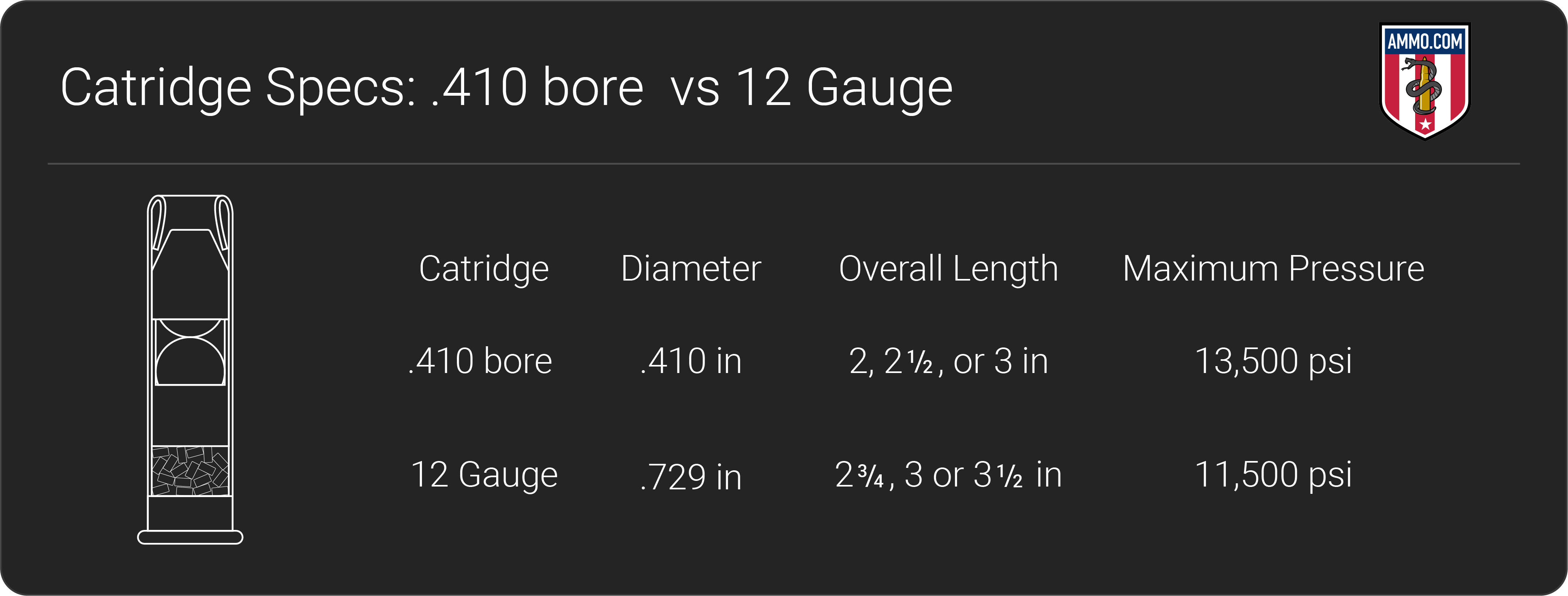
Internal pressures vary significantly based on the intended application of the load. Standard target loads generate lower chamber pressures (typically around 7,000 to 9,500 PSI) to reduce recoil and shooter fatigue. Conversely, high-velocity waterfowl loads and heavy turkey loads can generate pressures reaching up to 11,500 PSI, which is the maximum average pressure limit established by SAAMI for standard 12 gauge configurations. Shooters must verify that their firearm's receiver and barrel steel are rated for high-pressure modern commercial loads, particularly when dealing with vintage or imported side-by-side and over-under shotguns.
Materials and Structural Anatomy Affecting Dimensions
The physical dimensions of a 12 gauge shell are maintained through precise manufacturing standards applied to its constituent parts. Variations in material selection can subtly influence how a shell interacts with different chamber geometries.
- Hull Material: Modern hulls are almost universally constructed from high-density polyethylene plastic, occasionally featuring a ribbed exterior to improve grip during manual loading. Older paper hulls, while largely obsolete, swelled more readily when exposed to moisture, occasionally causing jamming issues in tight chambers.
- Base Head Height: The metal base (often referred to as the "brass," though it is typically brass-plated steel) varies in height from low brass (8mm to 12mm) to high brass (16mm to 25mm). While many shooters believe high brass denotes higher velocity or pressure, the brass height primarily serves structural and aesthetic purposes. High brass hulls simply provide extra reinforcement for heavy powder charges, though modern low-brass hulls are often engineered to handle identical pressure levels.
- Primer Pockets: Standard 12 gauge shells use large shotgun primers, commonly equivalent to Winchester 209 or Federal 209A specifications. The diameter of the primer pocket and the primer itself must remain standardized to ensure reliable ignition and prevent gas leakage backward through the bolt face.
Common Mistakes and Troubleshooting Dimensional Issues
Shooters frequently encounter operational issues related to shell dimensions, particularly when transitioning between different types of ammunition or using older firearms. Recognizing these issues prevents firearm jams and cycling failures.
Failure to Feed or Eject in Semi-Automatics
Gas-operated and inertia-driven semi-automatic shotguns rely on precise gas volumes and shell lengths to cycle reliably. Light target loads with shorter overall fired hulls may fail to generate sufficient recoil energy to cycle heavy bolt assemblies, resulting in stovepiping or failure to eject. Conversely, using oversized reloads with bulged hulls caused by improper sizing dies will prevent shells from fully seating in tight match chambers.
Reloading Tolerances and Resizing
Handloaders working with 12 gauge hulls must utilize a full-length resizing die to return the metallic base and rim to factory specifications after firing. Fired plastic hulls expand to fill the chamber of the specific firearm they were discharged in. If a reloaded shell is not properly resized, its base will exceed the maximum SAAMI dimension, preventing it from chambering in a different shotgun.
Frequently Asked Questions
Can I shoot 3-inch shells in a 2 3/4-inch chambered shotgun?
No. Firing a 3-inch shell in a 2 3/4-inch chamber is extremely dangerous. The extra length of the hull will unfold into the forcing cone of the barrel, creating an obstruction that causes dangerously high pressure spikes, potentially rupturing the barrel and injuring the shooter.
Does the height of the brass base on a 12 gauge shell affect its power?
No. The height of the metal base (brass or brass-plated steel) does not determine the power or velocity of the shell. It provides structural reinforcement for the powder charge. Many high-velocity hunting loads and standard target loads utilize low-brass hulls interchangeably based on modern plastic hull manufacturing capabilities.
What is the actual diameter of a 12 gauge shell?
The exterior diameter of a loaded 12 gauge plastic hull is approximately 0.798 to 0.800 inches. The metallic rim at the base measures roughly 0.873 to 0.880 inches in diameter.
Are European (CIP) and American (SAAMI) 12 gauge dimensions identical?
They are nearly identical and fully interchangeable for safe operation, though CIP pressure testing protocols and maximum allowable pressure thresholds can occasionally differ slightly from SAAMI standards for specific high-performance loads. Modern commercial ammunition from major global manufacturers complies with both standards.
Why do some 12 gauge shells have rolled crimps instead of star crimps?
Rolled crimps are traditionally used for paper or plastic hulls containing solid slugs, buckshot with over-shot cards, or specialty blanks. The rolled edge holds the internal components securely under heavy recoil and allows the mouth of the hull to open smoothly without catching on the forcing cone.
Conclusion and Next Action
Mastering the dimensions of 12 gauge shotgun shells ensures safe operation, reliable firearm cycling, and optimal ballistic performance. Always verify the stamped barrel markings on your shotgun before purchasing or loading ammunition, matching the hull length strictly to the chamber capacity. Inspect handloaded ammunition with a case gauge to confirm that all outer dimensions adhere to established safety standards before taking your firearm to the range or the field.
Image Gallery