The Truth About Errors and Omissions Liability Insurance
Errors and omissions (E&O) liability insurance is a specialized form of professional liability coverage designed to protect businesses and individuals from financial losses caused by claims of negligence, misrepresentation, or failure...
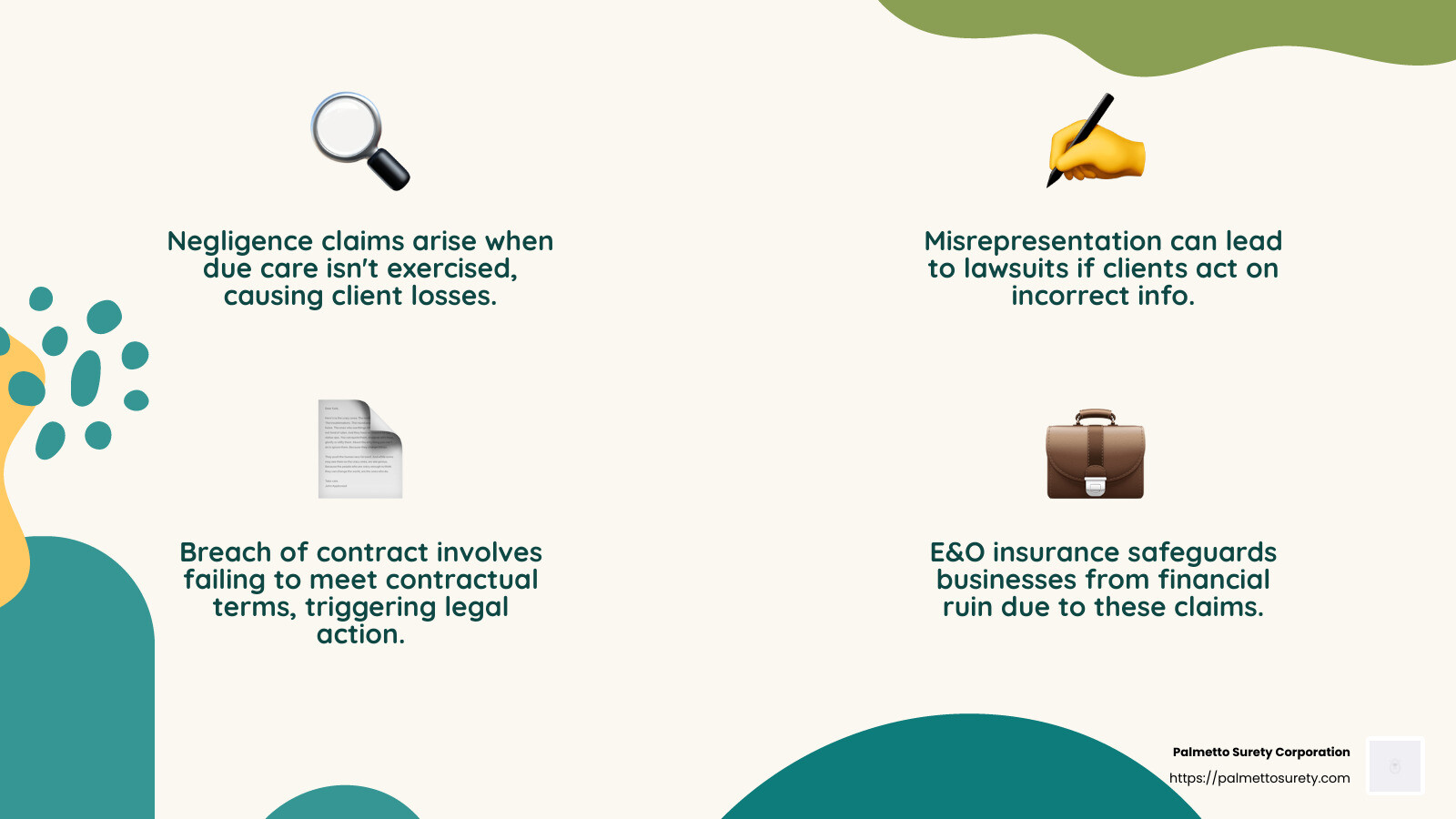
Errors and omissions (E&O) liability insurance is a specialized form of professional liability coverage designed to protect businesses and individuals from financial losses caused by claims of negligence, misrepresentation, or failure to perform professional services. Unlike general liability insurance, which covers physical injuries or property damage, E&O insurance focuses purely on financial damages resulting from mistakes, oversights, or unfulfilled contractual obligations.
Contents
Navigating the landscape of professional liability coverage requires separating marketing myths from legal and operational realities. Many service providers assume that a standard commercial general liability policy covers all aspects of business operations, only to find themselves entirely unprotected when a client alleges financial harm due to flawed advice, delayed deliverables, or overlooked technical details. Understanding the true scope, limitations, structure, and cost considerations of E&O insurance is vital for safeguarding a modern enterprise against potentially crippling litigation expenses and settlement costs.
What Errors and Omissions Liability Insurance Actually Covers
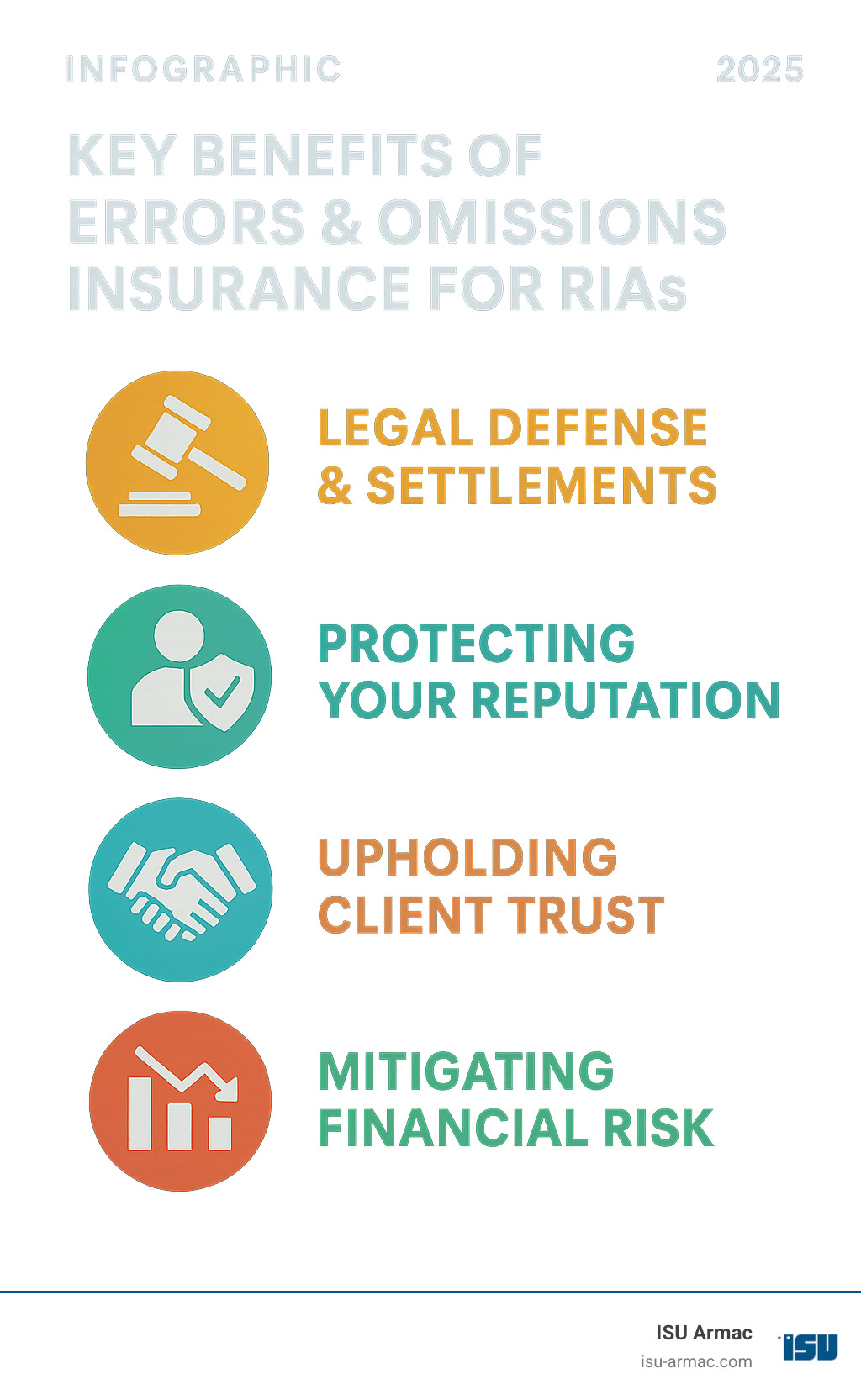
The primary function of errors and omissions insurance is to absorb the costs associated with defending a professional against client lawsuits and paying any resulting settlements or judgments. However, the scope of coverage is strictly bound by the definitions within the policy contract.
E&O policies typically cover financial losses suffered by third parties due to actual or alleged negligent acts, errors, or omissions committed while rendering professional services. This includes instances where a consultant provides incorrect market analysis, a software developer delivers code with critical defects that disrupt client operations, or an insurance agent fails to secure requested policy riders.
Beyond paying settlements or court-awarded damages, a robust E&O policy covers the substantial legal defense costs that accumulate long before a case reaches a courtroom. Attorney fees, expert witness retainers, court costs, and administrative expenses are often advanced or reimbursed by the insurer. This defense-inside-limits structure means that legal fees erode the overall policy limit, though some policies offer defense costs outside the limits.
Exclusions and Boundaries of Protection
A common misconception is that E&O insurance acts as an all-risk policy for any professional mishap. In reality, standard policies contain explicit exclusions that policyholders must understand to avoid unexpected coverage denials.
Intentional fraudulent acts, criminal behavior, and willful misconduct are strictly excluded from coverage. If a service provider knowingly defrauds a client, the insurer will neither defend nor indemnify them. Furthermore, bodily injury and property damage are carved out of E&O policies, as these fall under commercial general liability. Other standard exclusions include employment practices liability, patent infringement, contractual penalties assumed outside of standard professional liability, and claims arising from prior known acts before the policy's retroactive date.
Claims-Made Versus Occurrence Policies
One of the most critical structural realities of errors and omissions insurance involves how policies trigger coverage. Unlike general liability policies, which frequently utilize an occurrence form, the vast majority of E&O policies operate on a claims-made basis.
Under a claims-made policy, two crucial dates dictate whether an insurer will respond to a lawsuit: the retroactive date and the policy period.
- Retroactive Date: This is the earliest date from which work is covered. If a professional committed an error prior to this date, the insurer will not cover the resulting claim, even if the lawsuit is filed today.
- Policy Period: The active timeframe during which the insurance policy is in force and during which a claim must be formally made against the insured and reported to the insurer.
If a business cancels its E&O policy, coverage instantly ceases for any future claims, even if the alleged error occurred while the policy was active. To bridge this gap, businesses often purchase an Extended Reporting Period (ERP), commonly known as "tail coverage," which allows a window of time to report claims arising from past professional services after a policy has expired or been cancelled.
Industry-Specific Applications and Risk Profiles
The necessity and application of E&O insurance vary dramatically depending on the industry. While some professions are legally mandated to carry professional liability coverage, others buy it strictly as a matter of contractual requirement or prudent risk management.
| Industry Sector | Primary Risk Exposure | Typical Claim Scenario |
|---|---|---|
| Information Technology | Software failures, data corruption, project delivery delays | A custom inventory management system crashes during peak sales, causing massive revenue loss. |
| Real Estate | Misrepresentation of property conditions, missed disclosure deadlines | A broker fails to disclose a known structural zoning restriction prior to a commercial purchase. |
| Financial Services | Poor investment advice, regulatory non-compliance, calculation errors | An advisor recommends an unsuitable high-risk portfolio that suffers catastrophic devaluation. |
| Consulting & Marketing | Missed campaign launch dates, trademark infringements, strategy failures | A marketing agency uses an unlicensed copyrighted image, resulting in a severe copyright lawsuit. |
Regulated professions—such as certified public accountants, real estate brokers, and insurance agents—frequently face state-mandated insurance requirements or strict licensing board rules that enforce minimum coverage thresholds. Conversely, unregulated fields like business consulting or creative design purchase E&O coverage primarily to satisfy commercial contract stipulations required by enterprise clients.
Financial Realities: Costs, Deductibles, and Underwriting
Securing an E&O policy involves a rigorous underwriting process where insurers evaluate the specific risk profile of the applicant. Unlike off-the-shelf consumer products, professional liability premiums are customized based on multiple operational variables.
Underwriters examine annual gross revenue, staff qualifications, claims history, risk management protocols, and the complexity of the services provided. A firm with a history of client disputes or one operating in high-litigation sectors will face significantly higher premiums and stricter deductibles.
Deductibles and Retentions
E&O policies generally utilize a deductible known as a "retention" or "loss-only deductible." In some cases, policies feature "split deductibles," separating defense cost deductibles from indemnity deductibles. Business owners must evaluate their cash flow to ensure they can comfortably absorb a sudden deductible payment if a claim arises.
Furthermore, insurers often incorporate a "hammer clause" within the policy wording. If a professional disagrees with an insurer's recommendation to settle a claim out of court and insists on fighting the lawsuit, the hammer clause limits the insurer's liability to the proposed settlement amount, shifting financial responsibility for subsequent legal fees and escalated damages back to the insured.
Common Myths and Dangerous Assumptions
The commercial insurance market is plagued by misconceptions that leave businesses dangerously exposed. Dispelling these myths is essential for establishing an effective risk management strategy.
One widespread myth is that an incorporation status, such as an LLC or Corporation, protects personal and business assets from professional liability lawsuits. While corporate structures protect personal assets from general business debts, they do not shield individual professionals or the corporate entity from personal allegations of professional negligence or malpractice. A client suing for professional negligence can target the corporate assets and, under certain legal doctrines of personal negligence, pierce corporate protections.
Another dangerous assumption is that standard general liability covers professional advice. General liability policies contain explicit "professional services" exclusions. If a consultant gives erroneous advice that destroys a client's profit margin, the general liability carrier will deny coverage entirely, leaving the firm to pay defense costs out of pocket.
Frequently Asked Questions
Does errors and omissions insurance cover cyber attacks and data breaches?
Standard E&O policies generally do not cover direct cyber losses, such as ransomware extortion, business interruption from network lockouts, or regulatory fines for lost consumer data. While a data breach caused by professional negligence might trigger certain E&O components, modern enterprises typically require a dedicated cyber liability insurance policy to cover cyber-specific exposures comprehensively.
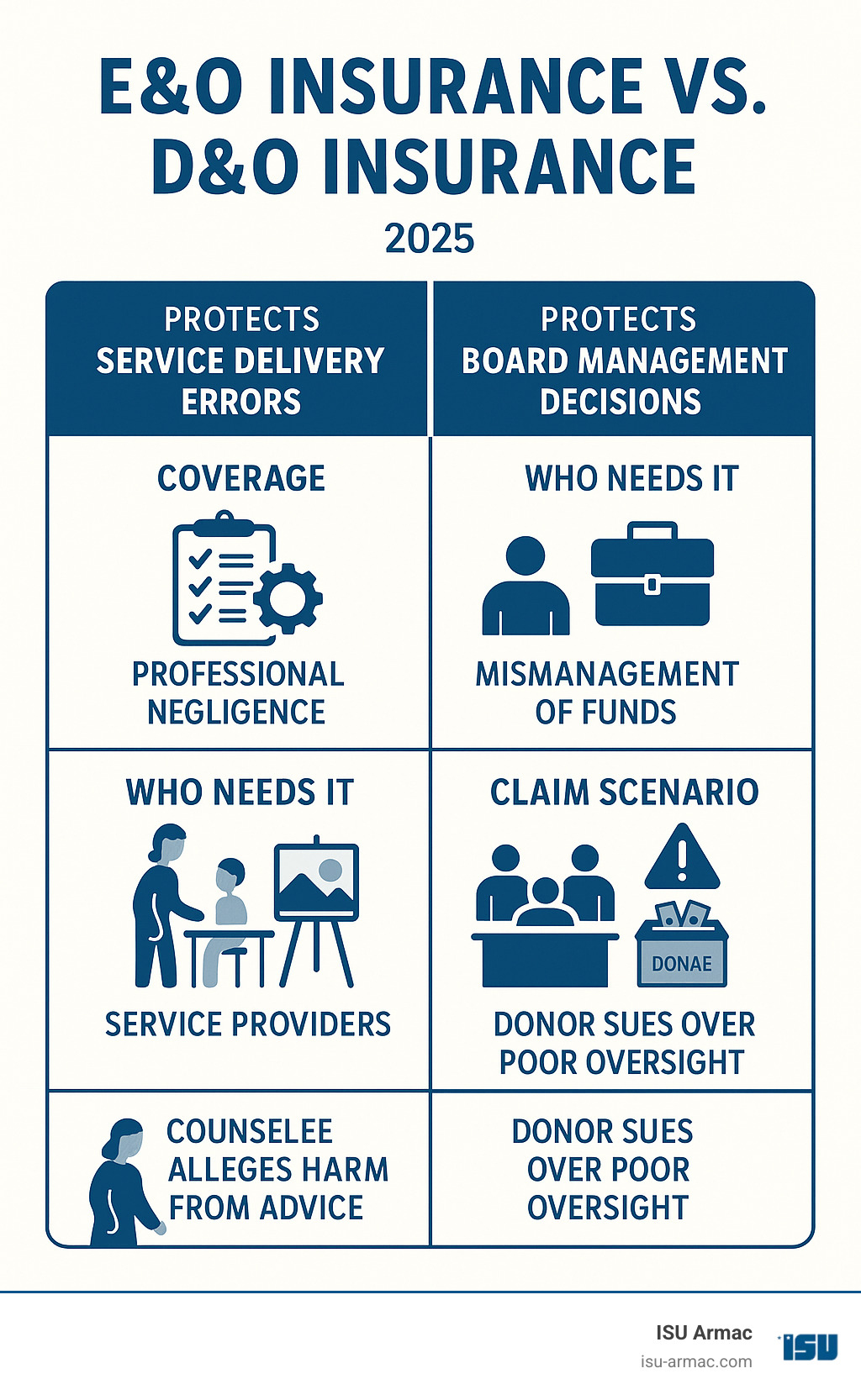
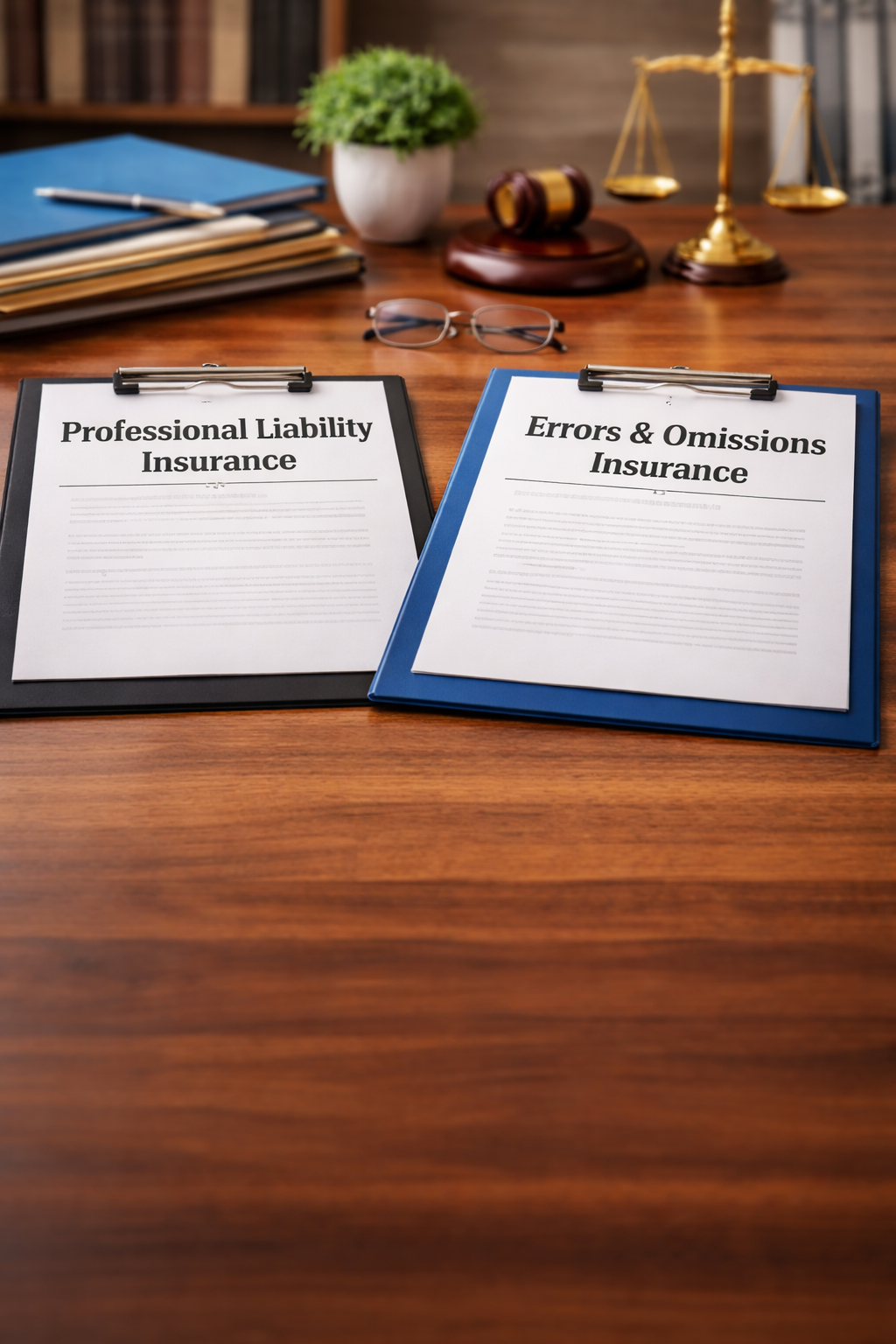
What is the difference between errors and omissions and professional liability insurance?
In practice, these terms are interchangeable. Both refer to insurance protecting service providers against financial loss resulting from professional negligence. However, "errors and omissions" is more commonly used for B2B service providers, consultants, and contractors, while "professional liability" is frequently used for medical practitioners, lawyers, and financial planners.
Can independent contractors operate under a client's E&O policy?
Usually not. Independent contractors and freelancers are generally considered separate legal entities and must maintain their own E&O insurance. Relying on a client's policy leaves the contractor exposed, as the client's insurer will not defend an external vendor against third-party claims unless the contractor has been formally designated as an insured sub-contractor under that specific policy—which is rare.
How much E&O coverage does a small business need?
Coverage limits depend heavily on contract requirements, asset value, and industry risk exposure. Standard small business policies frequently start with limits of $1,000,000 per occurrence and $1,000,000 in aggregate. However, businesses handling high-value enterprise accounts or sensitive financial data often purchase limits of $5,000,000 or more, frequently supplemented by excess liability layers.
What should I do if a client threatens to sue over a professional mistake?
Do not admit fault, negotiate settlements, or sign liability waivers without consulting legal counsel and your insurance broker. Notify your E&O carrier immediately. Delaying notification can violate policy conditions regarding timely reporting and jeopardize your right to coverage and defense indemnification.
Practical Next Steps for Securing Coverage
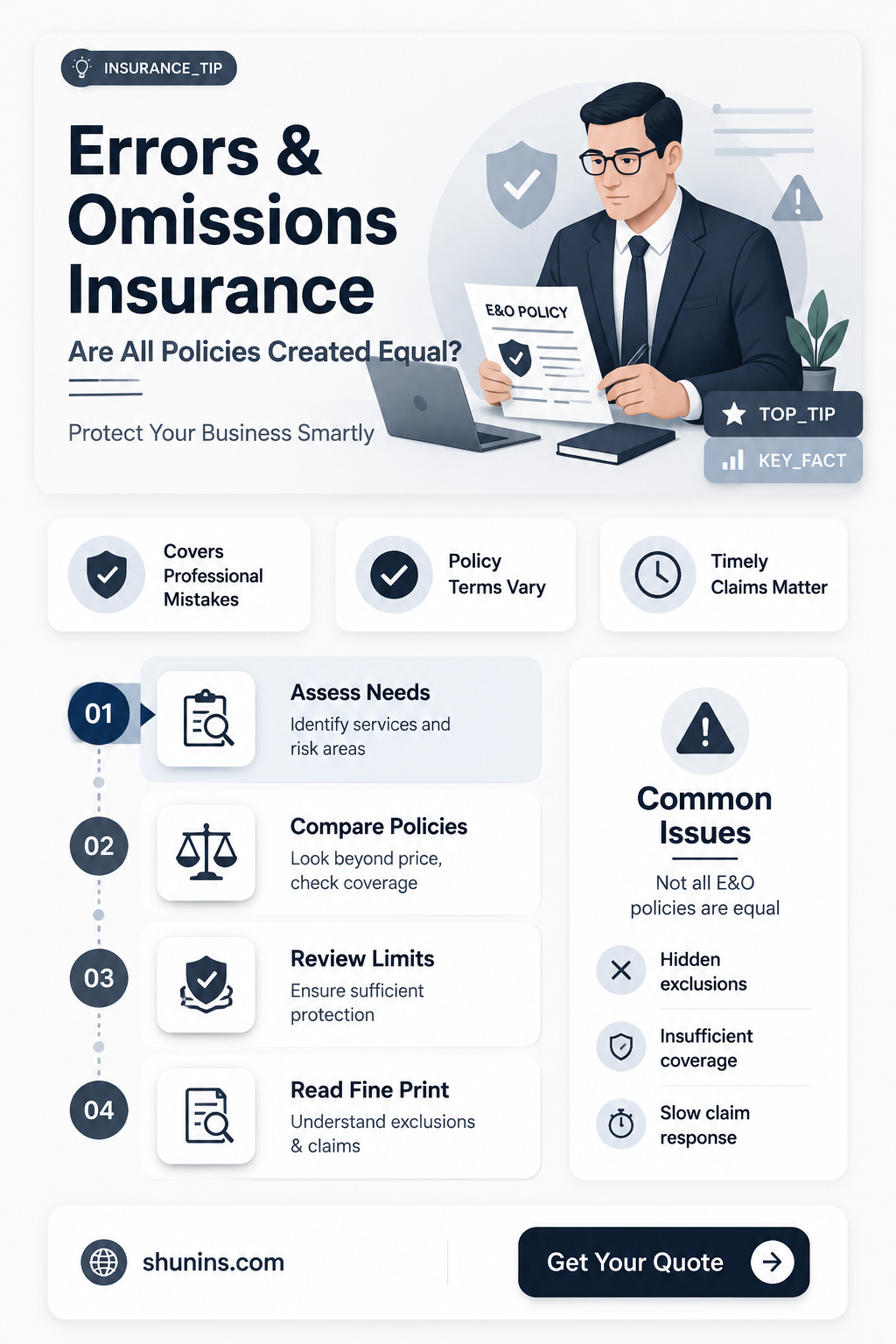
Evaluating your exposure to professional liability requires a methodical approach. Begin by reviewing current client contracts to identify mandatory insurance limits, indemnity clauses, and contractual liability obligations. Next, consult an independent commercial insurance broker specializing in your specific niche to conduct a thorough risk assessment. Request quotes from multiple admitted carriers, paying close attention not just to the premium cost, but to policy definitions, retroactive dates, and exclusion clauses. Implementing robust internal quality control workflows, clear scope-of-work documentation, and comprehensive client sign-off procedures will further reinforce your legal standing and help secure favorable underwriting terms.
Image Gallery