Understanding the Various Meanings of MLB Across Sports, Tech, and Industry
The acronym MLB most commonly refers to Major League Baseball, the top professional baseball organization in North America. However, MLB is also a widely used abbreviation across several specialized sectors, representing Middle Linebac...
The acronym MLB most commonly refers to Major League Baseball, the top professional baseball organization in North America. However, MLB is also a widely used abbreviation across several specialized sectors, representing Middle Linebacker in American football, Multilayer Board in electronics manufacturing, and Motor Lifeboat in maritime search-and-rescue operations.
Contents
Depending on whether you are reading sports statistics, analyzing an electronic schematic, reviewing coast guard operational manuals, or scanning flight itineraries, the three-letter combination carries distinctly different meanings. Interpreting the acronym correctly requires evaluating the industry context, surrounding terminology, and structural usage.
Major League Baseball: The Primary Global Meaning of MLB
In mainstream media and general conversation, MLB refers to Major League Baseball, the oldest continuous major professional sports league in the United States and Canada. Established through the historic integration and cooperation of two separate leagues, MLB serves as the governing body for top-tier professional baseball.
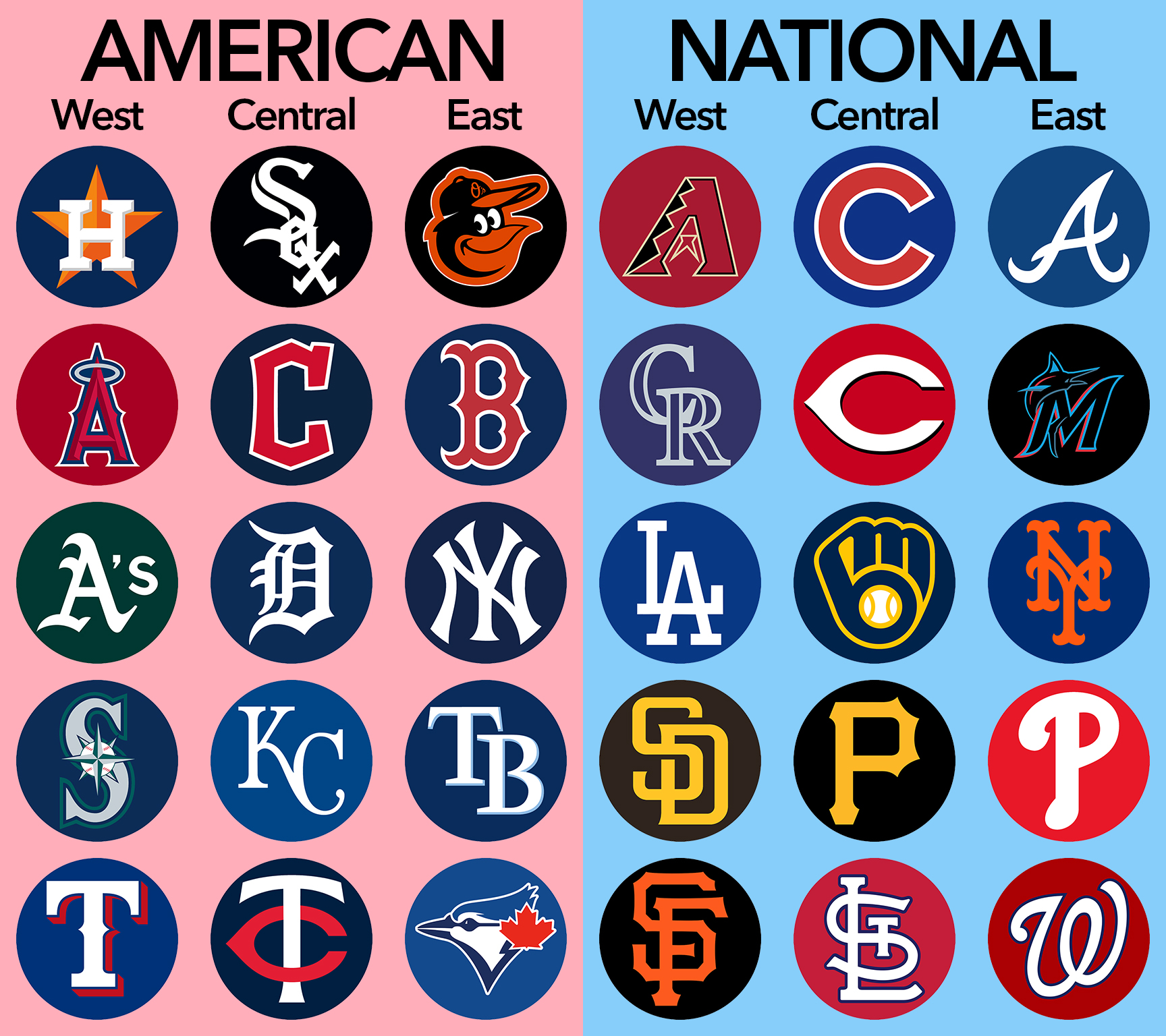
- Major League Baseball
- American League (AL)
- East
- Central
- West
- National League (NL)
- East
- Central
- West
- American League (AL)
Organizational Structure and Franchise Distribution
MLB is divided into two distinct sub-entities: the National League (NL), founded in 1876, and the American League (AL), established in 1901. While operating as independent competitive units for nearly a century, the two leagues formally merged their administrative structures under the unified office of the Commissioner of Baseball in 2000.
- Team Count: 30 total franchises (29 located in the United States, 1 located in Canada).
- Divisional Breakdown: Both the AL and NL are split into three geographic divisions: East, Central, and West, each containing 5 teams.
- Roster Regulations: Teams maintain a 26-player active roster during the majority of the regular season, expanded to 28 players in September, alongside a broader 40-man roster that includes players under major league contracts eligible for call-ups.
Operations and Competition Mechanics
The MLB season follows a rigorous schedule designed to test team depth and athletic endurance across several distinct phases:
- Spring Training: Conducted annually in February and March across Florida (the Grapefruit League) and Arizona (the Cactus League), allowing teams to evaluate prospects and prepare active rosters.
- Regular Season: Comprises 162 games per team, spanning from late March or early April to late September. The schedule incorporates balanced play, requiring every team to play against all 29 other franchises during the season.
- Postseason and World Series: Twelve teams qualify for the postseason—six from each league (three divisional champions and three wild card qualifiers). The postseason culminates in October with the World Series, a best-of-seven championship series between the AL champion and the NL champion.
Commercial and Technological Footprint
Beyond live competition, MLB operates extensive digital and media infrastructure. Its technology branch, historically known as MLB Advanced Media (MLBAM), pioneered early direct-to-consumer sports streaming architecture, establishing technical blueprints later adopted across the broader entertainment industry.
MLB in American Football: The Middle Linebacker Position
Within gridiron football, MLB stands for Middle Linebacker, a vital defensive playing position often described as the "quarterback of the defense."
- OFFENSIVE LINE: [C] [G] [T]
- (A-Gap) (B-Gap)
- [MLB] Middle Linebacker (Mike): Calls plays & fills gaps
Strategic Role in Defensive Formations
In standard defensive alignments—most notably the 4-3 defense (four defensive linemen and three linebackers)—the Middle Linebacker lines up near the center of the formation, directly behind the defensive tackles. In football jargon and defensive playbooks, the MLB is universally designated as the "Mike" linebacker.
- Play Calling and Adjustments: The MLB receives defensive play calls from coaches via in-helmet communication technology and translates them to the rest of the unit. Pre-snap, the MLB reads offensive line shifts, audible calls, and backfield motion, adjusting the defensive alignment accordingly.
- Run Support: The MLB is primarily responsible for securing the interior running lanes, specifically the A-gaps (between the center and guards) and B-gaps (between the guards and tackles), making direct tackles on running backs.
- Pass Coverage: In passing scenarios, the MLB drops into coverage to defend tight ends, slot receivers, or running backs coming out of the backfield. In zone schemes like the Tampa 2 defense, the MLB must drop deep into the middle third of the field to cover vertical passing routes.
Physical and Tactical Attributes
Elite middle linebackers combine physical strength to shed blocks from 300-pound offensive linemen with exceptional lateral speed and spatial reading ability. Key performance metrics for an MLB include tackle efficiency, field processing speed, forced fumbles, pass deflections, and interceptions.
MLB in Electronics Engineering: Multilayer Boards
In the fields of printed circuit board (PCB) design, electrical engineering, and hardware manufacturing, MLB stands for Multilayer Board.
- Top Copper Layer (Signal)
- Prepreg (Dielectric Insulating Layer)
- Internal Copper Plane (Ground/Power)
- Core Material
- Internal Copper Plane (Signal)
- Prepreg (Dielectric Insulating Layer)
- Bottom Copper Layer (Signal)
Engineering Architecture of Multilayer Boards
Unlike single-sided or double-sided PCBs, a Multilayer Board consists of three or more conductive copper layer paths laminated together under high temperature and pressure, separated by insulating dielectric materials known as prepreg and core substrates. Fabrication and design rules for these assemblies are codified globally by the IPC Standards for Electronics.
- Layer Stackup: High-density MLBs can range from 4 layers in consumer electronics to over 32 layers in supercomputers, industrial routers, and server motherboards.
- Vias and Interconnections: Electrical connections between different copper layers are established using plated through-holes, blind vias (connecting an outer layer to an inner layer), buried vias (connecting internal layers without touching outer layers), or laser-drilled microvias.
- Power and Ground Planes: MLBs allow engineers to dedicate entire inner copper layers as solid ground planes or power planes. This structure reduces electromagnetic interference (EMI), minimizes signal cross-talk, and stabilizes power delivery across complex microprocessors.
Key Advantages in Electronics Manufacturing
- Space Savings and Density: MLBs enable miniaturization by routing complex circuit traces across internal layers, drastically reducing the required physical footprint of modern smartphones, wearables, and medical devices.
- Improved Signal Integrity: By sandwiching high-speed signal traces between shielding ground layers (stripline configurations), MLBs prevent signal degradation at high operating frequencies.
- Thermal Management: Embedded copper planes help distribute heat evenly across the circuit board, reducing localized hot spots near power-hungry components.
MLB in Maritime Operations: Motor Lifeboats
In maritime safety, naval engineering, and coast guard operations, MLB refers to a Motor Lifeboat, a specialized vessel designed specifically for heavy-weather search and rescue operations.
- [ Pilothouse ]
- Waves / Surf
- (Self-Righting Hull Structure)
The U.S. Coast Guard 47-Foot Motor Lifeboat
The most prominent example of this craft is the 47-foot Motor Lifeboat (47' MLB) deployed extensively by the United States Coast Guard and international maritime rescue agencies.
- Self-Righting Capability: The defining engineering feature of the 47' MLB is its ability to self-right within 8 to 10 seconds if pitch-poled or capsized by heavy surf or crushing waves.
- Hull Construction: Constructed from high-strength marine-grade aluminum, the hull is compartmentalized with foam-filled buoyancy chambers to maintain flotation even if breached.
- Operational Capabilities: Designed to operate in extreme weather conditions, the vessel can survive 30-foot seas, 20-foot breaking surf, and sustained winds of up to 50 knots.
Primary Mission Profiles
Motor Lifeboats are stationed at coastal rescue stations located along ocean inlets, treacherous river bars, and high-surf areas. Their missions include responding to distress calls from commercial fishing vessels, conducting offshore body and craft recoveries, performing hazardous vessel towing operations, and deploying maritime paramedics during severe oceanic storms.
Additional Domain-Specific Meanings of MLB
Beyond the four primary categories, MLB serves as an abbreviation in several specialized technical, geographic, and corporate settings:
Aviation: Melbourne Orlando International Airport
In aviation logistics, passenger ticketing, and air traffic control, MLB is the official 3-letter airport code assigned by the International Air Transport Association (IATA) to Melbourne Orlando International Airport, located in Brevard County, Florida. Luggage tags, flight reservations, and radar tracking systems use MLB to distinguish this facility from other international airports.
Software Engineering and Artificial Intelligence
- Machine Learning Building Blocks / Machine Learning Workbench: In software development and data science, engineers occasionally use MLB to refer to modular Machine Learning Building blocks or specific development workbench environments used to train neural networks.
- Memory Location Block: In low-level computer system architecture and memory management, MLB sometimes abbreviates a specific contiguous block of memory allocated within system memory or hardware registers.
Business and Enterprise Operations
- Major Line of Business: In corporate planning, risk analysis, and financial reporting, enterprises classify primary revenue generators as an MLB (Major Line of Business) to segment strategic operations from minor subsidiaries.
Contextual Comparison of MLB Meanings
The table below summarizes the core operational differences, primary industries, and typical contexts across all major interpretations of MLB:
| Acronym Context | Primary Field | Full Name / Term | Key Function or Definition | Common Usage Context |
|---|---|---|---|---|
| Professional Baseball | Sports / Media | Major League Baseball | Highest level of professional baseball in North America; 30 franchises across AL and NL. | "MLB announced the regular season opening day schedule." |
| Gridiron Football | Sports / Coaching | Middle Linebacker | Central defensive player responsible for play calling, run gap filling, and pass coverage. | "The defense relied on their MLB to call pre-snap adjustments." |
| Circuit Design | Hardware / Electronics | Multilayer Board | A printed circuit board containing three or more copper layers for dense circuit routing. | "Signal interference was reduced by adding ground planes to the MLB." |
| Maritime Rescue | Nautical / Search & Rescue | Motor Lifeboat | Heavy-weather, self-righting rescue vessel designed for ocean surf conditions. | "The Coast Guard deployed a 47-foot MLB to rescue the stranded vessel." |
| Aviation Logistics | Transport / Travel | Melbourne Orlando Int'l Airport | Official IATA airport identifier for Brevard County airport in Florida. | "Flight documents listed the destination airport code as MLB." |
| Corporate Planning | Finance / Enterprise | Major Line of Business | High-level organizational classification for core operational divisions. | "The software segment represents the company's primary MLB." |
How to Identify the Correct Meaning of MLB in Text
Because MLB carries distinct meanings across sports, engineering, aviation, and emergency response, determining the intended meaning requires evaluating specific structural and textual markers.
- Is "MLB" referenced in text?
- Mentioning teams, stats, trades, runs, home runs?: Major League Baseball
- Mentioning defense, tackles, linebackers, snaps, gaps?: Middle Linebacker
- Mentioning PCBs, copper, traces, vias, layer stackups?: Multilayer Board
- Mentioning Coast Guard, surf, capsizing, rescue, sea?: Motor Lifeboat
- Mentioning flight routes, IATA tags, luggage, runways?: Airport Code (Melbourne, FL)
Contextual Clues by Domain
- Statistical Data and Names: If MLB appears alongside player names, team cities (e.g., New York, Los Angeles), ERA, RBI, or standings, it refers exclusively to Major League Baseball.
- Defensive Alignment Jargon: If MLB appears alongside terms like "tackles," "4-3 defense," "blitz package," or "Mike," it indicates the Middle Linebacker position in football.
- Engineering and Manufacturing Specifications: Terms like "IPC class," "copper weight," "via stack," "prepreg," "dielectric thickness," or "soldermask" confirm that MLB refers to a Multilayer Board.
- Nautical and Operational Terminology: References to "sea state," "knot speeds," "self-righting," "U.S. Coast Guard," or "coxswain" indicate a Motor Lifeboat.
- Capitalization and Formatting: While Major League Baseball, Motor Lifeboat, and Middle Linebacker are frequently written as lowercase
mlbin casual online text or statistical data tables, technical acronyms like airport codes (IATA:MLB) and PCB specs are strictly capitalized in formal documents.
Frequently Asked Questions
What is the most widely recognized meaning of MLB?
Globally, MLB most frequently stands for Major League Baseball. Due to international television broadcasts, global merchandise sales, and sports news distribution, this meaning dominates search engine queries and popular media references.
Is an MLB in football the same as an ILB?
Not strictly. In a 4-3 defensive formation (four linemen, three linebackers), the single central linebacker is called the Middle Linebacker (MLB). In a 3-4 defensive formation (three linemen, four linebackers), there are two central linebackers, which are officially designated as Inside Linebackers (ILBs) rather than an MLB.
Why use a Multilayer Board (MLB) instead of a double-sided PCB?
Engineers choose a Multilayer Board when circuit complexity makes routing all electrical traces on just two surfaces impossible. MLBs allow higher component density, superior high-speed signal integrity, reduced electromagnetic radiation, and integrated ground planes necessary for modern electronic devices.
Can a Motor Lifeboat (MLB) capsize permanently?
The U.S. Coast Guard's 47-foot Motor Lifeboat is specifically engineered with a low center of gravity and high-buoyancy superstructure. If knocked sideways or inverted by a massive breaking wave, the vessel is designed to automatically roll back upright (self-right) in less than 10 seconds without engine cutout.
Where is the airport with the code MLB located?
The IATA code MLB identifies Melbourne Orlando International Airport, situated in Melbourne, Brevard County, Florida. It serves domestic and international flights along Florida's Space Coast region.
Summary and Practical Guidance
When encountering the abbreviation MLB, avoid assuming it refers to Major League Baseball without verifying the surrounding text. For technical documentation, engineering reports, and athletic rosters, best practices dictate writing out the full title upon first usage—such as Multilayer Board (MLB) or Middle Linebacker (MLB)—before relying on the shortened abbreviation. This clear documentation practice prevents cross-industry ambiguity and ensures accurate technical communication.
Image Gallery