Magento Cloud Security: A Robust Shield for Your Online Store
Magento cloud security provides a comprehensive, multi-layered defensive framework designed to protect ecommerce environments hosted on Adobe Commerce (formerly Magento) Cloud. By integrating automated patching, managed infrastructure,...
Magento cloud security provides a comprehensive, multi-layered defensive framework designed to protect ecommerce environments hosted on Adobe Commerce (formerly Magento) Cloud. By integrating automated patching, managed infrastructure, and advanced threat monitoring, this architecture mitigates risks like data breaches, SQL injections, and unauthorized access, ensuring that sensitive customer information and transaction integrity remain secure throughout the entire lifecycle of an online store.
Contents
Understanding the Magento Cloud Security Architecture
The shift from on-premise hosting to cloud-native infrastructure fundamentally changes the security profile of an ecommerce site. In the Adobe Commerce Cloud environment, security is managed through a shared responsibility model. While the provider maintains the underlying infrastructure, the merchant remains responsible for secure coding practices, access management, and configuration.
The platform utilizes a "defense-in-depth" approach. This means that if one layer of security is compromised, subsequent layers act as barriers to prevent further unauthorized access. Core components of this architecture include:
- Platform-Level Security: Adobe maintains the foundational cloud infrastructure, ensuring that the operating system, database engines, and runtime environments receive regular security updates and hardening.
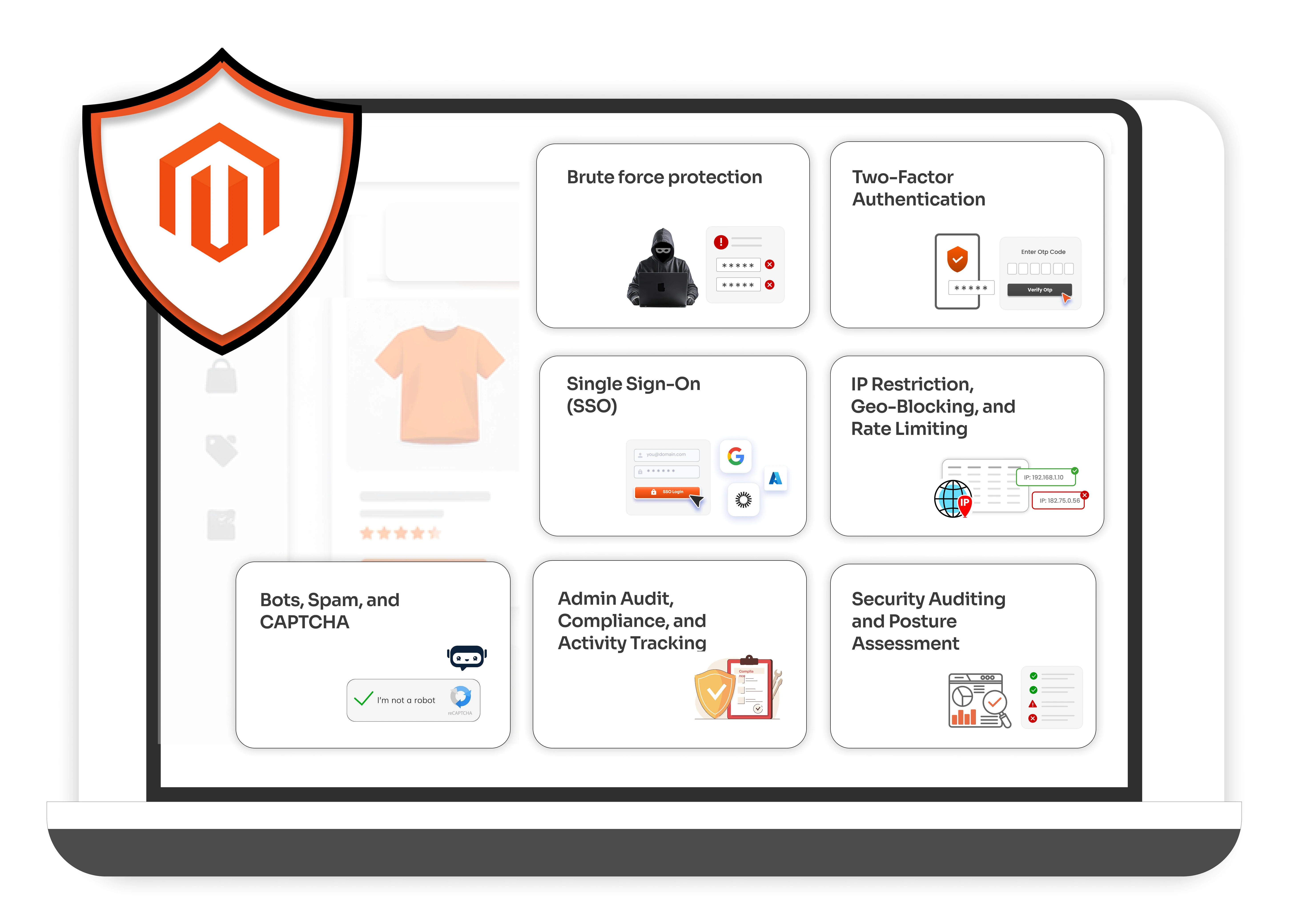
- Web Application Firewall (WAF): Integrated WAF solutions inspect incoming traffic for patterns associated with common exploits, such as Cross-Site Scripting (XSS) or SQL Injection (SQLi), and block malicious requests before they reach the application.
- Content Delivery Network (CDN) Protection: By distributing content across global edge nodes, the CDN helps absorb Distributed Denial of Service (DDoS) attacks, ensuring that traffic spikes caused by malicious botnets do not take down the store.
The Role of Automated Patching and Compliance
One of the most persistent threats to any Magento implementation is the vulnerability of outdated core software or third-party extensions. Magento Cloud mitigates this through standardized deployment pipelines. In 2026, the reliance on automated security patching is not merely a best practice; it is a fundamental requirement for maintaining PCI DSS (Payment Card Industry Data Security Standard) compliance.
The automated process ensures that security patches issued by Adobe are applied consistently across development, staging, and production environments. This uniformity reduces the risk of "configuration drift," where security settings in staging differ from production, leaving doors open to attackers. Furthermore, the platform supports automated vulnerability scanning, which routinely tests the site for known CVEs (Common Vulnerabilities and Exposures), allowing teams to address issues before they can be exploited.
Access Control and Identity Management
Security breaches are frequently the result of compromised credentials rather than external hacking techniques. Magento Cloud enforces stringent access management protocols to limit the blast radius of any individual user account.
- Role-Based Access Control (RBAC): Administrators can assign specific roles to team members, ensuring that developers, marketers, and support staff only access the systems necessary for their function.
- Multi-Factor Authentication (MFA): Mandatory MFA for administrative panels and backend access significantly reduces the risk posed by phishing and credential stuffing attacks.
- SSH Key Management: Access to the underlying cloud infrastructure is restricted to authorized SSH keys, preventing the use of brute-force password attacks on the backend server.
Comparing Security Approaches for Magento Stores
Selecting the right security posture requires balancing functionality with defensive depth. The following table summarizes the differences between manual, on-premise management and the cloud-managed approach.
| Security Feature | On-Premise/Custom Hosting | Adobe Commerce Cloud |
|---|---|---|
| Infrastructure Updates | Manual, labor-intensive | Automated, platform-managed |
| DDoS Mitigation | Requires third-party hardware/service | Integrated at edge/CDN level |
| Patch Application | High risk of deployment failure | Standardized via Git pipelines |
| Compliance Readiness | Requires external audit documentation | Built-in compliance logging |
| Threat Intelligence | Limited to local server logs | Aggregated across global nodes |
Common Security Pitfalls and How to Avoid Them
Even with a robust cloud shield, misconfigurations remain the leading cause of security incidents. Merchants should audit their stores for the following common issues:
Unrestricted File Permissions
Sometimes developers set broad file permissions to troubleshoot site errors, accidentally leaving sensitive directories writeable. Always adhere to the principle of least privilege, ensuring web servers only have read access to source code and specific, limited write access to media and cache directories.
Insecure Third-Party Extensions
The Magento ecosystem thrives on extensions, but these are often the "weak link." Every extension installed adds a new attack surface. Before adding a module, verify its release history, ensure it follows Adobe’s coding standards, and perform a security audit on the code if it handles sensitive checkout data.
Inadequate Logging and Monitoring
A security shield is only effective if you know it is being hit. Neglecting to centralize logs means that successful or unsuccessful breach attempts go unnoticed until a catastrophic event occurs. Utilize the built-in logging tools provided in the cloud console to monitor for repeated failed login attempts or unusual API call patterns.
Frequently Asked Questions
Does Adobe Commerce Cloud guarantee 100% protection against all hacks? No security system provides absolute immunity. While Magento Cloud provides a robust infrastructure shield, it cannot protect against compromised passwords or insecure custom code written by store developers. Security remains a shared responsibility.
How does PCI compliance work on Magento Cloud? Adobe provides the infrastructure components necessary for PCI compliance, but the merchant must still ensure their specific business processes—such as how they handle credit card tokens and administrative access—meet the requirements of their specific PCI tier.
Can I use a custom WAF with my Magento Cloud setup? Yes, while Magento Cloud provides integrated protection, many enterprises choose to add an additional layer of third-party WAF or bot management services to address specific regional threats or unique traffic patterns.
What is the first step in responding to a suspected breach? Immediately isolate the affected environment if possible, initiate your incident response plan, and contact the Adobe Commerce support team to coordinate an investigation. Never delete logs or cache files before an investigation, as they contain critical forensic evidence.
Are security updates included in the annual licensing costs? Yes, the cloud subscription includes the infrastructure and platform-level security updates. However, the labor required to test and deploy these updates within your specific development workflow is the responsibility of your internal team or system integrator.
Next Steps for Store Security
To maximize the efficacy of your Magento Cloud security, initiate a quarterly security audit. Start by reviewing your access logs and auditing user permissions to remove inactive accounts. Next, ensure your deployment pipeline is configured to automatically run security scans on every commit. If you have not reviewed your custom modules in the last six months, schedule a code review to ensure that no deprecated or insecure functions are being utilized. Proactive maintenance is the most effective way to turn your cloud environment into a truly impenetrable fortress.
Image Gallery