St. Louis Gangs: Evolution, Law Enforcement Strategies, and Community Impact in 2026
Understanding the landscape of St. Louis gangs requires analyzing decades of urban development, socio-economic shifts, and evolving law enforcement interventions. This analysis examines the historical context, modern operational struct...
Understanding the landscape of St. Louis gangs requires analyzing decades of urban development, socio-economic shifts, and evolving law enforcement interventions. This analysis examines the historical context, modern operational structures, regional crime dynamics, and community-led violence prevention initiatives within the city.
Contents
Historical Evolution of Street Gang Dynamics in St. Louis
The presence of organized street gangs in St. Louis has transformed significantly over the past half-century. Historically, the city's gang culture mirrored national trends, transitioning from loosely organized neighborhood cliques in the late 20th century to more structured, enterprise-driven criminal networks by the early 2000s. Unlike legacy syndicates found in cities like Chicago or Los Angeles, St. Louis gangs have traditionally maintained a more decentralized footprint, anchored deeply in specific neighborhood blocks and housing developments.
Urban renewal projects, public housing dispersals, and shifts in regional drug markets heavily influenced this evolution. As traditional open-air drug markets shifted, local groups adapted by diversifying illicit revenue streams, incorporating illegal firearm distribution, and utilizing digital platforms for recruitment and conflict escalation. Law enforcement agencies, including the St. Louis Metropolitan Police Department (SLMPD) and federal partners such as the FBI and ATF, have continually recalibrated their investigative frameworks to target these shifting network topologies.
Geographic Concentration and Neighborhood Impacts
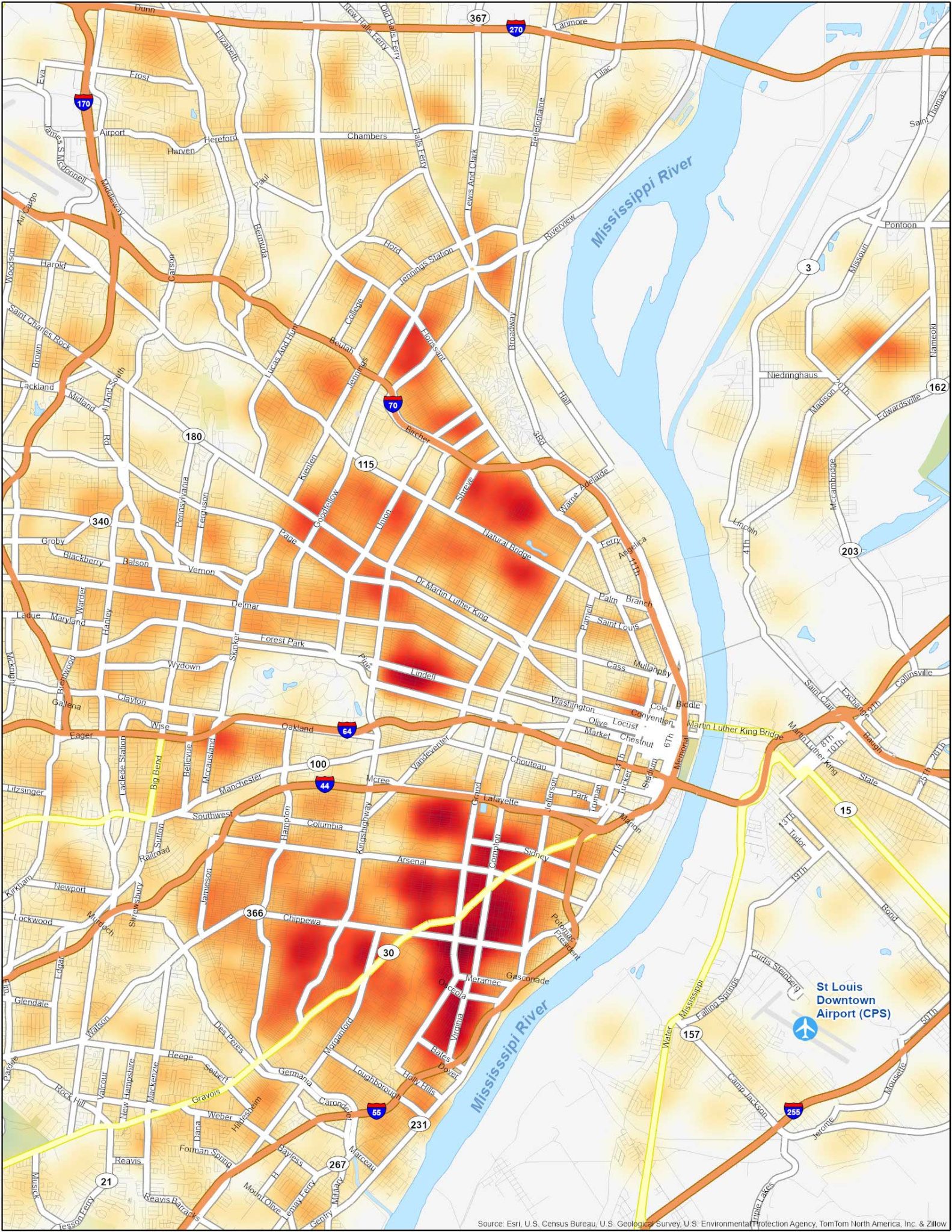
Gang activity in St. Louis is rarely uniform across the metropolitan area, clustering heavily within specific neighborhoods characterized by elevated poverty rates, disinvestment, and high vacancy levels. The majority of documented gang-related incidents concentrate within North City and select pockets of North County and South City.
Neighborhoods historically impacted by structural challenges—such as Greater Ville, Walnut Park, Wells-Goodfellow, and Dutchtown—frequently bear the brunt of localized disputes. These conflicts often stem from territorial disputes, personal retaliation cycles, and interpersonal grievances magnified by social media platforms.
| Neighborhood Zone | Primary Security Challenges | Law Enforcement & Intervention Focus |
|---|---|---|
| North City (e.g., Greater Ville, Walnut Park) | High rates of firearm violence, open-air drug markets, retaliatory cycles. | Targeted federal-local task forces, localized Cure Violence initiatives. |
| North County (e.g., Jennings, Pagedale) | Spillover crime, property offenses, transient youth groupings. | Multi-jurisdictional municipal policing cooperation, community outreach. |
| South City (e.g., Dutchtown, Bevo Mill) | Fragmented cliques, property crimes, localized narcotics distribution. | Neighborhood policing liaison units, business-civic partnerships. |
Modern Law Enforcement Strategies and Federal Partnerships
Addressing structural gang violence in St. Louis requires a blend of traditional deterrence, intelligence-led policing, and inter-agency collaboration. Modern law enforcement strategies have moved away from mass sweeps toward precision policing—focusing investigative resources on the most prolific violent offenders driving the vast majority of local crime.
Federal partnerships play a critical role in prosecuting high-level offenders. Initiatives such as the regionally integrated Project Safe Neighborhoods (PSN) framework leverage federal statutes regarding illegal firearm possession, racketeering, and narcotics trafficking to secure federal indictments, which often carry stiffer mandatory minimum sentences than state-level alternatives.
- Intelligence-Led Policing: Utilizing real-time crime centers, license plate readers, and ShotSpotter acoustic gunshot detection systems to deploy resources rapidly to high-risk zones.
- Federal Task Forces: Collaborative operations pairing SLMPD detectives with federal agents from the ATF, DEA, and FBI to trace illegal firearms and dismantle supply chains.
- Focused Deterrence Frameworks: Direct communication efforts delivered by law enforcement and community leaders to high-risk individuals, offering a clear choice between support services or targeted prosecution.
Public Health Approaches and Violence Interruption Programs
Recognizing that traditional policing alone cannot dismantle the root causes of gang involvement, St. Louis has increasingly integrated public health methodologies into its anti-violence infrastructure. Violence is treated not merely as a criminal justice failure, but as a contagious social disease that requires intervention and behavioral interruption.
Organizations utilizing the Cure Violence model employ violence interrupters and credible messengers—individuals with deep community ties and often past criminal justice system involvement—to mediate conflicts before they escalate into physical violence. These workers engage directly with high-risk youth, connecting them with social services, mental health resources, employment training, and educational support.
Community-Led Healing and Support Comprehensive violence reduction strategies require active participation from neighborhood residents, local clergy, and social service agencies. By establishing safe spaces for youth development, mental health counseling, and economic empowerment, St. Louis communities work to diminish the systemic vulnerabilities that facilitate gang recruitment.
Socio-Economic Factors Fueling Gang Recruitment
Young people join gangs typically as a result of complex push-and-pull factors deeply rooted in their immediate environment. Understanding these drivers is essential for implementing effective prevention strategies.
- Economic Disinvestment: Limited formal employment opportunities and systemic poverty in urban cores make illicit economies an attractive financial alternative.
- Educational Disparities: Under-resourced schools, high dropout rates, and a lack of vocational training pathways leave adolescents disconnected from stable futures.
- Social Isolation and Protection: In neighborhoods plagued by high violent crime rates, some youth join groups out of a perceived necessity for physical protection and familial solidarity.
- Family and Community Disruption: Generational trauma, unstable housing, and the absence of positive male or female role models increase susceptibility to external gang grooming.
Comparative Overview: Traditional Gangs vs. Modern Digital Cliques
The structural composition of groups operating in St. Louis has undergone a notable transformation over the past decade. The table below outlines the structural differences between traditional gangs and modern, loosely organized cliques.
| Characteristic | Traditional Hierarchical Gangs | Modern Digital Cliques / Neighborhood Crews |
|---|---|---|
| Structure | Clear leadership hierarchy, defined ranks, formal initiation rites. | Fluid, decentralized, revolving leadership, friendship- or block-based. |
| Communication | In-person meetings, coded language, traditional phone calls. | Encrypted messaging apps, social media livestreams, rapid digital beefs. |
| Primary Revenue | Organized drug distribution cartels, extortion, formal prostitution rings. | Opportunistic property theft, digital scams, localized and varied retail drug sales. |
| Conflict Catalyst | Territorial drug turf control, long-standing organizational rivalries. | Disrespect on social media, personal slights, rapid retaliatory spirals. |
Frequently Asked Questions
What are the main causes of gang violence in St. Louis?
Gang violence in St. Louis is primarily driven by systemic poverty, lack of economic opportunity, neighborhood disinvestment, and cycles of retaliatory interpersonal conflict often fueled by social media disputes. These underlying vulnerabilities create an environment where high-risk youth turn to street groups for protection and identity.
How do law enforcement agencies combat St. Louis gangs?
Law enforcement utilizes intelligence-led policing, real-time crime tracking technology, and inter-agency task forces combining local police with federal partners like the ATF and FBI. These strategies focus heavily on prosecuting the most violent repeat offenders rather than broad, indiscriminate sweeps.
What is the role of violence interruption programs in St. Louis?
Violence interruption programs treat urban violence through a public health lens by deploying credible messengers and violence interrupters into neighborhoods. These individuals mediate active disputes before they result in shootings and connect high-risk individuals with vital social and economic services.
Are St. Louis gangs structured like national syndicates?
Most contemporary groups in St. Louis do not operate as rigid franchises of national syndicates like the Crips or Bloods. Instead, they function primarily as localized neighborhood cliques, apartment complexes, or block-based crews with fluid memberships and decentralized leadership.
How has social media changed St. Louis gang dynamics?
Social media platforms accelerate conflict by allowing groups to broadcast threats, display illicit firearms, and disrespect rivals publicly in real-time. This digital exposure often transforms minor personal slights into rapid, highly visible acts of physical retaliation.
Strategic Recommendations for Regional Safety
Addressing the complex challenges posed by St. Louis gangs requires a dual-track strategy combining rigorous accountability for violent offenders with robust, sustained investment in youth development and community infrastructure. Stakeholders must continue to scale evidence-based violence interruption models while expanding economic mobility pipelines in vulnerable neighborhoods. For community members, supporting local mentorship networks, engaging with neighborhood stabilization efforts, and participating in public safety dialogues remain critical components of building long-term community resilience.
Image Gallery