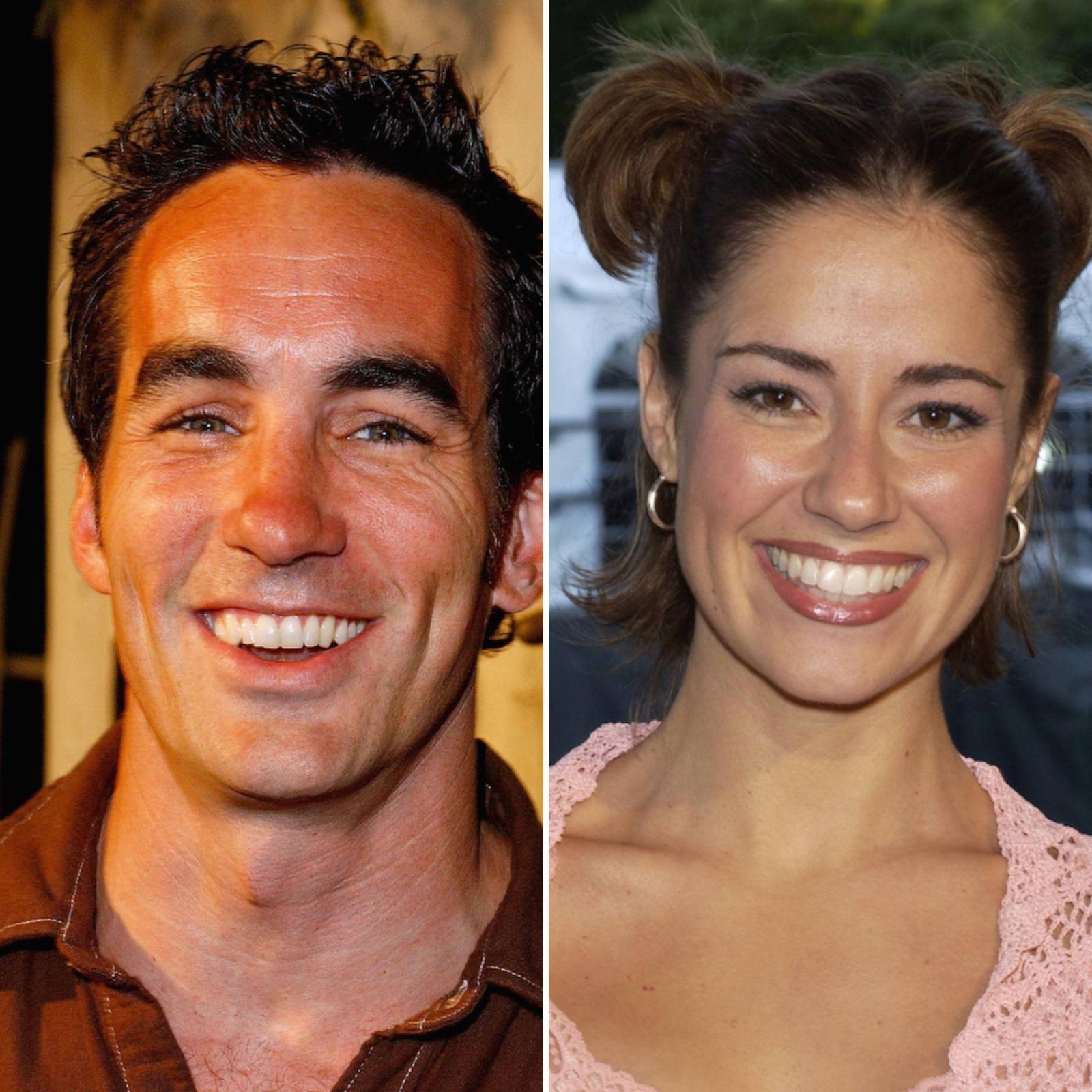
The Survivor Couples Season Evolution: From Island Flings to Strategic Powerhouses
The evolution of couples on Survivor has shifted from spontaneous, social "showmances" in the early 2000s to a sophisticated strategic element and even a foundational casting theme. While early seasons viewed romance as a distraction o...
The evolution of couples on Survivor has shifted from spontaneous, social "showmances" in the early 2000s to a sophisticated strategic element and even a foundational casting theme. While early seasons viewed romance as a distraction or a vulnerability, modern gameplay integrates these bonds into complex "meat shield" strategies and social maneuvering. As of 2026, the legacy of these pairs is defined not just by their impact on the game’s 26-day or 39-day cycles, but by their remarkably high success rate in forming long-term domestic partnerships off-camera.
Contents
The Early Era: The Birth of the Showmance
In the dawn of Survivor (2000–2004), the concept of a "couple" was seen primarily as a social curiosity or a threat to the tribal status quo. The very first season, Survivor: Borneo, introduced the blueprint with Greg Buis and Colleen Haskell. Their relationship was playful and intentionally ambiguous, yet it set a precedent: the "pair" was a target. Their bond made other players nervous, leading to their eventual systematic elimination.
During this period, production did not cast for romance; rather, romance was an organic byproduct of extreme conditions. However, the paradigm shifted permanently during Survivor: All-Stars (Season 8). The relationship between Rob "Boston Rob" Mariano and Amber Brkich was the first instance where a couple controlled the entire narrative and strategic direction of a season. Their alliance was impenetrable because it was rooted in genuine affection rather than just gameplay convenience. This "Power Couple" model proved that a dedicated duo could reach the Final Two together, though it often required a level of social scorched-earth tactics that embittered juries.
The Strategic Stigma of the Middle Eras
Following the dominance of Rob and Amber, players in the mid-teen and twenty-series seasons became hyper-aware of the "couple threat." Showmances like Erik Huffman and Jaime Dugan (Survivor: China) or Whitney Duncan and Keith Tollefson (Survivor: South Pacific) faced immediate scrutiny.
During this era, the strategy for couples evolved into a defensive posture. To survive, pairs often had to pretend to be less close than they were or actively vote against each other’s interests to "prove" loyalty to a larger alliance. The social cost of being in a couple was high:
- The Target Factor: A pair represents two guaranteed votes for each other, making them an automatic block that must be broken.
- The Information Leak: Tribemates often assume that if you tell one half of a couple a secret, the other half automatically knows.
- The Jury Problem: Juries are historically hesitant to reward one half of a couple if they feel the pair "ganged up" on the rest of the cast.
The Blood vs. Water Revolution
The most significant structural evolution in the history of Survivor couples occurred with the introduction of the Blood vs. Water format (Season 27 and Season 29). For the first time, couples were not just a social accident; they were the primary game mechanic.
This format forced an evolution in how both players and viewers understood the "couple" dynamic. It introduced the "Day Zero" concept, where pairs started on separate tribes. This created a fascinating strategic tension: do you help your partner's tribe win so they are safe, or do you want them to lose so you can eventually reunite at the merge?
Blood vs. Water also introduced the ultimate sacrifice—players like Ciera Eastin voting out her own mother, or Reed Kelly and Josh Canfield navigating the game as a highly strategic "power duo." This era proved that when romance or family is explicitly part of the rules, the game becomes more about emotional management and resource allocation than simple tribal loyalty.
The Modern Era: Nerd-mances and the 26-Day Game
In the "New Era" of Survivor (Season 41 onwards, including the most recent 2024–2026 cycles), the evolution has shifted toward "nerd-mances" and high-speed social bonding. With the game shortened to 26 days, the intensity of relationships is magnified.
Players like Matt Blankinship and Frannie Marin (Survivor 44) demonstrated a modern approach: the intellectual connection. Their bond was rooted in shared game enthusiasm, making them endearing to the audience but still terrifying to their competitors. The modern evolution of the couple is the "Shield Couple." In this strategy, one player (often the more overt physical or social threat) uses their partner as a buffer or a source of constant information, while both attempt to downplay their proximity to avoid the "Power Couple" label that doomed predecessors.
Furthermore, the casting in recent years has focused on high-emotional-intelligence individuals, which has led to more "post-game" couples. These are players who may not have been in a formal showmance during filming but connected deeply during the "Ponderosa" (jury sequestration) or after returning home. Examples include Jack Nichting and Elizabeth Olson (Survivor: David vs. Goliath), who stayed together long after the cameras stopped rolling.
Summary of Notable Survivor Couples and Their Evolution
The following table tracks the progression of influential couples and how their relationship impacted their respective seasons.
| Couple Name | Season(s) | Relationship Type | Game Outcome | Status (as of 2026) |
|---|---|---|---|---|
| Rob & Amber Mariano | S8: All-Stars | Showmance | 1st & 2nd Place | Married (4 Children) |
| Erik & Jaime Huffman | S15: China | Showmance | Mid-Jury | Married (1 Child) |
| Tyson & Rachel Apostol | S27: Blood vs. Water | Pre-existing | Tyson Won | Married |
| Joe & Sierra Anglim | S30: Worlds Apart | Post-game | Both played multiple times | Married |
| Matt & Frannie Marin | S44 | Showmance | Strategic targets | Partners |
| Dee & Austin Li Coon | S45 | Showmance | Winner & Runner-up | Ended (Publicly) |
The Mechanics of a Successful Survivor Couple
To survive the evolution of the game, modern couples must adhere to a specific set of operational guidelines to avoid being voted out "in pairs."
- Independent Social Circles: The most successful couples in recent seasons ensure they have deep, independent bonds with people outside their pair. If a couple is only seen talking to each other, they are effectively isolating themselves from the information flow of the camp.
- The "Meat Shield" Logic: One partner often intentionally takes the "lead" in strategy, acting as the lightning rod for votes, while the other plays a quieter, social game. This ensures that if the couple is attacked, at least one half survives to the endgame.
- Controlled Public Displays: Excessive physical affection is a strategic error. In the 2020s seasons, successful pairs have kept their "island dates" to a minimum, focusing instead on "strategic check-ins" that look like standard gameplay to an outsider.
Frequently Asked Questions
Why do Survivor couples have a higher success rate than Bachelor couples?
The success of Survivor couples is often attributed to the "trauma bonding" and the lack of artificiality. On Survivor, you see your partner at their absolute worst—hungry, tired, unshaven, and under extreme stress. If a bond forms in those conditions, it is built on a foundation of raw personality rather than the manufactured glamour of traditional dating shows.
Is being in a showmance still considered a "bad" move?
In the 2026 meta-game, it is considered high-risk, high-reward. A showmance provides a 100% loyal ally in a game of deception, which is invaluable. However, it also creates a massive target. Most modern players agree that a showmance is only "bad" if you cannot hide the depth of the alliance from the rest of the tribe.
How has the 26-day format changed Survivor romance?
The shorter format has made relationships more frantic. There is less "down time" to just sit and talk, so connections are forged through strategic collaboration. While this may seem less romantic, it often leads to stronger gameplay partnerships that transition into real-world relationships after the adrenaline of the game fades.
Can a couple ever both make it to the Final Three in the modern era?
It is increasingly difficult. Since the "Boston Rob and Amber" era, juries and competitors are trained to split pairs. However, as seen in Survivor 45, Dee and Austin managed to reach the end together by maintaining a "Final Two" pact while appearing to work within a larger "Reba Four" alliance. The key is having a larger group to hide within.
Does production encourage showmances?
Production encourages compelling television. While they don't explicitly force romances, the casting process looks for chemistry and compatible personalities. In the Blood vs. Water seasons, the romance was the point, but in standard seasons, production prefers to let the social dynamics develop naturally.
Final Recommendations for Fans and Future Players
If you are analyzing the evolution of Survivor couples, look beyond the screen-time dedicated to "sweet moments." The true evolution lies in the voting records. Notice how modern couples often vote separately in the pre-merge to minimize their perceived threat level.
For future players, the lesson from 50+ seasons of evolution is clear: a partner is the most powerful tool in the game, but only if you are willing to let them go to save yourself. The couples that have lasted—both in the game and in real life—are those who understood that Survivor is a game of individual survival, even when you’re playing for two. For fans, tracking these relationships provides a unique lens into the "human" side of a game that has become increasingly clinical and "game-bot" heavy in the mid-2020s.
Image Gallery