Understanding the FBI Ten Most Wanted Fugitives Program: Criteria, Rewards, and Reporting Protocols
The FBI's Ten Most Wanted Fugitives list is an investigative publicity initiative established in 1950 to mobilize public assistance in apprehending dangerous federal suspects. While other agencies maintain fugitive rosters, "10 most wa...
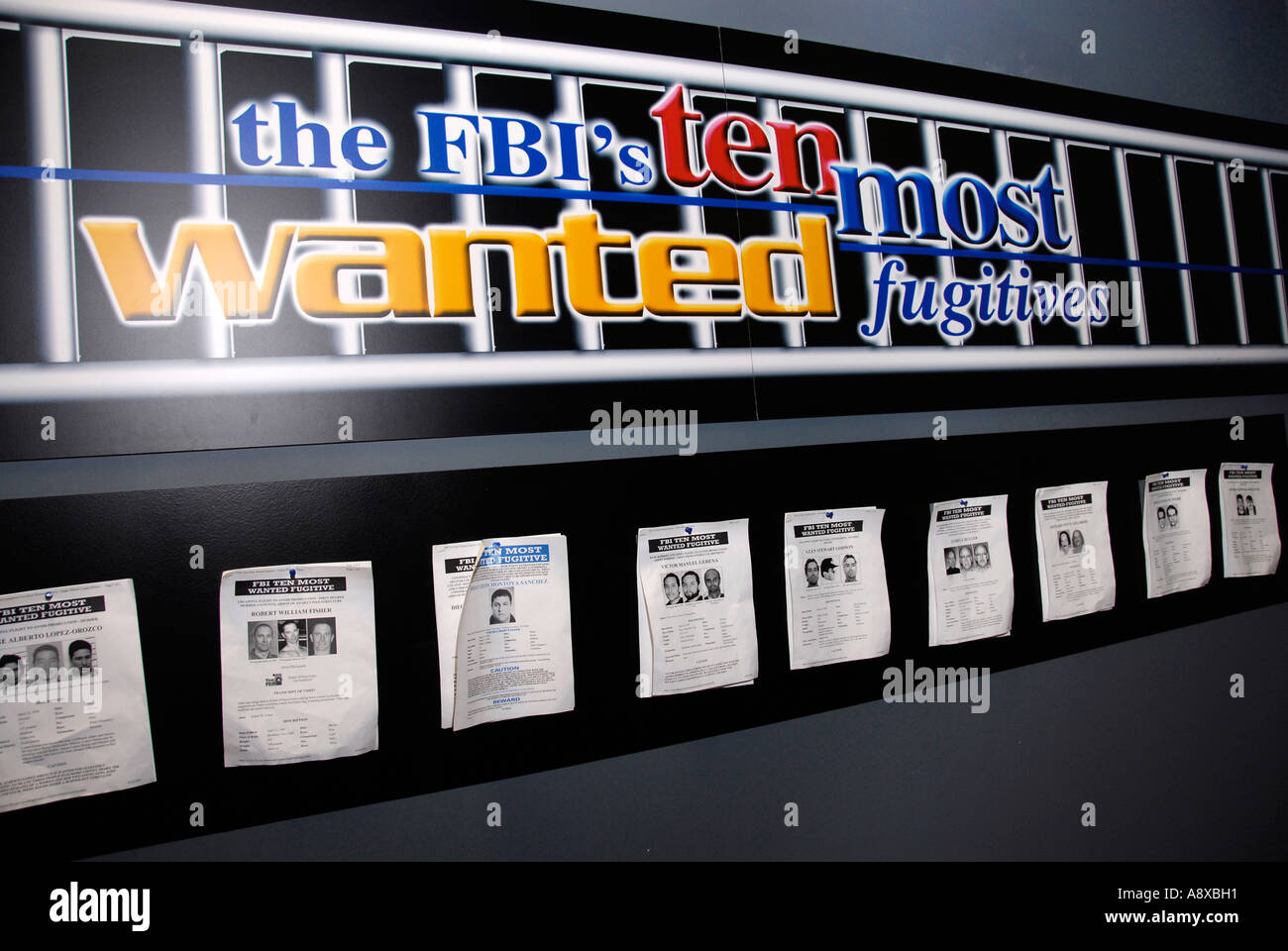
The FBI's Ten Most Wanted Fugitives list is an investigative publicity initiative established in 1950 to mobilize public assistance in apprehending dangerous federal suspects. While other agencies maintain fugitive rosters, "10 most wanted" universally refers to this specific Federal Bureau of Investigation program targeting individuals charged with severe violent crimes or national security offenses who pose an ongoing menace to society.
Contents
Since its inception following an informal discussion between FBI Director J. Edgar Hoover and a wire service editor, the initiative has led to hundreds of successful apprehensions. Gaining insight into how suspects are evaluated, listed, and apprehended provides clarity on how modern federal law enforcement coordinates with regional task forces, international bodies, and civilian informants.
Origins and Statutory Framework of the Ten Most Wanted Program
The Ten Most Wanted Fugitives list was formally launched on March 14, 1950. The concept emerged from an article published by the International News Service in 1949 detailing the "toughest guys" pursued by federal agents, which generated significant public response. Recognizing the operational value of nationwide civilian awareness, federal leadership formalized the roster to maintain continuous pressure on career criminals who actively crossed state and national borders.
Federal jurisdiction over these individuals stems largely from specific statutes, notably Title 18 of the United States Code (Crimes and Criminal Procedure). When a fugitive flees across state lines or outside United States territory to avoid prosecution, confinement, or testimony, federal authorities intervene under the Unlawful Flight to Avoid Prosecution (UFAP) statute (18 U.S.C. § 1073). This legal bridge enables federal agents to support municipal, county, and state law enforcement agencies whose local warrants lack extraterritorial enforcement authority.
The Criminal Investigative Division (CID) at FBI Headquarters in Washington, D.C., oversees the maintenance and deployment of this investigative tool. Field offices throughout the United States identify potential candidates, compile exhaustive dossiers, and submit recommendations through specialized operational review panels.
Selection Criteria and Evaluation Methodology
Securing a designation on the Top Ten list involves a strict administrative and operational review. The roster is maintained at ten active individuals; an addition occurs only after a slot becomes vacant through capture, dismissal of charges, death, or removal under extraordinary administrative criteria.
Primary Selection Standards
The Criminal Investigative Division weighs two baseline requirements before proposing a candidate to federal leadership:
- Demonstrated Danger to Society: The candidate must possess a documented history of severe criminal behavior, such as premeditated murder, terrorism, mass violence, organized narcotics trafficking, or major financial fraud with systemic harm. The suspect must represent an active, continuous threat to public safety.
- Value of Nationwide Publicity: The investigation must demonstrate that nationwide or international publicity will directly aid in the fugitive's apprehension. If federal agents already maintain localized operational surveillance on a suspect where public disclosure could trigger flight or jeopardize ongoing covert operations, the candidate is rejected for the listing.
The Administrative Nominating Pipeline
Field offices submit formal proposals to the CID detailing the fugitive's criminal history, known associates, physical identifiers, risk assessment, and previous apprehension efforts. The submission undergoes rigorous evaluation:
- Field Office Submission: Special Agents in Charge (SACs) authorize candidate dossiers detailing why standard investigative leads have failed to yield results.
- CID Analysts Review: Specialized criminal analysts cross-examine the dossier to confirm UFAP validity, criminal severity, and operational risk.
- Executive Vetting: The proposal moves through the Assistant Director of the CID to the Deputy Director.
- Director Approval: The Director of the Federal Bureau of Investigation holds final statutory authority to approve or deny addition to the list.
Removal Protocols: How Fugitives Leave the Roster
Fugitives are rarely removed from the list without being secured in custody. However, administrative rules established under federal procedural guidelines define four precise conditions under which an individual is cleared from the roster.
Apprehension and Custody Transfer Dismissal of Federal or State Charges Death or Confirmed Physical Demise Cessation of Threat or Low Publicity Utility
Administrative Removal Standards
A fugitive may be removed if federal prosecutors determine that the pending indictment or warrant can no longer be sustained due to evidentiary defects, witness unavailability, or jurisdictional transfers.
Removal can also occur under special circumstances where the FBI determines that the individual no longer poses an active, critical menace to society, or where continued publication no longer serves an investigative purpose.
Historic removals under the "no longer a menace" clause remain exceptionally rare. When a subject is removed without apprehension, the vacancy is filled by the standard administrative vetting process to return the roster to ten operational targets.
Comparison of Federal and Multilateral Fugitive Programs
Public discourse frequently confuses the FBI Ten Most Wanted Fugitives list with related programs operated by the United States Marshals Service (USMS), the Drug Enforcement Administration (DEA), and international bodies like Interpol. Each agency serves a distinct statutory purpose and maintains unique reward and recovery frameworks.
| Program Name | Operating Agency | Primary Target Profile | Base Minimum Reward | Primary Operational Role |
|---|---|---|---|---|
| Ten Most Wanted Fugitives | Federal Bureau of Investigation (FBI) | Major violent offenders, terrorists, high-impact cybercriminals | $250,000 (minimum baseline) | Public awareness, nationwide lead generation, international tracking |
| 15 Most Wanted | U.S. Marshals Service (USMS) | Career violent offenders, escaped federal prisoners, sex offenders | $25,000 | Direct fugitive recovery, interstate task force execution, court protection |
| Most Wanted Fugitives | Drug Enforcement Administration (DEA) | Cartel leaders, major international drug kingpins | Variable (Often supported by State Dept.) | Narcotics interdiction, international supply disruption, extradition |
| Red Notices | Interpol | Transnational fugitives sought by member states | None (Agency does not offer direct cash rewards) | International police alert, provisional arrest coordination across 196 nations |
| Rewards for Justice | U.S. Department of State | International terrorists, foreign cyber threats, state-sponsored actors | Up to $10,000,000 – $25,000,000 | National security protection, counterterrorism finance, foreign assets |
The U.S. Marshals Service operates as the primary federal agency responsible for fugitive apprehension stemming from federal court warrants and interstate task forces. While the USMS captures a higher aggregate volume of fugitives annually through regional task forces, the FBI's Ten Most Wanted list focuses on long-range public dissemination for suspects whose captures require sustained domestic and foreign visibility.
Reward Structures, Funding Mechanisms, and Legal Disclaimers
Monetary rewards serve as a major driver for actionable public tips. The baseline reward for information leading directly to the arrest of an individual on the FBI Ten Most Wanted Fugitives list is $250,000. In critical cases involving acts of terrorism, violent transnational gangs, or state-sponsored crimes, rewards frequently escalate into millions of dollars.
Funding Sources
Reward payments do not originate from arbitrary discretionary accounts. They are backed by dedicated congressional appropriations under Department of Justice asset forfeiture and programmatic funds, as well as joint programs:
- DOJ Asset Forfeiture Fund: Reallocates forfeited assets derived from criminal enterprises to fund authorized investigative expenses and civilian informant awards.
- Department of State Rewards for Justice (RFJ): Authorized under the 1984 Act to Combat International Terrorism, enabling multi-million dollar rewards for suspects tied to international terrorism or threats to U.S. foreign assets.
- Private and Municipal Co-Sponsorships: In specific instances, municipal victim compensation trusts or private industry groups coordinate legally recognized supplemental escrows to elevate the published payout.
Informant Protections and Payment Caveats
Receiving a reward requires compliance with strict federal guidelines. Tipsters must provide original, credible information that directly leads to the suspect's location and subsequent apprehension.
Important Legal Limitations on Reward Distribution
Government employees, including federal, state, local, or foreign law enforcement officers acting within their official capacities, are statutorily prohibited from claiming reward funds.
Informants providing information must be cleared through administrative screening to verify they did not participate in the underlying crimes committed by the fugitive, unless operating under a formal, pre-approved cooperation agreement overseen by federal prosecutors.
The FBI provides options for confidential processing to protect tipsters from retaliation. Disclosing personal identity in court is not always required for reward disbursement, provided the tip is validated through formal field office protocols.
Civilian Reporting Protocols and Safety Procedures
Encountering an individual featured on the Ten Most Wanted list presents immediate personal danger. The FBI categorizes every individual on this roster as armed and dangerous. Civilians must never attempt physical detention, continuous surveillance, or confrontational engagement.
Safe Reporting Workflow
When a citizen believes they have identified a wanted federal fugitive, adhering to established reporting standards preserves personal safety and legal integrity:
- Prioritize Personal Safety and Disengage: Immediately increase physical distance between yourself and the suspect. Do not alter your behavior in a manner that indicates recognition. Avoid taking direct, close-up photographs or recordings if doing so creates personal vulnerability.
- Document Identifying Details Safely: As soon as you are in a secure location, record critical physical indicators:
- Current hair color, facial hair, visible tattoos, scars, or physical gait.
- Specific address, intersection, or physical building of sighting.
- Make, model, color, and license plate (including state jurisdiction) of any associated motor vehicle.
- Direction of travel if the subject departed the area.
- Presence of companions, visible weapons, or distinct equipment.
- Contact Authorized Federal Channels: Transmit the information through established federal portals:
- Emergency Response: Dial 911 immediately if the suspect represents an imminent physical threat or is actively on scene. Inform the dispatcher that the individual is an active federal fugitive.
- Direct Federal Line: Contact the FBI's central operations hub at 1-800-CALL-FBI (1-800-225-5324).
- Online Tip Submission: Submit text, image, or video intelligence via the secure portal at tips.fbi.gov.
- International Submissions: Citizens located outside the United States must contact the nearest United States Embassy, Consulate, or Legal Attaché (Legat) office.
Modern Investigative Technologies Driving Fugitive Apprehensions
The operational mechanics of tracking fugitives have advanced significantly beyond the paper posters and radio broadcasts of 1950. While public visual recognition remains effective, modern investigative frameworks merge civilian tips with cutting-edge analytical tools.
Next Generation Identification (NGI)
The FBI’s Next Generation Identification system operates as one of the world's largest biometric repositories. When field agents recover physical evidence or intercept digital materials related to a fugitive, the NGI platform enables multi-modal cross-referencing:
- Advanced Fingerprint Identification Technology (AFIT): Accelerates automated fingerprint processing and increases identification accuracy across fragmented latent prints recovered from transit hubs or safe houses.
- Facial Comparison Systems: Evaluates submitted photographs and surveillance imagery against regional, federal, and partner databases, generating probabilistic matches even if a fugitive has aged or undergone cosmetic alterations.
- Repository for Individuals of Special Concern (RISC): Equips field agents and partner task force officers with rapid mobile fingerprint scanning devices to verify identities during roadside stops or field contacts within minutes.
Transnational Coordination and Legal Attachés
Fugitives on the Top Ten list frequently leverage false travel documentation to seek sanctuary in countries lacking direct extradition treaties with the United States. To counter this, the FBI deploys personnel globally through its Legal Attaché (Legat) program, operating in dozens of U.S. embassies and consulates worldwide.
Legats liaise directly with host-nation intelligence and law enforcement authorities, coordinating mutual legal assistance treaties (MLATs) and local search operations. When coupled with an Interpol Red Notice, foreign authorities can provisionally arrest a fugitive pending the preparation and submission of formal extradition paperwork under bilateral treaties.
Frequently Asked Questions
What happens if more than ten individuals qualify for the list?
The Ten Most Wanted list is strictly limited to ten active subjects at any given time. If an eleventh highly dangerous individual is identified, federal analysts evaluate the candidate against the current roster. If an existing subject on the list has experienced diminished investigative leads and lower public utility, that individual may be administratively removed to create space for the new, high-priority target.
Can an innocent person mistakenly placed on the list sue the FBI?
Administrative mechanisms and evidentiary safeguards make an erroneous listing exceptionally improbable. Placements require valid, unsealed arrest warrants, indictments returned by federal grand juries, and systematic identity verification through biometric benchmarks (fingerprints, DNA, and confirmed imagery). If an individual believes they are being misidentified by local officers pursuing a listed fugitive, they must present government-issued credentials to establish identity without physical resistance.
How are rewards legally paid to tipsters who wish to remain anonymous?
The FBI can issue cash reward distributions through confidential informant protocols. In these arrangements, field offices assign a secure alphanumeric tracking identifier to the individual providing actionable intelligence. The handling agent coordinates with federal financial compliance units to deliver funds via secure intermediaries or controlled banking instruments without exposing the recipient’s identity to public records or Freedom of Information Act (FOIA) requests.
What is the primary difference between an FBI Ten Most Wanted fugitive and an Interpol Red Notice subject?
An FBI Ten Most Wanted fugitive is an individual charged with serious federal or state crimes within the United States whose public visibility is prioritized directly by the American government. An Interpol Red Notice is an international request circulated to police agencies across 196 member countries asking them to locate and provisionally arrest a suspect pending extradition, surrender, or similar legal action. An FBI Top Ten fugitive who flees abroad is routinely designated on an Interpol Red Notice as well.
Has anyone ever surrendered simply because they were placed on the Top Ten list?
Yes. Multiple fugitives have voluntarily surrendered to federal or municipal authorities specifically due to the operational pressure caused by placement on the Ten Most Wanted list. The intense media scrutiny, social media circulation, and physical dissemination of posters often disrupt a fugitive’s financial support networks, cut off safe housing options, and render domestic or international travel unmanageable.
Public Responsibility and Vigilance
Public assistance remains an indispensable component of federal criminal interdiction. The Ten Most Wanted Fugitives program demonstrates that when federal investigative capabilities combine with widespread citizen vigilance, safe havens for dangerous offenders are eliminated. If you possess actionable information regarding any active federal fugitive, report the details through official channels immediately by contacting 1-800-CALL-FBI or submitting an electronic report at tips.fbi.gov. Do not take independent action; permit trained federal agents and regional law enforcement task forces to manage the apprehension safely.
Image Gallery