Carbon Fiber Foundation Repair in Michigan: Engineering Solutions for Basement Walls
Carbon fiber foundation repair in Michigan is an advanced structural reinforcement method used to stabilize bowing, cracking, or shifting concrete and masonry basement walls. By leveraging high-tensile-strength polymer strips anchored...
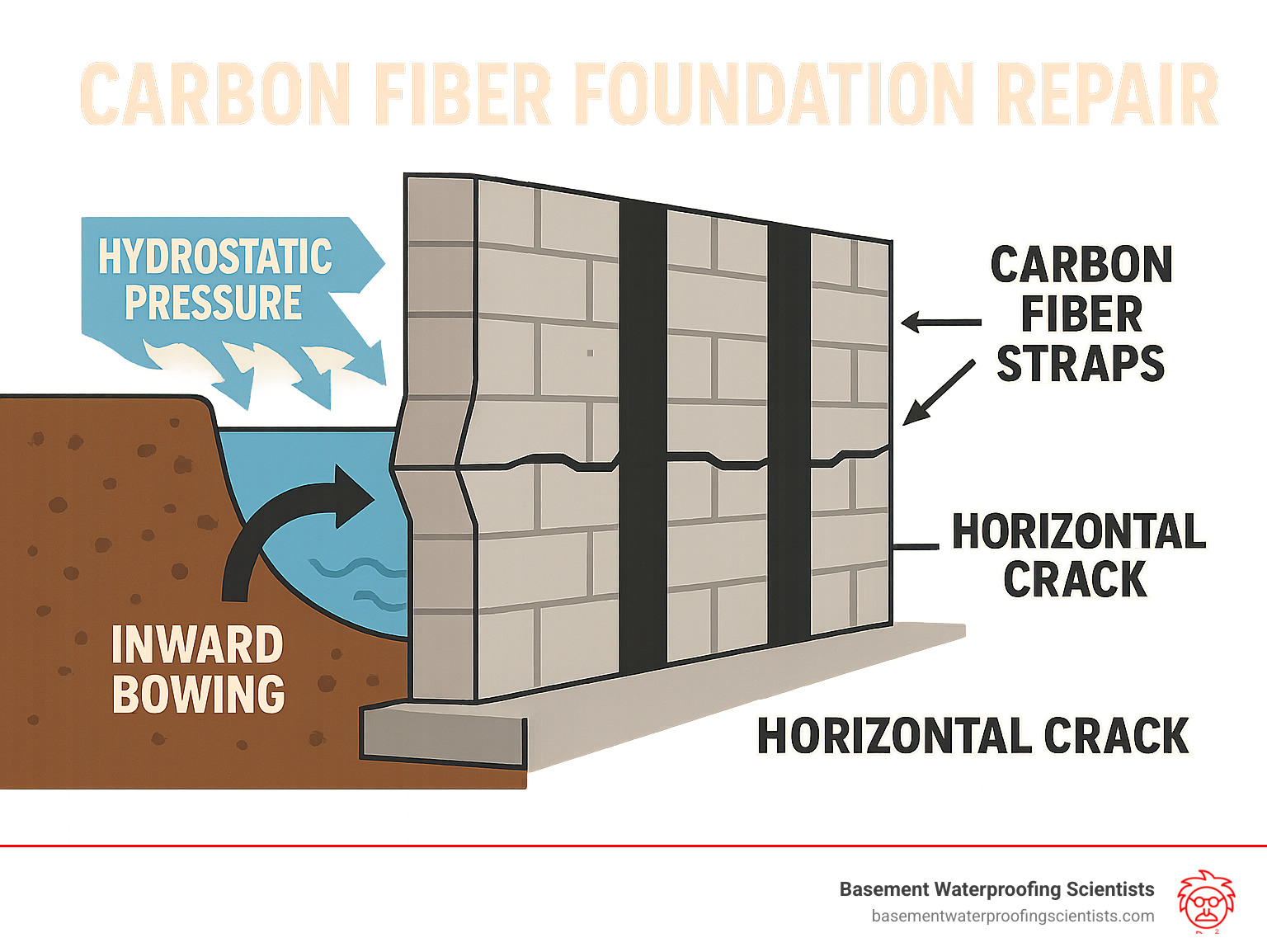
Carbon fiber foundation repair in Michigan is an advanced structural reinforcement method used to stabilize bowing, cracking, or shifting concrete and masonry basement walls. By leveraging high-tensile-strength polymer strips anchored to the floor and sill plate, this technique halts lateral soil pressure—exacerbated by Michigan’s freeze-thaw cycles and expansive clay soils—without requiring disruptive excavation or heavy steel I-beams.
Contents
Understanding Michigan’s Unique Foundation Challenges
Michigan basement walls face severe environmental stressors that compromise structural integrity over time. Understanding these geological and climatic factors is essential for property owners considering structural intervention.
Soil Composition and Hydrostatic Pressure
Much of Michigan, particularly regions near ancient lake beds and river valleys, features fine-grained clay and silt soils. These soils are highly expansive; they absorb significant moisture during heavy spring rains and autumn precipitation, swelling considerably.
When the soil expands, it exerts immense lateral pressure against basement foundation walls. This force is known as hydrostatic pressure. Concrete block and poured concrete walls have high compressive strength but limited tensile strength, meaning they can easily bow or crack inward when subjected to lateral loads from saturated soils.
The Impact of Freeze-Thaw Cycles
Michigan winters bring deep frost penetrations. Water trapped in the soil surrounding a foundation freezes, expanding by roughly 9% in volume. This frost wedge increases lateral pressures against the upper portions of foundation walls.
Furthermore, sub-grade moisture that enters existing hairline cracks in concrete or mortar joints expands as it turns to ice. This process, known as spalling or freeze-thaw damage, gradually widens cracks, weakens structural bonds, and allows more water to infiltrate the basement envelope.
How Carbon Fiber Reinforcement Works
Carbon fiber repair systems utilize aerospace-grade materials adapted for residential and commercial structural engineering. The methodology centers on distributing concentrated loads across a wider surface area to prevent further wall movement.
Material Properties and Tensile Strength
Carbon fiber is composed of thin, strong crystalline filaments of carbon that are bundled together and saturated with an epoxy resin matrix. Pound for pound, carbon fiber possesses a tensile strength significantly greater than structural steel while remaining lightweight and completely immune to rust or corrosion.
When applied to a basement wall, a carbon fiber grid or strap acts as a tension tie. It restrains the wall from deflecting inward, effectively locking the masonry or concrete in place.
The Step-by-Step Installation Process
Professional installation of carbon fiber strips requires precise surface preparation and structural bonding.
- Surface Preparation: The contractor locates and cleans the damaged wall areas. Paint, drywall, efflorescence, and sealants are ground away using a diamond wheel grinder to expose bare, porous concrete or block.
- Epoxy Priming: A specialized epoxy primer is rolled or brushed onto the prepared concrete surface to seal pores and create a chemically active bonding substrate.
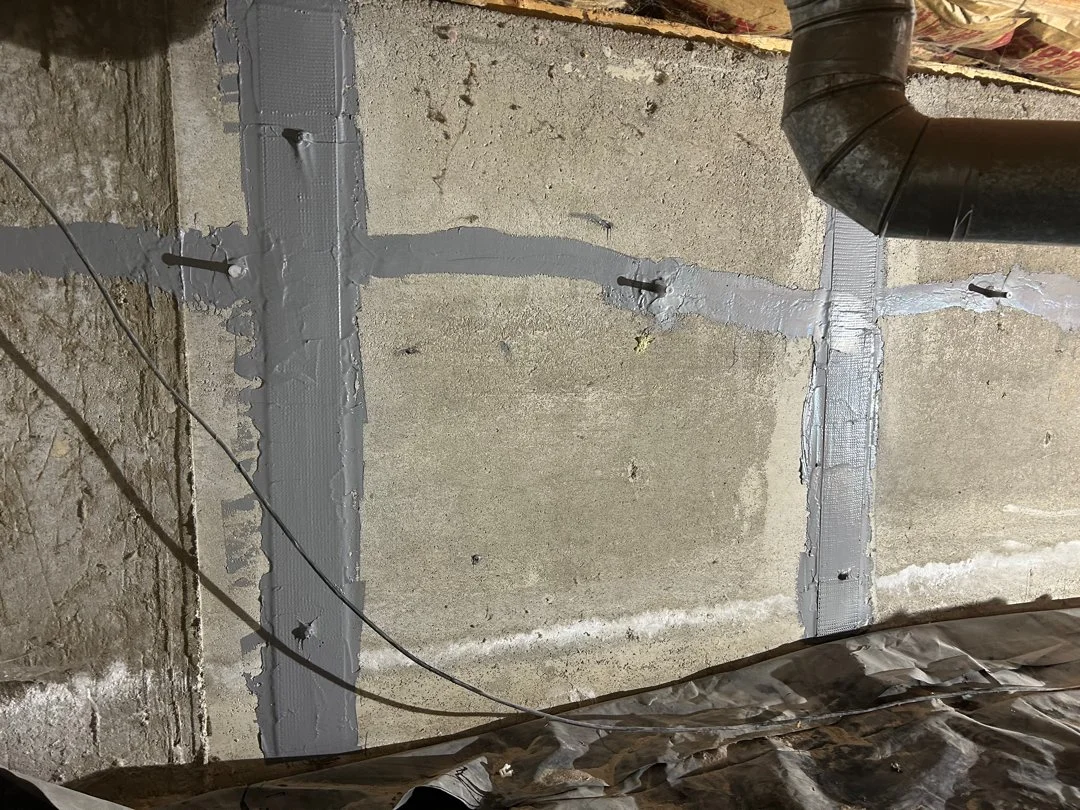
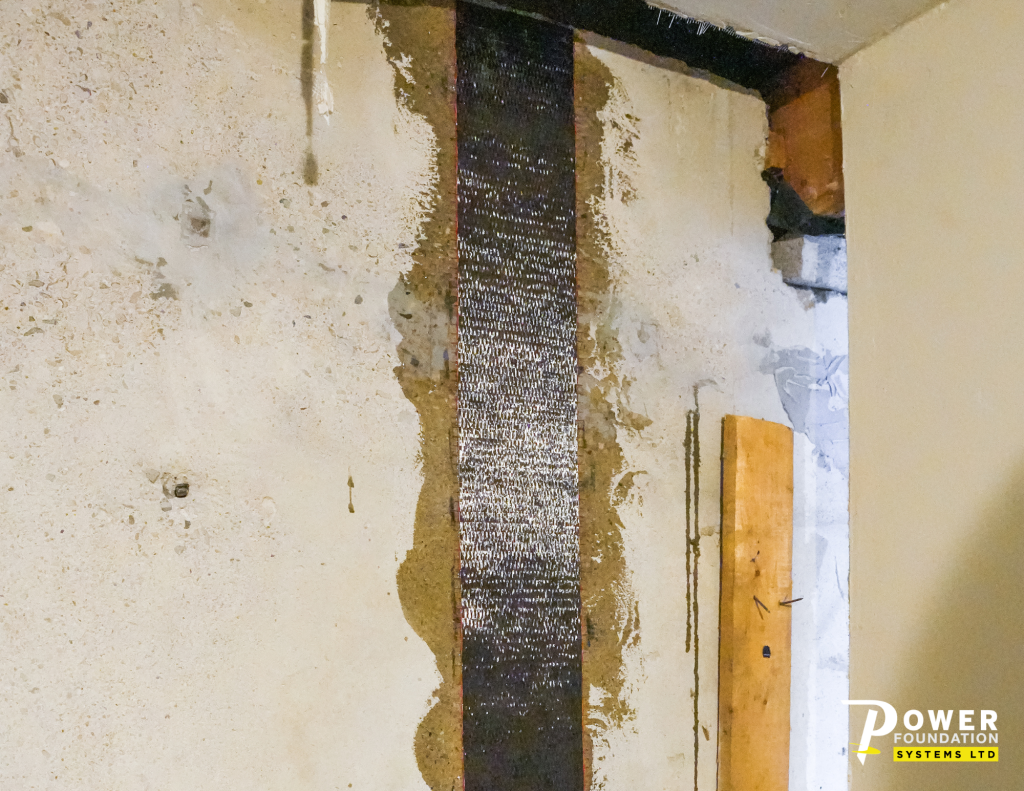
- Strap Application: Pre-cut carbon fiber straps are saturated with a high-viscosity structural epoxy and pressed firmly against the wall, smoothing out any air pockets with a roller.
- Anchoring: The top and bottom of the straps are secured using steel L-brackets or carbon fiber anchor systems attached to the sill plate (or rim joist) and the concrete floor slab, transferring the load to the home's primary framing and foundation footing.
- Curing: The epoxy cures over 24 to 48 hours, forming an unbreakable bond where the wall and the carbon fiber function as a single composite unit. Once cured, the straps can be painted over or finished behind standard basement wall insulation.
Comparing Carbon Fiber to Traditional Repair Methods
Property owners evaluating structural repairs typically compare carbon fiber systems against traditional steel I-beams and exterior excavation methods. Each approach has distinct engineering advantages and limitations.
| Repair Method | Primary Mechanism | Pros | Cons |
|---|---|---|---|
| Carbon Fiber Straps | High-tensile surface bonding | Low profile, zero loss of usable floor space, rust-proof, fast installation. | Cannot pull a severely bowed wall back to plumb; addresses stabilization only. |
| Steel I-Beams | Heavy structural bracing | High load capacity, can be tightened over time to gradually straighten walls. | Bulky, protrudes into the basement, susceptible to rust, reduces usable floor area. |
| Exterior Excavation & Tiebacks | Relieving soil pressure externally | Fixes the root cause by installing wall anchors or replacing compromised sections. | Highly disruptive to landscaping, expensive, labor-intensive, requires heavy machinery. |
Evaluating Your Foundation: When Is Carbon Fiber Appropriate?
Carbon fiber is an exceptional engineering solution for specific types of foundation distress, but it is not a universal cure-all. A structural engineer or licensed foundation contractor must assess the damage before installation.
Ideal Conditions for Carbon Fiber
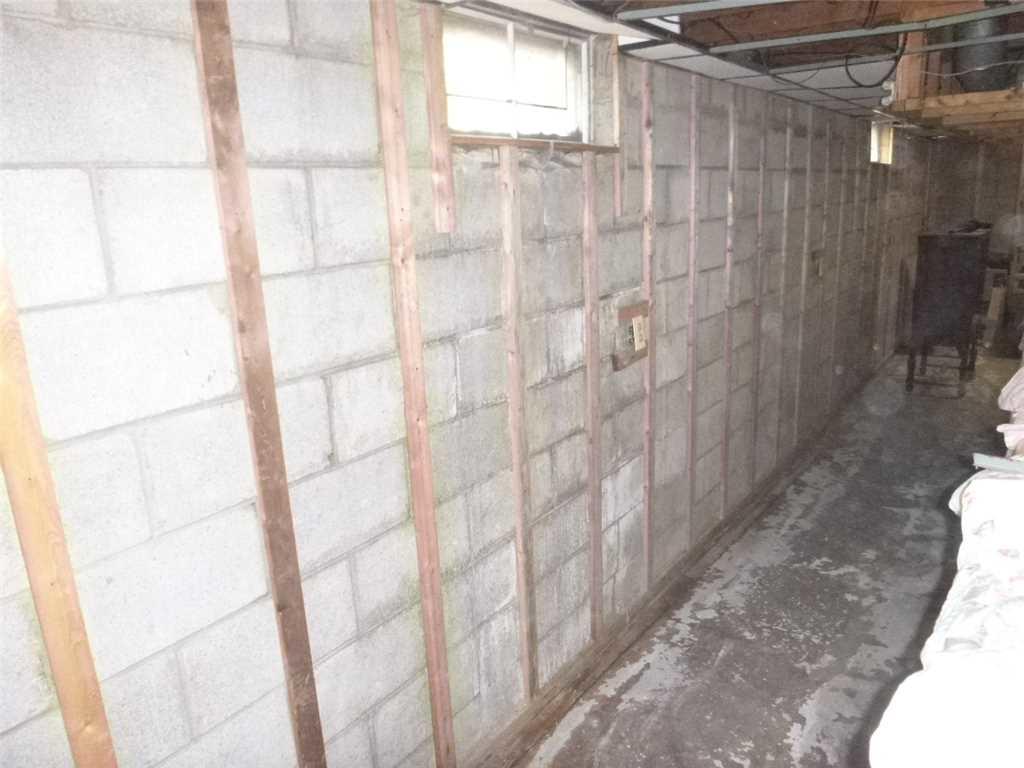
- Inward Bowing Under 2 Inches: If a concrete block or poured wall has deflected inward by less than two inches and the structural shear is stable, carbon fiber provides sufficient restraint.
- Vertical and Stair-Step Cracking: Active cracks caused by settlement or minor hydrostatic pressure can be bridged effectively once epoxy-injected.
- Dry, Stable Foundation Footings: The home's footing must remain structurally sound and level, without major downward settlement or crumbling concrete at the base.
Limitations and Contraindications
- Severe Wall Shear or Displacement: If sections of a concrete block wall have sheared horizontally or slipped past one another by more than two inches, carbon fiber alone cannot restore structural safety.
- Active Downward Settlement: If the foundation is sinking into the earth due to poor load-bearing soil beneath the footings, carbon fiber straps will not stop vertical movement. Such scenarios require helical piers or push piers.
- Rotten Sill Plates: Because carbon fiber systems typically anchor at the top to the home's rim joist or sill plate, any wood rot or structural damage in this framing area must be repaired before strap installation.
Cost Considerations in Michigan
The cost of carbon fiber foundation repair in Michigan varies based on the extent of the damage, the height of the basement walls, and labor rates in specific metropolitan areas like Detroit, Grand Rapids, or Lansing.
Typically, contractors price carbon fiber repairs per strap, with prices ranging from $400 to $900 per strip installed. For an average wall requiring 5 to 10 straps to properly distribute loads, total project costs generally range between $2,500 and $8,000.
While this represents a significant investment, it is routinely lower than the costs associated with full wall reconstruction or extensive exterior excavation, which can easily exceed $15,000 to $30,000 depending on landscaping restoration and deck removal.
Frequently Asked Questions
Can carbon fiber straps straighten a bowed basement wall?
No. Carbon fiber systems are designed to stabilize and lock a wall in its current position to prevent any further inward movement. If a wall needs to be pushed back toward a plumb vertical alignment, traditional steel I-beams with mechanical wall anchors or hydraulic systems are typically required.
Will carbon fiber repairs interfere with finishing my basement?
No. One of the primary advantages of carbon fiber straps is their ultra-low profile—they sit nearly flush against the concrete wall, protruding less than an eighth of an inch. You can easily frame standard 2x4 stud walls directly over them without losing valuable square footage in your finished basement.
How long do carbon fiber foundation repairs last?
When installed correctly using structural-grade epoxy resins, carbon fiber repair systems are designed to last the lifetime of the structure. The material does not degrade, rot, rust, or lose its tensile strength over decades of exposure to normal subterranean humidity levels.
Do I need a permit for carbon fiber foundation repair in Michigan?
Permit requirements vary by municipality across Michigan. Many local building departments require a structural permit and an engineering drawing if you are modifying or reinforcing load-bearing foundation elements. Always verify local codes with your city or township before initiating work.
Can I install carbon fiber foundation straps myself?
DIY carbon fiber kits are available, but professional installation is strongly recommended. Proper surface grinding, epoxy mixing ratios, and tension calculations require specialized equipment and structural expertise. Improper installation can result in bond failure under high hydrostatic loads.
Next Actions for Michigan Homeowners
If you notice horizontal, vertical, or stair-step cracks widening in your basement, or if your walls show visible signs of bowing inward, schedule an evaluation with a licensed structural engineer or a reputable foundation repair specialist in Michigan. Request a detailed engineering assessment to verify that your foundation issues stem from lateral pressure rather than deep soil settlement, ensuring the chosen repair method permanently protects your home.
Image Gallery