Comprehensive List of Indian Life Insurance Companies Explained (2026 Edition)
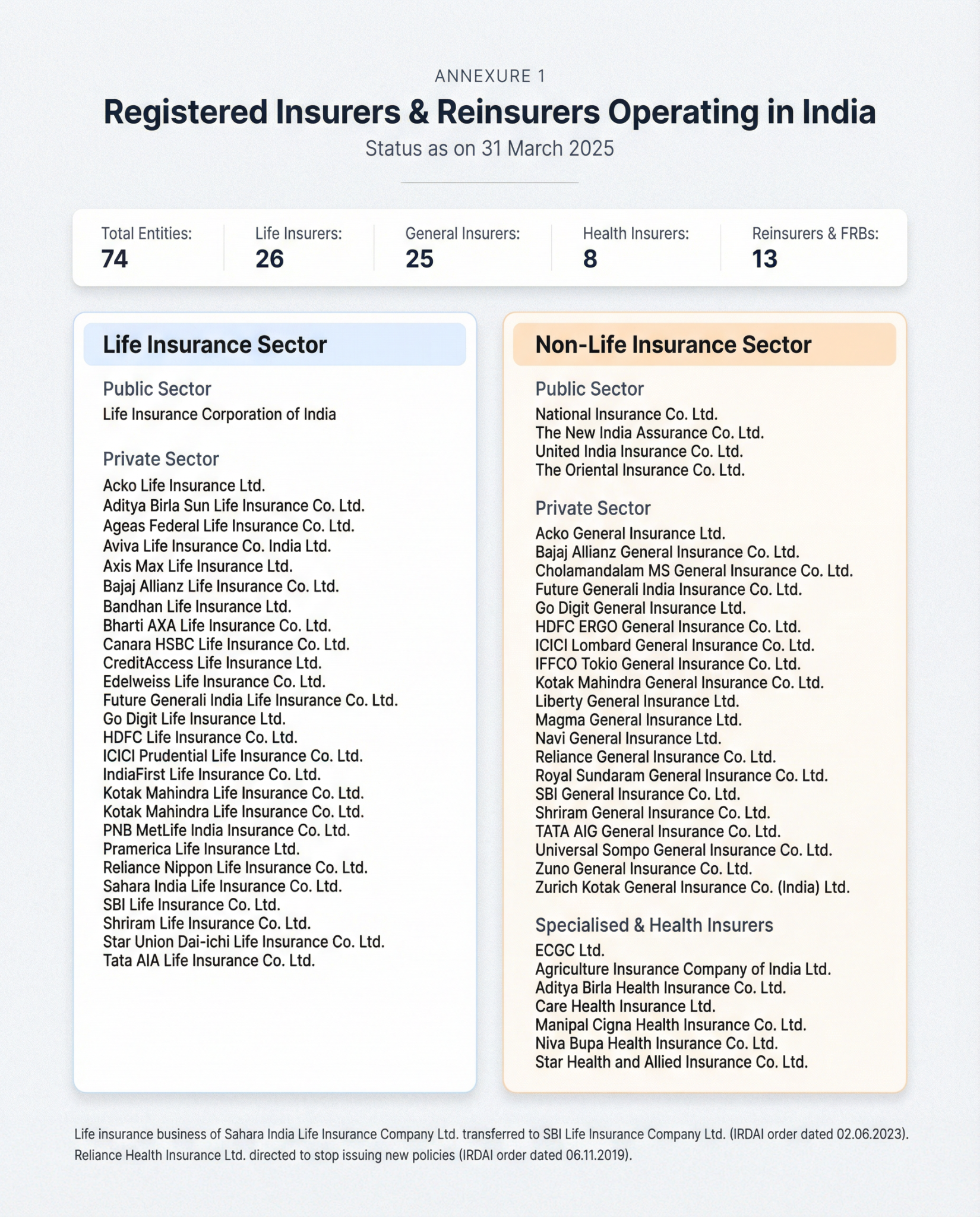
As of 2026, the Indian life insurance landscape consists of 27 registered players, including one public sector giant, the Life Insurance Corporation of India (LIC), and 26 private sector companies. Regulated by the IRDAI, these insurer...
As of 2026, the Indian life insurance landscape consists of 27 registered players, including one public sector giant, the Life Insurance Corporation of India (LIC), and 26 private sector companies. Regulated by the IRDAI, these insurers offer diverse products like term, endowment, and ULIPs, maintaining strict solvency standards to protect policyholder interests.
Contents
The life insurance sector in India has undergone a massive transformation over the last few decades. From a state-monopoly era to the opening of the market in 2000, and more recently, the increase in Foreign Direct Investment (FDI) limits to 74%, the industry has become a cornerstone of the nation’s financial stability. Understanding the list of insurance providers is the first step for any individual or business looking to secure their financial future in a high-growth economy.
The Regulatory Framework: Understanding the IRDAI
Before examining the list of companies, it is essential to understand the governing body that oversees them. The Insurance Regulatory and Development Authority of India (IRDAI) was established following the recommendations of the Malhotra Committee report. Its primary mandate is to protect the interests of policyholders while regulating, promoting, and ensuring the orderly growth of the insurance industry.
In 2026, the IRDAI continues to enforce strict capital requirements and operational transparency. Every company on the list below must comply with the Insurance Act, 1938, and subsequent amendments. A key metric enforced by the regulator is the Solvency Ratio, which indicates whether an insurer has enough buffer to pay out all potential claims. The IRDAI mandates a minimum solvency ratio of 150% (1.5).
Public Sector vs. Private Sector Dynamics
The Indian market is unique because it features a massive state-owned entity competing against agile private firms.
The Public Sector Giant: LIC
The Life Insurance Corporation of India (LIC) remains the only public sector life insurer. Established in 1956 through the nationalization of 245 insurance companies and provident societies, LIC held a monopoly until 2000. Even in 2026, it maintains the largest market share in terms of the number of policies and physical reach, particularly in rural India.
The Private Sector Players
Private insurers entered the market after 2000, often as joint ventures between large Indian conglomerates and international insurance leaders. These companies brought technological innovation, diverse product portfolios, and aggressive marketing strategies. Players like HDFC Life, SBI Life, and ICICI Prudential have become household names, often leveraging the "Bancassurance" model—selling insurance products through established bank branches.
The Complete List of Life Insurance Companies in India
Below is the verified list of life insurance providers operating in India as of 2026. This list includes established veterans and newer "Insurtech" entrants that have received licenses in the recent 2023–2025 window.
| Company Name | Sector | Founded/Licensed | Key Focus/Strength |
|---|---|---|---|
| Life Insurance Corporation (LIC) | Public | 1956 | Sovereign Guarantee & Massive Reach |
| SBI Life Insurance | Private | 2001 | Largest Private Bancassurance Network |
| HDFC Life Insurance | Private | 2000 | Product Innovation & Digital Integration |
| ICICI Prudential Life | Private | 2000 | Strong Brand & Diverse ULIP Portfolio |
| Max Life Insurance | Private | 2000 | High Claim Settlement & Customer Service |
| Bajaj Allianz Life | Private | 2001 | Flexible Investment-linked Plans |
| Tata AIA Life | Private | 2001 | High Persistency & Protection Focus |
| Kotak Mahindra Life | Private | 2001 | Tailored Solutions for HNIs |
| Aditya Birla Sun Life | Private | 2000 | Holistic Wealth Management |
| PNB MetLife India | Private | 2001 | Strong Presence in Tier-2/3 Cities |
| Canara HSBC Life | Private | 2008 | Synergistic Banking Partnership |
| Reliance Nippon Life | Private | 2001 | Significant Agency Force |
| Aviva Life Insurance | Private | 2002 | International Standards of Underwriting |
| Shriram Life Insurance | Private | 2005 | Inclusive Insurance for Mass Market |
| Future Generali India Life | Private | 2007 | Retail and Group Insurance |
| Ageas Federal Life | Private | 2008 | Focus on Long-term Wealth |
| Star Union Dai-ichi Life | Private | 2009 | Strong PSU Bank Backing |
| IndiaFirst Life | Private | 2009 | Digital-First Customer Acquisition |
| Edelweiss Tokio Life | Private | 2011 | Multi-channel Distribution |
| Bandhan Life | Private | 2024* | Rebranded/Acquired Focus (Formerly Aegon) |
| Pramerica Life | Private | 2008 | Specialized Protection Plans |
| Go Digit Life | Private | 2023 | Technology-Driven, Sachet Insurance |
| Acko Life Insurance | Private | 2023 | Direct-to-Consumer Digital Experience |
| CreditAccess Life | Private | 2023 | Rural and Micro-insurance Focus |
*Note: Some companies like Bandhan Life emerged through the acquisition or rebranding of older licenses (such as Aegon Life) to better align with evolving market structures.
Critical Metrics for Evaluating Indian Insurers
When looking at the list of Indian life insurance companies, the names alone do not tell the whole story. To differentiate between a "good" and a "great" insurer, you must analyze four specific metrics released annually in the IRDAI Annual Report.
1. Claim Settlement Ratio (CSR)
The CSR is the percentage of claims a company pays out of the total claims it receives in a financial year.
- Significance: A ratio above 97% is generally considered excellent.
- Context: While LIC usually boasts a high CSR due to its scale, top-tier private players like Max Life and HDFC Life have consistently hit the 99% mark in recent years.
2. Solvency Ratio
As mentioned, this measures the company's ability to meet its long-term debt and obligations.
- Significance: A solvency ratio of 1.5 is the legal minimum. However, many leading private insurers maintain a ratio between 1.8 and 2.5 to signal extreme financial stability to investors and policyholders.
3. Persistency Ratio
This measures how many policyholders are continuing to pay their premiums year after year.
- Significance: It is a proxy for customer satisfaction. A high 61st-month persistency ratio indicates that customers are happy with the long-term value of their policies and the service provided.
4. Assets Under Management (AUM)
AUM represents the total market value of the investments managed by the insurance company.
- Significance: While a larger AUM (like LIC's trillions) indicates institutional strength, a growing AUM in a private company indicates market trust and successful investment strategies.
Recent Trends in the Indian Insurance Sector (2024–2026)
By 2026, several key trends have reshaped the "list" and how these companies operate:
- The Rise of Insurtech: Companies like Acko and Go Digit have moved from general insurance into life insurance. Their "digital-native" approach allows them to offer lower premiums by eliminating heavy intermediary commissions.
- Product Diversification: There is a marked shift toward Non-Participating (Non-Par) products. These offer guaranteed returns, which have become highly popular among Indian consumers seeking certainty amidst global market volatility.
- Simplified Underwriting: Leveraging the "India Stack" (Aadhaar, UPI, and Account Aggregators), many companies on the list now offer instant policy issuance for term plans up to a certain limit without requiring physical medical checkups.
- Bancassurance Dominance: Most successful private insurers are those with strong ties to banks (SBI, HDFC, ICICI, Axis). This "one-stop-shop" financial model remains the primary driver of new business premiums.
Common Mistakes When Choosing from the List
- Chasing the Lowest Premium: Many buyers look only at the cost. However, a lower premium might come at the cost of a lower Solvency Ratio or a more difficult claim process.
- Ignoring the Benefit Illustration: Under IRDAI rules, companies must provide a Benefit Illustration showing returns at 4% and 8% interest rates. Failing to read this leads to unrealistic expectations regarding maturity amounts.
- Non-Disclosure of Material Facts: Whether you choose LIC or a new-age digital insurer, failing to disclose smoking habits or pre-existing diseases is the number one reason for claim rejection across the board.
- Overlooking the Rider Options: Sometimes the company itself is great, but the policyholder fails to add critical illness or accidental disability riders, which provide essential coverage at a marginal cost.
Frequently Asked Questions
Is LIC the only "government" life insurance company?
Yes, LIC is the only public sector company in the life insurance category. While there are other public sector companies in the general insurance category (like New India Assurance or United India Insurance), LIC remains the sole state-owned life insurer in India.
What happens if a private life insurance company goes bankrupt?
The IRDAI has a robust mechanism to protect policyholders. In the event of financial distress, the regulator typically facilitates a merger or acquisition where a stronger insurer takes over the liabilities and assets of the failing one (e.g., the acquisition of Sahara Life's portfolio). Your policy remains valid under the new entity.
Can I hold life insurance policies from two different companies?
Yes, you can hold multiple policies from different insurers on the list. However, you are legally required to disclose your existing total life cover (Sum Assured) to the new insurer during the application process. This ensures that the total cover is proportionate to your human life value.
Which insurer has the highest Claim Settlement Ratio?
The rankings for CSR change slightly every year based on the IRDAI’s audited data. Historically, LIC, Max Life, HDFC Life, and Tata AIA have consistently stayed at the top of the list with ratios exceeding 98-99%. Always check the most recent IRDAI annual report for the current year's validated numbers.
What is the "Free Look Period" offered by these companies?
All life insurance companies in India are mandated by the IRDAI to provide a 15-day Free Look Period (30 days if the policy is purchased electronically or through distance marketing). This allows the policyholder to review the terms and conditions and return the policy for a refund if they are not satisfied.
Summary and Next Actions
The list of Indian life insurance companies in 2026 offers a balance between the historic reliability of LIC and the innovative, tech-driven solutions of private players. When selecting a provider, do not rely solely on brand names. Instead, compare the Solvency Ratio and Claim Settlement Ratio of at least three different providers.
For those looking for pure protection, a term plan from a high-CSR private insurer often provides the best value. For those seeking long-term savings with a sovereign guarantee, LIC remains a formidable choice. Always verify a company’s current registration status on the official IRDAI website before making a premium payment.
Image Gallery