How Saquon Barkley’s Knee Surgery Reshaped His NFL Career and Legacy
Saquon Barkley’s 2020 reconstructive knee surgery served as the definitive pivot point of his professional trajectory, transforming him from an explosive, high-variance prospect into a resilient, high-volume veteran. While the procedur...
Saquon Barkley’s 2020 reconstructive knee surgery served as the definitive pivot point of his professional trajectory, transforming him from an explosive, high-variance prospect into a resilient, high-volume veteran. While the procedure initially compromised his trademark lateral agility, the subsequent recovery forced an evolution in his running style that ultimately extended his career and secured his blockbuster transition to the Philadelphia Eagles.
Contents
In the high-stakes environment of the NFL, a running back’s career is often measured by the integrity of his lower extremities. For Saquon Barkley, the "generational talent" label bestowed upon him during his 2018 rookie season was put to the ultimate test during Week 2 of the 2020 season. What followed was not just a medical rehabilitation, but a fundamental restructuring of how Barkley approached the game of football. As we look back from the vantage point of 2026, the surgery remains the most significant event in his statistical and financial narrative.
The Anatomy of the 2020 Injury and Surgical Intervention
On September 20, 2020, during a game against the Chicago Bears, Barkley suffered a non-contact injury while being ushered toward the sideline. The diagnosis was a "triple threat" of knee trauma: a torn Anterior Cruciate Ligament (ACL), a partial tear of the Medial Collateral Ligament (MCL), and significant damage to the meniscus.
This combination is often referred to in orthopedic circles as a variation of the "unhappy triad." Unlike a clean ACL tear, which has a relatively straightforward recovery path in the modern era, meniscus involvement complicates the long-term prognosis. The meniscus acts as the knee's shock absorber; when it is damaged or partially removed (meniscectomy), the risk of bone-on-bone friction and premature arthritis increases exponentially.
Barkley’s surgery was performed by the renowned orthopedic surgeon Dr. Neal ElAttrache in late October 2020. The procedure was intentionally delayed by several weeks to allow the MCL to heal naturally and to reduce preoperative swelling, a common strategy to improve post-operative range of motion. The surgery involved an ACL reconstruction using a graft—typically a patellar tendon or hamstring autograft—and a meticulous repair of the meniscus.
The "Lost Year": 2021 and the Biological Reality of Recovery
The 2021 season served as a case study in the "return to play vs. return to performance" gap. While Barkley was physically cleared for Week 1 of the 2021 season, he was a shadow of his former self. Medical literature suggests that while an ACL graft is biologically integrated within 6 to 9 months, the neuromuscular recalibration—the brain’s ability to trust the joint and fire muscles with millisecond precision—often takes 18 to 24 months.
In 2021, Barkley’s metrics plummeted. He lacked the "twitch" required to make defenders miss in the hole, often hesitating at the line of scrimmage. He finished that season with a career-low 3.7 yards per carry. This period was critical for his career because it invited intense media scrutiny regarding his durability and sparked debates about whether the New York Giants should move on from their former number two overall pick.
The Shift in Running Style
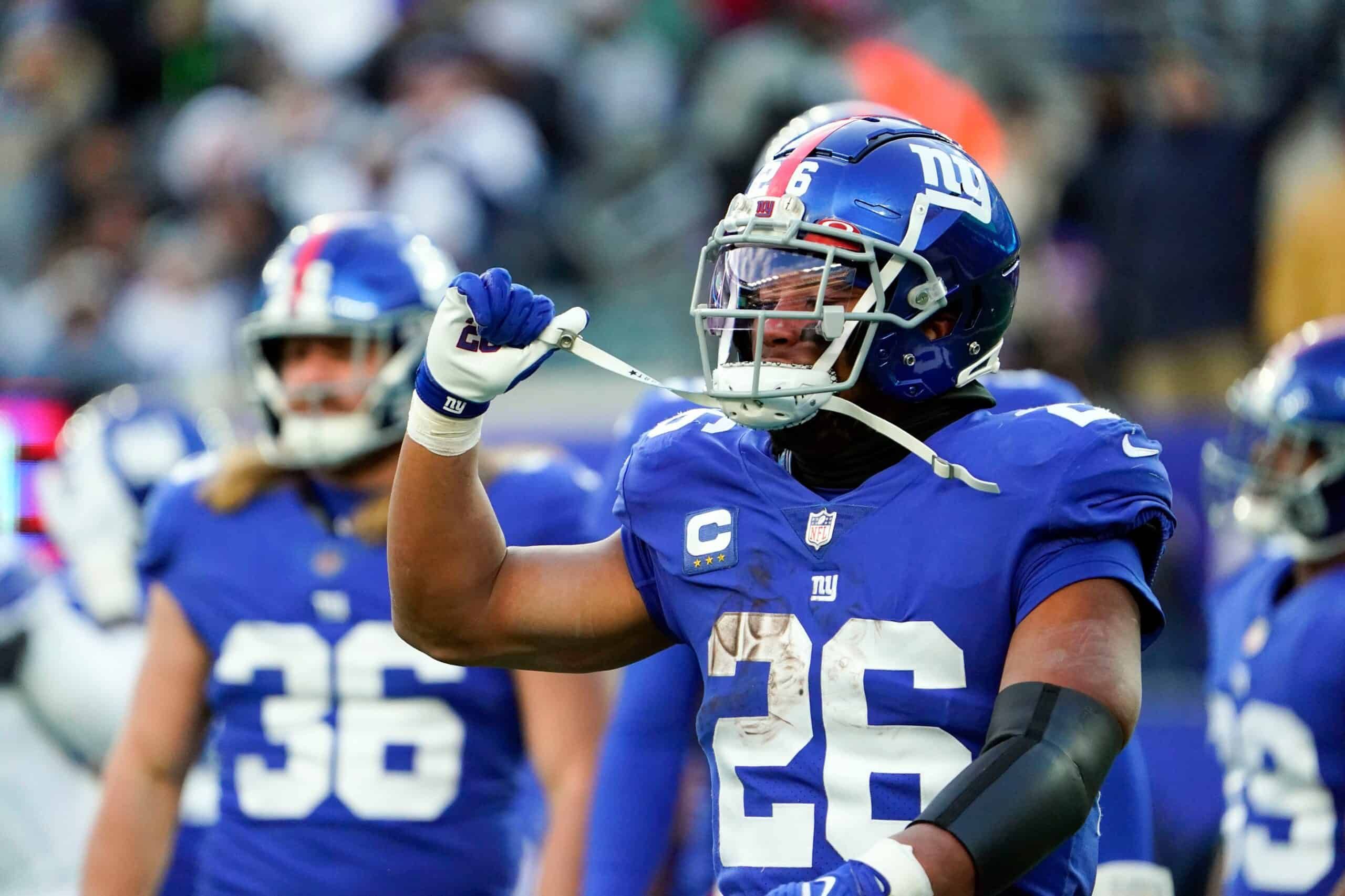
The most profound impact of the surgery was Barkley’s forced abandonment of the "home run or bust" mentality. Prior to 2020, Barkley frequently attempted to bounce runs to the outside, relying on pure speed and lateral cutting to outrun angles. Post-surgery, particularly starting in 2022, Barkley transitioned to a more disciplined, North-South running style.
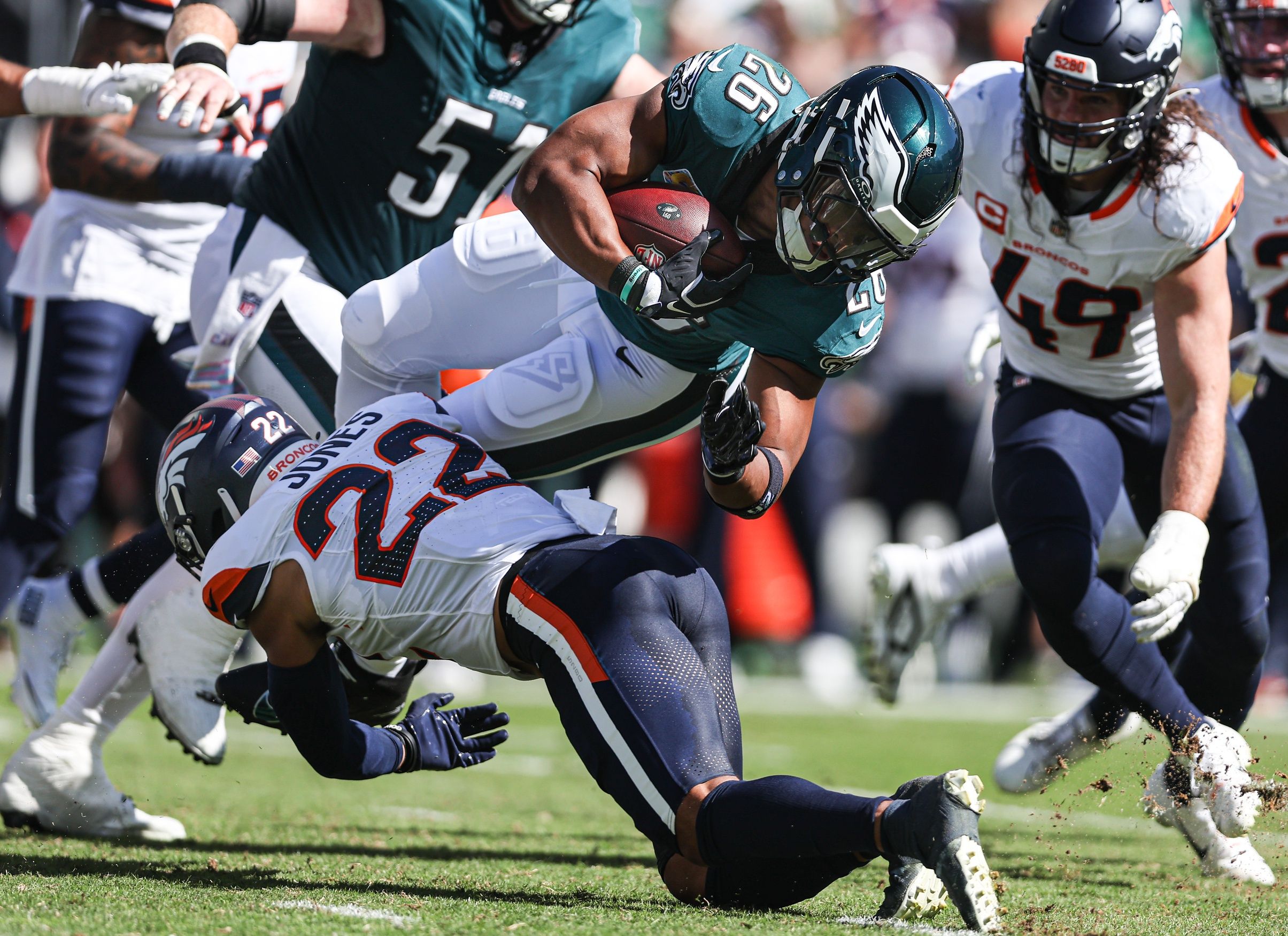
By accepting 4-yard gains rather than constantly hunting for 60-yarders, he reduced the shear stress on his reconstructed knee and became a more efficient "chain-mover." This evolution was the primary reason he remained a top-tier back through the mid-2020s, as it aligned his physical capabilities with the requirements of a high-volume NFL workload.
Career Statistical Comparison: Pre-Surgery vs. Post-Surgery
The following table illustrates the impact of the injury and the subsequent recovery phases on Barkley’s production. Note the dip in 2021 and the stabilization in the years following his 2022 "Comeback Player of the Year" caliber performance.
| Metric | Pre-Surgery (2018-2019) | Recovery Phase (2021) | Resurgence (2022-2024) |
|---|---|---|---|
| Yards Per Carry (Avg) | 4.8 | 3.7 | 4.4 |
| Breakaway Run Rate | High (Top 5 NFL) | Negligible | Moderate/High |
| Targets Per Game | 7.2 | 4.5 | 5.1 |
| Success Rate % | 42.1% | 34.2% | 46.8% |
| Games Played/Season | 14.5 | 13 | 15.5 |
Financial Implications and the Market for "Post-Op" Backs
The surgery arrived at the worst possible time for Barkley’s financial leverage. He was nearing the end of his rookie contract, and the uncertainty surrounding his knee led to a protracted standoff with the New York Giants. The "RB Dead Zone"—the industry-wide reluctance to pay veteran running backs—was exacerbated in Barkley’s case by his surgical history.
The Giants applied the franchise tag in 2023, a move that signaled a lack of long-term confidence in his durability. However, Barkley’s ability to play 16 games in 2022 and maintain high efficiency in 2023 proved his knee could withstand the rigors of 300+ touches.
This resilience culminated in his landmark 2024 free-agency signing with the Philadelphia Eagles. The three-year, $37.75 million contract was a rarity for a 27-year-old back with a major reconstructive history. It served as a market validation that his 2020 surgery was a successful intervention rather than a career-ending event. In the context of 2026, we see this as the moment Barkley secured his financial legacy, transitioning from a team in rebuild to a perennial contender.
The Biological Clock: Managing Wear and Tear in 2026
As of 2026, Saquon Barkley is navigating the late-career stage for an NFL running back. The long-term effects of the 2020 surgery are now a matter of "maintenance." While the ACL graft remains stable, the primary concern for a veteran back with his history is secondary compensation.
Often, athletes with ACL reconstructions experience issues in the opposite hip or the same-side hamstring as the body subconsciously shifts load to protect the repaired joint. Barkley’s longevity into 2026 is largely credited to his adoption of advanced recovery modalities, including:
- Load Management: Reduced practice repetitions during the mid-season.
- Biomechanical Analysis: Using wearable sensors to ensure his stride remains symmetrical, preventing compensatory injuries.
- Modified Strength Training: Shifting from maximum-effort squats to isometric and eccentric loading to preserve joint cartilage.
The Mental Toll and the "Resiliency" Brand
Beyond the physical constraints, the surgery redefined Barkley’s public persona. He transitioned from being the "Gold Standard" of athletic perfection to a symbol of perseverance. This shift had significant implications for his endorsement portfolio. In 2026, Barkley is frequently cited in sports psychology as a model for overcoming the "mental block" associated with catastrophic injury.
His willingness to be transparent about the difficulties of the 2021 season—the doubt, the pain, and the frustration—humanized him in a way that his rookie-year dominance never did. This narrative of the "rebuilt" superstar allowed him to maintain high-profile partnerships with brands focusing on wellness and longevity, even as his raw speed naturally declined with age.
Frequently Asked Questions
Did Saquon Barkley have a second surgery on the same knee?
No, there have been no public records of a second major reconstructive surgery on his right knee. While he has dealt with minor ankle sprains and various lower-body "niggles," the structural integrity of the 2020 ACL/Meniscus repair has held up throughout his tenure with the Giants and Eagles.
How did the surgery affect his top-end speed?
Barkley’s recorded top speed in 2018 was among the highest for any player in the league (exceeding 21 mph on several runs). Following the 2020 surgery, his "game speed" slightly decreased; however, his acceleration (the ability to reach 10-15 mph) returned to elite levels by mid-2022. By 2026, he relies more on vision and leg drive than pure breakaway speed.
Was his meniscus repair more concerning than the ACL tear?
In the long term, yes. While ACL tears are the most famous injuries, the meniscus repair dictates the "mileage" of the knee. Because Barkley underwent a repair (sewing the cartilage) rather than a meniscectomy (cutting it out), the recovery took longer but the long-term health of the joint was better preserved, allowing him to play effectively into his late 20s.
Did the surgery lead to his departure from the New York Giants?
Indirectly, yes. The injury created a "valuation gap" between Barkley and the Giants' front office. The team was hesitant to offer a massive guaranteed contract to a back with a major knee history, leading to the use of the franchise tag and his eventual departure to Philadelphia in 2024.
What is the typical career length for an RB after an ACL/MCL tear?
Historically, RBs often see a significant decline 2-3 years after such a major surgery. Barkley is an outlier because of his elite athleticism and the quality of his rehabilitation. Most RBs do not secure a second major contract (like his 2024 Eagles deal) after a "triple threat" knee injury.
Final Perspective for 2026
The 2020 surgery did not end Saquon Barkley’s career; it merely ended the first version of it. By forcing a more pragmatic approach to the running back position and necessitating a world-class focus on body maintenance, the surgery may have actually extended Barkley’s viability as a starter. For fans and analysts, Barkley's journey serves as a blueprint for how modern medicine, when paired with an elite work ethic, can overcome injuries that were once considered career-ending. As he enters the twilight of his career, his legacy is defined less by the 2018 highlight reels and more by the disciplined, efficient production of his post-surgical years.
Image Gallery