Why Whole Life Versus Term Insurance Matters: A Critical 2026 Financial Analysis
The choice between whole life and term insurance matters because it dictates the long-term efficiency of your financial plan, the cost of protecting your family, and the availability of liquidity in later years. Selecting the wrong pol...
The choice between whole life and term insurance matters because it dictates the long-term efficiency of your financial plan, the cost of protecting your family, and the availability of liquidity in later years. Selecting the wrong policy can result in either paying for unnecessary features or finding yourself uninsured when coverage is needed most.
Contents
Understanding the fundamental differences between these two products is essential for any individual or business owner looking to secure their financial future. In 2026, as interest rates and market volatility continue to influence household planning, the nuances of life insurance have become more than just a matter of "if" you are covered—it is a matter of "how" that coverage integrates with your broader estate and tax strategies.
Defining the Core Contenders: Term and Whole Life
Before examining why the distinction is so vital, we must define the mechanics of each policy type. While both provide a death benefit to beneficiaries, their internal structures and intended use cases differ significantly.
The Mechanics of Term Life Insurance
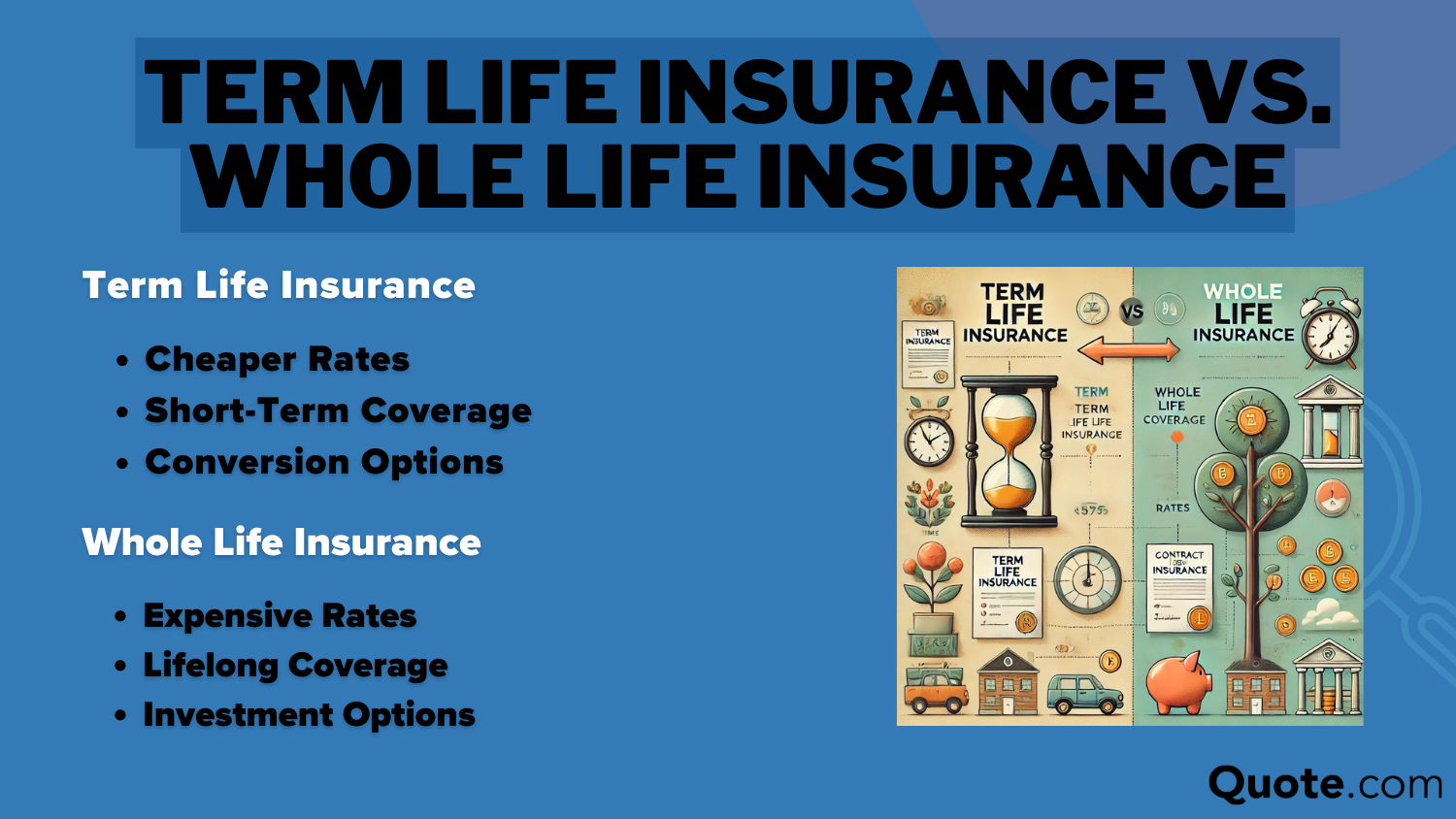
Term life insurance is often described as "pure" insurance. It is designed to provide coverage for a specific period, typically ranging from 10 to 30 years. If the insured individual passes away during this "term," the insurance company pays the death benefit to the beneficiaries. If the policyholder survives the term, the coverage simply ends, and there is usually no payout or residual value.
In 2026, term insurance remains the most affordable way to secure high levels of coverage. It is particularly effective for covering temporary obligations, such as a mortgage, a child’s college education, or the "income replacement" years of a primary breadwinner. Because the insurance company only pays if death occurs within a fixed window, the premiums are significantly lower than permanent alternatives.
The Mechanics of Whole Life Insurance
Whole life insurance is a form of permanent life insurance. Unlike term, it is designed to last for the policyholder's entire life, provided premiums are paid. It features a guaranteed death benefit and a "cash value" component. A portion of every premium payment is directed into a savings-like account that grows over time at a guaranteed rate.
Whole life insurance is more than just a death benefit; it is a financial asset. The cash value grows tax-deferred and can be accessed during the policyholder's lifetime through loans or withdrawals. This permanence and the accumulation of equity are the primary reasons why whole life premiums are substantially higher than term premiums for the same amount of death benefit.
Why the Choice Matters for Your Financial Lifecycle
The debate between whole life and term is not about which product is "better" in a vacuum, but which is more appropriate for a specific stage of life or financial goal. The stakes of this decision are high because life insurance is a long-term contract; changing your mind a decade later can be expensive or, in some cases, impossible due to health changes.
1. Cost and Opportunity Expense
The most immediate reason the choice matters is the impact on your monthly budget. In 2026, a 30-year-old in good health might pay $30 a month for a $500,000 term policy, whereas a whole life policy for the same amount could cost $400 to $600 a month.
This discrepancy introduces the concept of opportunity cost. If you choose term insurance, you have hundreds of dollars in "saved" premiums every month that can be invested in a brokerage account, a 401(k), or a Roth IRA. If you choose whole life, you are essentially outsourcing that investment to the insurance company in exchange for guarantees. If your goal is maximum wealth accumulation and you have the discipline to invest the difference, term insurance is often the mathematically superior choice.
2. Matching Duration to Need
The "why" behind the choice often hinges on whether your financial need is temporary or permanent.
- Temporary Needs: Mortgages, debt, and child-rearing are temporary. Once the house is paid off and the children are independent, the need for a $1 million death benefit often evaporates. Using expensive whole life insurance to cover a 20-year mortgage is often seen as an inefficient use of capital.
- Permanent Needs: Some needs never go away. These include funeral and final expenses, providing for a lifelong dependent (such as a child with special needs), or providing liquidity for estate taxes in high-net-worth scenarios. If you rely on term insurance for a permanent need, you run the risk of outliving your policy and being uninsurable at age 70 or 80.
3. Cash Value and Liquidity
Whole life insurance matters to those who want a "forced savings" mechanism. The cash value component offers a level of liquidity that is not available in term insurance. Policyholders can borrow against their cash value to fund business ventures, pay for emergencies, or supplement retirement income. In a volatile 2026 market, having a non-correlated asset that grows at a guaranteed rate can provide a significant psychological and financial safety net.
Comparative Analysis: Term vs. Whole Life
To help visualize the structural differences, the following table breaks down the primary features of each insurance type as they stand in 2026.
| Feature | Term Life Insurance | Whole Life Insurance |
|---|---|---|
| Duration | Fixed period (10–30 years) | Entire life (Permanent) |
| Premium Cost | Low (Initially) | High (Often 10x–15x higher) |
| Cash Value Build-up | None | Yes (Guaranteed growth) |
| Death Benefit | Fixed for the term | Guaranteed (May increase with dividends) |
| Complexity | Simple/Straightforward | Complex (Requires management) |
| Dividends | Not applicable | Often available in "Participating" policies |
| Tax Treatment | Tax-free death benefit | Tax-free death benefit + Tax-deferred growth |
| Best Use Case | Income replacement, debt coverage | Estate planning, final expenses, high net worth |
The Role of Dividends and Policy Performance
In the context of 2026, "participating" whole life policies from mutual insurance companies have gained attention. These policies pay dividends to policyholders, which are essentially a return of a portion of the premium. Dividends can be used to purchase "paid-up additions," which increase both the death benefit and the cash value over time.
This matters because it provides an inflation hedge. While a $500,000 term policy will always be worth exactly $500,000, a well-funded whole life policy can grow its death benefit significantly over thirty or forty years. For individuals concerned about the eroding purchasing power of the dollar, this internal growth mechanism is a key factor in the whole life column.
Strategic Hybrid Approaches: Convertible Term Insurance
It is important to note that the choice between term and whole life does not have to be an "either/or" proposition. Many modern term policies include a conversion rider. This allows the policyholder to convert their term coverage into a permanent whole life policy at a later date without undergoing a new medical exam.
This matters for young professionals who currently have a high need for coverage but a low budget. They can secure the high death benefit they need today via a cheap term policy, with the contractual right to lock in permanent whole life coverage later when their income rises, regardless of any health issues they may have developed in the interim.
Common Pitfalls in the Selection Process
When deciding why one matters more than the other, many consumers fall into traps that can derail their financial health.
- Underestimating Future Costs: If you buy a 10-year term policy thinking you will "just buy another one" when it expires, you may be in for a shock. If your health declines or you develop a chronic condition, the cost of a new policy at age 45 or 55 can be astronomical or entirely unavailable.
- Lapsing Whole Life Policies: Because whole life is expensive, many people start a policy and then find they cannot keep up with the premiums. Lapsing a whole life policy in the first 5 to 10 years is often a significant financial loss, as the "surrender value" is usually minimal in the early years.
- Ignoring the "Net Amount at Risk": As whole life cash value grows, the actual "insurance" the company provides (the difference between the death benefit and the cash value) decreases. Understanding this shift is vital for calculating the true cost of the insurance component within a permanent policy.
Jurisdictional and Professional Limitations
Life insurance regulations vary by jurisdiction. In the United States, policies are governed at the state level, and tax treatments are defined by the Internal Revenue Code (specifically Section 7702). It is essential to consult with a licensed insurance professional or a tax advisor to ensure that a policy complies with current laws and does not inadvertently become a Modified Endowment Contract (MEC), which could trigger unfavorable tax consequences.
Note: This article is for informational purposes and does not constitute legal, financial, or tax advice.
Frequently Asked Questions
Can I have both term and whole life insurance at the same time?
Yes, many people use a "laddering" strategy. They carry a small whole life policy for permanent needs (like funeral costs) and a large term policy to cover their working years (like income replacement and mortgage protection). This approach balances cost-efficiency with lifelong security.
What happens to my whole life insurance if I stop paying premiums?
If the policy has accumulated enough cash value, you may have options like "Reduced Paid-Up" insurance (a smaller death benefit with no more premiums due) or using the cash value to pay the premiums (Automatic Premium Loan). If there is no cash value, the policy will lapse and coverage will end.
Is the cash value in a whole life policy taxable?
The growth of the cash value is tax-deferred. If you withdraw more than you have paid in premiums (your "basis"), the excess is taxed as ordinary income. However, policy loans are generally not considered taxable income, provided the policy remains in force. More details can be found via the IRS website.
Why do some financial experts say "Buy term and invest the difference"?
This strategy is based on the idea that the internal rate of return on a whole life policy is often lower than what an individual could earn by investing in the stock market. By buying the cheaper term policy and putting the savings into an index fund, many people believe they can build more wealth over 20 to 30 years than a whole life policy would provide.
Does term insurance have any value at the end of the term?
Standard term insurance has no value at the end of the term. However, some "Return of Premium" (ROP) policies exist where the insurer pays back all your premiums if you survive the term. These policies are significantly more expensive than standard term insurance.
Next Actions for Choosing the Right Coverage
To determine which type of insurance matters most for your situation, follow these steps:
- Conduct a Needs Analysis: Calculate your total debt, including mortgage, and your family’s future income needs. If this number is high but temporary, prioritize term insurance.
- Evaluate Your Estate Goals: Determine if you need to provide liquidity for estate taxes or leave a guaranteed legacy. If so, a portion of your coverage should be permanent.
- Review Your Budget Discipline: If you are a disciplined investor, "buy term and invest the difference" may work well. If you struggle to save, the forced savings of a whole life policy might be beneficial.
- Consult a Licensed Professional: Speak with an agent who represents multiple carriers. Ask for "illustrations" for both term and whole life policies to see how the numbers project over 20 and 30 years based on 2026 interest rates and mortality data.
Image Gallery