Complete Guide to Locating and Communicating with an FDOC Inmate in 2026
Navigating the Florida Department of Corrections (FDOC) system to locate, track, and communicate with an inmate requires understanding specific online databases, identification numbers, and institutional protocols. Friends and family m...
Navigating the Florida Department of Corrections (FDOC) system to locate, track, and communicate with an inmate requires understanding specific online databases, identification numbers, and institutional protocols. Friends and family members looking up an FDOC inmate must utilize official state resources, adhere to strict mailing guidelines, and follow designated procedures for visitation and financial deposits to ensure smooth interaction within the correctional framework.
Contents
Understanding the FDOC Inmate Population and Identification Systems
The Florida Department of Corrections manages tens of thousands of individuals housed across state correctional institutions, work camps, and private facilities. To effectively track any individual within this system, understanding the baseline identification numbers is critical. Every person entering the state prison system is assigned a unique tracking designation known as the DC Number.
When initiating a search, having precise biographical data significantly reduces lookup errors. Common names often yield multiple results in the state database, making secondary identifiers essential for accurate verification.
- DC Number (Department of Corrections Number): A unique six-digit or seven-digit identifier assigned permanently to the offender upon intake.
- Full Legal Name: Including middle names or suffixes (Junior, Senior, III) is necessary to filter out common naming matches.
- Date of Birth: The most reliable secondary filter used alongside names to distinguish between individuals with identical monikers.
- Race and Gender: Baseline demographic filters built into state search engines to refine broad queries.
Step-by-Step Process for Locating an Inmate in Florida
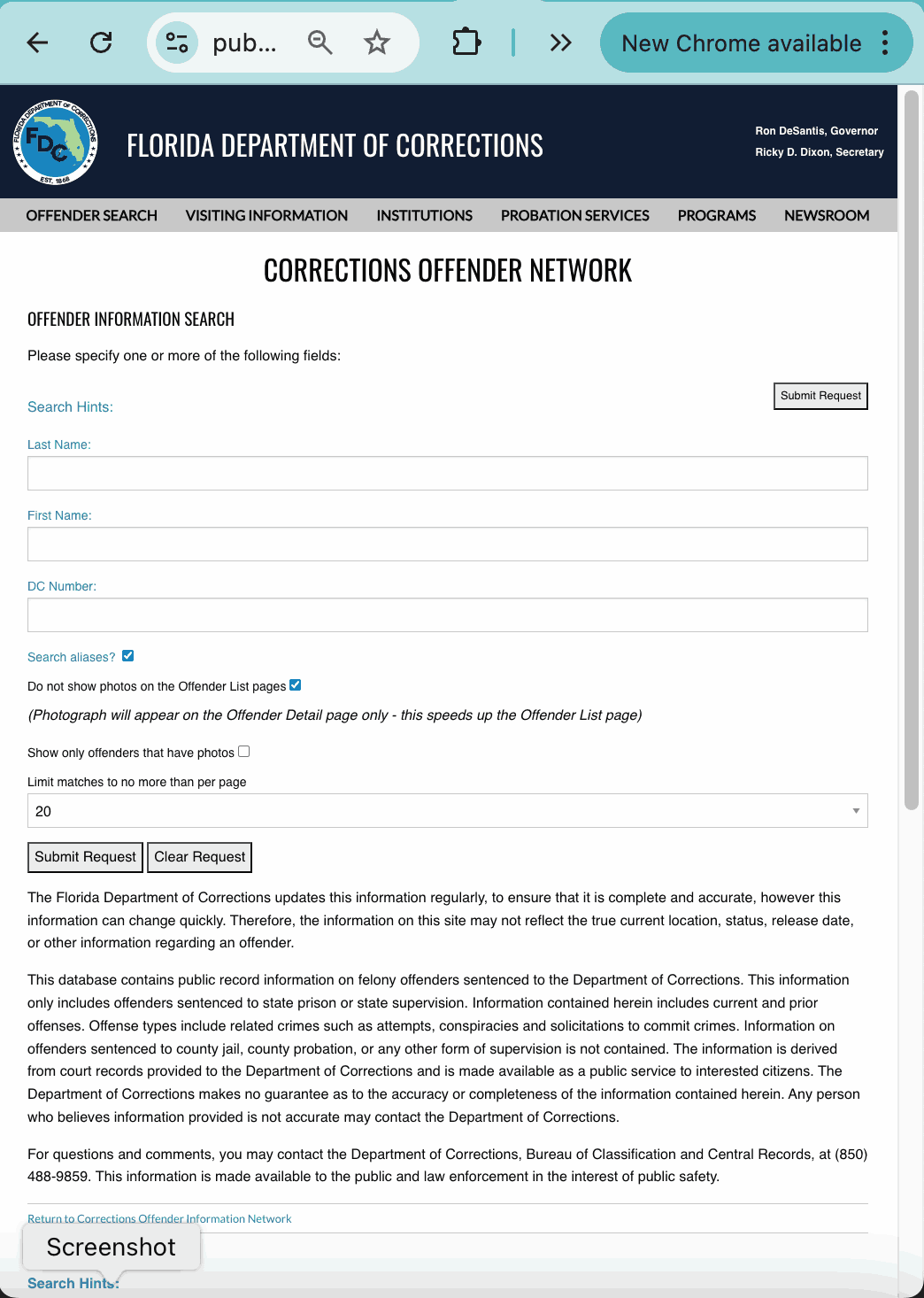
Finding an individual currently under the custody of the Florida Department of Corrections relies primarily on the public online offender search tool hosted on the official state correctional website.
- Access the Official Portal: Navigate to the official Florida Department of Corrections public offender information search page. Avoid third-party aggregator sites that may charge fees or display outdated records.
- Input Search Criteria: Enter the known parameters. For optimal results, input the exact DC Number if known. Otherwise, enter the last name and first name.
- Analyze Search Results: Review the list of matches. The results display the offender's full name, DC number, race, sex, date of birth, current facility assignment, and current custody status (e.g., active, released, escaped).
- Select the Individual Record: Click on the specific inmate name to open their comprehensive profile sheet. This page reveals sentencing details, current facility location, projected release date, and aliases used.
- Record Facility Information: Note the exact name of the correctional institution where the inmate is currently housed, as institutional rules regarding mail and visitation vary slightly by facility type.
Communication Channels: Mail, Phone Calls, and Electronic Messaging
Maintaining contact with an FDOC inmate involves strict adherence to state communication policies. Security protocols govern every form of correspondence to prevent contraband entry and maintain facility safety.
Postal Mail Regulations
All incoming general correspondence must follow standardized addressing formats to ensure delivery. Inmates cannot receive mail directly at the facility address without proper identification formatting. Mail is typically processed through a centralized processing center or inspected thoroughly at the local facility.
- Addressing Format Example: Inmate Name, DC Number followed by Facility Name, Street Address, City, State, and Zip Code.
- Prohibited Content: Polaroid photographs, stickers, glitter, perfumed paper, cash, personal checks, and items depicting gang affiliations or explicit material.
- Approved Publications: Books, magazines, and newspapers must be shipped directly from an approved publisher or vendor, such as Amazon or Barnes & Noble.
Telephone and Electronic Messaging Services
Inmates do not have direct access to standard cellular devices or open internet access. Communication occurs through heavily monitored, contracted telecommunication vendors.
- Phone Calls: Inmates can make outgoing collect calls or utilize pre-paid calling accounts established by friends and family through the state's contracted telephone provider.
- Electronic Messaging: The FDOC utilizes electronic messaging systems (such as approved tablet platforms) allowing family members to send digital messages and photos for a per-message fee. Messages are subject to manual review by institutional staff before delivery.
Financial Transactions and Trust Fund Deposits
Inmates rely on personal trust fund accounts to purchase hygiene items, stationery, snacks, and authorized electronics from the prison canteen. Depositing funds requires compliance with approved processing vendors.
- Money Orders: Can be mailed to a designated centralized processing address with a properly filled-out deposit slip and the inmate's full name and DC number.
- Electronic Deposits: Funds can be added instantly online or via telephone using approved third-party financial services contracted with the state of Florida. Transaction fees apply based on the deposit amount.
- Cashier's Checks: Accepted through approved lockbox channels, provided they include clear identification of the sender and the intended inmate recipient.
Visitation Guidelines and Scheduling Protocols
In-person visitation is a privilege granted to inmates who maintain good behavioral standing. Visiting rules are strictly enforced across all Florida state correctional facilities.
- Visitor Application: Every prospective visitor aged 12 and older must submit a completed visitor application form and pass a background check before visiting privileges are approved.
- Scheduling: Most facilities require advance scheduling through the state's online visitation portal or by contacting the facility directly.
- Dress Code: Strict dress codes prohibit revealing clothing, clothing resembling inmate uniforms (blue or grey tones), clothing with offensive graphics, and open-toed shoes in certain facilities.
- Identification: Adult visitors must present a valid, government-issued photo identification, such as a driver's license, state ID card, or passport.
Comparative Overview of FDOC Communication and Support Methods
| Method | Primary Purpose | Associated Costs | Processing Time |
|---|---|---|---|
| Online Inmate Search | Locating facility and status | Free | Instant |
| Postal Mail | Sending letters and photos | Cost of postage and stationery | 3 to 7 business days |
| Trust Fund Deposits | Canteen purchases and commissary | Variable processing/transfer fees | Instant to 3 business days |
| Pre-Paid Phone Accounts | Outbound voice communication | Per-minute calling rates | Instant upon funding |
| Electronic Messaging | Digital text and photo sharing | Per-message digital stamp fees | 24 to 48 hours for review |
Frequently Asked Questions About FDOC Inmates
How can I find an inmate's DC number if I only know their name?
You can use the public offender search tool on the official Florida Department of Corrections website by entering their first and last name, along with birthdate parameters if known. The system will generate a matching list containing the correct DC number and current facility assignment.
Can inmates in Florida receive packages directly from family members?
No. General care packages containing food, clothing, or personal items cannot be mailed directly by family members to the facility. All packages must come from approved third-party vendors or publishers.
What is the process for adding money to an inmate's account?
You can deposit funds into an inmate's trust fund account online, over the phone, or by mailing a properly formatted money order through the state-designated processing center using the inmate's full name and DC number.
Why is an inmate's status listed as "Transition" or "Transit"?
A "Transit" or "Transition" status indicates that the inmate is currently being transferred between correctional facilities, appearing in court, or processing through a transitional work release center. Information may temporarily fluctuate during these moves.
Are video visitation options available for FDOC inmates?
Yes, the Florida Department of Corrections offers authorized video visitation services through contracted technology vendors, allowing families to connect remotely via supported digital devices for a scheduled fee.
Summary and Next Steps
Successfully managing communication, fund deposits, and visitation with an FDOC inmate requires strict adherence to official state guidelines and proactive verification of institutional rules. Always consult the official Florida Department of Corrections website for the most current policy updates, fee schedules, and facility-specific instructions before sending mail, scheduling visits, or transferring funds.
Image Gallery