Average Increase in Auto Insurance After a No-Fault Accident
While a no-fault accident typically results in a smaller premium hike than an at-fault collision, motorists in 2026 can expect an average increase of 3% to 12%. This translates to an annual premium rise of approximately $60 to $250, de...
While a no-fault accident typically results in a smaller premium hike than an at-fault collision, motorists in 2026 can expect an average increase of 3% to 12%. This translates to an annual premium rise of approximately $60 to $250, depending on your carrier, state regulations, and previous driving history.
Contents
Navigating the aftermath of a car accident is stressful enough without the looming fear of rising premiums. When you are not the party responsible for a collision, it seems counterintuitive that your insurance company would penalize you. However, the mechanics of actuarial risk assessment mean that any incident—regardless of liability—can potentially alter your risk profile in the eyes of an insurer.
Understanding why these increases occur, how state laws protect you, and what the specific financial impacts are in 2026 is essential for any driver looking to manage their total cost of vehicle ownership.
Understanding the "No-Fault" Concept: Legal vs. Liability
The term "no-fault" is often used in two distinct ways within the insurance industry, and it is vital to distinguish between them to understand rate impacts.
No-Fault Liability Status
In common parlance, a no-fault accident refers to a "not-at-fault" incident. This is a collision where another driver is 100% responsible, or where an external factor (such as a fallen tree or a hit-and-run while parked) caused the damage. From a claims perspective, your insurer may recover their costs from the responsible party’s insurance through a process called subrogation. Even when subrogation is successful, the mere fact that an accident occurred is recorded on your driving history.
No-Fault Insurance States
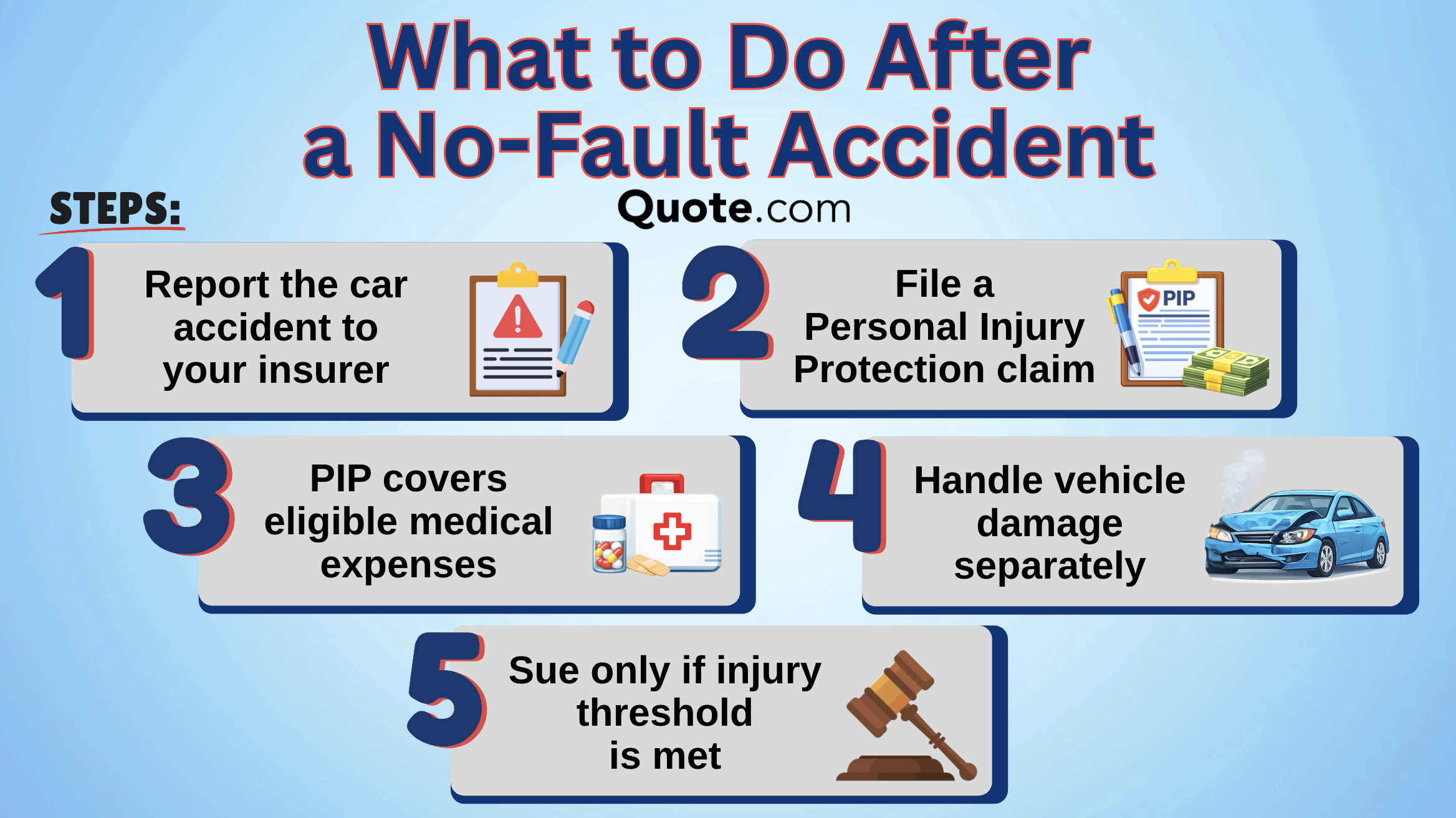
In a legal context, "no-fault" refers to specific states (such as Michigan, New York, and Florida) that operate under a no-fault system. In these jurisdictions, drivers are required to carry Personal Injury Protection (PIP). Regardless of who caused the accident, each driver’s own insurance pays for their medical expenses and lost wages up to a certain limit. In these states, small premium increases after any accident are more common because the insurer is guaranteed to pay out for their own policyholder's medical costs, regardless of blame.
Why Premiums Rise Even When You Aren't at Fault
It may feel like a breach of fairness, but insurers use data-driven algorithms to set rates. There are three primary reasons why a no-fault accident can trigger a rate increase:
- Actuarial Risk and Statistical Probability: Insurance companies rely on historical data which suggests that a driver involved in one accident—even one they didn't cause—is statistically more likely to be involved in another accident within the next three to five years. This could be due to factors like commuting in high-traffic areas, parking in high-crime zones, or driving habits that, while not illegal, put the driver in "wrong place, wrong time" scenarios more frequently.
- Loss of "Claims-Free" Discounts: Many insurers offer significant discounts (often 10% to 20%) for drivers who have had no claims for a period of three to five years. Filing a no-fault claim, even if the insurer recovers the money, technically ends your "claims-free" status, causing your premium to revert to the standard rate. The resulting "increase" is actually just the loss of a prior discount.
- Administrative and Adjusting Costs: Every claim filed requires human resources. Adjusters must be assigned, damage must be appraised, and subrogation teams must chase the at-fault party's insurer for reimbursement. These operational costs are often baked into the general risk pool, leading to marginal increases for the individual policyholder.
Average Cost Increases: 2026 Data and Projections
In 2026, the cost of vehicle repairs has reached record highs due to the complexity of Advanced Driver Assistance Systems (ADAS) and the specialized labor required for electric vehicle (EV) battery safety. Consequently, even minor "no-fault" claims represent a larger financial outflow for insurers than they did a decade ago.
The following table outlines the estimated premium impacts based on the nature of the claim and the driver's location.
| Scenario | Average Premium Increase (%) | Estimated Annual Increase (USD) | Impact Duration |
|---|---|---|---|
| No-Fault Accident (Standard) | 3% – 12% | $60 – $250 | 3 Years |
| No-Fault Accident (Protected State) | 0% | $0 | N/A |
| At-Fault Accident (Minor) | 20% – 35% | $400 – $800 | 3–5 Years |
| Comprehensive Claim (Theft/Weather) | 1% – 5% | $20 – $100 | 3 Years |
| At-Fault Accident (Major/DUI) | 60% – 100%+ | $1,200 – $2,500+ | 5–10 Years |
Note: These figures are averages. Individual rates depend heavily on the specific carrier's internal "rating tiers" and the policyholder's credit-based insurance score.
State-Specific Variations and Legal Protections
Where you live is perhaps the most significant factor in whether your rates will rise after a no-fault accident. Several states have enacted consumer protection laws that expressly forbid insurance companies from raising premiums for accidents where the policyholder was not at fault.
- California: Under Proposition 103, insurers in California are generally prohibited from increasing premiums based on a not-at-fault accident.
- Oklahoma: State law prevents surcharges for accidents where the driver was not at fault.
- Massachusetts: The state’s "Safe Driver Insurance Plan" (SDIP) ensures that only at-fault accidents and certain traffic violations result in surcharges.
- Other States: In most other states, insurers are permitted to adjust rates based on any claim filed, though some may choose not to do so as a competitive advantage.
Drivers should consult their state's Department of Insurance to understand the specific statutes governing surcharges in their jurisdiction.
Factors That Influence the Severity of the Rate Hike
Not all no-fault claims are treated equally. The "weighted" impact on your premium depends on several variables:
1. The Carrier's Accident Forgiveness Policy
Many modern insurance policies include "Accident Forgiveness" as either a standard feature or a paid endorsement. If you have this coverage, your first accident (even if you are at fault) will not result in a premium increase. If the accident is no-fault, the insurer will almost certainly waive any surcharge, though your ability to use the "forgiveness" for a future at-fault accident may be reset.
2. Claim Frequency
A single no-fault accident is unlikely to cause a massive spike. However, if you file three no-fault claims within two years (e.g., getting rear-ended twice and having a tree limb fall on the car), the insurer may reclassify you as a "high-frequency claimant." This can lead to a non-renewal notice or a shift into a higher-risk premium tier.
3. Your Credit-Based Insurance Score
In states where it is legal to use credit information for insurance (which is most states except California, Hawaii, and Massachusetts), a high credit score can act as a buffer. Insurers view high-credit individuals as less likely to file small, frivolous claims, which can lead to more leniency after a legitimate no-fault incident.
How to Prevent or Minimize a Rate Increase
If you have been involved in an accident that wasn't your fault, take the following steps to protect your premium:
- Obtain a Police Report: An official police report stating the other driver was 100% at fault is your strongest evidence during the underwriting review process.
- File Through the At-Fault Party’s Insurance: If the other driver’s liability is clear and their insurer is cooperative, you can file a claim directly with their company (a "third-party claim"). This keeps the claim off your own policy entirely, though it may be slower than using your own collision coverage.
- Shop Around After 30 Days: If your current insurer raises your rates, wait one month and then request quotes from competitors. Other insurers may not weigh a "not-at-fault" incident as heavily as your current provider, especially if they are looking to gain market share.
- Review Your Discounts: Check if you are eligible for new discounts—such as telematics programs (tracking your driving via an app)—to offset any small increase caused by the accident.
Long-Term Impact: The CLUE Report
Every claim you file is recorded in the Comprehensive Loss Underwriting Exchange (CLUE) report. This database is shared among insurance companies and tracks claim history for up to seven years, though most insurers only look back at the last three to five years. Even if you switch insurance companies, the new insurer will see the no-fault accident on your CLUE report. It is important to ensure the report accurately labels the accident as "not-at-fault" to prevent being charged as if you caused the collision.
Frequently Asked Questions
Does a no-fault accident affect my credit score?
No, filing an insurance claim does not impact your FICO or VantageScore. However, in many states, your credit history is used to calculate your "insurance score," which affects your premium. The accident and your credit are two separate data points used by the insurer.
Should I file a claim if the damage is less than my deductible?
Generally, no. If you are not at fault and the damage is $800 while your deductible is $1,000, your insurer will not pay anything. However, the incident will still be recorded on your file. If the other driver is at fault, you should pursue them or their insurance directly for the full $800.
Can I be canceled for a no-fault accident?
It is very rare for an insurer to cancel a policy due to a single no-fault accident. However, they may choose "non-renewal" at the end of your policy term if you have a high frequency of claims of any type.
How long will the increase stay on my insurance?
Most premium surcharges for accidents last for three years. Some carriers may reduce the surcharge gradually each year you remain accident-free following the incident.
Practical Recommendation
If you are involved in a no-fault accident in 2026, your first priority should be securing a police report and the other driver's insurance information. To avoid a rate increase, try to settle the claim through the at-fault driver's insurance company whenever possible. If you must use your own policy, monitor your next renewal statement closely. If you see an increase exceeding 10%, use that as a signal to shop for a new policy, as many insurers use no-fault incidents as a "soft" reason to test price elasticity with their current customers.
Image Gallery