Navigating the Air Conditioning and Refrigeration School Experience
The air conditioning and refrigeration school experience is an intensive blend of theoretical physics and hands-on mechanical training designed to prepare students for the HVACR (Heating, Ventilation, Air Conditioning, and Refrigeratio...
The air conditioning and refrigeration school experience is an intensive blend of theoretical physics and hands-on mechanical training designed to prepare students for the HVACR (Heating, Ventilation, Air Conditioning, and Refrigeration) industry. It typically involves a curriculum covering thermodynamics, electrical systems, and refrigerant handling, culminating in essential certifications like the EPA Section 608.
Contents
Entering a trade school for HVACR in 2026 is a commitment to mastering both the "invisible" world of electricity and chemistry and the "visible" world of hardware and machinery. For many, the transition from a traditional academic setting to a technical lab is the most significant shift. Unlike standard college courses that rely heavily on essays and lectures, the refrigeration school experience is defined by tactile learning—feeling the vibration of a compressor, hearing the hiss of a vacuum pump, and seeing the precise moment a brazing rod melts into a copper joint.
Foundations of the Trade: What to Expect in the First Semester
The initial phase of HVACR school focuses on building a safety-first mindset. Before a student is allowed to touch a manifold gauge or a multimeter, they must understand the inherent risks of the trade. In 2026, safety training includes not only high-voltage electricity and pressurized gases but also the specific handling requirements for mildly flammable (A2L) refrigerants, which have become the industry standard for residential and commercial systems.
Early coursework often feels like a concentrated physics class. Students are introduced to the Refrigeration Cycle, the four-pillar process that allows modern comfort cooling to exist. You will spend significant time studying the evaporator, the compressor, the condenser, and the metering device. Understanding how heat is moved rather than "created" or "destroyed" is the foundational "aha!" moment for most students.
During these first few weeks, the "school experience" involves heavy memorization of pressure-temperature (PT) charts and the laws of thermodynamics. While this may seem abstract, instructors quickly bridge the gap by bringing students into the lab to identify these components on actual rooftop units (RTUs) and split systems. This immediate application helps reinforce the complex math and science behind heat transfer.
The Core Curriculum: From Thermodynamics to Electrical Schematics
As the program progresses, the focus shifts toward the two most critical skills in any technician's repertoire: electrical troubleshooting and refrigerant management.
Electrical Systems and Controls
Statistically, the majority of HVACR service calls are electrical in nature. Therefore, a massive portion of the school experience is dedicated to reading schematics. You will learn to trace a circuit from the thermostat to the contactor, understanding how 24V control circuits interact with 240V or 480V power circuits. By 2026, the curriculum also heavily emphasizes inverter technology and communicating systems. These modern units use variable-frequency drives (VFDs) that require a deeper understanding of electronics compared to the simple "on/off" systems of the past.
Refrigerant Chemistry and Recovery
Handling refrigerants is a matter of both technical skill and federal law. Students spend hours practicing recovery, evacuation, and charging. You will learn how to use a vacuum pump to reach the industry-standard 500 microns, ensuring that moisture and non-condensables are removed from a system. The experience involves learning the nuances of different oils (like POE) and the specific pressures associated with refrigerants such as R-32 and R-454B.
The Laboratory Experience: Where Theory Meets Metal
The lab is the heart of the refrigeration school experience. This is where students move away from desks and into simulated mechanical rooms. A typical day in the lab involves several key activities:
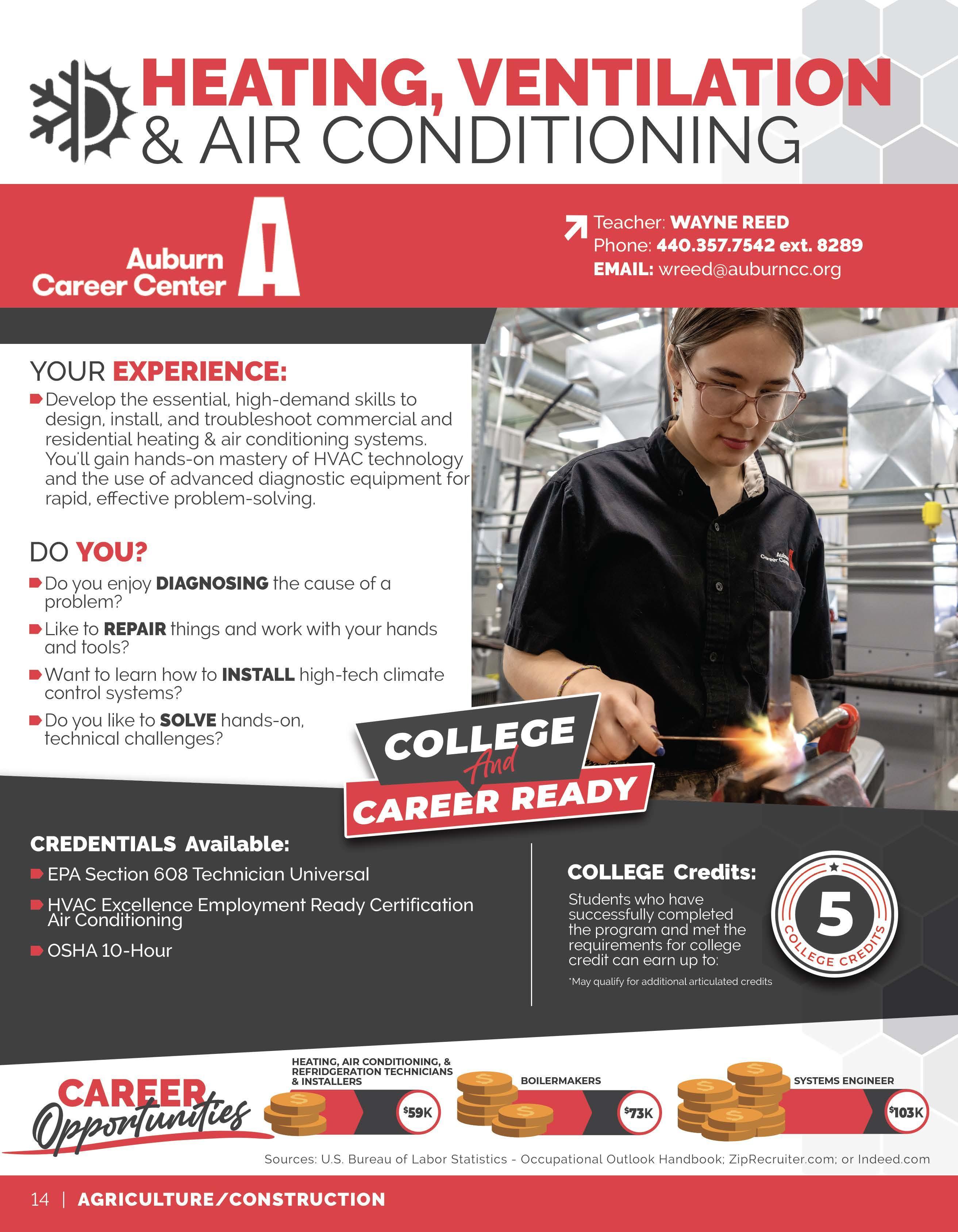
- Brazing and Soldering: Mastering the use of an oxy-acetylene torch is a rite of passage. Students must learn to join copper tubing without creating leaks or internal oxidation. This requires a steady hand and a "nitrogen purge" to keep the inside of the pipe clean.
- System Diagnostics: Instructors often "bug" a unit—intentionally causing a mechanical or electrical fault—and challenge students to find and fix it. This simulates the high-pressure environment of a real-world service call.
- Sheet Metal Fabrication: While many modern systems use pre-fabricated ductwork, a well-rounded school experience still teaches the basics of layout and fabrication using shears, brakes, and folders.
- Preventative Maintenance: Students practice cleaning coils, checking capacitors, and testing motors. These repetitive tasks build the muscle memory required for entry-level "maintenance tech" roles.
The lab environment also fosters a sense of camaraderie. Trade school cohorts are often small, and students frequently work in pairs to lift heavy components or troubleshoot complex wiring issues. This mimics the team-based nature of commercial mechanical contracting.
Tools and Equipment: Your Initial Investment
One of the most tangible aspects of the school experience is the acquisition of a professional toolset. Many schools include a "tool kit" in the tuition, while others provide a list of requirements. In 2026, a student's bag is a mix of traditional hand tools and advanced digital instruments.
| Essential Category | Common Tools Included | Why It Matters |
|---|---|---|
| Measurement | Digital Manifold Gauges, Multimeter, Micron Gauge | Provides precise data for system charging and electrical safety. |
| Mechanical | Pipe Cutters, Flaring Tools, Swaging Kits | Necessary for modifying and repairing copper refrigerant lines. |
| Hand Tools | Nut Drivers, Needle-Nose Pliers, Wrenches | The daily drivers for opening cabinets and tightening terminals. |
| Safety Gear | Safety Glasses, Leather Gloves, Voltage Detectors | Protects the student from flash burns, cuts, and electrocution. |
| Digital/Tech | Thermal Imaging Cameras, App-linked Probes | Allows for non-invasive diagnostics and remote data logging. |
Understanding how to calibrate and maintain these tools is a core part of the education. Students learn that a technician is only as good as their measurements, and relying on cheap or uncalibrated gear can lead to costly mistakes in the field.
Certification and the EPA 608 Exam
The climax of the HVACR school experience is the EPA Section 608 Certification exam. Under the Clean Air Act, anyone who maintains, services, repairs, or disposes of appliances that contain regulated refrigerants must be certified.
The exam is divided into four sections:
- Core: General knowledge of ozone depletion and shipping regulations.
- Type I: Small appliances (refrigerators, window ACs).
- Type II: High-pressure systems (residential split systems, commercial RTUs).
- Type III: Low-pressure systems (large chillers).
Attaining a "Universal" certification (passing all four sections) is the goal for most students. School programs are specifically structured to drill these regulations into students, as the certification is a legal prerequisite for employment. According to the Environmental Protection Agency (EPA), failing to adhere to these standards can result in significant fines for both the technician and the employer.
Financial Realities: Tuition and Earning Potential in 2026
The cost of HVACR school varies significantly depending on the type of institution. Community colleges generally offer the most affordable path, while private technical institutes may have higher tuition but offer faster completion times and more robust job placement services.
In 2026, federal financial aid (FAFSA) is widely applicable to accredited HVACR programs. Many students also pursue "earn-while-you-learn" models, where they attend school two nights a week while working as a helper or apprentice during the day.
Comparison of Educational Paths
| Feature | Certificate Program | Associate Degree (A.A.S.) |
|---|---|---|
| Duration | 6 to 12 Months | 2 Years |
| Focus | 90% Technical / Hands-on | 70% Technical / 30% General Education |
| Cost | $5,000 – $15,000 | $10,000 – $25,000 |
| Best For | Fast entry into the workforce | Aspiring managers or system designers |
| Credential | Technical Certificate | College Degree |
Graduates in 2026 enter a market with high demand. The U.S. Bureau of Labor Statistics continues to project steady growth for the field, driven by the need for energy-efficient retrofits and the ongoing complexity of climate control systems.
Frequently Asked Questions
Is HVACR school harder than a regular college?
It is "hard" in a different way. While it requires less long-form writing, it demands high levels of spatial reasoning, mathematical accuracy, and physical stamina. You must be comfortable working with your hands in environments that are often hot, cramped, or loud.
Do I need to be good at math to succeed?
You need a solid grasp of basic algebra and geometry. You will calculate superheat and subcooling, measure airflow in cubic feet per minute (CFM), and use Ohm's Law to calculate electrical loads. Most schools provide "Refresher Math" courses to help students who have been out of school for a while.
Can I learn this trade entirely online?
No. While many programs offer "hybrid" options where the theory and lectures are delivered online, the hands-on lab portion is mandatory. You cannot learn to braze a pipe or recover refrigerant through a screen; physical interaction with the equipment is essential for safety and competency.
What is the most difficult part of the school experience?
For most students, the transition to electrical troubleshooting is the biggest hurdle. Understanding how a sequence of operations works and using a meter to find a "ghost" voltage or a failed relay requires a logical, step-by-step mindset that can be difficult to master initially.
Will I get a job immediately after graduation?
Most reputable schools have a job placement rate of over 80%. Because the industry is facing a shortage of skilled labor in 2026, many students receive job offers before they even graduate, provided they have passed their EPA 608 exam and maintained a good attendance record.
Final Recommendation
If you are considering the air conditioning and refrigeration school experience, your next step should be to visit at least two different campuses. Ask to see their labs. A modern program in 2026 should have a mix of old "workhorse" units and new, high-efficiency inverter systems. Check if the school is accredited by organizations like HVAC Excellence or PAHRA (Partnership for Air-Conditioning, Heating, Refrigeration Accreditation). These credentials ensure the curriculum meets rigorous industry standards and that your investment will lead to a viable, long-term career.
Image Gallery