Understanding How Boot Repair Works in Longview, TX: A Complete Guide
Boot repair in Longview, TX, is a specialized process involving the mechanical and manual restoration of footwear, ranging from heavy-duty work boots to high-end western styles. Local cobblers focus on three primary phases: assessment...
Boot repair in Longview, TX, is a specialized process involving the mechanical and manual restoration of footwear, ranging from heavy-duty work boots to high-end western styles. Local cobblers focus on three primary phases: assessment of the welt and mid-sole, technical replacement of the outsole or heel, and deep conditioning of the leather. By utilizing traditional machinery and modern adhesives, these professionals extend the life of quality boots, making repair a cost-effective alternative to replacement in 2026.
Contents
In East Texas, boots are more than just fashion; they are essential tools for the oil, gas, and agricultural industries. Consequently, the local repair industry is geared toward durability and structural integrity. Whether you are dealing with a worn-out Vibram sole on a pair of work boots or a thinning leather sole on custom Lucchese western boots, understanding the mechanics of how these repairs are executed can help you make better decisions regarding your footwear investments.
The Foundation of Boot Repair: Construction Types
Before a cobbler in Longview can begin work, they must identify the construction of the boot. This is the single most important factor in determining how the repair works and if the boot is even "serviceable."
Goodyear Welting
Most high-quality boots found in Longview—brands like Red Wing, Ariat, or Justin—utilize a Goodyear Welt. This involves a strip of leather (the welt) being stitched to the upper and the insole, which is then stitched to the outsole. In a repair scenario, the cobbler can simply unstitch the old outsole and sew on a new one without ever damaging the upper leather. This allows a boot to be resoled multiple times over a decade or more.
Blake Stitching
Common in dressier boots or European styles, the Blake stitch runs directly through the outsole, insole, and upper. While repairable, it requires a specific Blake stitch machine. Longview shops equipped with these machines can offer a thinner, more flexible profile after the repair, though the water resistance is generally lower than a Goodyear welted boot.
Cemented Construction
Often found in lower-priced "disposable" boots, the sole is simply glued to the upper. While some Longview cobblers can perform a "sole swap" using industrial-strength heat and chemical solvents to strip the old glue, these are the most difficult to repair reliably. The process involves grinding down the old material and using high-pressure presses to bond a new unit-sole to the existing structure.
The Step-by-Step Repair Process in Longview Shops
When you take your boots to a local professional, the workflow follows a standardized technical progression. In 2026, many shops have integrated digital intake systems to track these steps, ensuring that specific customer requests—such as a specific heel height or sole density—are met.
1. Initial Inspection and Deconstruction
The cobbler first checks the insole and the gemming (the rib that the welt attaches to). if the inner structure is rotted from moisture or sweat, a standard resole may not be enough. Once cleared, the old stitching is carefully cut using a specialized knife or a prying tool. The old sole is pulled away, exposing the "filling"—usually cork or felt.
2. Replacing the Filling and Shank
The shank is a rigid piece of steel, fiberglass, or wood located between the insole and outsole that provides arch support. In Longview's heavy-duty work boots, steel shanks are common. If the shank is rusted or snapped, the cobbler replaces it. They then apply a fresh layer of hot granulated cork or a cork sheet. This layer is crucial because it eventually molds to the shape of the wearer's foot, maintaining the "broken-in" feel even with a brand-new sole.
3. Sole Attachment and Stitching
A new leather or rubber outsole is cemented temporarily to the midsole. The boot is then taken to a heavy-duty stitching machine (often a Landis or United Shoe Machinery model). The machine follows the original welt line, driving a thick, waxed thread through the welt and the new sole. This mechanical bond is what gives the boot its legendary durability.
4. Heeling and Finishing
If the heel block is leather, it is built up layer by layer (the "stack") and then topped with a rubber heel cap. In Longview, many workers request "logger heels" or specialized underslung western heels. The edges of the new sole and heel are trimmed using a high-speed sander and then burnished with wax and dye to match the boot's original color.
Specialized Services for the East Texas Market
Given the regional climate and industries, Longview boot repair shops often offer specialized services that you might not find in urban fashion-focused boutiques.
- Toe Guard Application: For those working in the oil fields or construction, the leather at the toe often wears through before the sole does. Cobblers apply a "Tuff Toe" or a molded rubber cap to the exterior to prevent the steel toe from being exposed.
- Western Boot Stretching: Many residents wear exotic skins like ostrich, alligator, or lizard. These leathers can shrink if not conditioned. Cobblers use professional-grade stretching machines that can expand the width of the vamp or the circumference of the shaft by up to a full size.
- Vibram Upgrades: For better traction in the muddy conditions common in East Texas, many owners choose to replace standard leather soles with Vibram "Lug" soles. These provide superior grip and are resistant to oil and chemicals found on industrial sites.
Comparison of Common Boot Repair Services
Understanding the costs and timeframes for these services in 2026 helps in planning your maintenance schedule.
| Service Type | Best For | Technical Benefit | Estimated Cost (2026) |
|---|---|---|---|
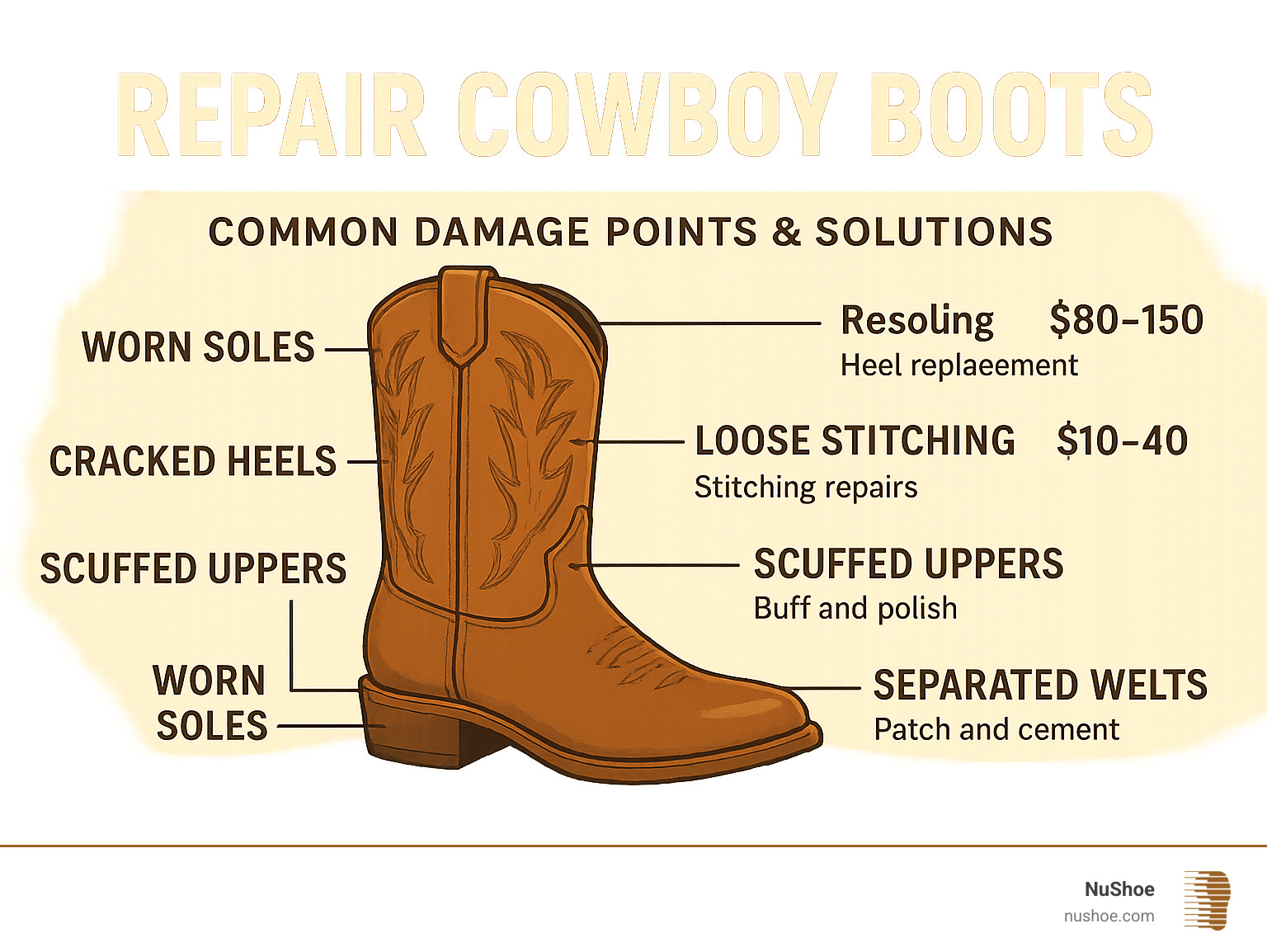
| Half-Sole Resole | Dress/Western Boots | Replaces only the front wear area; preserves the original heel block. | $65 - $90 |
| Full Resole | Work/Hiking Boots | Complete replacement of the ground-contact surface. | $110 - $160 |
| Heel Cap Replacement | All Footwear | Prevents uneven gait and protects the heel stack. | $30 - $50 |
| Protective Top-Soles | Leather Soles | Adds a thin rubber layer to prevent water damage to leather. | $40 - $60 |
| Welt Repair | Damaged/Older Boots | Rebuilds the structural "skeleton" of the boot. | $80 - $120 |
Leather Restoration and Conditioning
The red clay and humidity of Longview can be brutal on leather. A major part of how boot repair works involves chemical restoration.
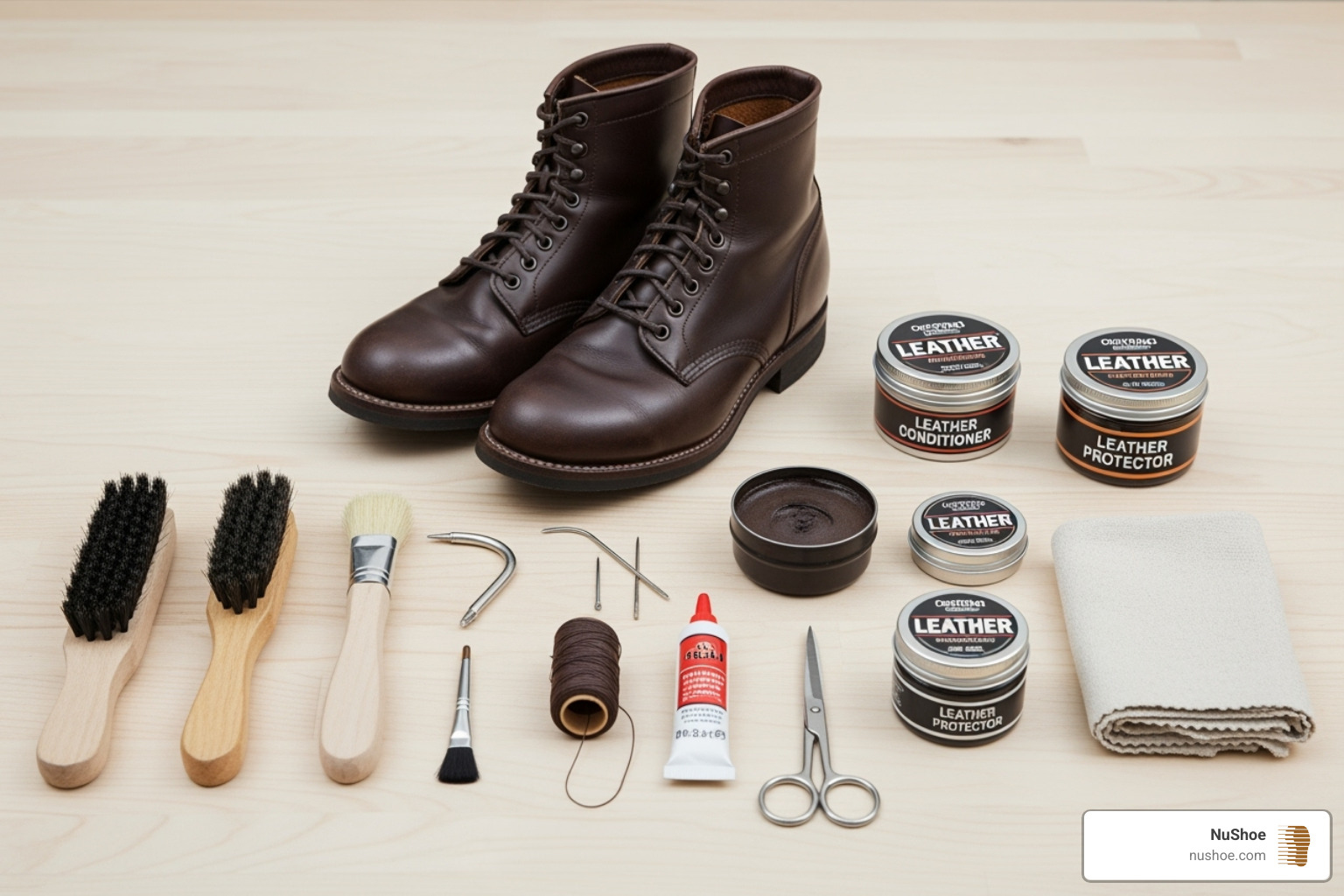
Cobblers use de-glazers to strip away layers of old wax and dirt that have trapped moisture against the hide. Once clean, they apply deep conditioners containing mink oil, neatsfoot oil, or lanolin. For western boots, specific dyes are used to restore the "pop" of the exotic grain. This isn't just cosmetic; dry leather becomes brittle and will eventually crack at the flex points (the "ball" of the foot). Once leather cracks through, it usually cannot be repaired, making preventative conditioning the most important part of boot longevity.
Choosing a Quality Cobbler in Longview
When looking for boot repair in the 75601 to 75605 zip codes, look for shops that display their machinery. Traditional cobbling requires heavy, specialized equipment that cannot be substituted with hand tools alone.
- Check the Thread Quality: Ask if they use waxed polyester or nylon thread. Waxed thread prevents water from "wicking" into the holes made by the needle.
- Inquire About Adhesives: Modern polyurethane glues are superior to old-fashioned contact cements for certain rubber soles. A knowledgeable cobbler will explain which they use and why.
- Review the Portfolio: Most reputable shops in 2026 maintain a social media presence or a physical book showing "before and after" photos of complex rebuilds, specifically on western boots where the stitching patterns are intricate.
Frequently Asked Questions
Is it worth repairing boots that cost less than $150?
Generally, no. Boots in this price range often use "cemented" construction and low-grade leather or synthetic uppers. The cost of a professional resole ($110+) would approach the cost of a new pair, and the upper leather may not have enough life left to justify the investment. Repair is best reserved for boots with high-quality uppers and Goodyear welt construction.
How many times can a pair of boots be resoled?
A well-cared-for pair of Goodyear welted boots can typically be resoled 3 to 5 times. Eventually, the leather welt itself will become too perforated from the stitching process and will need to be replaced (a process called "re-welting"). Once the welt is replaced, the cycle can essentially begin again.
How long does a typical boot repair take in Longview?
In 2026, the standard turnaround time for a full resole in Longview is 10 to 14 days. This allows for the proper curing of adhesives and the time needed for the cobbler to work through their "bench" of orders. Smaller repairs, like heel cap replacements or stretching, can often be done in 2 to 4 days.
Can a cobbler fix a hole in the side of my boot?
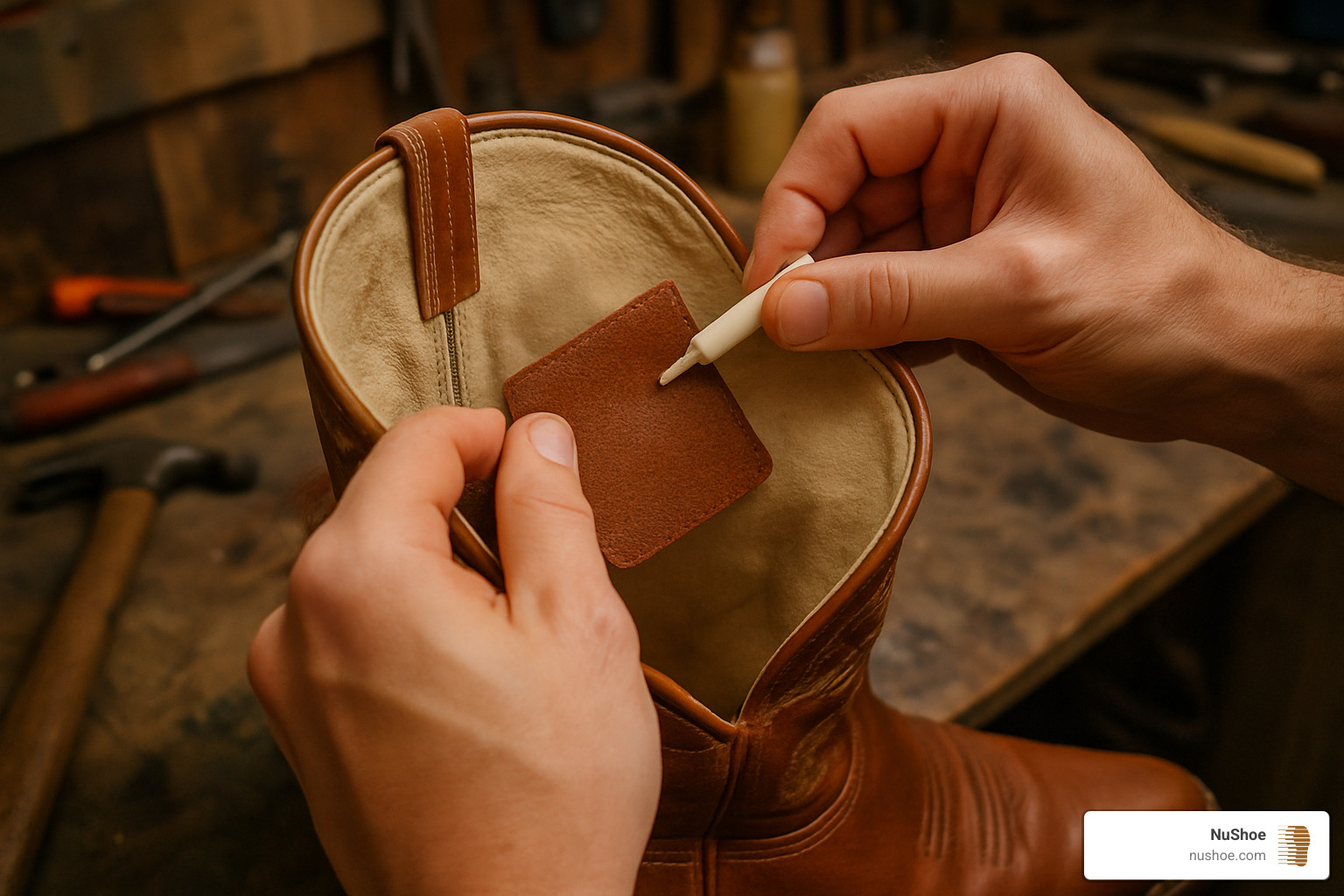
Yes, this is known as a patch. The cobbler will find a matching piece of leather, skive (thin) the edges so it doesn't create a pressure point against your foot, and sew or glue it over the hole. While functional, patches are usually visible, so they are more common on work boots than on dress boots.
Why do my boots squeak after a repair?
Squeaking usually occurs when two layers of material—typically the shank and the midsole—are rubbing against each other. A professional cobbler prevents this by applying a layer of glue or talcum powder around the shank during the reassembly process. If your boots squeak after a repair, the shop should be able to fix it by injecting a small amount of adhesive or lubricant.
Practical Recommendation
If your boots are showing signs of wear, do not wait until you can see your sock through the sole. The most cost-effective way to manage boot repair in Longview is to replace the heel caps and half-soles early. Once you wear through the outsole and begin grinding down the midsole or the welt, the repair cost can double. For those in high-impact jobs, a visit to the cobbler every six months for an inspection and deep conditioning is recommended to ensure the structural integrity of your footwear remains intact through 2026 and beyond.
Image Gallery