Does Life Insurance Pay for Suicidal Death in South Carolina?
Yes, life insurance in South Carolina generally pays a death benefit for suicide, provided the policy has been active for at least two years. Under South Carolina insurance law and standard policy provisions, if suicide occurs within t...
Yes, life insurance in South Carolina generally pays a death benefit for suicide, provided the policy has been active for at least two years. Under South Carolina insurance law and standard policy provisions, if suicide occurs within the initial two-year exclusion period, the insurer refunds paid premiums rather than paying the full death benefit.
Contents
Understanding the Suicide Clause in South Carolina
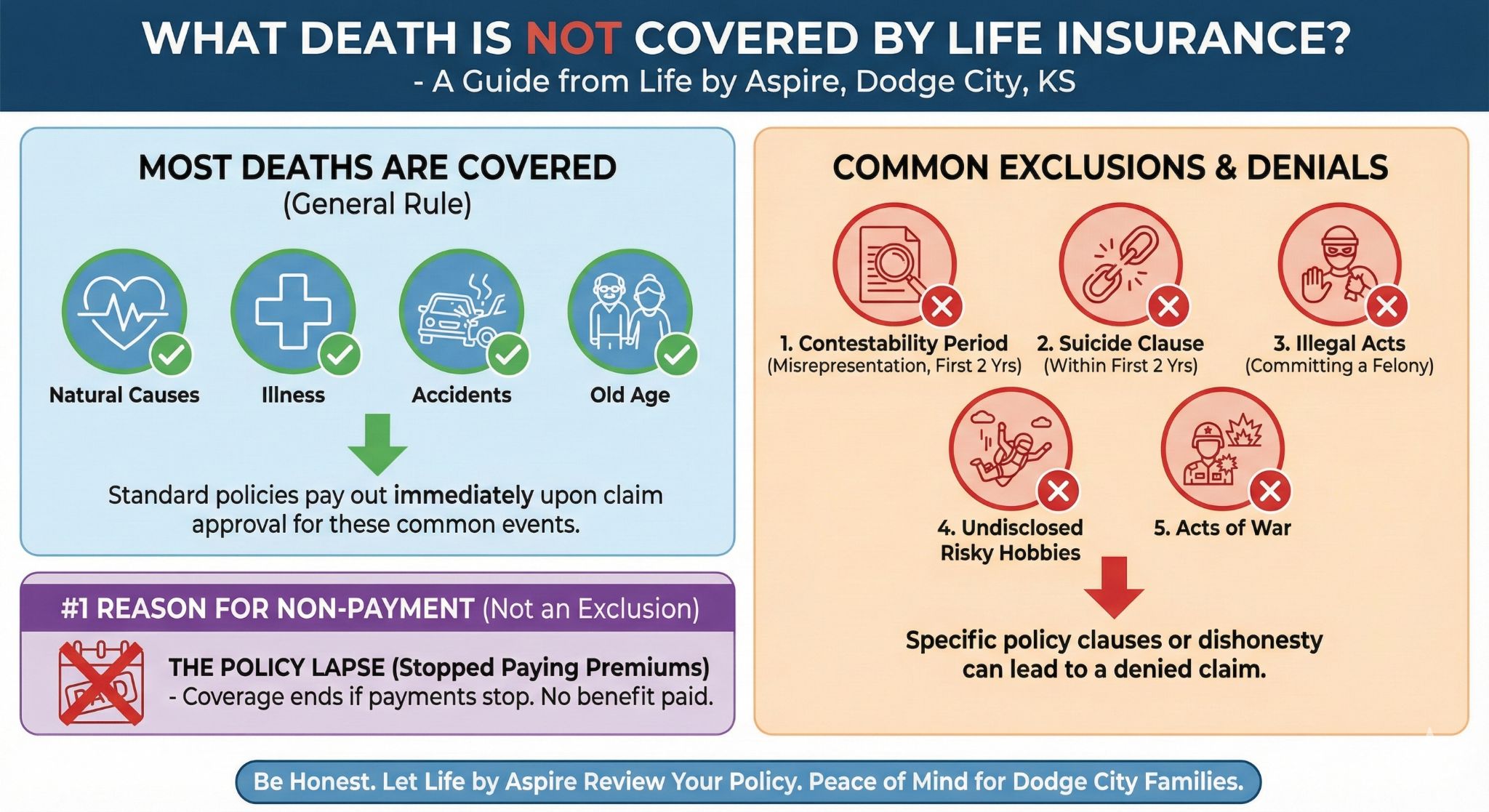
In South Carolina, life insurance contracts operate under state insurance regulations that permit insurers to include a standard suicide clause (also referred to as a suicide exclusion). Under South Carolina Code § 38-63-220, individual life insurance policies may limit coverage or exclude liability for death resulting from suicide within a specified period—typically two years—from the policy’s official issue date.
The primary purpose of this clause is to protect insurance providers against adverse selection, specifically preventing individuals from purchasing large coverage amounts with the immediate intent of ending their lives. Once this initial exclusion window lapses, the suicide clause no longer applies, and the policy treats death by suicide in the same manner as death by natural causes, illness, or an accident.
- Policy Inception / Effective Date
- Years 0 to 2: Exclusion Period
- Full death benefit is denied if death is ruled a suicide.
- Insurer refunds all premiums paid to date (minus loan balances).
- After 2 Years: Full Coverage Active
- Suicide is covered like any natural or accidental death.
- Full death benefit paid to named beneficiaries.
The Two-Year Contestability Period vs. The Suicide Clause
While people often discuss them together, the incontestability clause and the suicide exclusion clause are distinct legal provisions governed by South Carolina law:
- The Suicide Exclusion Clause: Directly addresses the cause of death. If the insured person dies by suicide within two years of policy issuance, the insurer is legally permitted to deny the death benefit claim and instead return the total premiums collected to the beneficiary.
- The Contestability Period: Also set at two years under South Carolina Code § 38-63-220(1)(b), this provision allows the insurer to review the original application for material misrepresentations, omissions, or fraud. If an applicant concealed severe medical conditions, depression, or previous suicide attempts on their application, the carrier may attempt to rescind the contract or deny a claim within those two years, independent of the suicide clause.
Key Factors That Influence Payouts in South Carolina
Whether a life insurance claim is paid after a death by suicide depends on several critical policy factors and situational variables under South Carolina law.
- Key Factors Impacting Suicide Claim Outcomes
- Policy Type (Group vs. Individual)
- Policy Status (Active vs. Reinstated)
- Rider Types (AD&D vs. Standard Term)
1. Individual vs. Group Life Insurance
- Individual Policies (Term and Whole Life): Almost universally enforce a rigid two-year suicide exclusion from the policy’s underwriting approval date.
- Employer-Sponsored Group Life Insurance: Basic group life insurance coverage provided through an employer often has different terms. Some group policies contain no suicide exclusion at all, meaning benefits may be payable immediately upon enrollment. However, supplemental or voluntary group coverage purchased above the basic employer-paid tier frequently includes a one- or two-year suicide exclusion.
2. Policy Reinstatement and the Exclusion Reset
If an individual life insurance policy lapses due to non-payment of premiums and the policyholder subsequently reinstates the coverage, South Carolina law allows the insurer to reset the two-year suicide clause and contestability period. The two-year countdown begins again on the official reinstatement date, not the original issue date. Beneficiaries facing a claim on a reinstated policy must verify when the policy was brought current.
3. Policy Upgrades and Coverage Increases
If a policyholder increases their death benefit amount after the initial policy purchase, the original coverage amount remains protected under the original timeline. However, the additional coverage amount typically triggers a new two-year exclusion period starting on the effective date of the coverage increase.
4. Accidental Death and Dismemberment (AD&D) Riders
Many life insurance policies include or are sold alongside Accidental Death and Dismemberment (AD&D) insurance. AD&D policies pay an additional benefit strictly for accidental deaths. Under standard insurance contracts across South Carolina, AD&D coverage explicitly excludes suicide, attempted suicide, and intentionally self-inflicted injuries under all circumstances, regardless of how many years the policy has been active.
Overview of Life Insurance Coverage Rules for Suicide in SC
The following matrix details how different life insurance scenarios and policy types handle death by suicide within South Carolina.
| Policy Type / Scenario | Timing of Death | Benefit Status | Financial Payout Outcome |
|---|---|---|---|
| Individual Term / Whole Life | Within 2 years of issue | Excluded | Full premiums paid returned to beneficiary |
| Individual Term / Whole Life | After 2 years of issue | Covered | Full death benefit paid to beneficiary |
| Reinstated Policy | Within 2 years of reinstatement | Excluded | Premiums paid since reinstatement returned |
| Employer Basic Group Life | Any time after enrollment | Varies (Often Covered) | Full death benefit paid (if policy has no exclusion) |
| Supplemental Group Life | Within 1–2 years of add-on | Excluded | Premiums for supplemental portion refunded |
| Accidental Death (AD&D) | Any time | Excluded | No payout ($0) under AD&D provision |
| Coverage Benefit Increase | Within 2 years of increase | Partial Coverage | Base coverage paid; increased portion premiums refunded |
The Investigation and Claims Process in South Carolina
When a life insurance claim involves a suicide or occurs within the two-year contestability window, insurance companies in South Carolina follow a rigorous review process before making a determination.
- Claim Submitted by Beneficiary
- Review Official Docs:
- Death Certificate
- SC Coroner's Report
- Toxicology Reports
- Evaluate Policy Timeline:
- Policy Active > 2 Years: Approve & Pay Full Benefit
- Policy Active < 2 Years: Verify Cause of Death & Application History
- Suicide: Refund Premiums
- Accidental: Pay Death Benefit
Official Cause of Death Determination
Under South Carolina law (SC Code Title 17, Chapter 7), county coroners or medical examiners are responsible for investigating non-natural deaths and determining the official cause and manner of death. The insurance company relies heavily on the official death certificate issued by the South Carolina Department of Health and Environmental Control (DHEC), along with the coroner's investigative report and autopsy or toxicology results.
- Determining Intent: For an insurer to deny a claim within the two-year window based on the suicide exclusion, the burden of proof rests on the insurance company to establish that the death was intentionally self-inflicted.
- Ambiguous Cases: If a death is ruled accidental (such as an unintentional medication overdose) rather than suicide, the suicide exclusion clause does not apply, and the full death benefit is payable even within the first two years, subject to standard contestability review.
Documents Required for Claim Submission
Beneficiaries filing a claim in South Carolina after a death by suicide should gather the following documentation:
- Completed Claimant Statement: The standard claim form supplied by the insurance carrier.
- Certified Copy of the Death Certificate: Must state the final manner and cause of death.
- Original Policy Document: Or the policy number and certificate of coverage.
- Coroner’s Report / Police Report: Required if the death occurred within the two-year contestability window or if the death certificate lists the manner of death as pending investigation.
What to Do If a Claim Is Delayed or Denied
If an insurance company denies or delays a life insurance claim involving suicide in South Carolina, beneficiaries have clear rights and recourse under state law.
1. Request a Written Explanation
If a carrier denies a claim or offers a premium refund instead of the death benefit, they must provide a written explanation detailing the specific policy provisions, legal clauses, and factual evidence relied upon for the decision.
2. Verify Policy Dates and Effective Windows
Carefully compare the policy's official issue date, application date, and effective date against the date of death. In some legal disputes, insurers incorrectly calculate the two-year window from the policy delivery date rather than the underwriting or effective date specified in the policy contract.
3. Contact the South Carolina Department of Insurance (SCDOI)
The South Carolina Department of Insurance regulates state-licensed insurers. If you believe an insurer is unfairly delaying a claim, misinterpreting the two-year statutory period, or wrongfully asserting suicide without sufficient coroner evidence, you can file a formal consumer complaint with the SCDOI Office of Consumer Services.
4. Consult an Insurance Law Attorney
If substantial benefit amounts are in dispute—particularly in cases involving ambiguous coroner reports, policy reinstatements, or alleged misrepresentations during the application process—consulting a qualified South Carolina legal advisor specializing in insurance litigation is recommended.
Frequently Asked Questions
Does life insurance pay for suicide in South Carolina after two years?
Yes. Once an individual life insurance policy has been in effect for full two years from its official issue date, South Carolina policies cover suicide. The insurance company will pay the full death benefit to the named beneficiaries, assuming all premium payments were kept current.
What happens if suicide occurs within the first two years of a policy in SC?
If the insured dies by suicide during the initial two-year exclusion period, the insurance company will not pay the death benefit. However, the insurer is required to refund all premiums paid toward the policy up to that point to the designated beneficiary or the insured's estate.
Does group life insurance through a South Carolina employer cover suicide?
Basic group life insurance offered by employers often does not contain a suicide exclusion clause, allowing benefits to be paid regardless of how long the policy has been active. However, voluntary or supplemental group life coverage purchased independently through an employer frequently enforces a one- or two-year suicide exclusion. Check the specific summary plan description (SPD).
Does an Accidental Death and Dismemberment (AD&D) policy pay for suicide?
No. AD&D insurance policies specifically exclude suicide, attempted suicide, and self-inflicted injuries under all circumstances. AD&D policies only cover deaths directly resulting from sudden, unexpected accidents.
Can an insurer deny a suicide claim after two years due to depression on the application?
After the two-year contestability period passes, an insurer in South Carolina generally cannot contest a policy or deny a claim based on statements or omissions in the initial application, including unstated mental health conditions or depression, absent proven intentional fraud as permitted by state law.
Important Notice & Crisis Support
Disclaimer: This article provides general educational information regarding South Carolina insurance laws and policy provisions. It does not constitute formal legal, financial, or medical advice. For specific policy disputes, consult a licensed South Carolina insurance attorney or contact the South Carolina Department of Insurance.
If you or someone you know is struggling with difficult emotions, depression, or thoughts of self-harm, support is available 24 hours a day, 7 days a week:
- 988 Suicide & Crisis Lifeline: Call or text 988 (Available free, confidentially, and nationwide in the U.S.).
- The Crisis Text Line: Text HOME to 741741 to connect with a crisis counselor.
- Veterans Crisis Line: Dial 988 and press 1, or text 838255.
Image Gallery