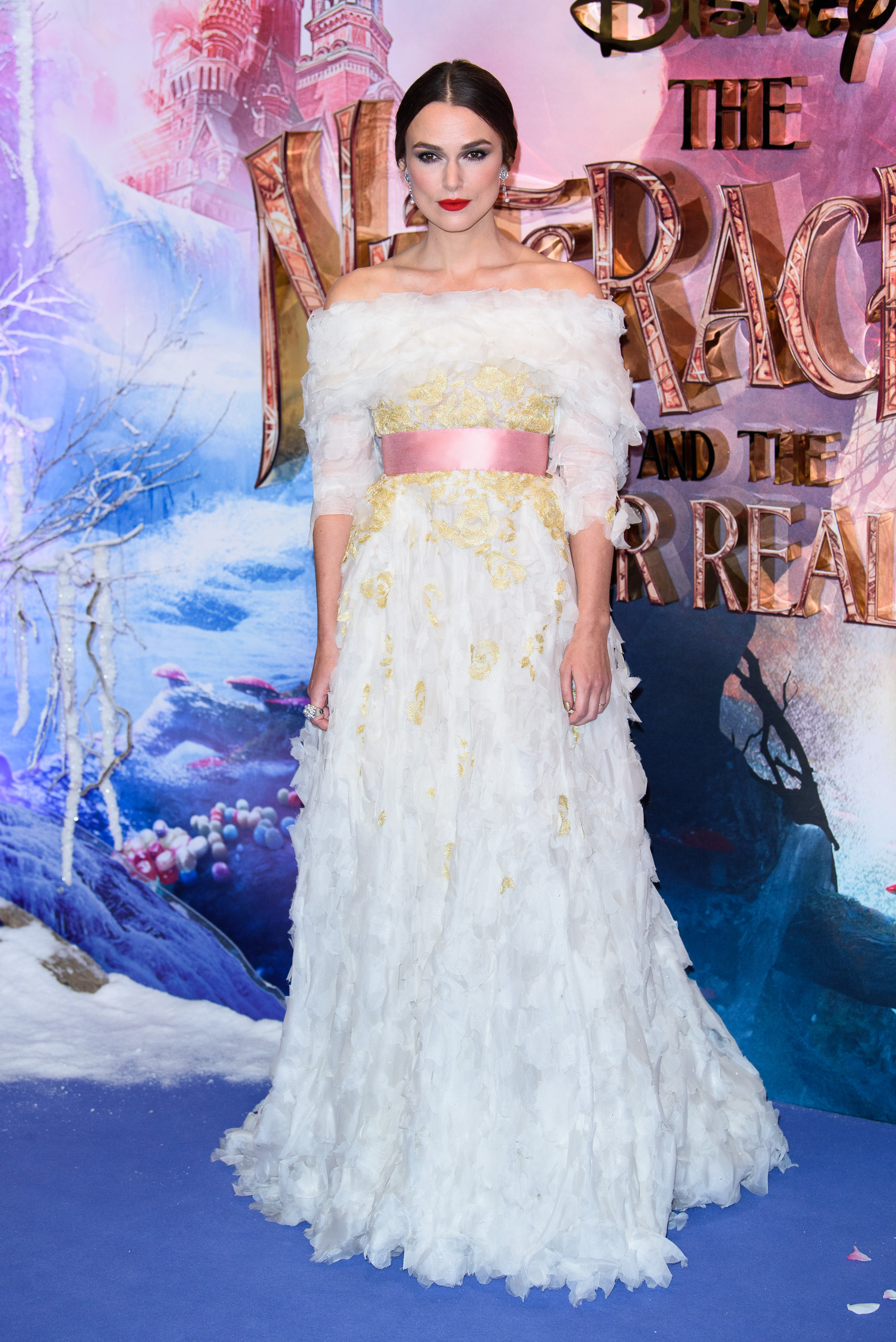
Keira Knightley in The Nutcracker and the Four Realms: Character Analysis, Twist, and Production Design
In Disney’s 2018 fantasy film The Nutcracker and the Four Realms, Keira Knightley portrays the Sugar Plum Fairy, the Regent of the Land of Sweets. Knightley delivers a high-camp, theatrical performance defined by a distinct high-pitche...
In Disney’s 2018 fantasy film The Nutcracker and the Four Realms, Keira Knightley portrays the Sugar Plum Fairy, the Regent of the Land of Sweets. Knightley delivers a high-camp, theatrical performance defined by a distinct high-pitched voice and cotton-candy hair, serving as Clara’s primary guide before revealing her role as the film's central antagonist.
Contents
The Character Arc: From Benevolent Regent to Central Antagonist
When Clara Stahlbaum (Mackenzie Foy) first arrives in the mystical parallel world created by her late mother, Marie, the Sugar Plum Fairy is introduced as her warmest advocate. As the Regent of the Land of Sweets, Knightley’s character project an aura of sweet, motherly concern mixed with childlike exuberance. She welcomes Clara into the shimmering palace, introduces her to the leaders of the other realms, and acts as the primary historian explaining the fractured state of their world.
The narrative establishes a classic fantasy setup: the Fourth Realm (formerly the Land of Amusements) has rebelled under the control of Mother Ginger (Helen Mirren). Sugar Plum convinces Clara that Mother Ginger is a tyrant intent on destroying the peace of all Four Realms. She guides Clara toward retrieving a specialized key that can power an engine capable of bringing soldiers—and inanimate toys—to life.
- Clara's Arrival
- Guided by Sugar Plum
- Key Retrieved
- Betrayal Revealed
- Conflict Resolved
The true turn of the film occurs once Clara retrieves the key and hands it to Sugar Plum. Rather than using the key to protect the realms, the Sugar Plum Fairy uses the engine to animate an army of toy soldiers for total conquest. The narrative reveals that Marie Stahlbaum was the original creator and queen of the realms, and Sugar Plum felt abandoned when Marie left to return to the human world. Her drive for control stems from a mix of resentment, obsession with power, and a rejection of any authority other than her own.
This unexpected turn shifts the character from a supportive mentor archetype to a megalomaniacal usurper. Knightley transforms her physical performance during this shift, shedding the sugary sweetness in favor of sharp, militaristic commands and erratic, manic energy.
Acting Choices and Vocal Performance
Keira Knightley’s interpretation of the Sugar Plum Fairy represents one of the most eccentric acting choices in modern live-action Disney adaptations. Rather than delivering a subdued or classical performance, Knightley leaned fully into high-camp theatricality, designing a voice and physicality that mimicked the delicate yet mechanical nature of music boxes and spun sugar.
The Origin of the Voice
Knightley revealed in production interviews that her unique voice for the character was directly inspired by Tchaikovsky’s famous musical score—specifically the Dance of the Sugar Plum Fairy. The piece prominently features the celesta, a keyboard instrument that produces a light, bell-like, tinkling sound.
To recreate that auditory feel through speech, Knightley adopted an octave-spanning, high-pitched vocal cadence with a pronounced upper-register squeak. The voice sounds intentionally artificial, echoing the uncanny nature of a porcelain doll or automated music box, which serves as subtle foreshadowing for her character's underlying deceit.
Physicality and Mannerisms
Alongside her vocal pitch, Knightley incorporated distinct physical traits into the role:
- Pouting and Facial Exaggeration: The character frequently flutters her eyelids, purses her lips into extreme shapes, and holds playful poses to project childlike innocence.
- Gestural Movement: Her hands move with floating, fluid gestures that resemble decorative cake toppers, contrasting with the sharp, precise movements she displays after her villainous reveal.
- Sugar Nibbling: Throughout her early scenes, she habitually nibbles on pieces of her own cotton-candy hair, reinforcing the literal sweets motif of her domain.
This deliberate exaggeration divided critics upon release, but it provided the film with a vivid, memorable presence that separated the character from traditional fairy-tale archetypes.
Costume, Hair, and Visual Aesthetics
The visual presentation of Keira Knightley in The Nutcracker and the Four Realms was overseen by Oscar-winning costume designer Jenny Beavan, working alongside hair and makeup departments to create a look that felt simultaneously regal, edible, and delicate.
Costume Architecture:
- Palette: Deep magenta, lavender, and dusty pink organza
- Silhouette: 19th-century Victorian bustle dress combined with rococo flourishes
- Material Details: 100+ meters of fabric, hand-sewn metallic trim, crystallized accents
- Hair & Makeup: Towering pink cotton-candy wig, porcelain foundation, pearlized highlights
The Sugar Plum Dress Construction
The gown worn by Knightley throughout the majority of the film is a masterclass in costume engineering. Designed to resemble crystallized sugar and refined pastries, the dress incorporates layers of pleated organza, tulle, and satin.
- Color Palette: The dress transitions from deep magenta at the base to soft pastel lavenders and translucent pinks near the bodice, mirroring spun sugar.
- Structural Detail: The silhouette draws inspiration from both 19th-century Victorian gowns and 18th-century French court fashion, utilizing a wide skirt structure to give the character an ethereal, floating stance when walking through the palace halls.
- Fabric Volume: Over 100 meters of custom-dyed fabric were used in constructing the skirt, layered to capture light during camera pans and dance sequences.
Wig and Makeup Artistry
Complementing the dress is the character's iconic hair architecture. Designed as a towering, sculpted arrangement of pink and violet curls, the wig was styled to resemble freshly spun cotton candy.
The makeup department applied a pale, porcelain-like foundation to mimic the smooth texture of fine icing or sugar paste, finished with pearlized highlight powders across the cheekbones and eyelids. When Sugar Plum turns villainous in the final act, subtle adjustments to lighting and makeup framing highlight the sharper angles of her features, emphasizing her transition from delicate confectionery to cold tyrant.
Comparison of Realm Regents in the Film
To understand the dynamic between the Sugar Plum Fairy and the other leaders within the Four Realms, it is helpful to evaluate how each regent reflects their respective realm's theme and narrative role.
| Realm | Regent / Leader | Actor | Narrative Role & Alignment | Visual Design Theme |
|---|---|---|---|---|
| Land of Sweets | Sugar Plum Fairy | Keira Knightley | Primary antagonist; deceives Clara to seize absolute power | Confectionery pinks, cotton candy, metallic organza |
| Fourth Realm (Amusements) | Mother Ginger | Helen Mirren | Misunderstood guardian; protects the balance of the realms | Marionette strings, cracked porcelain, circus motifs |
| Land of Snowflakes | Shiver | Richard E. Grant | Neutral diplomatic regent; seeks peaceful coexistence | Ice-blue robes, frosted trim, crystalline crown |
| Land of Flowers | Hawthorne | Eugenio Derbez | Jovial ceremonial regent; easily swayed by palace politics | Floral appliques, vibrant botanical colors, leaf motifs |
This structure shows how the Sugar Plum Fairy's ambition disrupts an otherwise balanced system of regional regents, forcing Clara to re-evaluate who her true allies are within the realm.
Adaptation Differences: Film vs. Original Ballet and Book
The portrayal of the Sugar Plum Fairy in Disney's 2018 film diverges significantly from both E.T.A. Hoffmann's original 1816 story The Nutcracker and the Mouse King and Pyotr Ilyich Tchaikovsky’s 1892 ballet adaptation.
- Original Ballet (1892)
- Benevolent host
- Solitary dance featured
- Welcomes Clara without conflict
- Disney Film (2018)
- Disguised main villain
- Active political conspirator
- Seizes military power via machinery
The Ballet Persona
In Tchaikovsky's ballet, the Sugar Plum Fairy is purely a benevolent figurehead. She rules the Kingdom of Sweets and presents a divertissement (a series of celebratory dances) to honor Clara (or Marie, depending on the production) for saving the Nutcracker Prince. She has no darker motives, engages in no political maneuvering, and does not act as an antagonist. Her primary role is musical and choreographic, serving as the climax of Act II with her famous pas de deux.
The 2018 Film Reimagining
Screenwriter Ashleigh Powell and the film’s creative team reconceptualized the character entirely to provide a central antagonist for a blockbuster narrative structure. In the film:
- Political Ambition: Sugar Plum is no longer just a welcoming hostess; she is an ambitious politician seeking to unify all four realms under her sole authority.
- Technological Threat: She leverages the realm's hidden technology—the scale-altering machine designed by Marie—to turn inanimate tin soldiers into an invasive army.
- Complex Relationship with Marie: Her villainy stems directly from personal abandonment issues related to Clara's mother, adding an emotional layer absent from the original ballet.
Production Context and Reception
The Nutcracker and the Four Realms was developed as part of Disney's ongoing push to adapt classic fairy tales and literary properties into live-action visual spectacles. Directed by Lasse Hallström with additional photography directed by Joe Johnston, the film focused heavily on visual world-building, set design, and digital effects.
Critical Response to Knightley's Performance
Upon the film's release in November 2018, response from film critics was mixed regarding the overall plot, but Knightley's performance was frequently highlighted as a standout element.
- Praise for Commitment: Many critics appreciated that Knightley committed fully to an unconventional, exaggerated performance, noting that her high-camp approach injected energy into an otherwise straightforward fantasy plot.
- Polarizing Reception: Other reviewers found the high-pitched vocal delivery and eccentric mannerisms distracting, arguing that the tone clashed with the film's darker visual elements.
Despite differing opinions on the stylistic choice, film scholars and retrospective reviewers frequently cite Knightley's Sugar Plum Fairy as one of the boldest character interpretations in Disney’s live-action catalog, standing alongside performances like Johnny Depp’s Mad Hatter or Angelina Jolie’s Maleficent in terms of commitment to stylized character acting.
Frequently Asked Questions
Did Keira Knightley perform her own stunts and physical comedy in the movie?
Keira Knightley performed the majority of her character's physical mannerisms, dance-like gestures, and comedic reactions. For complex action sequences involving giant mechanical soldiers or high-wire visual effects work, professional stunt doubles and visual effects compositing were utilized.
Why did the Sugar Plum Fairy become evil in the film?
In the film's lore, the Sugar Plum Fairy felt abandoned when Clara's mother, Marie, left the Four Realms to return to her family in London. This sense of rejection turned into bitterness, driving Sugar Plum to seek complete control over the realms so she would never be left vulnerable again.
What accent does Keira Knightley use in the movie?
Knightley uses a heavily stylized, high-pitched vocal register that blends elements of an upper-crust British accent with artificial, musical inflections. The voice was designed to sound like a celesta music box rather than a real geographical dialect.
Who directed Keira Knightley in The Nutcracker and the Four Realms?
The film was directed by Lasse Hallström and Joe Johnston. Hallström led principal photography, while Johnston directed additional photography during post-production. Both directors worked with Knightley to shape the character's unique tone and physical presence.
Where was Keira Knightley's costume for the film manufactured?
The costume was created by costume designer Jenny Beavan and her team at Pinewood Studios in the United Kingdom. The dress involved months of hand-crafting, dyeing, and structural framing to ensure it could withstand the motion required for filming.
Viewing Recommendations and Further Exploration
For viewers and cinema enthusiasts interested in analyzing Keira Knightley's performance in The Nutcracker and the Four Realms, the following steps offer a complete viewing and educational experience:
- Watch the Film with Audio Commentary: Stream The Nutcracker and the Four Realms on platforms such as Disney+ or view the Blu-ray release to access behind-the-scenes featurettes focusing on costume design, vocal choices, and practical set construction.
- Compare with Classical Ballet Performances: Watch a traditional production of Tchaikovsky’s The Nutcracker (such as the Royal Ballet or New York City Ballet productions) to evaluate how the original dance-focused Sugar Plum Fairy contrasts with Knightley’s dramatic narrative interpretation.
- Explore Jenny Beavan’s Costume Portfolio: Examine the documented design archives of costume designer Jenny Beavan to understand how historical Victorian textiles were altered to create the fantasy costumes used across all Four Realms.
Image Gallery