Finding the Best Debt Management Plan: A Comprehensive Guide to Credit Counseling and Debt Relief
A Debt Management Plan (DMP) is a structured repayment program offered by accredited non-profit credit counseling agencies designed to help consumers pay off unsecured debts—primarily credit cards—within three to five years. By negotia...
A Debt Management Plan (DMP) is a structured repayment program offered by accredited non-profit credit counseling agencies designed to help consumers pay off unsecured debts—primarily credit cards—within three to five years. By negotiating directly with creditors, agencies lower interest rates, waive late fees, and consolidate multiple debt payments into a single monthly disbursement.
Contents
What Is a Debt Management Plan and How Does It Work?
A Debt Management Plan is not a loan, nor is it debt settlement. It is an organized repayment agreement facilitated by a certified credit counselor who acts as an intermediary between you and your creditors. When high-interest credit card debt becomes unmanageable, maintaining minimum payments often does little to reduce the principal balance due to compound interest rates exceeding 20% or 25% APR.
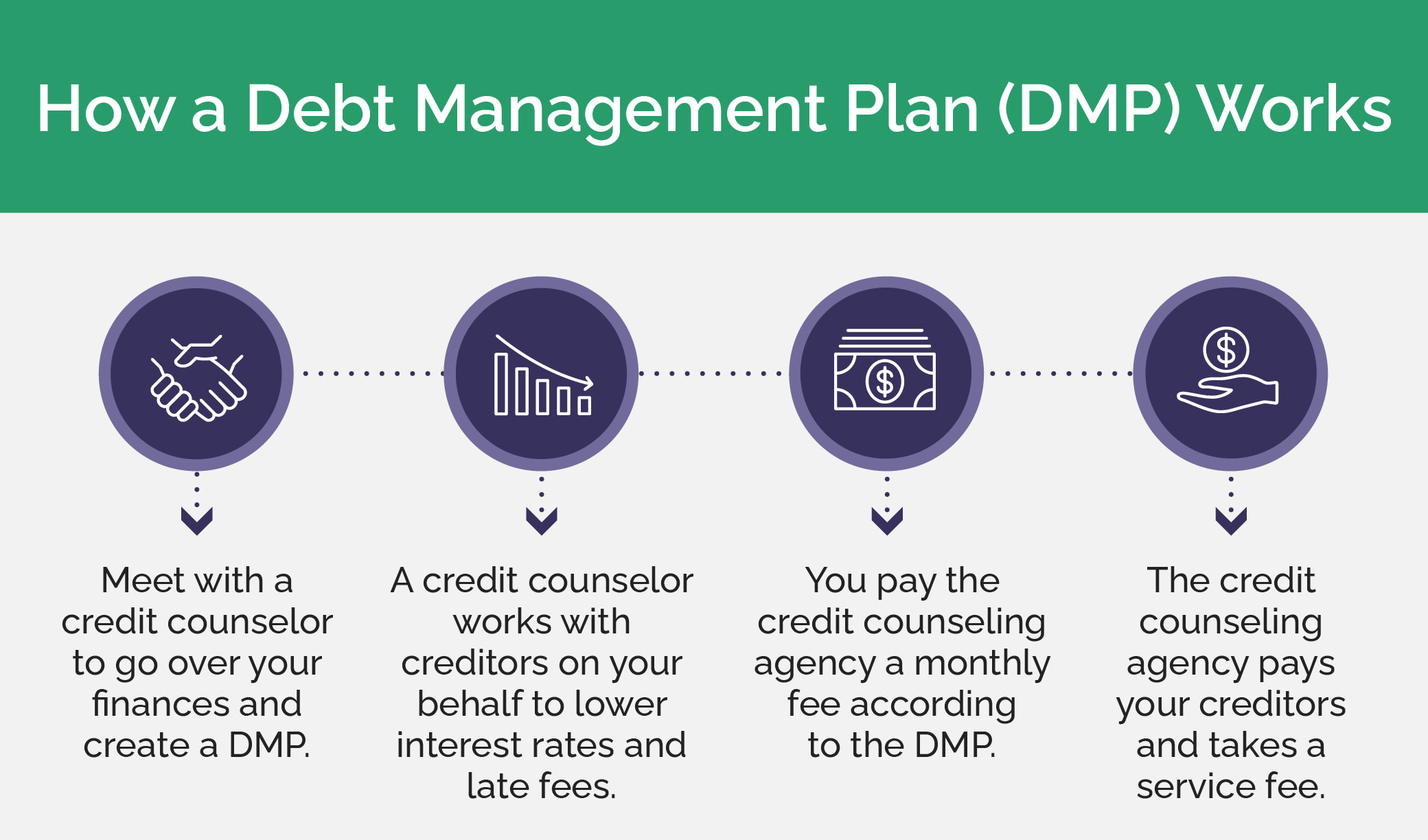
Under a DMP, you deposit a set monthly payment to the credit counseling organization. The organization then distributes those funds to your respective creditors based on a pre-negotiated schedule. In exchange for your commitment to a structured payoff plan, creditors agree to extend specific concessions, which typically include:
- Substantial APR Reductions: Creditors reduce interest rates to single-digit percentages (often between 0% and 8%), allowing a much larger portion of your monthly payment to apply directly to the principal balance.
- Waiver of Fees: Over-limit and late payment fees are typically waived once the plan is established.
- Re-aging Accounts: Accounts that were previously delinquent are brought to a "current" status after a series of consistent, consecutive payments under the plan.
- Cessation of Collection Activities: Collection calls, legal threats, and demand letters from participating creditors cease once enrollment is confirmed.
To participate, you must agree to close the credit card accounts included in the plan and refrain from opening new lines of credit during the repayment period.
The Role of Non-Profit Credit Counseling Agencies
Not all debt relief companies operate under the same regulatory standards. The best debt management plans are administered by non-profit 501(c)(3) credit counseling agencies. These organizations are audited by independent bodies and must adhere to strict state regulations, including caps on administrative fees.
Reputable agencies are members of primary industry associations, such as the National Foundation for Credit Counseling (NFCC) or the Financial Counseling Association of America (FCAA). Counselors certified through these organizations undergo rigorous training in budgeting, debt management, and consumer credit law.
Evaluating Top Non-Profit Credit Counseling Providers
Choosing the right provider is critical to ensuring your debt management plan is cost-effective, legal, and tailored to your household budget. When reviewing potential agencies, verify their accreditation, licensing in your state, fee structure, and client service options.
The following table compares key features across major accredited non-profit credit counseling providers:
| Provider Name | Accreditation | Typical Monthly Fee Range | Average Timeline | Key Distinguishing Features |
|---|---|---|---|---|
| Money Management International (MMI) | NFCC / Council on Accreditation (COA) | $25 – $50 (state capped) | 36 – 60 Months | Largest non-profit provider in the U.S.; offers 24/7 online account management and phone counseling. |
| GreenPath Financial Wellness | NFCC / COA | $10 – $50 (state capped) | 36 – 60 Months | Extensive network of physical branch locations; integrated housing and student loan counseling services. |
| InCharge Debt Solutions | NFCC / COA | $20 – $50 (state capped) | 36 – 60 Months | Strong digital portal for tracking payment disbursements; online educational resources and tools. |
| Take Charge America | NFCC / COA | $25 – $50 (state capped) | 36 – 60 Months | Specializes in integrating debt management with student loan repayment strategies. |
| Apprisen | NFCC / COA | $20 – $45 (state capped) | 36 – 48 Months | Personalized financial coaching models with a focus on post-program wealth building and budgeting. |
Note: Setup fees ($0 to $50) and monthly maintenance fees vary by state law and household income. Fees are frequently waived for individuals experiencing severe financial hardship.
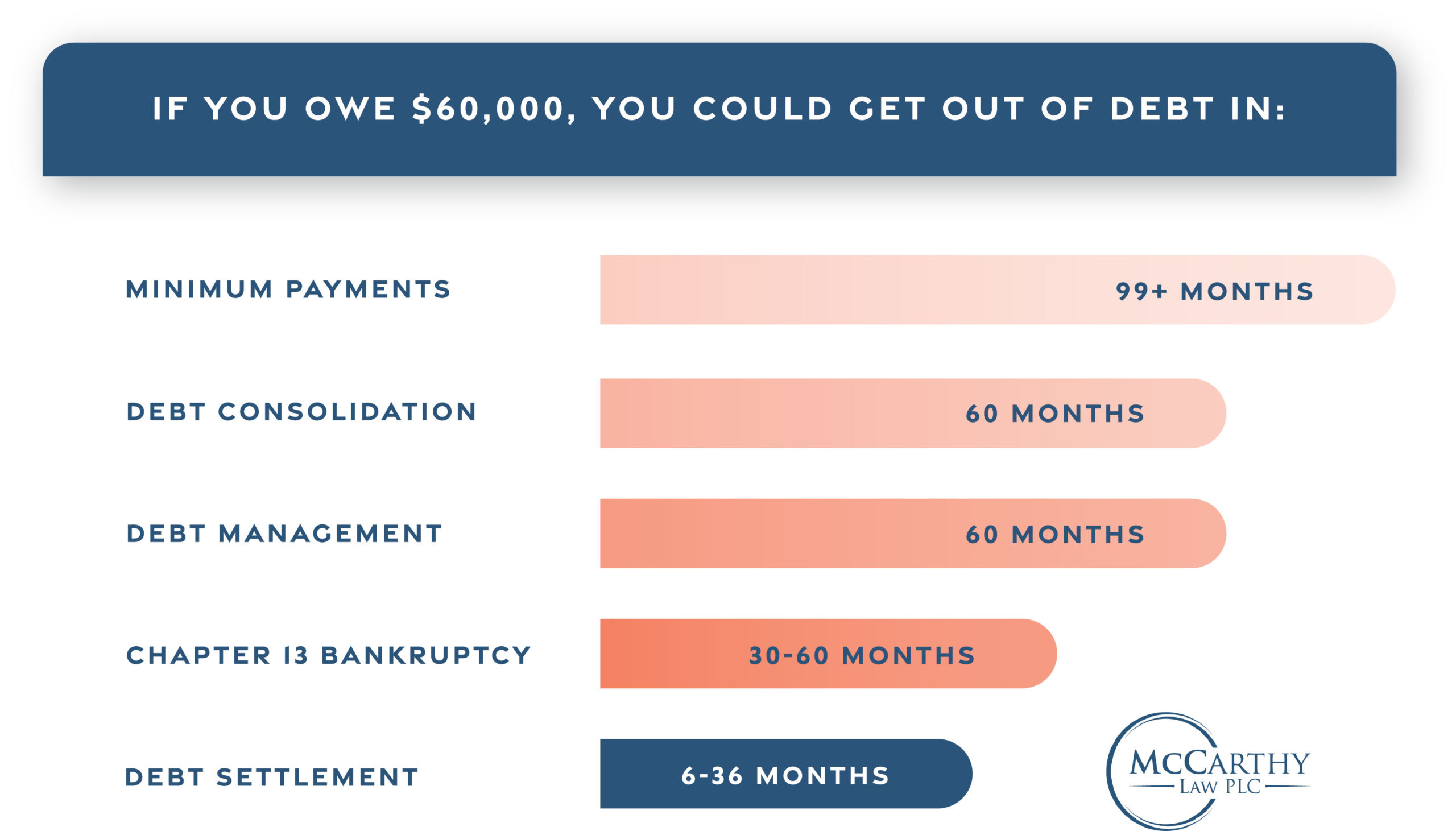
Debt Management Plan vs. Alternative Debt Relief Options
Understanding how a Debt Management Plan compares to other debt relief strategies ensures you select the method best aligned with your financial standing and long-term goals.
- Evaluate Debt Level
- Substantial Income & Credit Score Intact?
- Consolidation Loan (Full principal, lower APR)
- Debt Management Plan (DMP) (Full principal, reduced APR)
- Severe Hardship & Low/No Recovery?
- Debt Settlement (Reduced principal, high risk)
- Chapter 7 / 13 Bankruptcy (Court-ordered discharge/repay)
- Substantial Income & Credit Score Intact?
1. DMP vs. Debt Consolidation Loans
A debt consolidation loan replaces multiple credit card debts with a single new loan from a bank, credit union, or online lender.
- Credit Impact: Consolidating via a personal loan does not require closing accounts immediately and can temporarily boost your credit score by lowering your credit utilization ratio.
- Eligibility: Requires a good-to-excellent credit score (typically 670+) to secure an interest rate low enough to make consolidation worthwhile.
- Risk: If you lack financial discipline, clearing credit card balances with a loan can tempt you to run up new balances, doubling your total debt load. A DMP enforces discipline by closing participating accounts.
2. DMP vs. Debt Settlement
Debt settlement involves hiring a commercial company (or negotiating yourself) to pay a lump-sum amount that is less than the total balance owed.
- Principal Reduction: Settlement aims to discharge a portion of the principal balance (e.g., paying 50 cents on the dollar).
- Credit Damage: Settlement requires you to stop making payments on your accounts for several months to force creditors into negotiations. This severely damages your credit score with late payments, collection notices, and potential charge-offs.
- Financial and Tax Risks: Unpaid balances forgiven through debt settlement may be treated as taxable income by the Internal Revenue Service (IRS). In contrast, a DMP repays 100% of the principal owed, avoiding tax liabilities and severe credit score destruction.
3. DMP vs. Chapter 7 and Chapter 13 Bankruptcy
Bankruptcy is a formal legal proceeding handled in federal court.
- Chapter 7: Liquidates non-exempt assets to discharge eligible unsecured debt within three to six months. It remains on your credit report for 10 years and requires passing a strict income-based means test.
- Chapter 13: A court-mandated 3-to-5-year repayment plan supervised by a trustee. While similar in duration to a DMP, Chapter 13 becomes a matter of public legal record, negatively impacts your credit for 7 years, and carries high legal fees.
Step-by-Step Guide: How to Enroll in a Debt Management Plan
Enrolling in the best debt management plan for your situation involves a structured, step-by-step evaluation process conducted alongside a certified financial counselor.
- Step 1: Initial Financial Counseling & Budget Analysis
- Step 2: Debt & Creditor Assessment
- Step 3: Proposal Submission & Negotiation
- Step 4: Plan Acceptance & Account Closures
- Step 5: Automated Single Monthly Payments & Tracking
Step 1: Complete an Initial Financial Assessment
Contact an accredited non-profit credit counseling agency to schedule a free, confidential consultation. You will present your total household income, monthly living expenses (rent/mortgage, utilities, food, insurance), and detailed account statements for all debts.
Step 2: Receive a Tailored Action Plan
The counselor will analyze your cash flow and determine whether a DMP is the most viable option. If your budget is balanced enough to manage a single, reduced monthly payment—and your debt consists predominantly of eligible unsecured accounts—the counselor will draft a formal DMP proposal.
Step 3: Creditor Proposal and Concession Verification
The agency submits the proposed repayment terms to each of your creditors. Creditors review the plan and formally accept the standardized concession terms they have established with the credit counseling organization.
Step 4: Plan Activation and Account Closure
Once participating creditors approve the proposal, you sign a DMP agreement with the counseling agency. You will then close all credit card accounts enrolled in the plan to prevent further debt accumulation.
Step 5: Begin Consolidated Monthly Payments
You make one fixed monthly payment directly to the agency on a set date each month. The agency distributes the funds to your creditors. You must continue monitoring your monthly statements from both the credit counseling agency and your individual creditors to verify that payments arrive on time and that interest rate concessions are applied correctly.
Legal Protections, Fee Structures, and Regulations
The debt relief industry is regulated at both the federal and state levels to protect consumers from predatory practices.
Federal Trade Commission (FTC) Regulations
Under the Telemarketing Sales Rule (TSR) enforced by the Federal Trade Commission, it is illegal for debt relief companies to charge upfront fees before altering your debt terms or providing services. While non-profit 501(c)(3) credit counseling agencies are exempt from certain TSR provisions, industry standards set by the NFCC strictly govern upfront charges.
Fee Caps and Transparent Disclosures
Non-profit credit counseling agencies charge small setup and monthly administrative fees to cover program overhead. According to state laws across the United States:
- Setup Fees: Typically range between $0 and $50.
- Monthly Fees: Capped by state regulations, usually maxing out between $25 and $50 per month, regardless of how many credit accounts are included in the plan.
- Hardship Waivers: Agencies are required by regulatory standards to waive setup and monthly fees if a consumer’s income falls below federal poverty guidelines or if paying the fee would cause severe financial distress.
Consumers can review comprehensive debt relief guidance and consumer rights direct from the Consumer Financial Protection Bureau (CFPB) to ensure their selected agency operates transparently.
How a Debt Management Plan Affects Your Credit Score
A Debt Management Plan impacts your credit profile differently in the short term versus the long term. Understanding these dynamics prevents surprises on your credit reports.
- Credit Score Timeline
- Initial Enrollment (Months 1-3)
- Temporary dip due to account closures (lowered average age of accounts & reduced overall credit limit).
- Mid-Program (Months 6-24)
- Rapid decrease in Credit Utilization Ratio.
- Consistent 100% on-time payment history established.
- Completion (Months 36-60)
- High credit score recovery due to zero unsecured balance and clean payment record. DMP notations removed.
- Initial Enrollment (Months 1-3)
Initial Impact: Temporary Dip
During the first few months of a DMP, your credit score may experience a modest decline. This occurs because creditors require enrolled accounts to be closed. Closing credit accounts impacts two major credit scoring factors:
- Credit Utilization Ratio: Closing cards reduces your total available credit limit, which initially increases your utilization percentage if you hold balances elsewhere.
- Average Age of Accounts: Closing older credit accounts can eventually reduce the average age of your credit history over time.
Long-Term Impact: Significant Recovery
As you progress through the plan, the positive credit effects generally outweigh the initial drop:
- Consistent On-Time Payments: Payment history accounts for roughly 35% of your credit score calculation under models like FICO and VantageScore. Successful monthly payments through a DMP establish a steady record of on-time history.
- Substantial Balance Reduction: As principal balances drop, your overall credit utilization ratio decreases dramatically, driving steady credit score improvements.
The "DMP" Notation on Credit Reports
While enrolled, some creditors place a temporary note on your credit report stating: "Account managed by a credit counseling service." This notation does not affect calculated credit scores directly. However, outside lenders evaluating new credit applications during your plan may view the notation as an indicator that your budget is restricted. The notation is removed entirely once the account is paid off and you complete the program.
Common Mistakes to Avoid During a Debt Management Plan
To complete a 3-to-5-year repayment plan successfully, avoid these frequent operational errors:
- Failing to Stop Using Credit: Enrolling in a DMP requires a shift to a cash- or debit-based budget. Opening new credit cards or taking out personal loans while on a DMP violates your agreement and can prompt creditors to revoke interest rate concessions.
- Stopping Payments Too Early: Do not stop paying your creditors directly until you receive written confirmation that the creditor has accepted the DMP proposal and integrated it into their billing system. Stopping payments prematurely can lead to missed payment reports and late fees.
- Ignoring Monthly Creditor Statements: Always compare your monthly credit card statements against the disbursement statements provided by your credit counseling agency. Verify that the reduced APR has been applied and that payments are posted prior to due dates.
- Selecting an Unaccredited Agency: Avoid for-profit companies that label themselves as "debt management" providers while collecting high upfront fees or advising you to stop communicating with your creditors entirely. Always confirm membership with the NFCC or FCAA.
Frequently Asked Questions
What types of debt can be included in a Debt Management Plan?
DMPs are designed specifically for unsecured debts. Eligible accounts include credit cards, department store cards, gas cards, and unsecured personal loans. Some agencies can also integrate delinquent utility bills or medical debts. Secured debts (mortgages, auto loans) and federal student loans cannot be included in a DMP; federal student loans should be managed through federal income-driven repayment (IDR) options instead.
Can I keep one credit card open for emergencies while on a DMP?
In most cases, no. Participating creditors require all revolving unsecured credit card accounts to be closed upon entering a DMP to ensure you do not accumulate additional debt. Some agencies permit an exception for a business card if required for employment, or a single card with a zero balance reserved strictly for travel/emergencies, provided the creditor permits it.
How long does it take to complete the best debt management plan?
The standard duration for a Debt Management Plan is between 36 and 60 months (3 to 5 years). The exact timeframe depends on your total debt balance, your negotiated interest rates, and the monthly payment amount your household budget can support. You can accelerate completion by making extra principal payments toward the plan without penalty.
Will enrolling in a Debt Management Plan stop collection lawsuits?
Yes, in most instances. Once a creditor accepts your agency’s DMP proposal and you begin making scheduled payments, active collection efforts cease. If a collection lawsuit or wage garnishment is already pending, enrolling in a DMP may help your counselor negotiate a settlement or withdrawal of the suit, though legal actions already filed require immediate communication with the creditor's legal counsel.
What happens if I miss a monthly payment while on a DMP?
Missing a payment puts your plan at risk. Creditors may revoke their concessions, restoring your original high interest rates, re-applying late fees, and removing the account from the DMP. If you experience an unexpected financial emergency (such as job loss or medical illness), contact your credit counselor immediately to adjust your plan terms or explore temporary hardship protections.
Final Verdict: Is a Debt Management Plan Right for You?
A Debt Management Plan is best suited for individuals who:
- Owe significant high-interest unsecured debt (typically $5,000 or more).
- Have a reliable, steady source of income capable of covering basic living expenses plus a single consolidated monthly payment.
- Are committed to closing credit cards and living without new credit for 3 to 5 years.
- Want to protect their credit standing from the severe damage caused by debt settlement or bankruptcy.
If you meet these criteria, your next step is to schedule an initial consultation with a certified, non-profit credit counseling agency affiliated with the NFCC or FCAA. Bringing your latest debt statements, income records, and household budget details to your first appointment will accelerate the setup process and put you on a clear path toward becoming debt-free.
Image Gallery