Ultimate Guide to Experience a Challenge Room in San Francisco
Navigating the immersive entertainment landscape in San Francisco requires understanding local venue logistics, booking protocols, and team dynamics to maximize your interactive adventure. A challenge room—commonly known as an escape r...
Navigating the immersive entertainment landscape in San Francisco requires understanding local venue logistics, booking protocols, and team dynamics to maximize your interactive adventure. A challenge room—commonly known as an escape room—places participants in a themed, time-constrained environment where they must decode puzzles, manipulate physical props, and solve a narrative-driven mystery to escape before the clock expires.
Contents
Understanding the San Francisco Challenge Room Ecosystem
The interactive entertainment market in San Francisco features a diverse ecosystem of independent operators, high-end theatrical productions, and puzzle-centric venues. Unlike standard entertainment options, these live-action experiences rely on meticulous set design, mechanical engineering, and live actor integration to test participants' cognitive and collaborative skills.
Venues across the city range from intimate, narrative-heavy puzzle boxes to sprawling multi-room cinematic installations. Understanding the structural differences between these experiences helps organizers select the optimal venue for corporate team-building events, birthday parties, or casual weekend outings with friends.
Operators design their spaces to accommodate specific group sizes, with optimal performance typically achieved when groups utilize the maximum capacity allowed per room. The local industry emphasizes immersive storytelling, often drawing inspiration from San Francisco's rich history, tech culture, and architectural heritage.
Key Planning Prerequisites and Booking Protocols
Securing a reservation at a premier challenge room in San Francisco requires advance planning due to high demand, limited time slots, and strict operational schedules. Most venues operate on a strict punctuality policy, requiring teams to arrive 15 minutes before their scheduled start time for safety briefings and narrative setup.
Operational Warning: Late arrivals are strictly penalized across the majority of San Francisco interactive venues. If a team misses the designated briefing window, operators reserve the right to forfeit the session without a refund or subtract the late time directly from the standard 60-minute gameplay clock to maintain operational schedules for subsequent bookings.
Before finalizing a booking, participants must evaluate several logistical criteria to ensure a seamless experience:
- Team Size Constraints: Verify the minimum and maximum player capacities for each specific room, as overcrowding or understaffing severely hampers puzzle distribution and overall success rates.
- Age and Accessibility Guidelines: Review minor policies—many locations require participants under 18 to have a signed waiver or adult supervision—and check wheelchair accessibility details, as historical buildings often present physical layout limitations.
- Private vs. Public Booking Policies: Determine whether purchasing a ticket guarantees a private room for your group or if strangers will be assigned to fill remaining slots.
- Cancellation and Rescheduling Terms: Familiarize yourself with the venue window for modifications, noting that most require at least 48 to 72 hours notice for changes.
Step-by-Step Guide to Conquering Your First Challenge Room
Approaching an interactive puzzle scenario requires a strategic framework distinct from standard casual gaming. Success depends heavily on structured communication, division of labor, and maintaining a calm demeanor under time pressure.
- Conduct an Immediate Room Sweep: Upon entering the space, every team member should quickly survey the environment, scanning for obvious locks, loose items, and unusual wall fixtures without immediately disturbing complex props.
- Establish a Central Communication Hub: Designate a specific table or flat surface to place all discovered keys, tokens, and loose puzzle components so items are never misplaced during the heat of the game.
- Divide and Conquer Based on Strengths: Assign tasks according to individual aptitudes—such as delegating physical dexterity challenges to detail-oriented members and logic puzzles to analytical thinkers.
- Maintain Transparent Verbal Updates: Shout out discoveries across the room immediately. If someone finds a four-digit clue or matches a symbol, the entire team must be verbally informed to prevent duplicate effort.
- Utilize Hints Strategically: Monitor the countdown clock; if your team remains completely stalled on a single riddle for more than 10 minutes, request a clue from the game master to preserve momentum.
Comparative Analysis of San Francisco Challenge Room Experiences
Selecting the appropriate experience depends on your group's collective experience level, thematic preferences, and desire for physical interactivity versus intellectual puzzle-solving.
| Venue Type / Experience Category | Average Difficulty Level | Ideal Group Size | Thematic Focus & Environment | Best Suited For |
|---|---|---|---|---|
| Cinematic Thriller Rooms | Advanced (High Failure Rate) | 4 to 8 Players | High-end theatrical sets, live actors, intense narrative arcs | Experienced enthusiasts seeking deep immersion |
| Classic Logic Puzzle Rooms | Moderate (Balanced Progression) | 3 to 6 Players | Mechanical locks, code-breaking, traditional treasure hunts | Families, beginners, and casual corporate outings |
| Sci-Fi / Tech-Driven Rooms | Moderate to Advanced | 3 to 7 Players | Automated sensors, laser grids, electronic triggers | Tech-savvy groups and fans of futuristic puzzles |
| Historical Mystery Rooms | Beginner to Moderate | 2 to 6 Players | Local historical themes, period-accurate props, narrative depth | Tourists and history enthusiasts |
Common Pitfalls and Troubleshooting Strategies
Even seasoned puzzle solvers frequently encounter cognitive bottlenecks and procedural errors during high-pressure immersive experiences. Recognizing these common failure points helps teams course-correct before the countdown timer expires.
- Tunnel Vision on a Single Puzzle: Teams often waste 20 or more minutes fixating on a lock that requires a component found in an entirely different part of the room. If a lock refuses to open, step back and assume you lack the necessary information.
- Forcing Mechanical Components: Challenge rooms utilize delicate props and sensors. If a physical mechanism requires excessive force to turn, pull, or slide, you are executing the solution incorrectly and risk damaging venue equipment.
- Failing to Track Used Clues: Establish a mental or physical check of which codes and keys have already been utilized. Re-testing a discarded combination wastes critical seconds.
- Ignoring the Game Master's Guidance: When a game master offers a subtle hint or nudge via the audio monitor, immediately pivot your attention to the area they are directing, as they possess a comprehensive view of your team's blind spots.
Maximizing Team Synergy and Communication
Achieving the coveted "Successful Escape" status relies less on individual brilliance and more on cohesive team dynamics. Establishing psychological safety before entering the room ensures that quieter participants feel empowered to voice unconventional ideas.
Encourage active listening and rotational leadership. Often, a fresh perspective from a novice player breaks a stubborn mental block that has stalled veteran participants. Combine this inclusive environment with structured debriefing sessions post-game to analyze which strategies worked, where communication broke down, and how to improve performance for future interactive challenges across the San Francisco Bay Area.
Frequently Asked Questions About Challenge Rooms in SF
What is a challenge room in San Francisco?
A challenge room is a live-action, themed team game where participants solve puzzles and complete missions within a set time limit. These immersive experiences combine theatrical storytelling with interactive problem-solving in a controlled physical space.
How early should my team arrive before our scheduled time?
Teams must arrive 15 minutes before their scheduled time for mandatory safety briefings and game rules. Arriving late may result in forfeiture of the session or a shortened gameplay experience.
Are challenge rooms suitable for corporate team building?
These experiences serve as exceptional corporate team-building events by highlighting communication, leadership, and collaborative problem-solving under pressure. Many local operators offer private facility buyouts and customized corporate packages.
Do I need to be physically fit to participate?
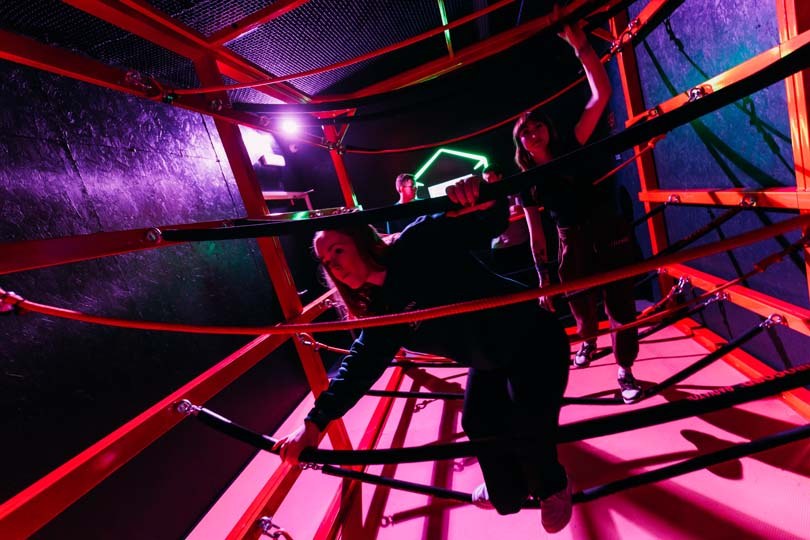
Most challenge rooms require only standard mobility, such as walking and standing, with minimal physical exertion required. However, certain installations may feature low lighting, tight spaces, or crawling elements, so participants should check specific room guidelines beforehand.
What happens if our team cannot solve all the puzzles in time?
If the 60-minute timer expires before your team escapes, the game master enters the room, unlocks the final doors, and explains the remaining puzzle solutions. While you do not win the official escape, the experience remains engaging from start to finish.
Image Gallery