How to Choose a Super Bowl Wings Special
Choosing the right Super Bowl wings special involves evaluating portion sizes, flavor variety, pickup or delivery logistics, and pricing structures to feed your group efficiently without overpaying or running out of food during the gam...
Choosing the right Super Bowl wings special involves evaluating portion sizes, flavor variety, pickup or delivery logistics, and pricing structures to feed your group efficiently without overpaying or running out of food during the game.
Contents
The Super Bowl is the single biggest day of the year for the chicken wing industry, with millions of Americans consuming wings by the truckload while watching the championship game. Because demand spikes exponentially over a compressed window of a few hours, local pizzerias, sports bars, national chains, and caterers roll out specialized bundle deals, bulk pricing tiers, and customized flavor packages. Navigating these promotions requires looking past flashy marketing slogans to examine what you actually receive for your money. Selecting the ideal deal means balancing crowd preferences, dietary requirements, logistics, and cost efficiency so that your game-day watch party runs smoothly from kickoff to the final whistle.
Assessing Your Party Size and Headcount Requirements
Before browsing local restaurant menus or third-party delivery apps, you must establish an accurate head count for your watch party. Estimating food quantities incorrectly is the easiest way to ruin a sports gathering, either leaving hungry guests empty-handed by halftime or leaving you with an overwhelming mountain of leftover bones.
When calculating how many wings to order, standard catering math suggests estimating five to seven standard wings per person if you are serving heavy side dishes like pizza, nachos, chili, and dips. If wings are serving as the primary anchor of the menu with minimal heavy sides, that estimate climbs to eight to twelve wings per adult. Keep in mind that traditional bone-in wings and boneless wings satisfy appetites differently. Traditional wings weigh more because of the bone, meaning fewer physical pieces per pound, whereas boneless wings are 100 percent meat, often making them more filling per piece.
Furthermore, you should segment your guest list by appetite and preferences. If your party includes teenagers, college students, or enthusiastic sports fans who plan to graze across four hours of pre-game, game, and post-game coverage, lean toward the higher end of your quantity estimates.
Understanding Wing Special Formats: Bundles vs. Bulk Pricing
Restaurants structure Super Bowl specials in distinct ways, and recognizing the structural difference between a bundled package and bulk ala carte pricing helps you secure the best value.
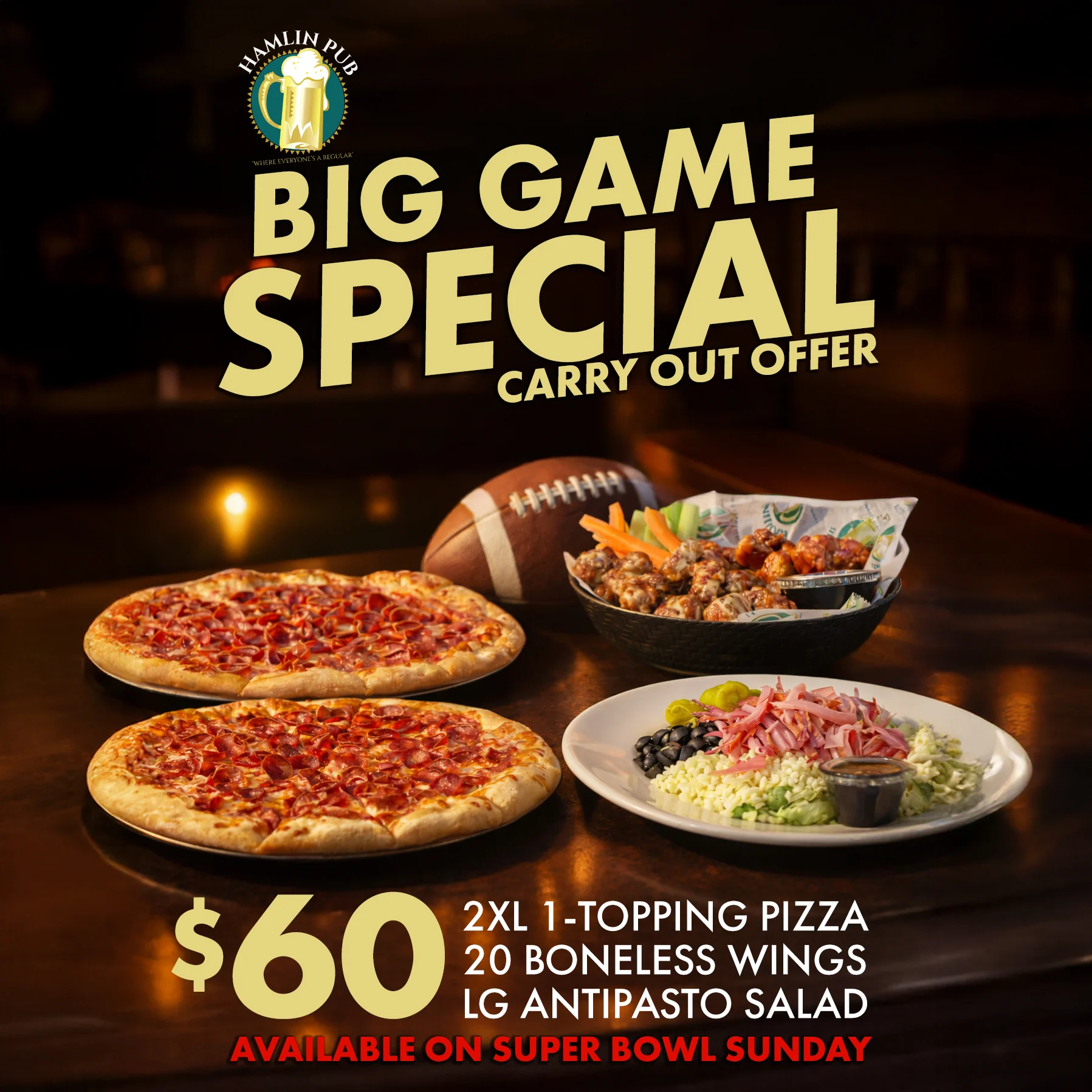
Bundled specials typically combine wings with complementary game-day finger foods. A standard Super Bowl bundle might include 50 wings divided into two or three flavor choices, alongside a large order of french fries or onion rings, celery and carrot sticks, and large bottles of ranch or blue cheese dressing. Some bundles also throw in a pizza, garlic knots, or a two-liter soda. Bundles are ideal if you want a turnkey catering solution where you do not have to think about assembling side dishes or buying dipping sauces separately.
Bulk pricing tiers, on the other hand, focus strictly on volume. Restaurants often sell wings in quantities of 25, 50, 75, 100, or more, with incremental price breaks as the count increases. Bulk pricing works best if your crowd is purely focused on wings, or if you already plan to make your own homemade sides, chili, or dips.
| Special Type | Typical Contents | Best Suited For | Key Consideration |
|---|---|---|---|
| Complete Game-Day Bundle | Wings, fries/sides, dipping sauces, celery/carrots, sometimes pizza | All-in-one party hosting with diverse food preferences | Check if sides scale proportionally with the wing count. |
| Bulk Tiered Wings | High-volume bone-in or boneless wings with basic sauce splits | Wing-centric parties where guests bring sides or you cook extras | Confirm maximum sauce flavor limits per bulk batch. |
| Family Meal Deal | Moderate wing count (20–30) plus smaller side and drink | Small family gatherings or micro-parties (4–6 people) | Offers great cost control for compact groups. |
Managing Flavor Profiles and Sauce Divisions
One of the most contentious aspects of ordering wings for a group is satisfying everyone's spice tolerance and flavor preferences. While you might personally love ghost pepper or ultra-fiery habanero sauces, a guest who prefers mild garlic parmesan will find themselves unable to eat.
Most restaurants allow you to split flavor orders, but they often impose strict rules. For example, a restaurant offering a 50-piece special might permit you to split the order into a maximum of two or three different sauces, with a minimum of 25 wings per flavor. Smaller increments, such as getting ten wings in five different sauces, are frequently restricted on Super Bowl Sunday because of the operational strain it places on the kitchen line.
To navigate this limitation successfully, follow these strategic guidelines:
- The Safe Baseline: Allocate 50 percent to 60 percent of your total order to crowd-pleasing, universally accepted flavors like mild buffalo, barbecue, or honey garlic.
- The Heat Option: Dedicate 25 percent to a traditional medium or hot buffalo sauce for guests who expect a classic game-day kick.
- The Wildcard/Alternative: Use the remaining percentage for a distinct profile like lemon pepper, garlic parmesan, or a sweet-and-spicy Asian glaze, or keep sauces on the side entirely.
Requesting sauces on the side is a clever tactical move for Super Bowl delivery. Transporting hot wings tossed in sauce for 20 minutes in a sealed cardboard container often results in soggy, skinless meat by the time it reaches your dining room table. Ordering the wings naked or sauced on the side preserves the structural integrity and crispness of the exterior coating, letting guests dip or toss them fresh at home.
Evaluating Logistics: Pickup, Delivery, and Advance Ordering
Super Bowl Sunday is universally recognized as the single busiest day of the year for food delivery drivers and restaurant kitchens. Choosing how your food arrives or how you collect it requires meticulous advance planning.
Many national chains and local establishments open their Super Bowl pre-order windows weeks in advance. Waiting until Sunday afternoon to place an order often leads to rejected online carts, exhausted phone lines, or pickup time slots that do not align with kickoff.
When scheduling your order, pay close attention to time slots. Kitchens stagger pickup and delivery windows to prevent total gridlock, meaning you might have to choose between picking up your food at 4:00 PM for a 6:30 PM game or getting it delivered during the chaotic pre-game hour. If you choose delivery, anticipate severe delays caused by traffic and high order volume across third-party apps like DoorDash, Uber Eats, or direct restaurant fleets. Whenever feasible, scheduling an in-store pickup slightly ahead of the peak pre-game rush ensures you receive your food hot, complete, and on time.
Furthermore, inspect the packaging requirements. Large orders require sturdy corrugated boxes or specialized foil containers that retain heat without trapping condensation. If a restaurant packs 100 hot wings into a single flimsy paper bag, steam accumulation will ruin the texture before the first quarter ends.
Factoring in Hidden Costs, Taxes, and Service Fees
When reviewing advertised Super Bowl wing specials, the initial price tag rarely reflects the final total. Failing to account for hidden fees can throw off your party hosting budget.
Watch out for the following financial variables when calculating your order:
- Extra Sauce Charges: Many specials include a standard allotment of ranch or blue cheese dressings and celery sticks, but charge incremental fees for every additional tub of sauce. Because wings consume large amounts of dipping sauce, running out is common, and buying extra at fifty cents to a dollar per cup adds up quickly.
- Delivery Fees and Surcharges: Third-party delivery apps tack on service fees, delivery charges, and mandatory tip minimums that can inflate an order by 20% to 30%. Direct restaurant delivery often features special Super Bowl surcharges to compensate drivers working high-demand shifts.
- Tax and Packaging Fees: Large catering orders frequently include municipal taxes or eco-packaging fees that do not apply to standard everyday menus.
Reviewing the complete itemized subtotal before submitting payment prevents unpleasant financial surprises and ensures your party stays within its allocated budget.
Frequently Asked Questions
How far in advance should I place my Super Bowl wings order?
You should place your Super Bowl wings order at least three to five days in advance, and up to a week ahead if you are ordering from a high-demand local favorite. Many popular spots reach kitchen capacity and close their pre-order windows days before kickoff.
Are bone-in or boneless wings better for a large group?
Bone-in wings offer superior flavor and texture, making them the traditional choice for sports purists, but they generate waste and take up more physical plate space. Boneless wings (which are essentially breast meat nuggets) are easier to eat, yield more edible meat per pound, and are generally easier to portion out for mixed crowds that include children.
How do I keep wings hot if I pick them up early?
If you must pick up your wings an hour or more before kickoff, keep the containers tightly closed during transit to trap heat. Once home, you can transfer them to a baking sheet and keep them warm in an oven preheated to 200°F (93°C) until you are ready to serve. Avoid covering them tightly with heavy plastic or foil in the oven, as this traps steam and makes the skin soggy.
Can I freeze leftover cooked wings after the game?
Yes, leftover cooked wings can be stored in an airtight container in the refrigerator for up to three to four days, or frozen for up to two months. To reheat frozen or refrigerated wings while maintaining crispness, place them in an air fryer at 380°F for 6 to 8 minutes rather than using a microwave, which makes the meat rubbery.
What is the average cost per wing during Super Bowl promotions?
Wing prices fluctuate based on market conditions, but during Super Bowl promotions, you can typically expect to pay between $1.25 and $2.00 per wing when buying in bulk tiers or bundles, depending on whether you choose premium boneless cuts or traditional bone-in varieties.
Final Recommendation
To secure the ultimate Super Bowl wings experience, audit your guest list count today, lock in a pre-order with your chosen restaurant at least 48 to 72 hours before kickoff, and opt for a balanced mix of half mild-sauced bulk wings and half naked wings with sauces on the side. Plan for in-store pickup to bypass third-party delivery gridlock, stock up on extra dipping sauces and paper products in advance, and use an oven or air fryer to refresh your food if pickup times require early collection.
Image Gallery