Understanding the Ferrari Enzo Crash: A Detailed Reference Entry
The Ferrari Enzo, a pinnacle of early 2000s automotive engineering, has been involved in several high-profile accidents that serve as case studies in automotive physics, chassis integrity, and the legal implications of exotic vehicle o...
The Ferrari Enzo, a pinnacle of early 2000s automotive engineering, has been involved in several high-profile accidents that serve as case studies in automotive physics, chassis integrity, and the legal implications of exotic vehicle operation. These incidents, most notably the 2006 Pacific Coast Highway crash, highlight the extreme safety limits of carbon-fiber monocoque construction and the complexities of high-speed collision forensics.
Contents
Historical Context and Technical Significance
The Ferrari Enzo (officially the Ferrari Enzo Ferrari) was produced between 2002 and 2004, with only 400 units ever manufactured. Built on a Formula One-inspired carbon-fiber and Nomex honeycomb monocoque chassis, the vehicle was designed for extreme aerodynamic downforce and rigid structural safety.
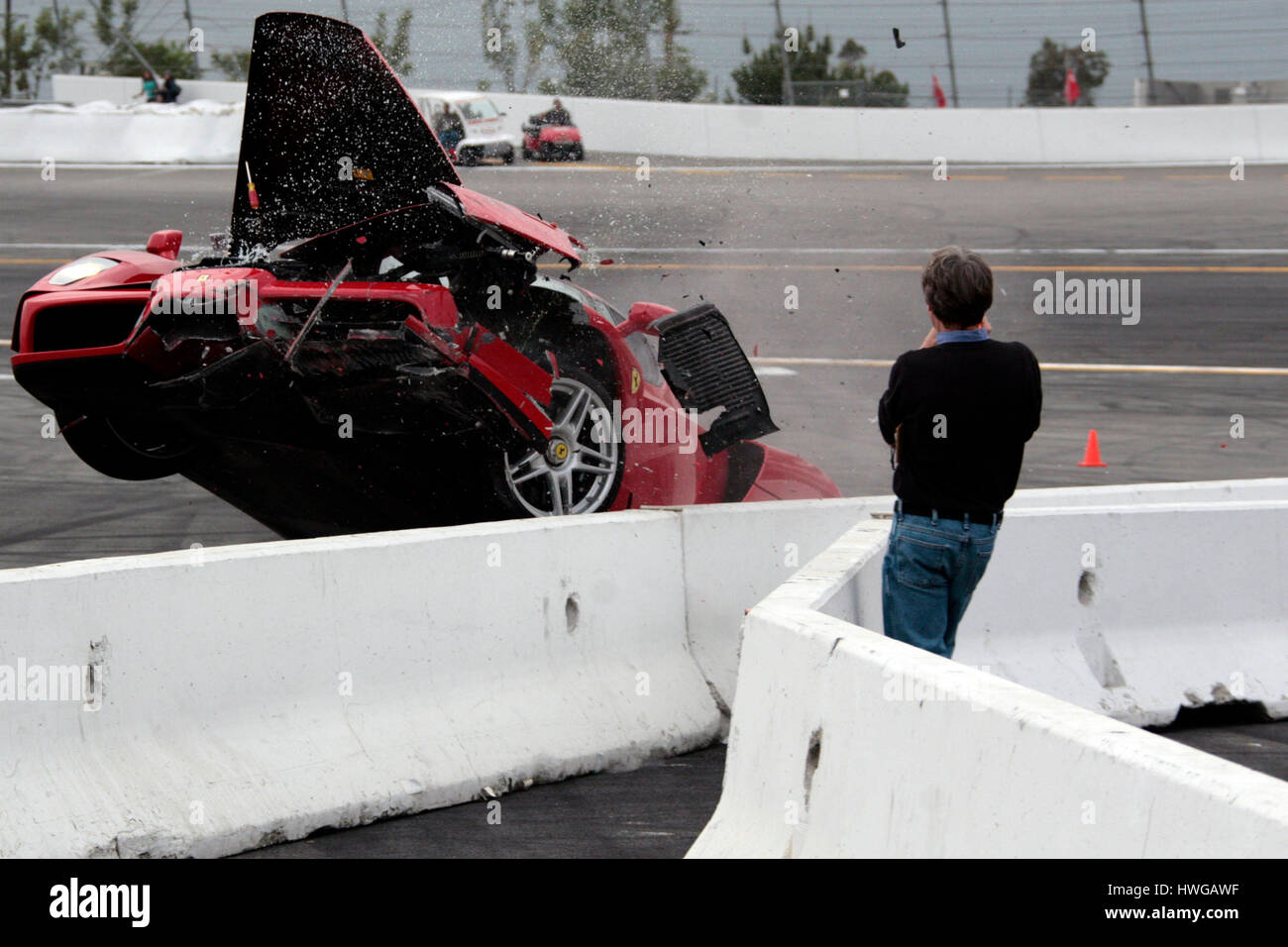
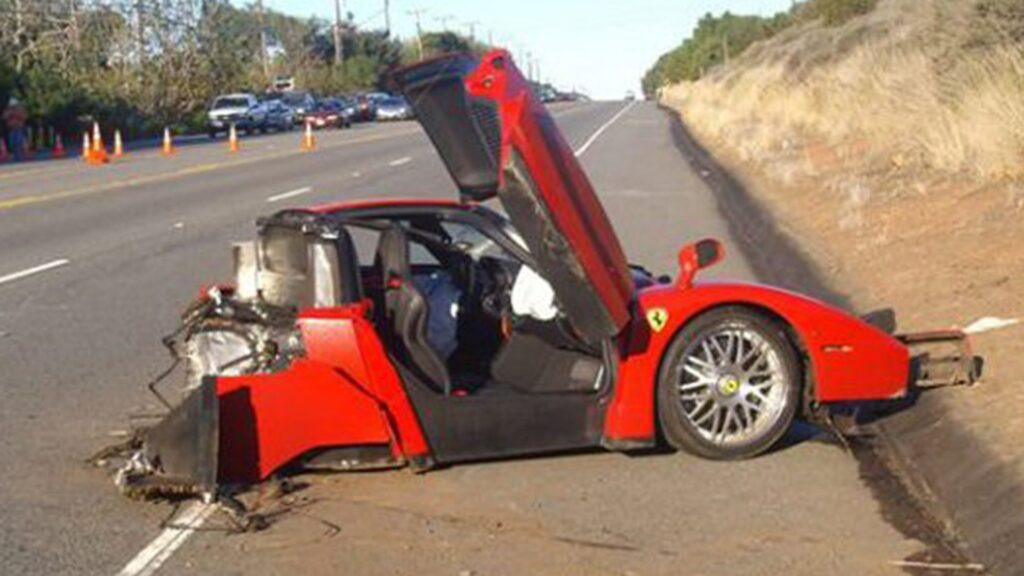
When analyzing an "Enzo crash," enthusiasts and investigators often look at the 2006 incident involving a vehicle piloted by Stefan Eriksson in Malibu, California. This specific event is considered the primary reference point for discussions regarding Enzo survivability. The vehicle struck a utility pole at an estimated speed exceeding 160 mph, splitting the car in half. Remarkably, the occupant survived with only minor injuries, a testament to the structural engineering of the carbon-fiber tub, which is designed to detach the engine and transmission from the passenger cell during extreme kinetic energy dissipation.
The Physics of High-Velocity Impacts
The structural design of the Ferrari Enzo utilizes a "crash box" architecture similar to that found in contemporary open-wheel racing. When the vehicle reaches a failure point—often characterized by shearing forces that exceed the mounting points of the subframes—the chassis is intended to fracture in specific zones.
- Energy Absorption: The front and rear aluminum subframes are engineered to deform or detach, absorbing the initial kinetic energy before the force reaches the carbon-fiber monocoque.
- Passenger Cell Integrity: The central tub remains rigid, preventing cabin intrusion. This feature is the primary reason why drivers of wrecked Enzos have frequently walked away from total-loss incidents.
- Material Fatigue: Because carbon fiber does not exhibit the same ductile deformation characteristics as steel, a severe impact often results in catastrophic material failure rather than crumpling. This creates the appearance of the vehicle "splitting," which is often a planned safety release of the rear subframe.
Common Factors in Enzo Incidents
While the Enzo is a highly capable machine, it lacks the advanced electronic driver aids (such as modern stability control systems found in current 2026 models) that define contemporary supercar safety. Analysts have identified recurring patterns in high-speed incidents involving this platform:
- Overconfidence in Mechanical Grip: The lack of modern traction control systems means that the transition from grip to total loss of control is near-instantaneous, particularly on uneven or cold road surfaces.
- Maintenance and Tire Age: Due to the vehicle's age, many owners still utilize period-correct tire compounds that have long since hardened or degraded, leading to a massive loss of cornering potential.
- Operator Experience: The Enzo features a "paddle-shift" automated manual transmission that requires a specific learning curve. Improper throttle management during shifts at high RPM can induce sudden yaw moments, leading to loss of control.
Comparative Safety and Forensic Analysis
Understanding the performance of the Enzo in a crash requires comparing its design philosophy to other mid-engine supercars of the same era, such as the Porsche Carrera GT or the Mercedes-Benz SLR McLaren.
| Feature | Ferrari Enzo (2002-2004) | Contemporary Reference (2026 Standards) |
|---|---|---|
| Chassis | Carbon-fiber Monocoque | Carbon-fiber Reinforced Polymer (CFRP) |
| Electronic Aids | Traction Control (Basic) | Multi-stage Stability/Torque Vectoring |
| Crash Safety | Structural Decoupling | Integrated Crumple Zones |
| Braking | Carbon-Ceramic Discs | Advanced Brake-by-Wire/ABS |
While the Enzo was revolutionary at its launch, the absence of side-curtain airbags and modern driver assistance systems makes it a "raw" vehicle. When a crash occurs, the outcome is almost entirely dependent on the structural integrity of the monocoque and the presence of road-side obstacles, such as utility poles or concrete barriers, which are unforgiving to the vehicle's rigid construction.
Operational and Legal Considerations
In the wake of a high-profile Enzo crash, significant attention is often paid to the legal and insurance ramifications. Exotic vehicles of this caliber are typically insured under specialized "agreed value" policies rather than standard automotive coverage.
- Valuation Challenges: Determining the financial loss after a crash is complex, as the market value of an Enzo fluctuates significantly based on provenance, mileage, and originality. A "totaled" Enzo is rarely scrapped; due to the rarity of parts, salvage firms often rebuild them using the original chassis plate to maintain the vehicle's pedigree.
- Forensic Investigation: Authorities in the United States and Europe utilize event data recorders (EDRs) to reconstruct the final moments of a crash. In older supercars like the Enzo, the data availability is limited compared to current-year vehicles, making physical forensic reconstruction the primary method for determining cause.
Troubleshooting and Preventive Safety
For owners looking to mitigate the risk of a high-speed incident, the focus should remain on proactive maintenance.
- Tire Replacement: Never drive an Enzo on tires older than five years. The compound degradation significantly impairs the vehicle's ability to shed energy safely.
- Suspension Health: The Enzo uses an F1-style pushrod suspension. Worn bushings or leaking dampers can cause unpredictable handling characteristics at higher speeds. Annual inspections by a certified Ferrari specialist are mandatory.
- Driver Training: Given the lack of safety nets, professional track-based instruction in a similar, lower-powered mid-engine vehicle is recommended to understand the handling characteristics of a rear-wheel-drive, high-torque platform.
Frequently Asked Questions
Are Ferrari Enzo parts still available for repair after a crash? Ferrari maintains a "Ferrari Classiche" program that supports older models, though specific structural components like the carbon-fiber monocoque are extremely scarce and often require specialized fabrication or sourcing from donor chassis.
Does an Enzo crash automatically result in a total loss for insurance? Not necessarily. Due to the high appreciation of the vehicle, repair costs that might total a standard production car are often deemed justifiable for an Enzo. Insurance adjusters typically assess the repairability of the carbon tub before declaring a total loss.
How does the carbon-fiber structure handle collisions compared to steel? Steel absorbs energy through bending and folding. Carbon fiber is engineered to be rigid, protecting the occupant by not collapsing. However, it handles impacts by shattering or delaminating to dissipate energy. This makes repairs more difficult, as the material cannot be "bent back."
Is the "splitting" of the chassis a defect? No. This is a deliberate engineering feature. By allowing the engine subframe to break away, the vehicle reduces the total mass that must be brought to a halt, significantly decreasing the deceleration forces experienced by the driver in the cockpit.
Next Steps for Owners
If you own or operate a Ferrari Enzo, your primary responsibility is ensuring the mechanical integrity of the vehicle. Schedule a comprehensive diagnostic check with an authorized dealer or an independent specialist experienced with the Enzo's specific chassis requirements. Always prioritize high-performance, fresh rubber over cosmetic modifications, and consider enrolling in a high-performance driving school to better understand the vehicle's mechanical limitations in a controlled environment.
Image Gallery