Heath Ledger’s Joker in The Dark Knight: A Definitive Analysis of Cinema’s Greatest Villain
Heath Ledger’s portrayal of the Joker in Christopher Nolan’s 2008 film The Dark Knight remains the definitive cinematic interpretation of the character. By reimagining the "Clown Prince of Crime" as a calculating, anarchic terrorist ra...
Heath Ledger’s portrayal of the Joker in Christopher Nolan’s 2008 film The Dark Knight remains the definitive cinematic interpretation of the character. By reimagining the "Clown Prince of Crime" as a calculating, anarchic terrorist rather than a campy prankster, Ledger transformed the superhero genre into high-stakes psychological drama, earning a posthumous Academy Award for Best Supporting Actor.
Contents
The Evolution of a Chaos Agent: Conceptualizing the Joker
When Christopher Nolan and co-writer David S. Goyer began developing the sequel to Batman Begins, their primary challenge was to introduce a villain who could challenge Batman not just physically, but philosophically. In the 2026 retrospective of 21st-century cinema, critics still point to this version of the Joker as the catalyst for the "prestige" superhero movie. Unlike previous iterations that focused on the character's origin—such as falling into a vat of chemicals—Nolan’s Joker was a man without a past.
This lack of backstory was a deliberate narrative choice to heighten the character's threat. By presenting multiple, conflicting stories about how he received his facial scars (the "Glasgow Smile"), the Joker established himself as an unreliable narrator and a pure agent of chaos. He was not motivated by money, power, or revenge, but by a desire to prove that society’s "plan" is fragile and that anyone can be pushed into madness.
Heath Ledger’s casting was initially met with skepticism by fans who associated him with his roles in 10 Things I Hate About You or Brokeback Mountain. However, Nolan saw in Ledger an actor capable of total immersion. Ledger’s Joker was designed to be a "dog chasing cars," an entity that didn't know what to do with one if he caught it, representing the antithesis of Batman’s rigid moral code.
The Joker Diary and Method Acting: How Ledger Prepared
The intensity of Ledger’s performance was the result of a rigorous, self-imposed isolation period. To find the "voice" and the "soul" of the character, Ledger spent approximately six weeks locked in a London hotel room. During this time, he maintained a journal known as the "Joker Diary," which was filled with disturbing images, news clippings about mental illness, and notes written in the character's voice.
Creating the Physicality and Voice
Ledger’s preparation focused heavily on the voice. He wanted a tone that didn't sound like Jack Nicholson’s 1989 version. He eventually settled on a range that shifted from a high-pitched, mocking squeal to a low, gravelly snarl. This vocal unpredictability mirrored the character's erratic behavior.
The physical tics, such as the constant licking of his lips, were also deliberate. While some believe this was a nervous habit of Ledger’s, it actually served a technical purpose: the prosthetic scars (the "Chelsea Grin") were made of silicone and frequently came loose. By licking his lips, Ledger kept the prosthetics moist and in place, eventually incorporating the gesture into the character's unsettling persona.
Intellectual Inspirations
Ledger and Nolan drew inspiration from various cultural touchstones. They looked at the character of Alex DeLarge from A Clockwork Orange for his "ultraviolence" and unpredictable energy. They also channeled the aesthetic of punk rock icons like Sid Vicious, aiming for a look that was "disheveled" rather than "theatrical." This grounded the Joker in a gritty, urban reality that matched the film’s hyper-realistic tone.
Technical Artistry: Makeup, Costume, and Presence
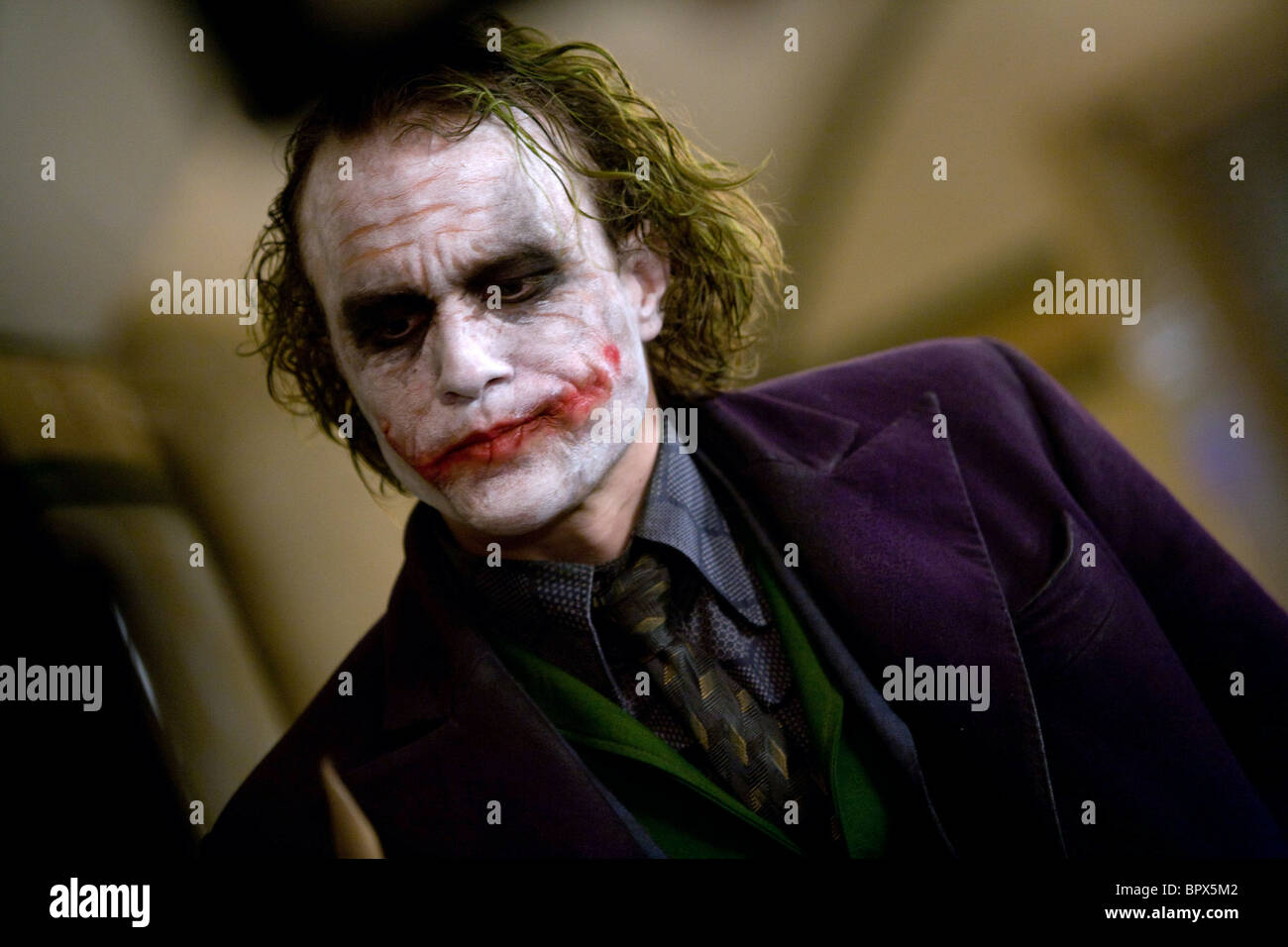
The visual design of the Joker in The Dark Knight was a radical departure from the comics. Under the direction of makeup artist John Caglione Jr., the team moved away from the "permanent white skin" look. Instead, they opted for cheap, theatrical greasepaint that looked like it had been applied by the Joker himself and then slept in for several days.
The "Sloppy" Aesthetic
This "lived-in" look was achieved by having Ledger scrunch up his face during the makeup application, creating natural cracks and uneven textures in the white paint. The black eye makeup was smeared to look like it was running due to sweat or rain. This imperfection made the character more frightening because it suggested a man who was completely indifferent to his own appearance and hygiene, focusing only on his ideological goals.
Costume Design as Characterization
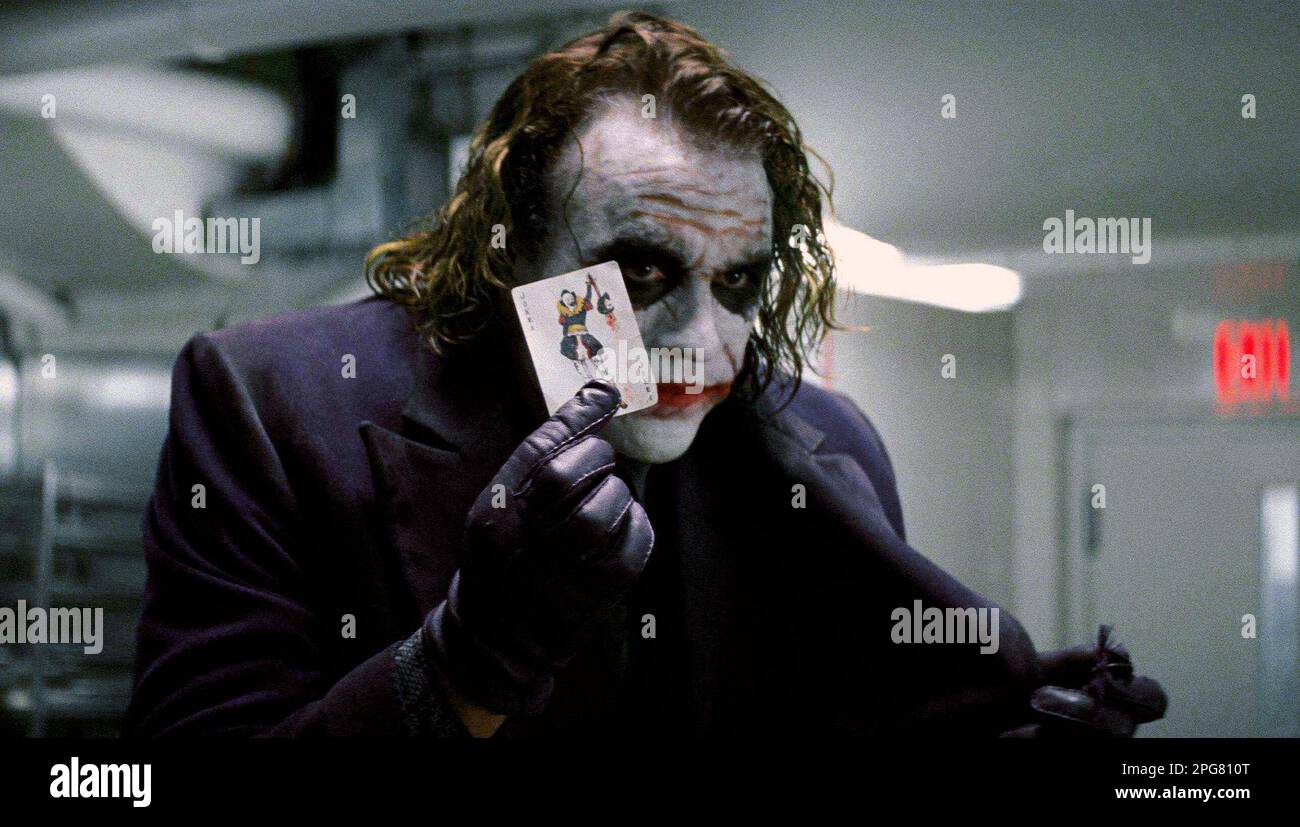
Costume designer Lindy Hemming created a wardrobe that was a "grunge" take on the classic purple suit. The fabrics were chosen to look high-quality but worn out. The iconic purple overcoat was paired with a green waistcoat and patterned shirts that didn't quite match, signaling a mind that operated on a different frequency of logic. The goal was to make the Joker look like a vagrant who had happened upon a collection of expensive clothes—a "gentleman of crime" gone completely wrong.
Key Scenes and the Power of Improvisation
Several of the most memorable moments in The Dark Knight were either improvised or enhanced by Ledger’s deep understanding of the character. These scenes demonstrate the chemistry between Ledger and Christian Bale, as well as Ledger’s ability to command a room without saying a word.
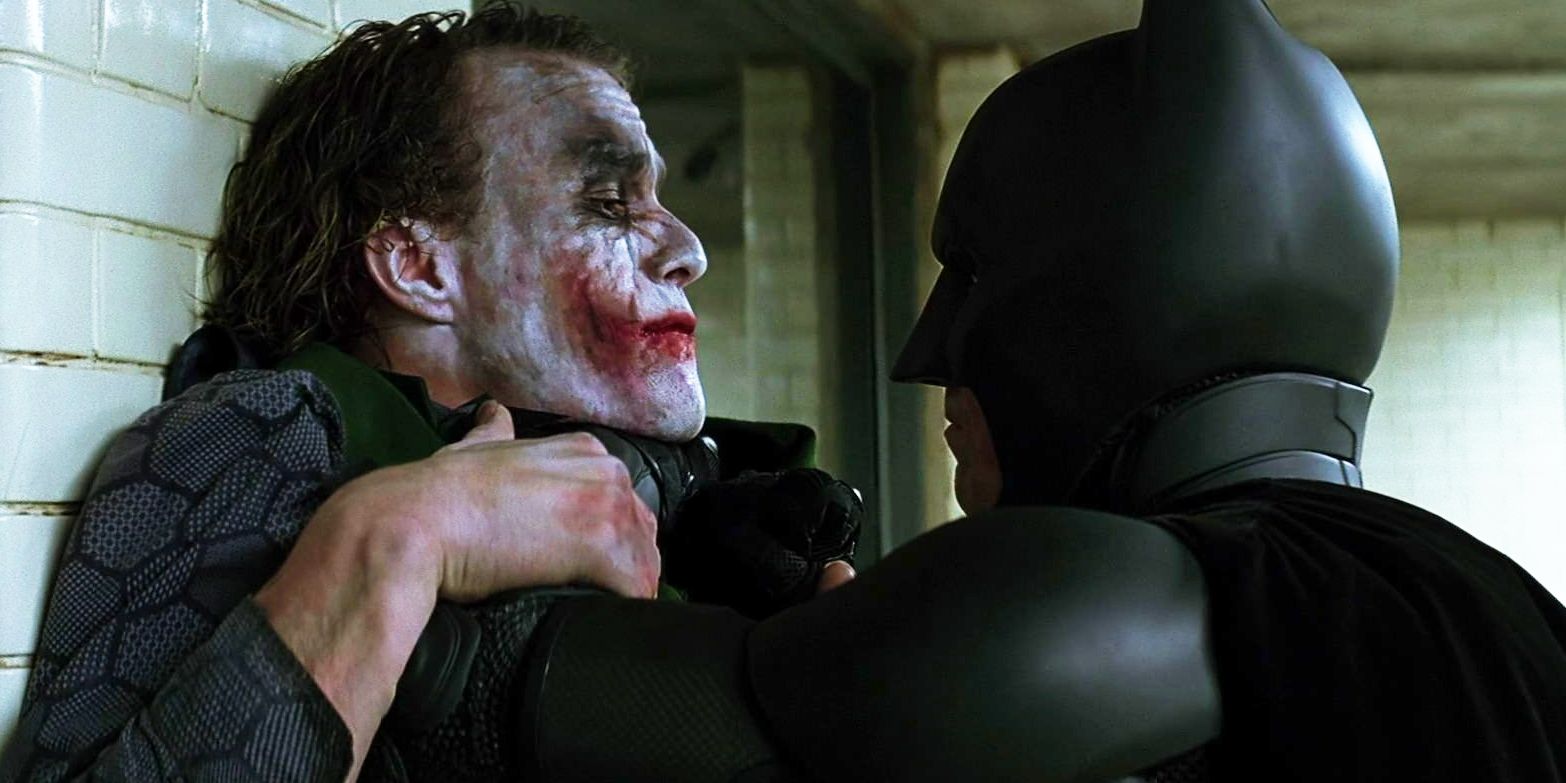
- The Interrogation Scene: This is widely considered the heart of the film. Ledger requested that Bale actually hit him during the fight to make the scene feel more authentic. The Joker’s laughter as he is being beaten highlights his victory; he has successfully forced Batman to break his one rule (not using excessive violence) while remaining completely unfazed by physical pain.
- The Pencil Trick: This scene established the Joker’s lethality immediately. While the trick was a practical effect involving a stuntman pulling the pencil away at the last second, Ledger’s nonchalant delivery of the line "Ta-da!" turned a gruesome moment into a dark comedic beat.
- The Hospital Explosion: A common urban legend suggests the delay in the hospital explosion was a technical glitch and Ledger’s reaction (fiddling with the detonator) was improvised. While the delay was scripted for safety reasons, Ledger’s specific reaction—the frustrated shuffling and the jump-start when the final blast occurs—was his own character-driven contribution.
- The Slow Clap: During the scene where Jim Gordon is promoted to Commissioner, the Joker begins a slow, mocking clap from inside his jail cell. This was not in the script. Nolan liked the addition so much that he kept the cameras rolling, capturing one of the most chilling expressions in the film.
Comparing Cinematic Jokers
To understand why Ledger’s performance is so highly regarded, it is helpful to compare his approach to other major iterations of the character.
| Feature | Jack Nicholson (1989) | Heath Ledger (2008) | Joaquin Phoenix (2019) |
|---|---|---|---|
| Origin | Mobster (Jack Napier) | Unknown/Multiple | Failed Comedian (Arthur Fleck) |
| Motivation | Vanity and Greed | Anarchy and Chaos | Personal Trauma/Social Rejection |
| Visual Style | Polished, Comic-Accurate | Gritty, "DIY" Makeup | Classic Clown Aesthetic |
| Tone | Darkly Humorous | Terrifyingly Unpredictable | Tragic and Psychological |
| Legacy | Set the standard for 20th C. | Transformed the Genre | Focused on Character Study |
The Legacy of a Posthumous Legend
Heath Ledger passed away on January 22, 2008, six months before the release of The Dark Knight. His death cast a long shadow over the film’s promotion, leading to intense speculation about whether the darkness of the role had contributed to his mental state. However, his family and collaborators, including Christopher Nolan, have consistently stated that Ledger had the "time of his life" playing the character and was incredibly proud of the work.
The 2009 Academy Award
In 2009, Ledger was posthumously awarded the Oscar for Best Supporting Actor. This was a landmark moment for the film industry, as it was the first time a performance in a "superhero" or "comic book" movie was recognized with a major acting Academy Award. This win validated the genre as a legitimate medium for serious artistic expression and paved the way for future films like Logan (2017) and Joker (2019) to be taken seriously by the Academy.
Influence on Later Portrayals
Every actor who has played the Joker since 2008 has had to contend with Ledger’s shadow. Jared Leto’s "gangster" Joker in Suicide Squad (2016) was a reaction against Ledger’s realism, while Joaquin Phoenix’s Oscar-winning turn in Joker (2019) leaned even further into the psychological realism Ledger pioneered. Even in 2026, Ledger's performance is the yardstick by which all cinematic villains are measured.
Common Misconceptions and Fact-Checking
Because of the tragic nature of Ledger’s passing, several myths have persisted regarding his time on set.
- The "Method" Legend: While Ledger used method acting techniques (like the isolation and the diary), he was known to be cheerful and social between takes. He was often seen skateboarding on set in full Joker costume, proving he could switch the character on and off.
- The Cause of Death: Medical reports confirmed that Ledger’s death was an accidental overdose of prescription medications (including painkillers and sleep aids), not a direct result of the "darkness" of the Joker role.
- The Scripting of the Voice: Ledger did not just "find" the voice on set. It was a calculated technical achievement developed over months of practice, drawing from ventriloquism and various regional accents.
FAQs about Heath Ledger’s Joker
Did Heath Ledger direct the "Hostage Videos" in the movie?
Yes. Christopher Nolan gave Ledger the freedom to direct the two low-quality videos the Joker sends to the news stations. Ledger chose the camera angles and the lighting to ensure they felt authentic to the character's chaotic nature.
What happened to the Joker after The Dark Knight?
Because of Ledger’s death, the character was not mentioned or featured in the sequel, The Dark Knight Rises (2012), out of respect for the actor. The novelization of the third film suggests the Joker remained the sole inmate of Blackgate Penitentiary after Arkham Asylum was cleared.
Why did Heath Ledger wear a nurse’s outfit in the hospital scene?
The nurse’s outfit was a classic Joker "gag" from the comics, used to blend in while causing maximum destruction. Notably, the name tag on the uniform read "Matilda," which was the name of Ledger’s real-life daughter.
Was the Joker's makeup design his own idea?
Ledger was heavily involved. He reportedly bought cheap makeup from a drugstore and applied it himself to show the hair and makeup team exactly how "unprofessional" and messy he wanted the character to look. The professional team then worked to replicate that specific look consistently for filming.
How much was Heath Ledger paid for the role?
While specific contracts are private, reports suggest Ledger received an upfront salary of approximately $20 million. His estate also continues to receive residuals from the film’s massive commercial success and ongoing popularity.
Final Recommendation
For those looking to truly appreciate the depth of Ledger’s performance, it is recommended to watch The Dark Knight with a focus on his physicality. Notice how he stands, how he walks with a slight hitch, and how he uses his hands to emphasize his points. Beyond the makeup and the lines, it is Ledger’s total body control that makes the character feel like a real, breathing threat. To gain further insight, the documentary I Am Heath Ledger (2017) provides excellent behind-the-scenes footage and interviews with his closest collaborators.
Image Gallery