Understanding HRIS: Definitions, Functions, and Strategic Implementation
A Human Resource Information System (HRIS) is a software solution that serves as a centralized database for managing employee data, human resources policies, and administrative processes. By consolidating information—ranging from payro...
A Human Resource Information System (HRIS) is a software solution that serves as a centralized database for managing employee data, human resources policies, and administrative processes. By consolidating information—ranging from payroll and benefits administration to recruitment tracking and performance appraisals—an HRIS enables organizations to automate workflows, ensure data accuracy, and maintain regulatory compliance within a unified digital infrastructure.
Contents
The Core Purpose of an HRIS
At its most fundamental level, an HRIS acts as the “source of truth” for an organization’s workforce data. Before the adoption of these systems, human resources departments relied on fragmented physical files or siloed spreadsheets, which often led to data entry errors, security vulnerabilities, and inefficient information retrieval.
The primary objective of an HRIS is to transition administrative HR tasks into automated, scalable workflows. By centralizing employee information, the system allows HR professionals to shift focus from manual data entry and record maintenance to strategic initiatives such as talent development, retention planning, and organizational culture improvement. In 2026, the complexity of labor laws and the shift toward hybrid work models make this centralization essential for maintaining accurate, real-time records regarding contracts, tax filings, and benefits eligibility.
Key Functional Components
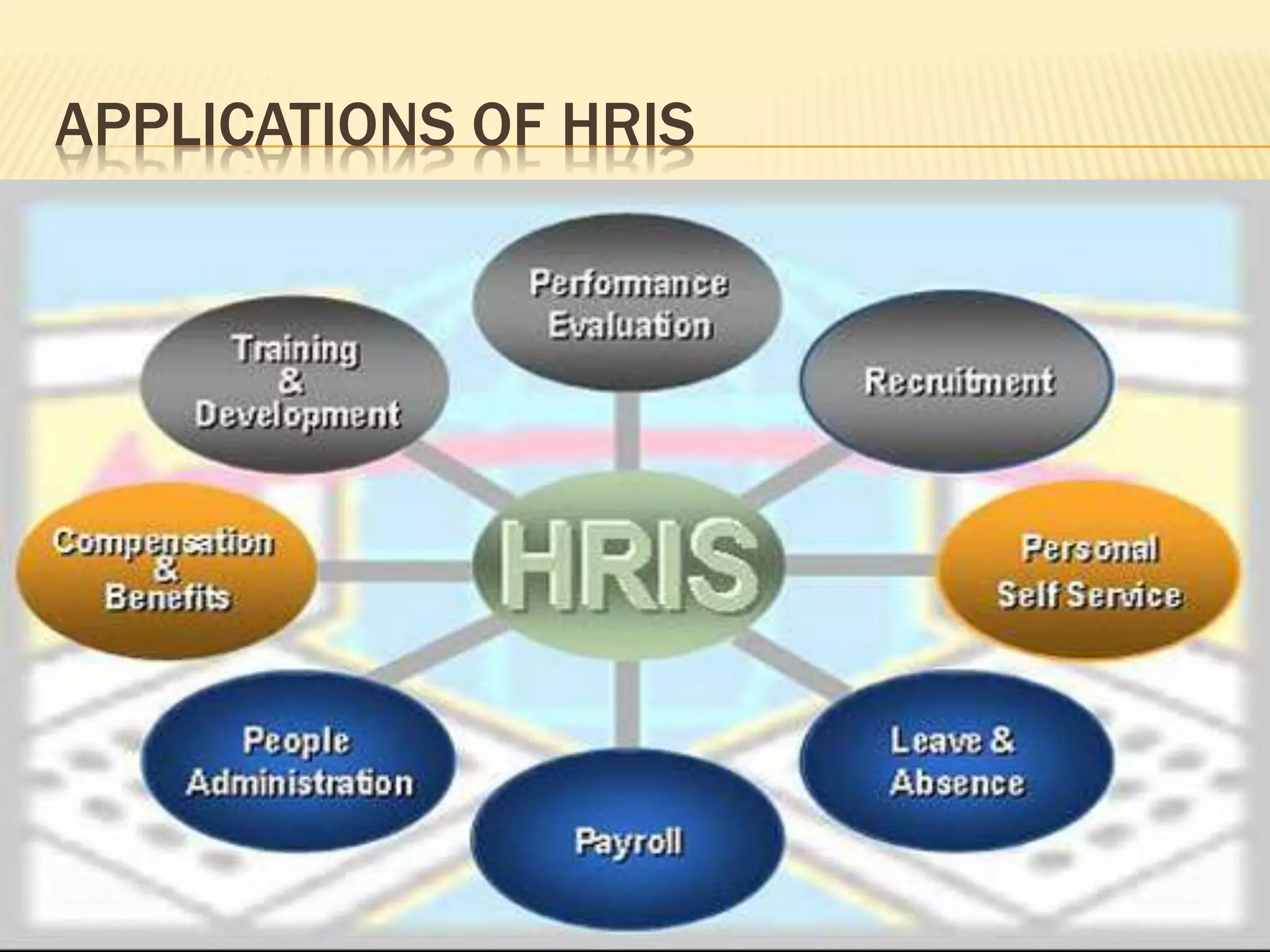
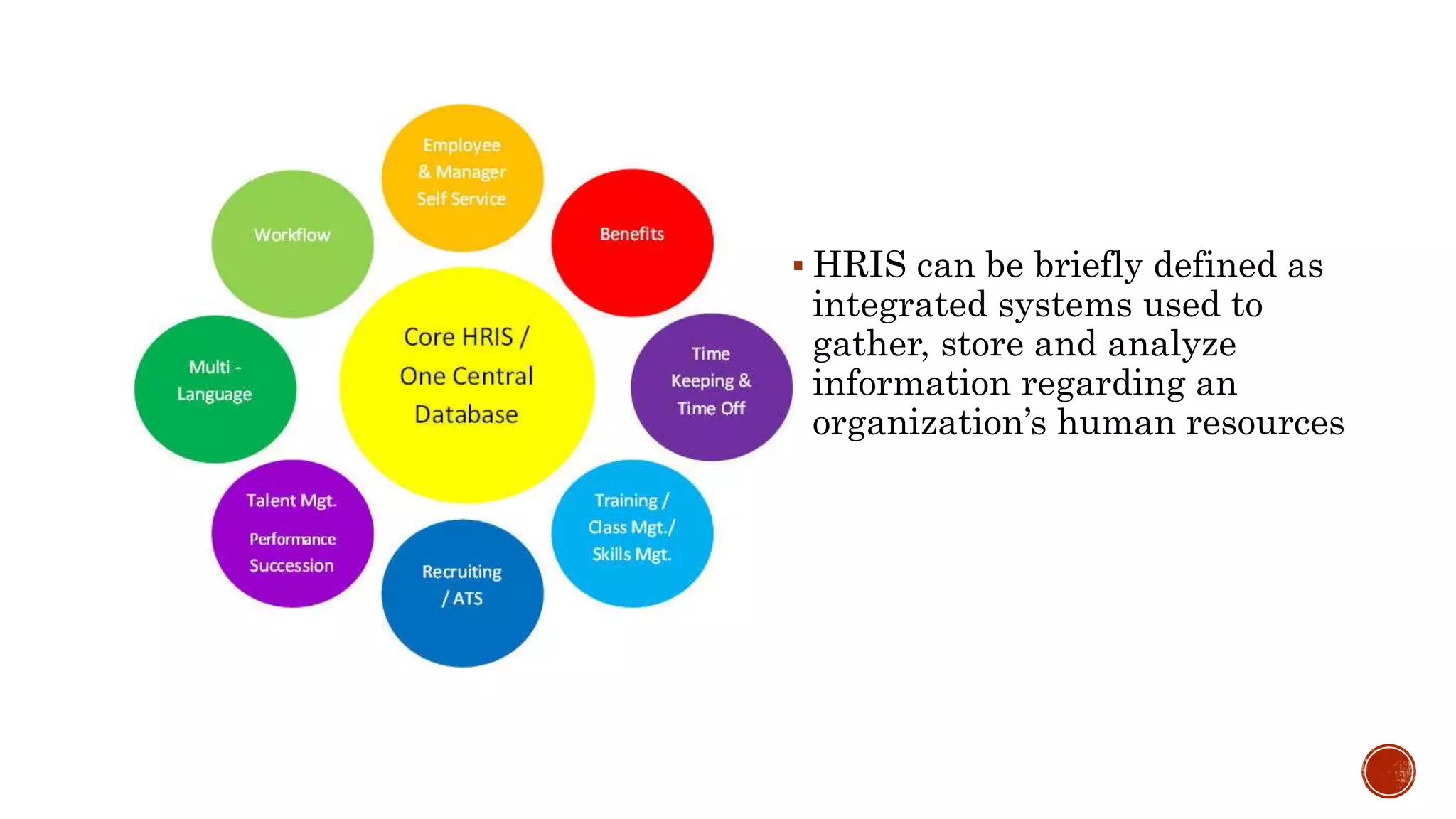
While platforms vary in complexity, most robust HRIS solutions are built upon several foundational modules designed to cover the entire employee lifecycle.
1. Core HR and Employee Database
This module acts as the digital personnel file. It stores sensitive information such as legal names, tax identification numbers, contact details, job descriptions, compensation history, and reporting structures. It provides the base data that feeds into all other system modules.
2. Payroll and Compensation Management
An HRIS often includes or integrates directly with payroll systems. By mapping employee salary structures, overtime hours, bonuses, and tax withholdings, the system ensures that pay cycles are processed accurately and in accordance with local labor regulations.
3. Benefits Administration
This module manages enrollment for healthcare, retirement accounts, and other employee perks. It allows employees to self-serve—reviewing their coverage options, updating beneficiary information, and electing benefits during open enrollment periods—which significantly reduces the administrative burden on HR teams.
4. Time and Attendance
Tracking work hours, leave requests, and absenteeism is a critical component of operational efficiency. Modern HRIS platforms enable managers to approve time-off requests digitally and integrate attendance data directly into the payroll process to prevent discrepancies in pay.
5. Recruitment and Onboarding
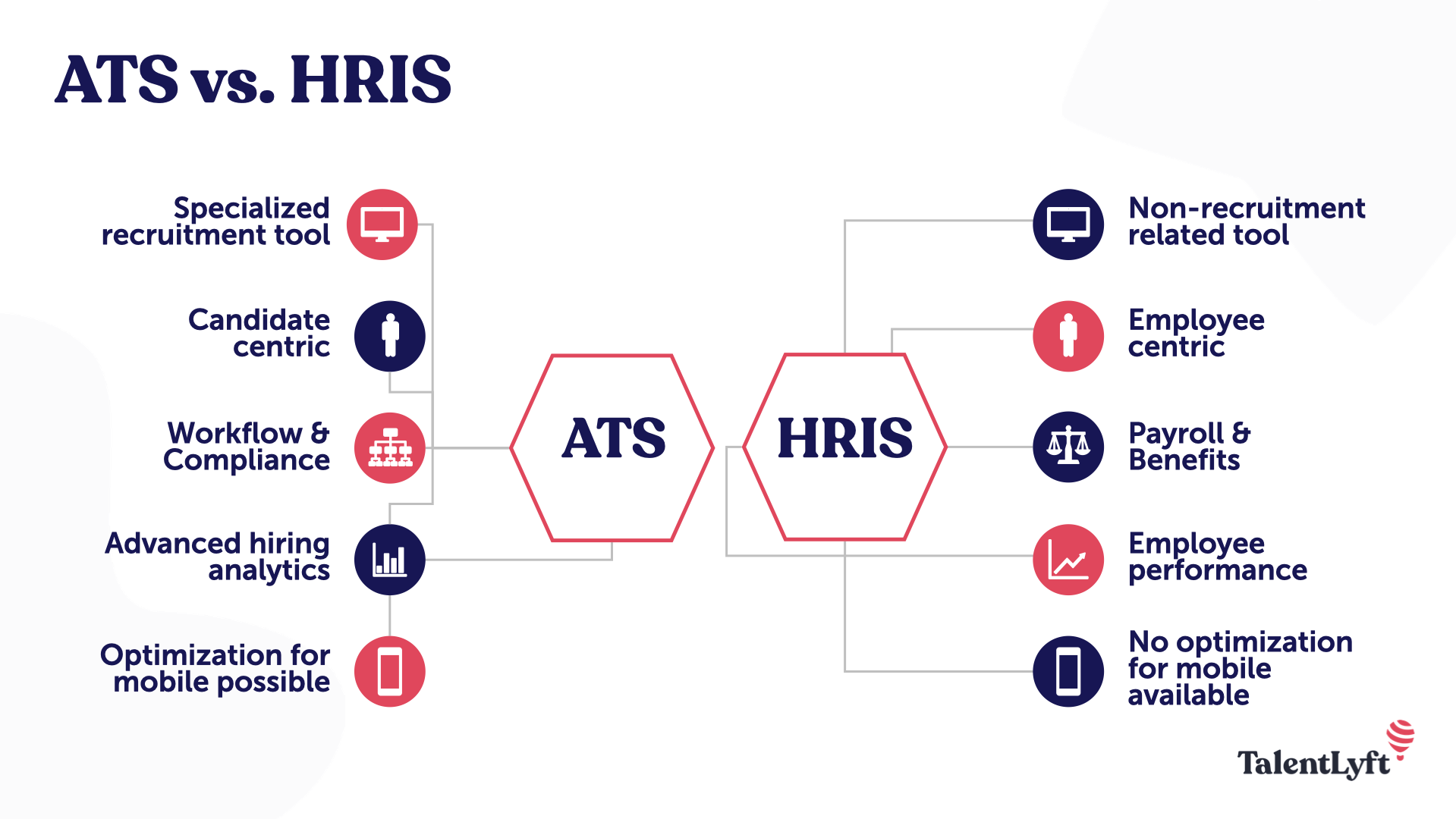
Some HRIS platforms include Applicant Tracking Systems (ATS) or offer seamless integration with third-party tools. These features manage job postings, candidate communication, and the digital distribution of onboarding documentation, such as non-disclosure agreements and tax forms.
Comparative Analysis of HR Software Solutions
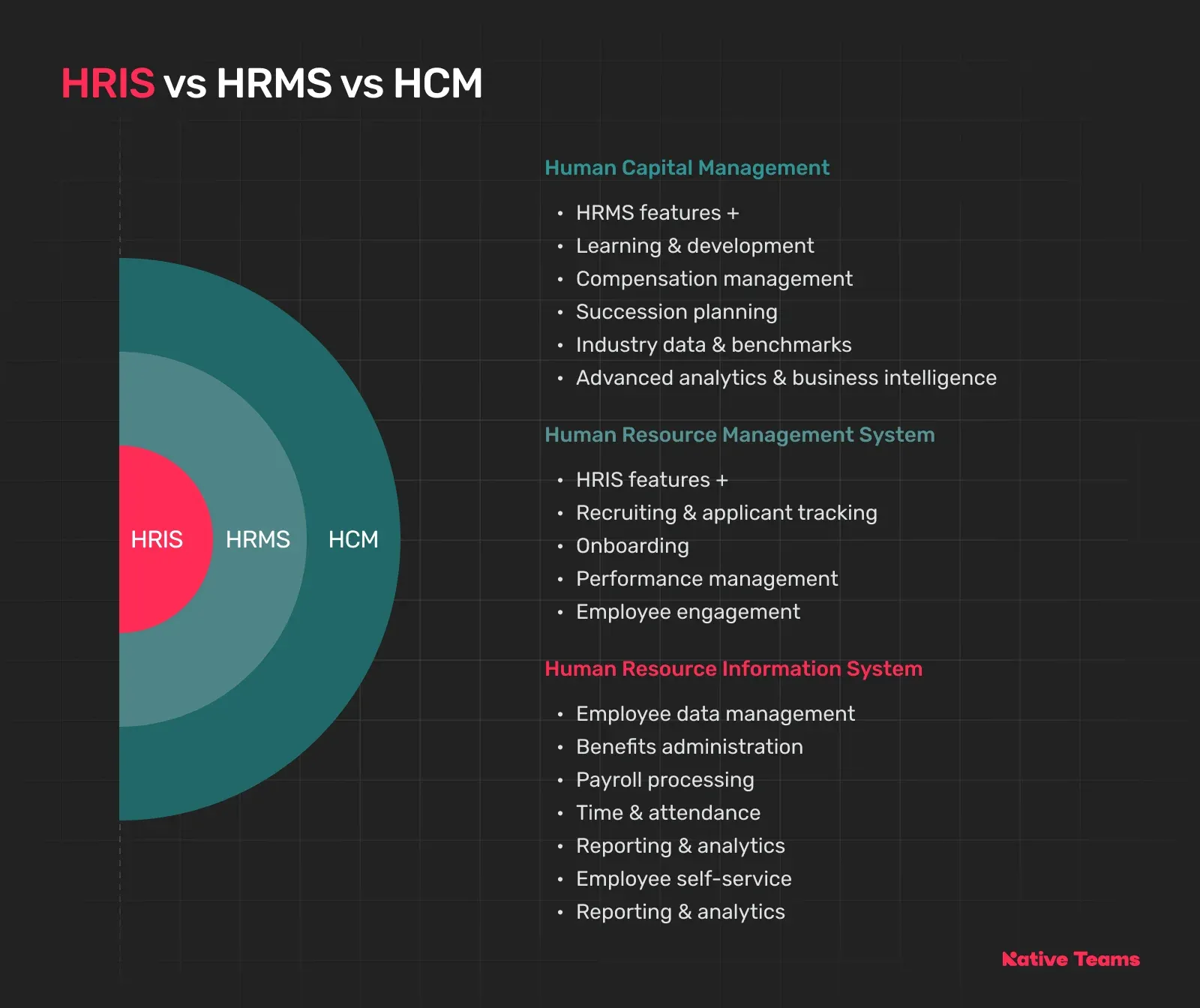
Choosing the right system requires understanding the distinctions between various HR technology categories, as the acronyms are frequently used interchangeably despite having different scopes.
| System Type | Primary Focus | Ideal For |
|---|---|---|
| HRIS | Data management, compliance, and core administrative HR. | Standardizing operations and record-keeping. |
| HRMS | Broad HR management including strategic planning and talent management. | Enterprises requiring holistic workforce analytics. |
| HCM | The entire employee lifecycle from hire to retire. | Organizations focused on high-level talent development. |
| ATS | Managing the candidate journey and hiring pipeline. | Organizations with high-volume recruitment needs. |
Prerequisites for Successful Implementation
Deploying an HRIS is a significant organizational change that requires careful planning beyond just technical installation.
- Needs Assessment: Before selecting a vendor, perform an audit of existing pain points. Determine whether your organization requires specific international tax support, complex shift scheduling, or advanced data analytics capabilities.
- Data Migration: The transition from legacy systems—such as paper records or disconnected spreadsheets—is the most labor-intensive phase. Ensuring that data is "clean," deduplicated, and formatted correctly before migration is critical for system reliability.
- Change Management: Technology is only effective if employees and managers adopt it. Provide training sessions and documentation to ensure users are comfortable with self-service features like portal logins and digital benefit enrollment.
- Data Security and Compliance: Because an HRIS holds highly sensitive PII (Personally Identifiable Information), the system must adhere to strict security protocols. In 2026, organizations must ensure their chosen platform complies with regional data protection standards, such as GDPR in Europe or state-specific privacy laws in the United States.
Operational Benefits of Adopting an HRIS
The transition to an HRIS offers tangible advantages for both the HR department and the broader organization.
Improved Accuracy and Compliance: Automation reduces the risk of human error in payroll and tax filings. By maintaining an audit trail of changes, HR departments can prove compliance during regulatory reviews or legal proceedings.
Enhanced Employee Experience: Modern HRIS platforms provide self-service portals, allowing employees to access their pay stubs, update personal details, and enroll in benefits at their convenience. This autonomy increases engagement and reduces the volume of repetitive queries directed at the HR team.
Strategic Analytics: An HRIS transforms raw data into actionable insights. Through built-in reporting tools, leadership can analyze metrics such as turnover rates, time-to-hire, and department-specific cost centers, enabling data-driven decision-making.
Potential Limitations
While the benefits are significant, organizations should be aware of potential challenges. Initial implementation costs, including subscription fees and data migration expenses, can be substantial. Furthermore, if a system is overly complex, it may suffer from low adoption rates among staff who find the user interface unintuitive. It is also important to note that an HRIS is not a substitute for human intuition; while it handles data and process, the "human" element of HR—conflict resolution, culture building, and empathetic management—remains the responsibility of the HR professional.
Frequently Asked Questions (FAQ)
What is the difference between an HRIS and an HRMS? While often used synonymously, an HRIS typically focuses on record-keeping and data administration. An HRMS (Human Resource Management System) often implies a broader scope, including more advanced functionality for performance tracking, succession planning, and deeper workforce analytics.
Does an HRIS automatically handle tax filings? Most modern HRIS platforms include payroll modules that automate tax calculations and withholdings. However, some systems act as an intermediary, requiring the organization to maintain a relationship with a tax-filing service or accountant to ensure that government reporting is accurate and timely.
Is an HRIS suitable for small businesses? Yes. In 2026, there is a wide range of HRIS options, including "lite" versions specifically designed for small businesses that require streamlined payroll and time tracking without the heavy administrative overhead of enterprise-grade suites.
How is sensitive employee data protected in an HRIS? Reputable HRIS vendors implement multi-factor authentication (MFA), end-to-end encryption for data at rest and in transit, and granular permission controls. Organizations should verify that their provider holds relevant security certifications, such as SOC 2 or ISO 27001, to ensure robust protection.
What happens if an HRIS goes offline? Most cloud-based HRIS providers offer high availability guarantees (often 99.9% uptime). To mitigate risks, organizations should verify the vendor’s data backup schedule and disaster recovery plan as part of their initial vetting process.
Recommendations for Next Steps
To determine if your organization is ready for an HRIS, begin by mapping your current HR workflows and identifying the time spent on manual entry versus strategic tasks. Once you have quantified these hours, engage with vendors to request a demonstration focusing on your specific pain points—such as payroll integration or time-tracking challenges. Prioritize vendors that offer a clear path to data migration and have a proven record of supporting your specific industry’s compliance requirements.
Image Gallery